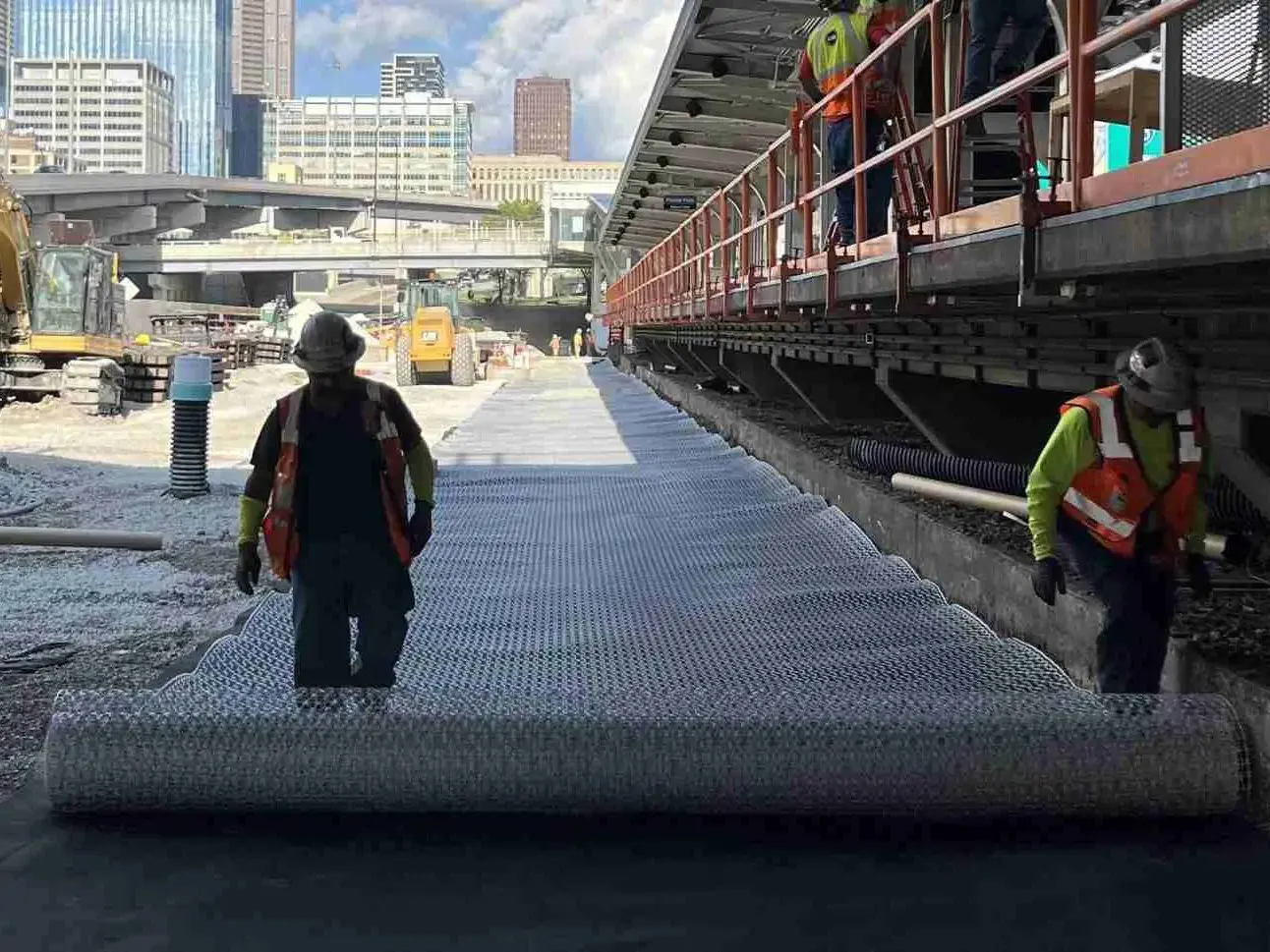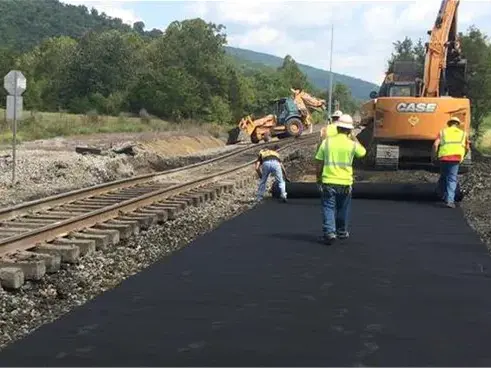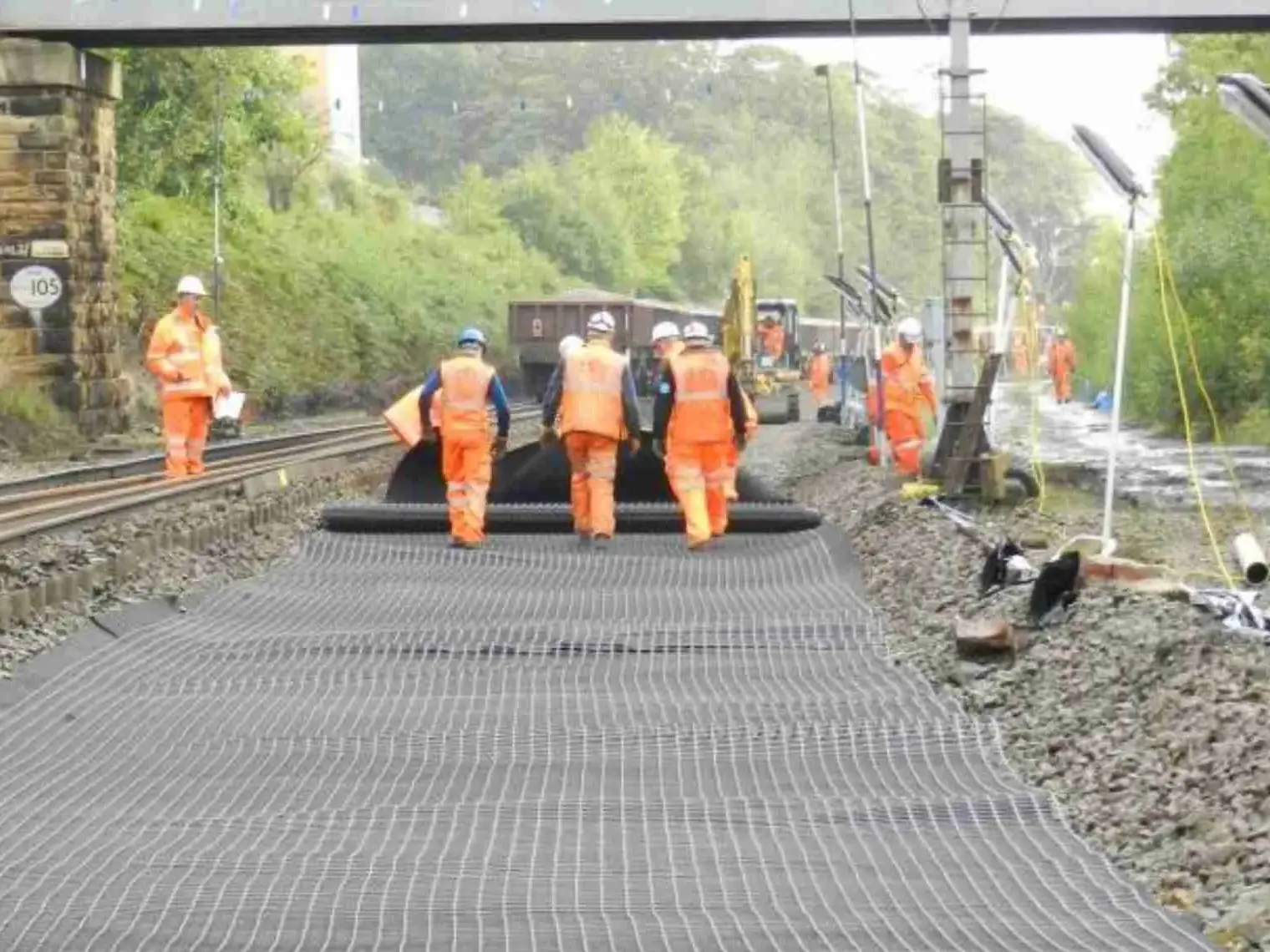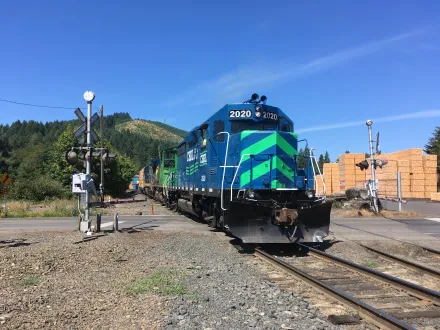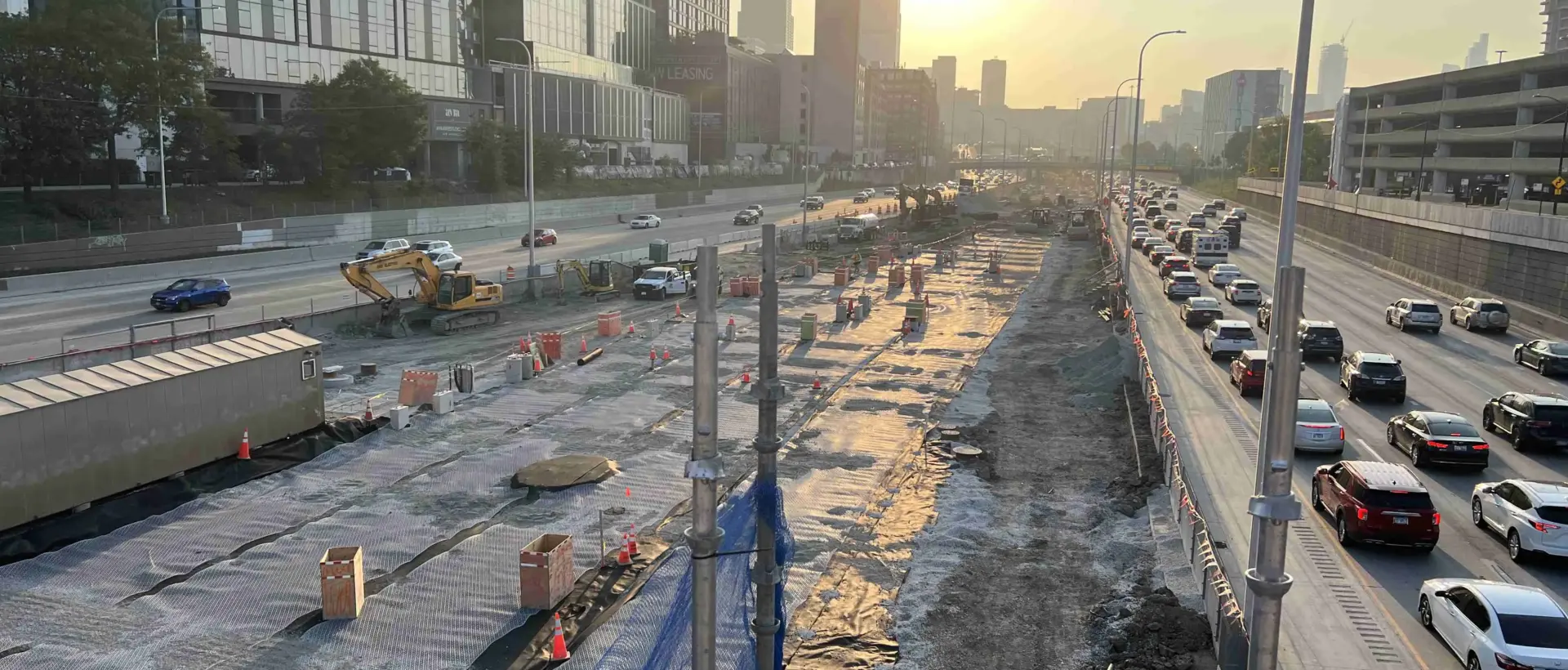
This road crossing had been repaired and/or replaced multiple times due to issues with track geometry movement and differential settlement of the highway and railroad. Union Pacific assessed the site and identified mud pumping as a contributor to the repeat problems. TrackTex anti-pumping geocomposite was selected as the preferred solution following successful installation and performance on similar problem sites.

Subgrade pumping has always been a potential problem for ballasted track, particularly on weakly cemented mudstones or over consolidated clays. These soil types have a high shear strength and as such do not need a deep trackbed to support track loading, however if left unprotected the upper surface degrades easily when exposed directly to water.
The free draining nature of ballast allows water to come into contact with the soil subgrade. When the subgrade contains fine grained particles, these can be readily eroded by the water accumulating in the voids, forming weak, highly mobile slurry. Passing axle loads then generate a ‘pump’ effect which squeezes the slurry up into the overlying ballast.
This contamination of the clean ballast layer by the fine soil particles in the slurry very quickly reduces the load-bearing properties of the ballast effectively meaning the ballast fails, and the track modulus is weakened. Consequently, there is typically loss of track alignment in the affected area meaning increased maintenance costs. Under extreme conditions the ballast will become unmaintainable within a very short time post-installation and replacement becomes necessary.
Mud-pumping reduces the ground bearing strength leading to settlement issues and costly repeated maintenance repairs
At this particular site, the crossing had been repaired and/or replaced multiple times with various remedial treatments applied, including undercutting the road section and filling with asphalt. These remedies failed after a relatively short time period.
Various options including concrete infill, geocells and asphalt options were considered before TrackTex was selected as the best solution for this site.
How TrackTex Helped
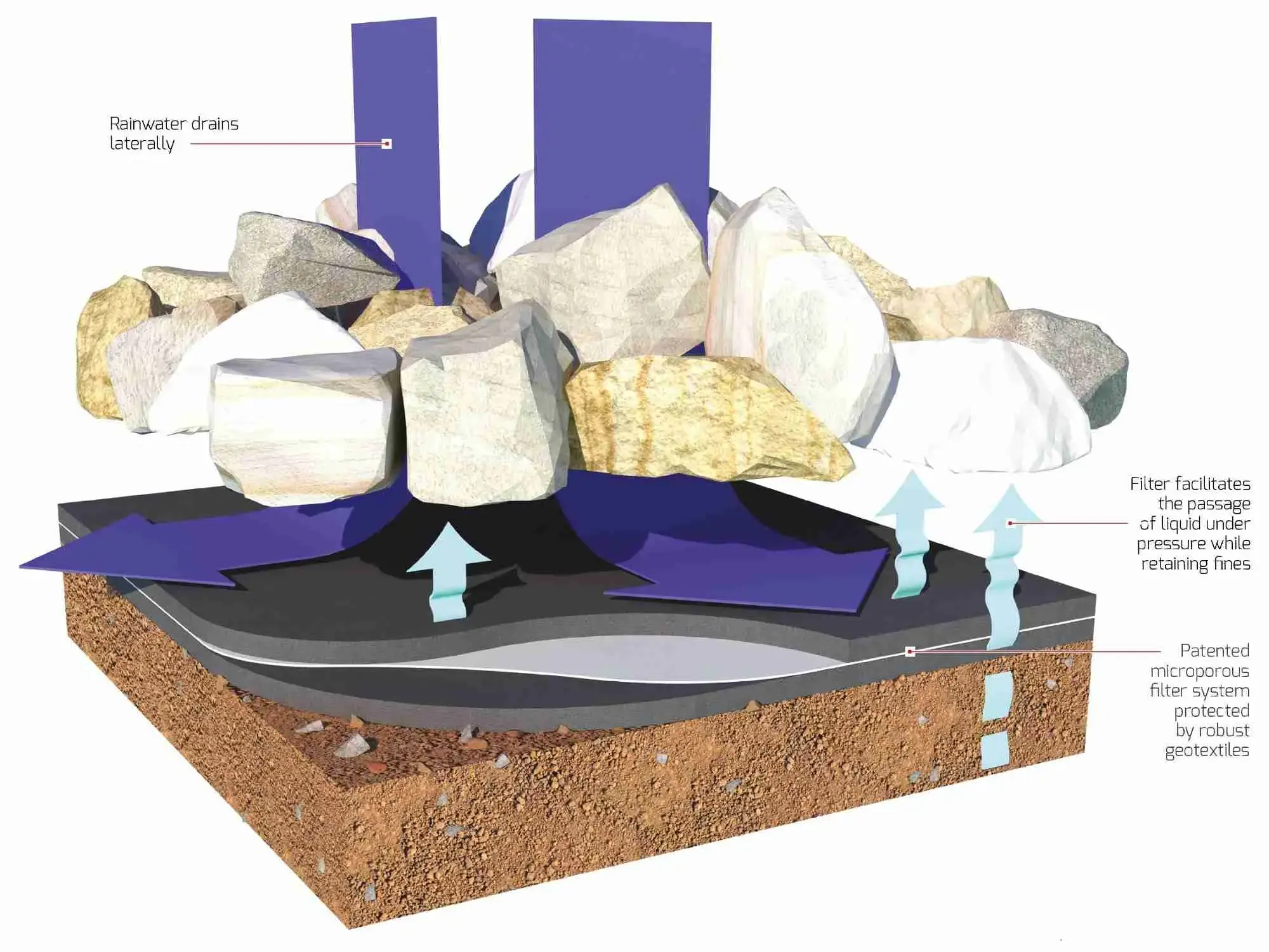
TrackTex is a multilayer composite with a unique microporous filter media protected by specially engineered nonwoven geotextiles. The filter is an orientated microporous polymeric film with a series of microcells and interconnecting pores, characterized by its relative strength and ability to transmit vapor.
Without pressure water cannot pass through the filter, but under pressure TrackTex effectively facilitates the passage of liquid. The pores are such that the passages of clay fines are not permitted meaning any underlying clay subgrade will dry out and strengthen over time.
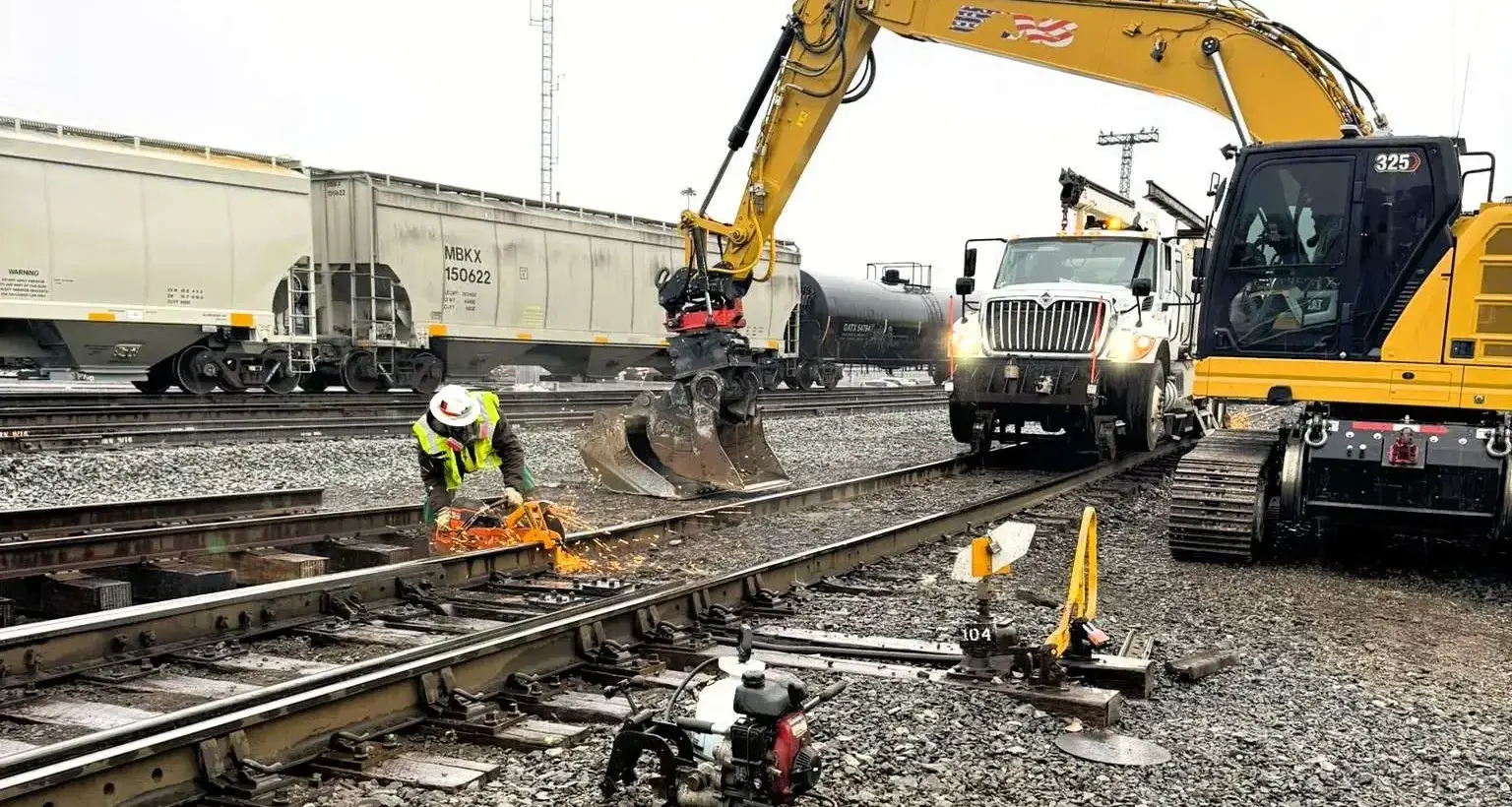
TrackTex was installed without the need for any specialist equipment.
When installed on a soft subgrade, TrackTex can be used in conjunction with a geogrid, in this case a 30kN biaxial grid was used, to provide additional strength and stiffness to the ballast section.
The Outcome
More than 3 years after installation the crossing has shown no recurrence of the differential settlement or track geometry movement. The ballast has remained clean with no signs of further mud-pumping.
TrackTex prevents mud pumping so maintains the integrity and strength of the ballast
As TrackTex has been shown to increase maintenance intervals due to pumping failure by as much as 25 times it is likely to be many years before further maintenance will be required.
Following installation of the TrackTex the site has been monitored, with no further differential settlement problems reported to date
This article was originally published by TrackTex.