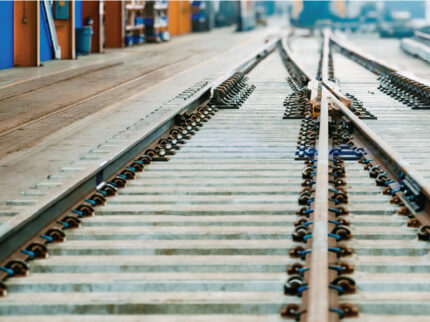
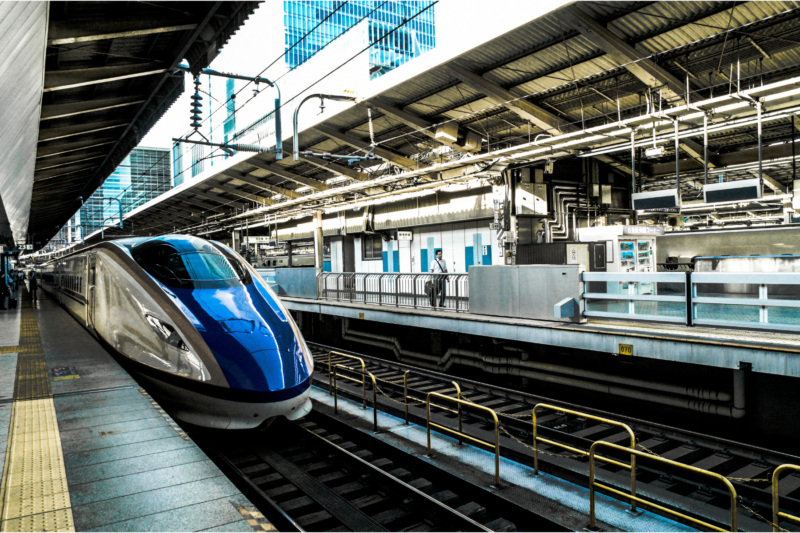
Any time spent travelling across the EU or the UK’s rail networks will reveal a few prevalent insights. Firstly, for every station that resembles a small walkable city, complete with grocery chains and tech stores, there are several so remote and unassuming that you wouldn’t know they were part of the infrastructure were it not for the great trails of iron and wood beside them.
A second, less novel finding is that notices on the wall and announcements over the intercom often urge travellers to stay vigilant and keep their belongings secure. As with any public, high-footfall area, stations are popular targets for thieves and pickpockets, but recent years have seen an increase in violent crime incidents across major transportation hubs in Brussels and Germany.
Station security teams are now expected to take a more proactive role in curbing anti-social behaviour and organised crime, which will require a re-examination of surveillance infrastructure.
Stations As Easy Targets
The reason rail stations are such notorious hotspots for illegal activity is quite simple. Enormous crowds of people pour in and out through multiple entrances, making it easy for criminals to blend in and quickly escape before security can stop them. Their open-access design is great for congestion, but it complicates perimeter control.
Travel can be stressful at the best of times, and some take news of delays and cancellations worse than others. The British Transport Police, for example, saw a 10% increase in attacks on station staff and police since 2019, despite dealing with 11% fewer passengers overall. While rail enforcement officers are allowed to detain travellers, they still rely on the police and other emergency services, a process complicated by legacy systems.
These older camera networks capture low-quality images and do not integrate modern security devices, so station teams are slower to react to incidents. Video feeds require constant monitoring, and with so many crowds and faces to track manually, burnout compounds. As transport networks overhaul their ageing legacy frameworks, the integration of technology tailored to specific operational vulnerabilities enhances both productivity and safeguarding, facilitating a seamless shift toward integrated surveillance environments.
The Benefits Of Intelligent Systems
Trains are part of some of the world’s oldest still-active transit and transport networks. Modernisation has seen faster locomotives, advances in signalling technology and stations that double as shopping centres, but security has been slow to catch up.
The future of rail station monitoring is long overdue, and IP cameras will likely form the foundation of this development. Playing an active role in threat perception, these devices automate alerts that trigger when risk indicators are detected, reducing the time teams spend manually monitoring feeds. Unlike the siloed legacy systems common to many older stations, IP infrastructure combines other security measures, creating a network of cameras, sensors and access controls that share data.
Strong security posture comes from a layered approach. High-quality video is the core of a rail station’s visibility, but connecting that oversight to an analytics platform, such as a VMS, unlocks a new tier of proactive safeguarding that permeates all security efforts. Response is faster and more informed when systems communicate, whether station enforcement officers are dealing with theft or coordinating with police.
Innovations In AI
Artificial intelligence processes information far faster than any human. This has always been the core strength of the technology, and where it is most effective in station security. AI drives many of the analytic abilities of IP cameras, such as:
Object detection – which could be an unattended bag, or an individual or group that is acting suspiciously.
Crowd behaviours – both eyesight and traditional cameras struggle with the complexity of crowds. AI can see through the noise to detect loitering, build-up and unexpected movement patterns that could indicate danger.
AI already facilitates predictive maintenance in rail stations, where its ability to recognise patterns streamlines the reporting and scheduling of faults and fixes. In a similar vein, artificial intelligence builds on VMS platforms and individual cameras by analysing video data in real time to identify patterns and highlight potential risks before they escalate.
The Work To Be Done
The threats facing rail stations are not limited to pickpockets and alcohol fuelled fights before the final train home. Equipment theft, particularly of copper wiring that runs throughout rail networks, is a pressing concern with enormous costs for providers and commuters. Stations are also vulnerable targets to acts of terrorism, as they’re densely populated and highly visible.
All of this is to say that security teams and the travellers they protect depend on the effectiveness of station safety measures. The future resilience of transport hubs will depend on connected, intelligent systems that centralise vision and responsibly utilise AI to enhance safeguarding, while protecting privacy.