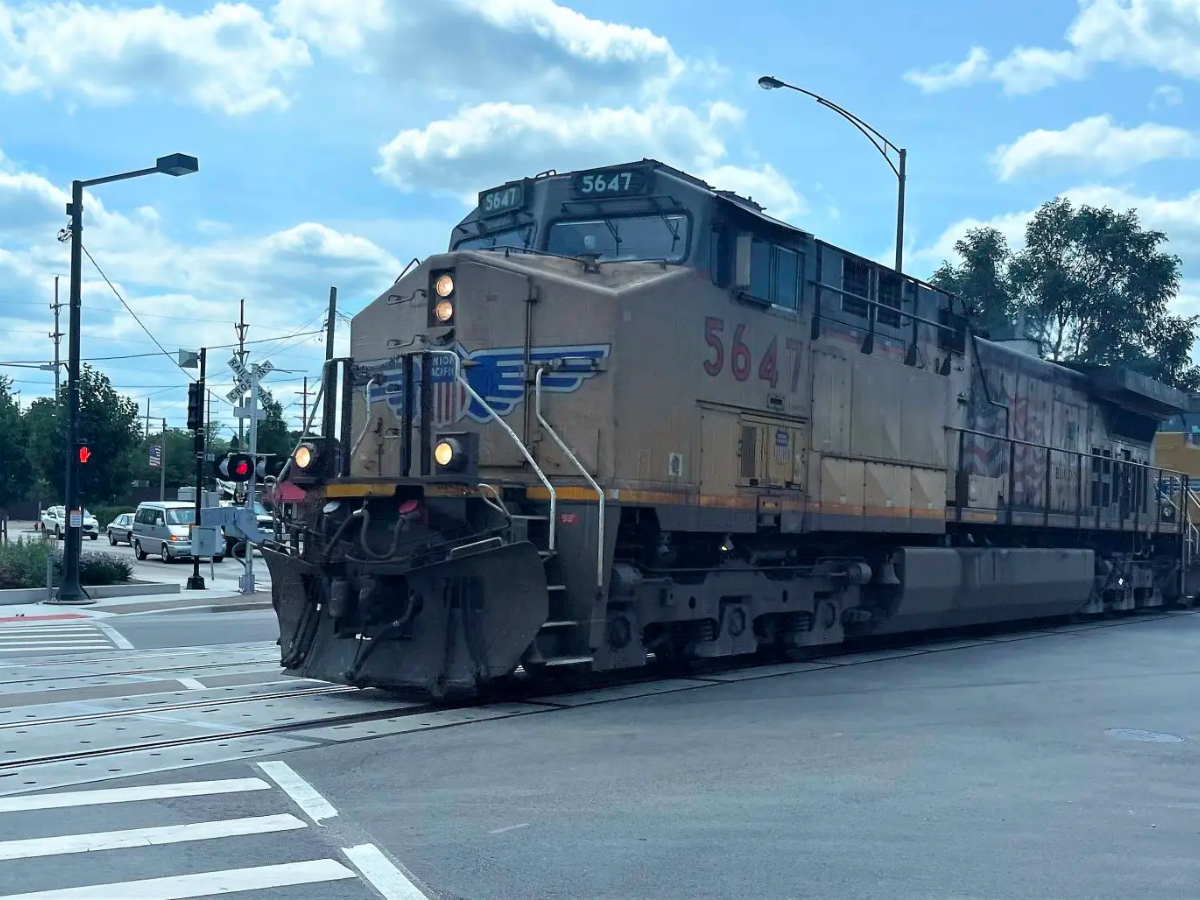
High Volume Freight Yard
Conway Terminal is a major freight rail classification yard owned and operated by Norfolk Southern. Commonly known as Conway Yard the site is a key East Coast hub, handling around 100,000 freight cars each month.
The terminal serves as an important hub on the Fort Wayne Line, part of the route connecting Chicago to the Northeast. Located in the boroughs of Conway and Freedom, Pennsylvania, approximately 20 miles northwest of Pittsburgh, along the Ohio River, Conway yard covers about 570 acres, features 181 miles of track, and has a storage capacity for over 11,000 rail cars.
Nearly every commodity handled by NS passes through Conway due to its strategic midpoint position. The yard processes high volumes of freight—around 100,000 cars per month), on approximately 80 daily trains.
Preventative Maintenance
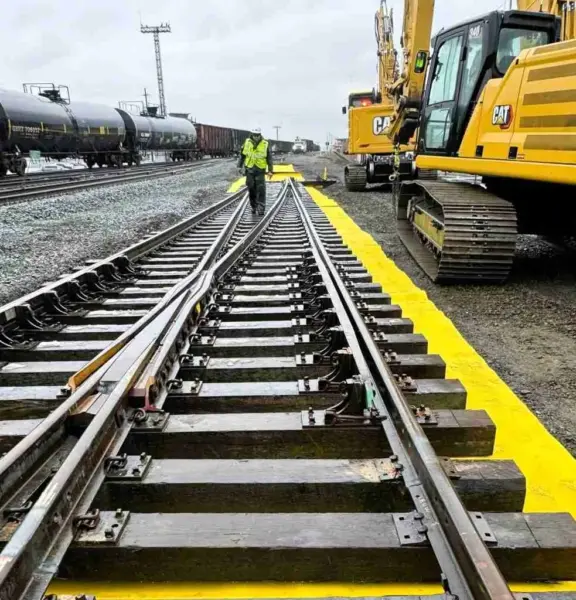
A new switch installation was scheduled for December 2025 and to minimize disruption the work had to be completed in one day. However, this very high-volume section had existing mudspot contamination issues. If left untreated, the mud spots would reappear within a short time, weakening the ballast and necessitating further disruptive maintenance works in the near future.
Engineers decided to incorporate TrackTex as a preventive maintenance measure to block future mud pumping. For more than a decade, TrackTex has been used to prevent mud pumping and provide separation between construction layers under railroads across North America.
Following successful field trials at a number of closely monitored sites, Norfolk Southern maintain a stock of TrackTex at this terminal for use on mud spot remediation for both planned and reactive track maintenance across their network.
Heavy Duty Microporous Geocomposite
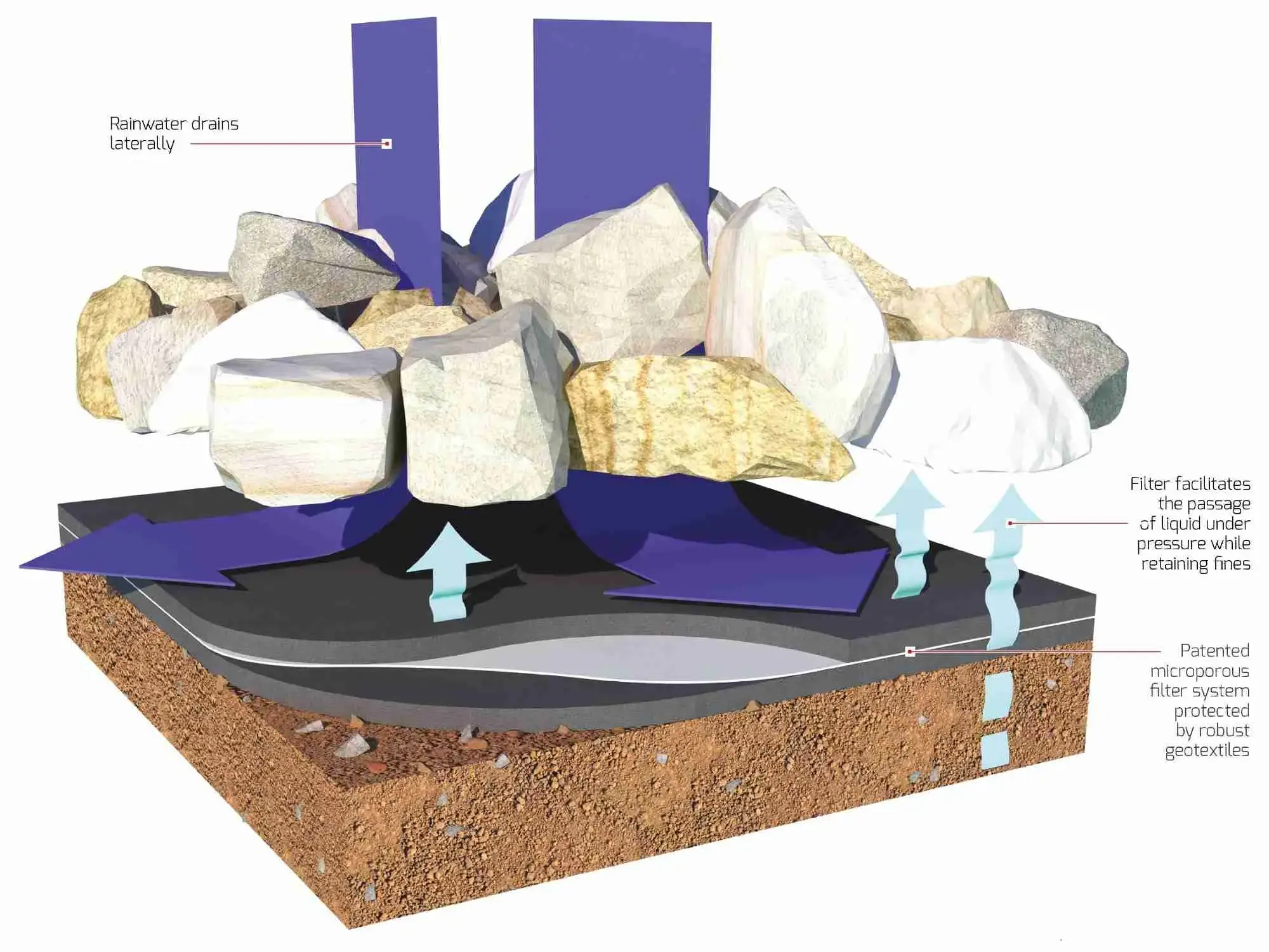
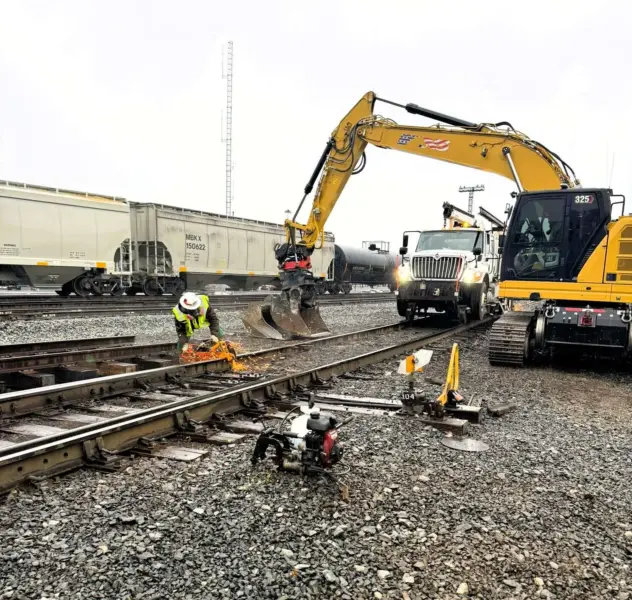
TrackTex is a heavy duty geocomposite that comprises a microporous membrane sandwiched between protective nonwoven protection geotextiles. The porous microfilter is impermeable to rainfall, meaning water cannot penetrate into the subgrade. The microporous filter also prevents movement of fines, so even the smallest particle sizes found in clays and silts cannot pass. When subject to dynamic loads of passing traffic, the membrane allows pore water to escape which means any mud beneath the TrackTex will over time desiccate as the water is removed so the subgrade strength actually improves over time.
Simple Installation
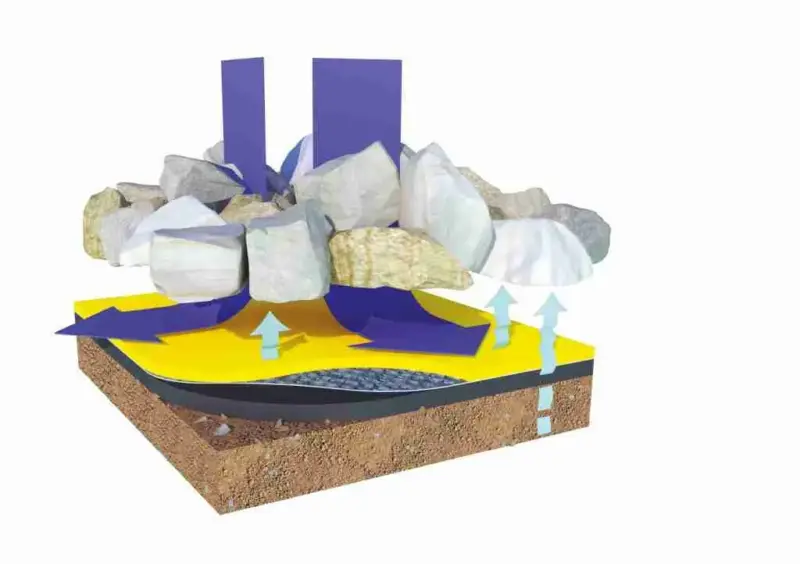
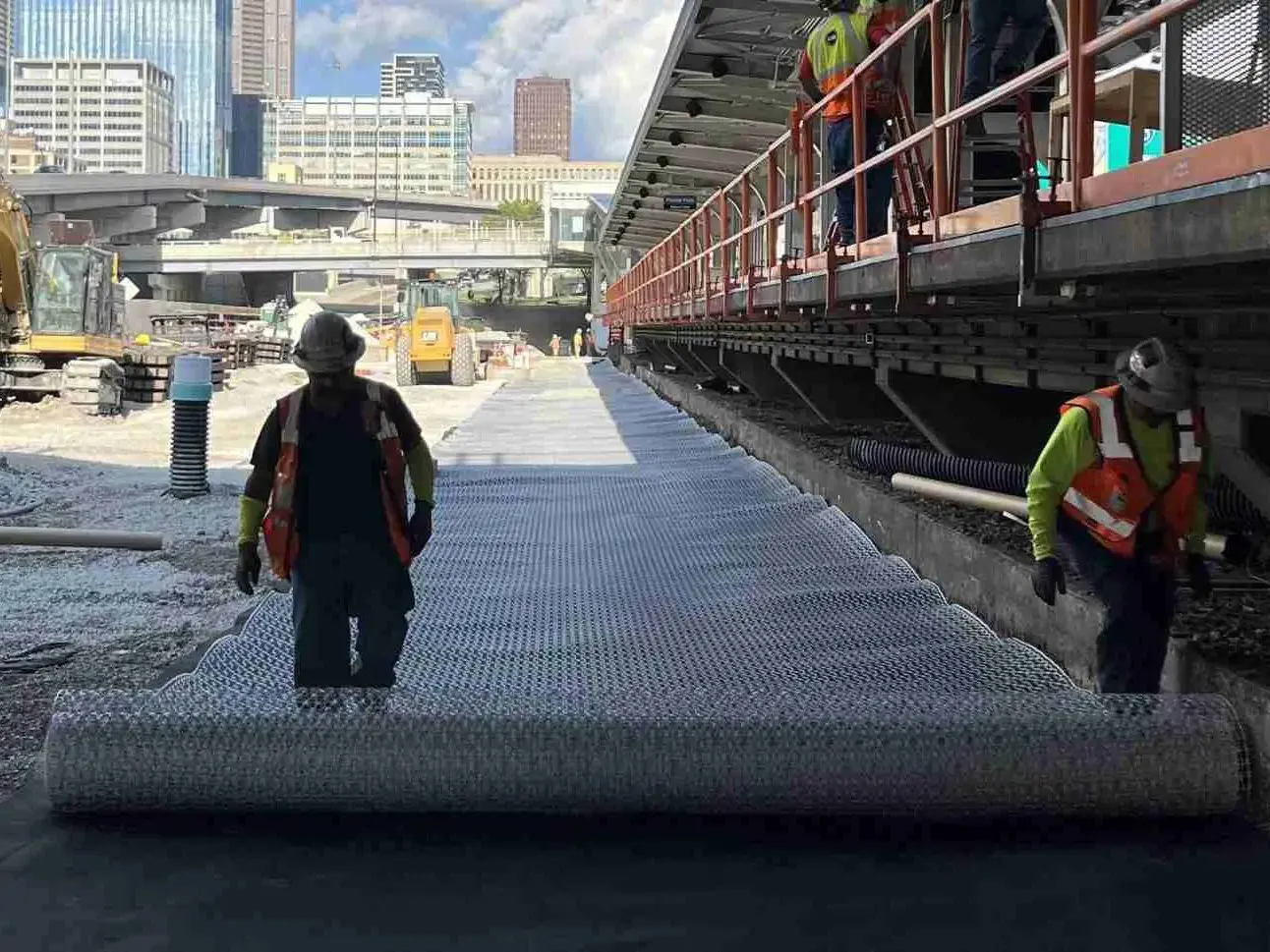
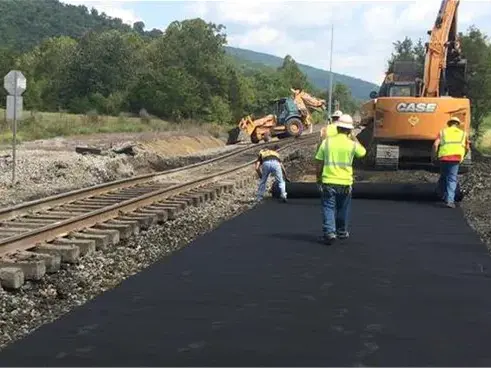
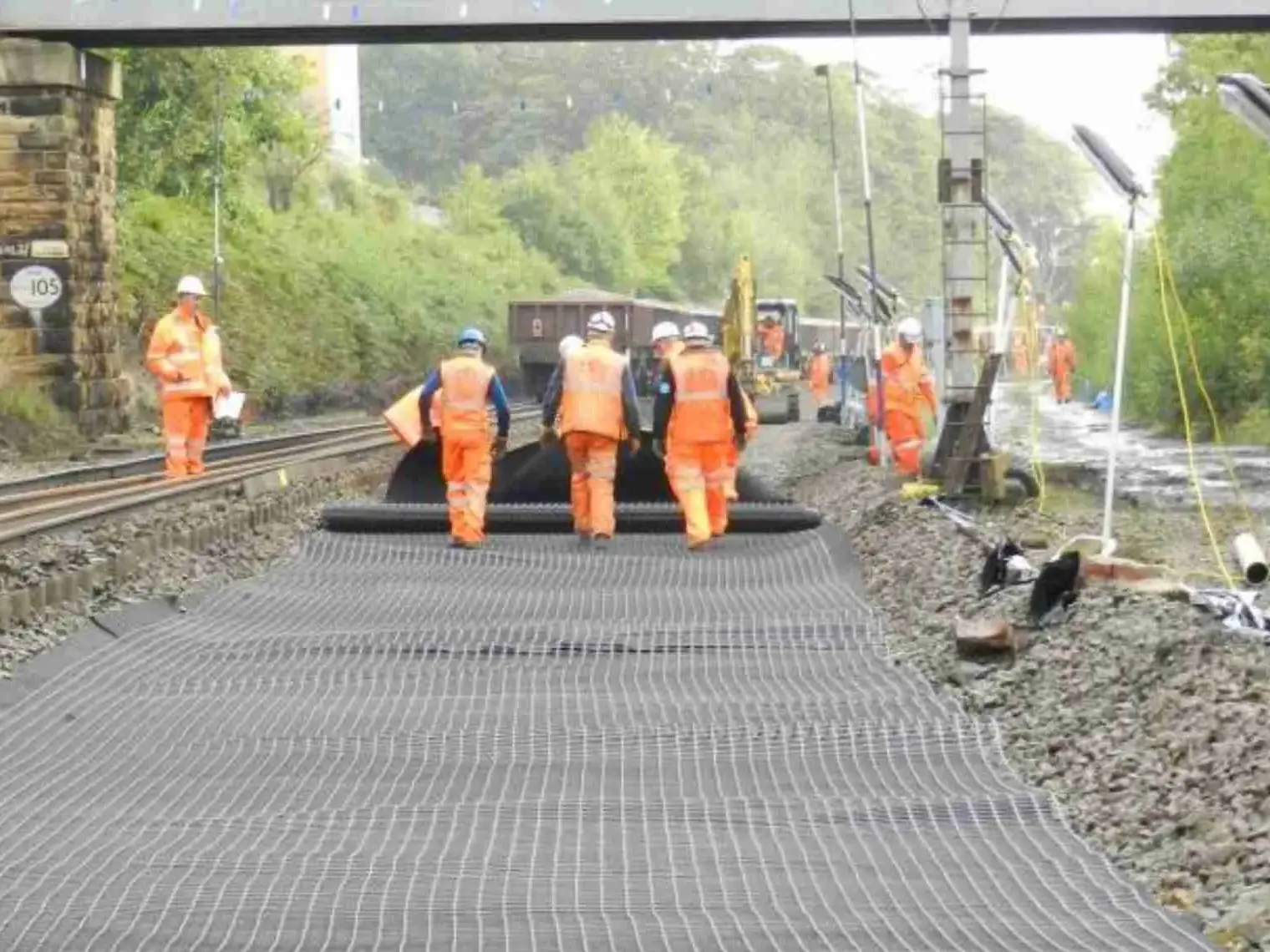
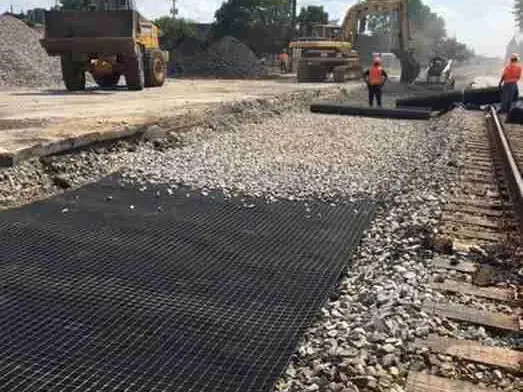
The existing track was cut and lifted so the mud filled ballast could be scraped out quickly. TrackTex was rolled out onto the levelled subgrade, with the new switch and track then positioned directly onto the TrackTex. An excavator then placed clean ballast over the track and TrackTex. The new track was lifted and aligned to grade, ballast settled under the ties and then was tamped. In this shallow installation where the bottom of the tie is close to the TrackTex extra care was taken not to disturb the TrackTex during track setting and tamping operations.
Extended Maintenance Intervals
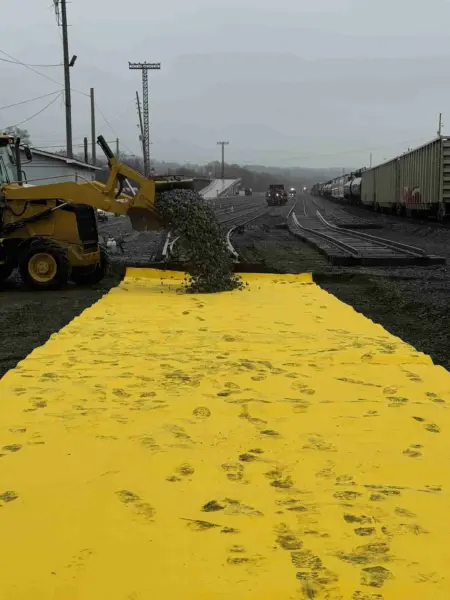
This unique performance capability of TrackTex means that the poor subgrade materials could be left in situ rather than being excavated and replaced. This reduction in material handling means installation time is drastically reduced and construction times are faster.
At Conway Yard, removal of the old track and expired ballast and installation of the new switch was completed in less than 10 hours. Incorporating TrackTex Anti-pumping composite within the ballast section added next to no time to the work program, but will drastically extend the future maintenance intervals meaning much less disruption to yard operations.For any rail project team looking for value engineered solutions to help reduce construction time and to eliminate the potential for future contamination of the ballast section from fine-grained soils TrackTex is the proven solution.
This article was originally published by TrackTex.