In September 2014 TrackTex Anti-Pumping Geocomposite was supplied to Norfolk Southern for installation on the Whitethorne District of Virginia. The aim was to determine how effectively TrackTex protected the ballast from mud pumping on known trouble spots.
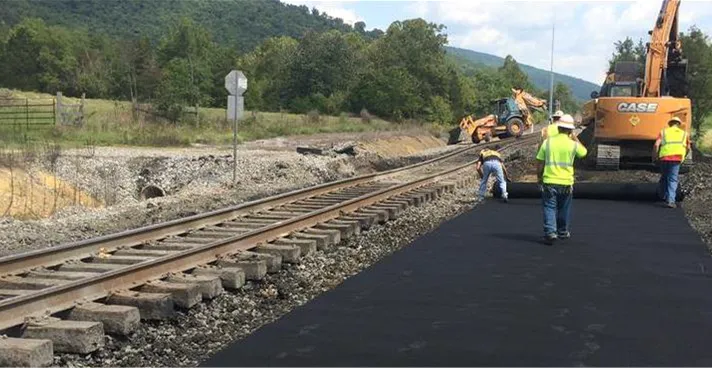
TrackTex was installed at three locations on the Christiansburg subdivision between Narrows WV and Roanoke VA. The locations were chosen as all three had known mud pumping problems. Two sections were straight, one including an at-grade crossing, and the third on a 2˚ curve.
All three sections of track had been undercut and renewed with clean ballast within the previous two years, but track settlement problems were already recurring with mud visible at the surface.
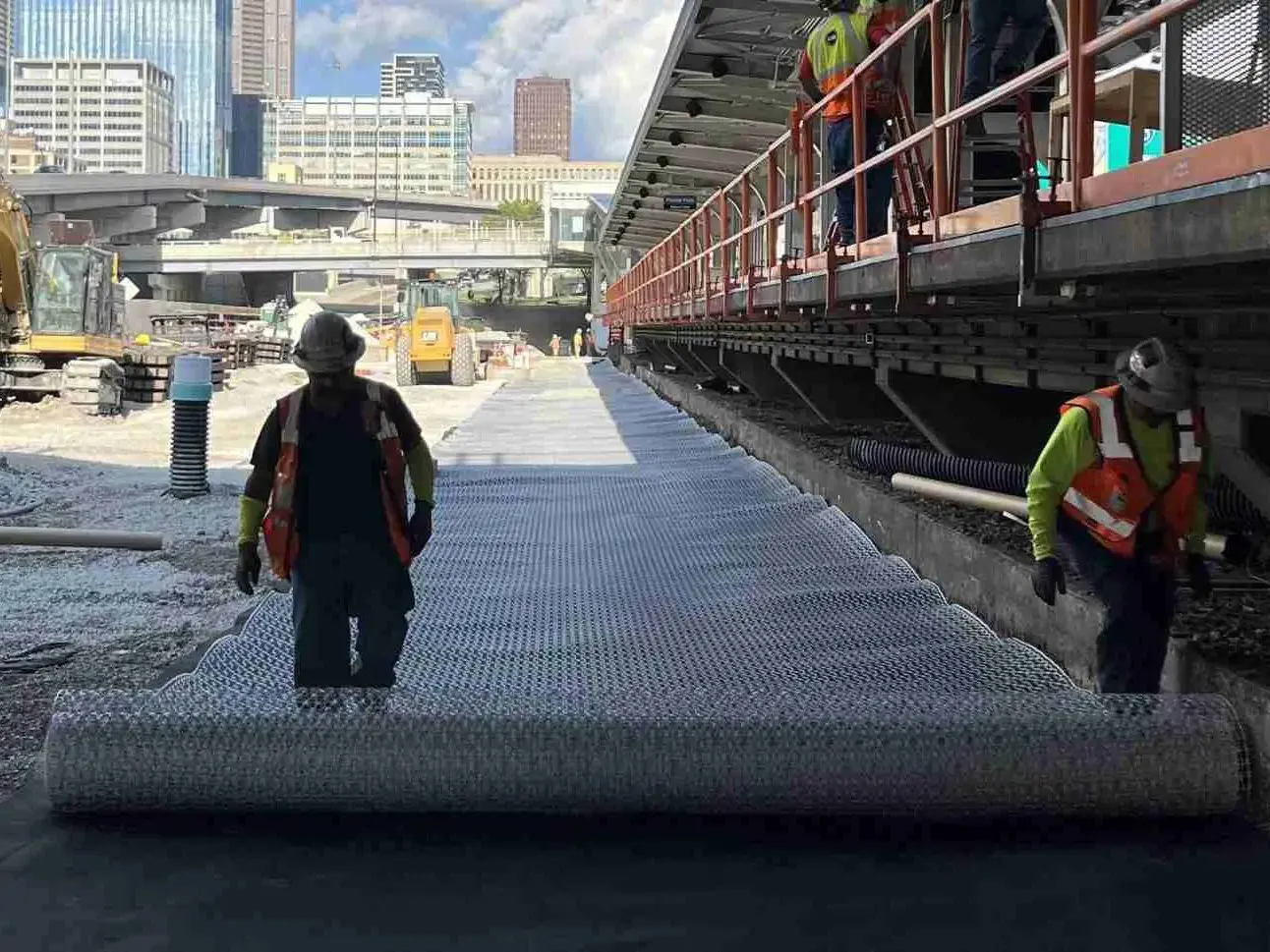
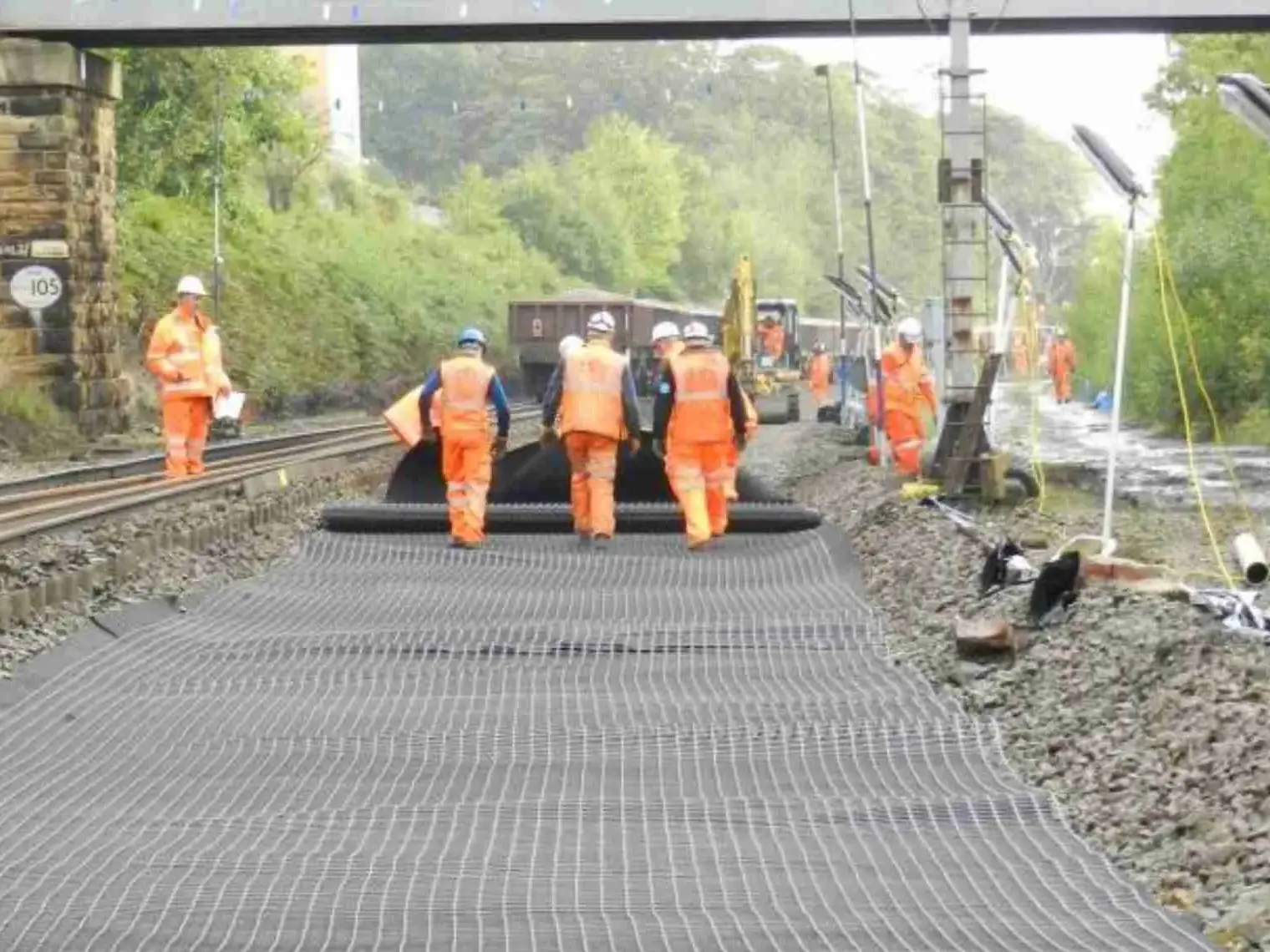
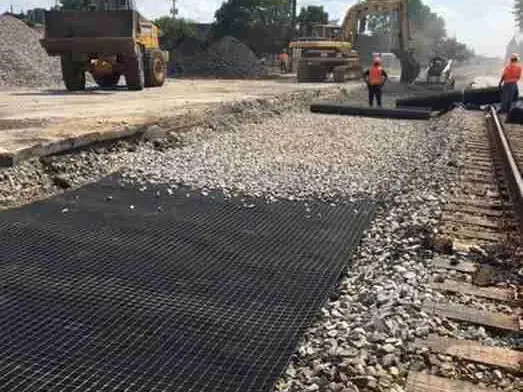
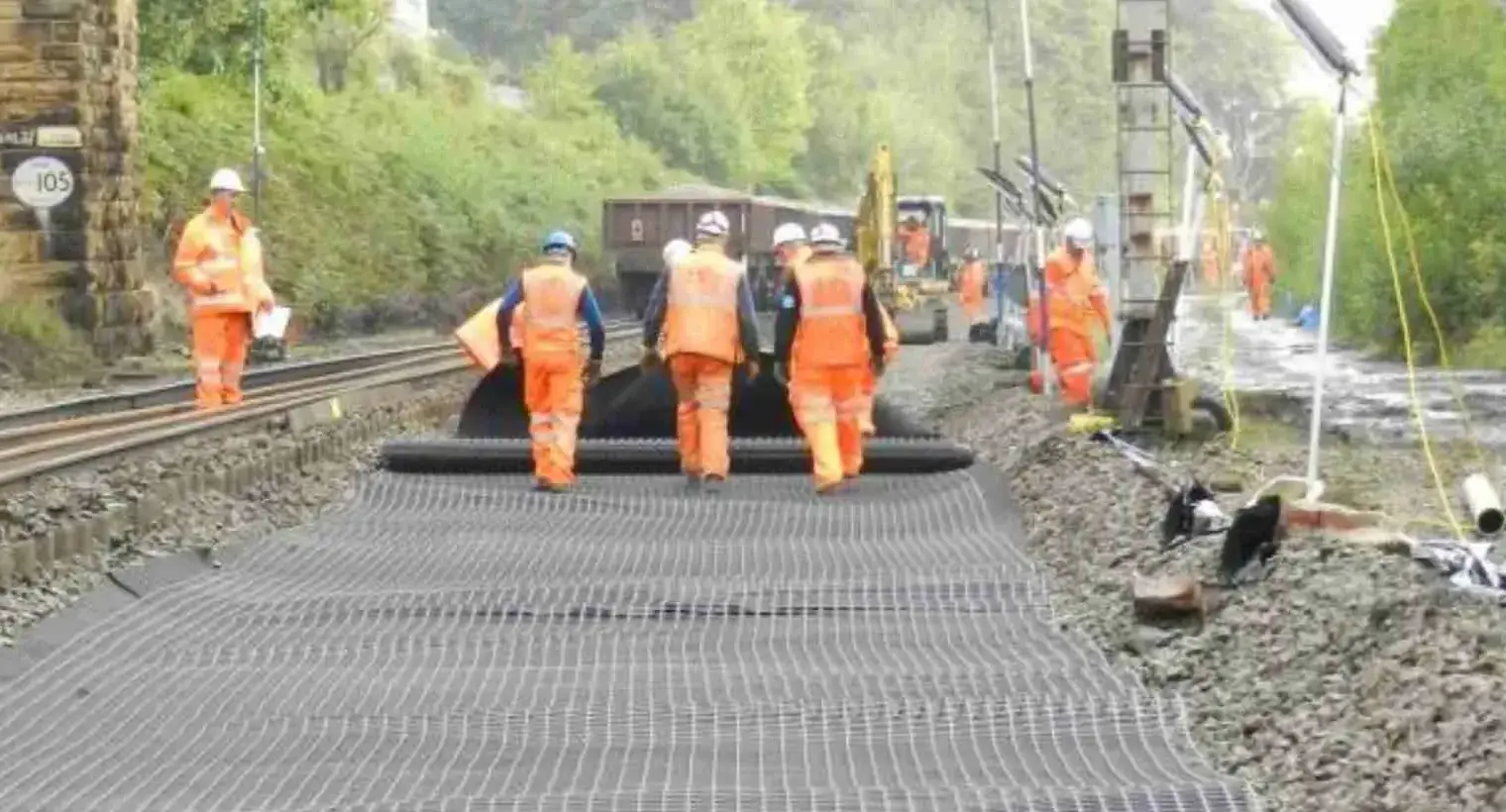
At each location the track was undercut to a depth of approximately 12” to 14”. The track was lifted and the TrackTex geocomposite simply slid under the track, meaning minimal time added to the overall renewal operation. The new ballast was placed and tamped to a shallow depth to avoid damage to the TrackTex, and the associated drainage ditches were cleaned and reprofiled.
The intent of these trial installations was to establish how effectively TrackTex would protect the ballast from mud pumping, so following this renewal, a detailed monitoring period ran for two and a half years. During this time there was approximately 60MGT of traffic with a timetable speed of 40 mph.
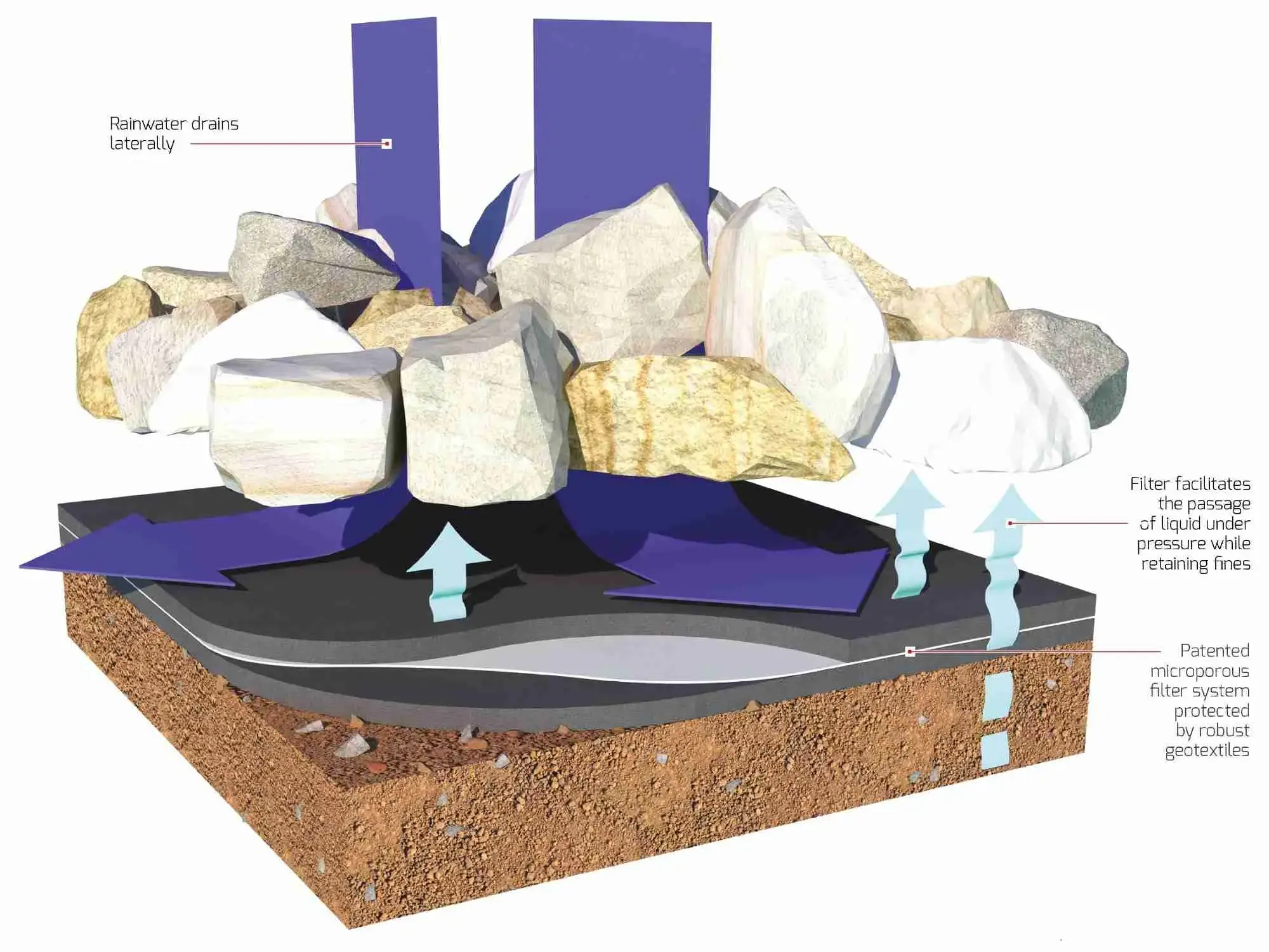
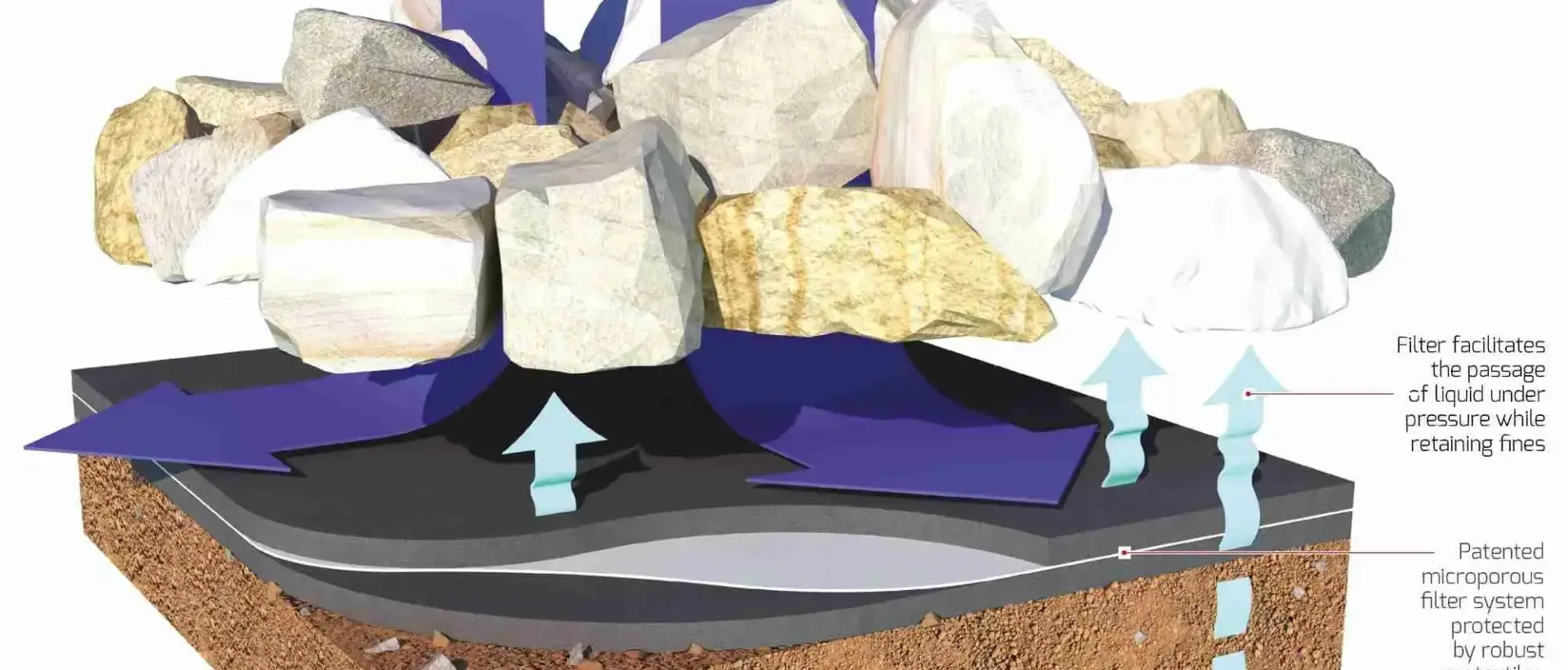
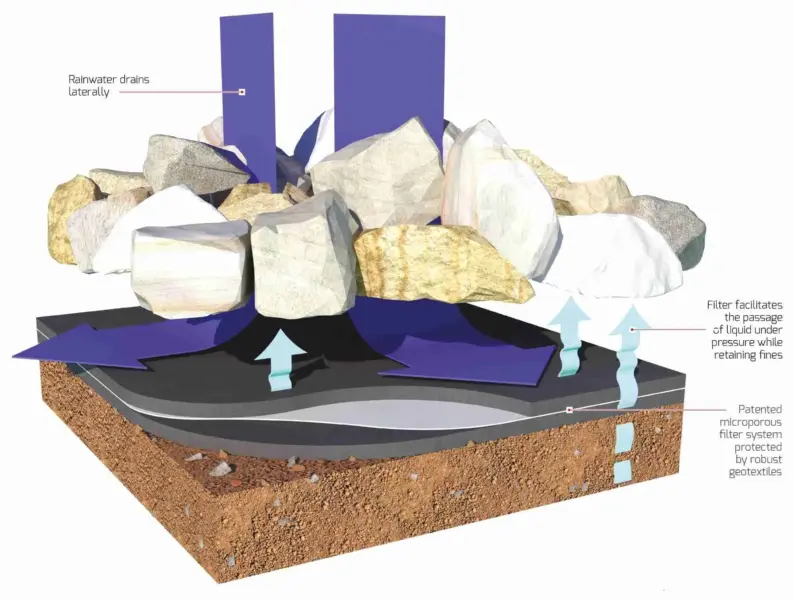
TrackTex is a multilayer geocomposite that comprises a unique microporous filter media sandwiched between specially engineered protective nonwoven geotextiles. The filter is an orientated microporous polymeric film with a series of microcells and interconnecting pores that prevent movement of silt and clay fines, yet under traffic load allows pore water to escape.
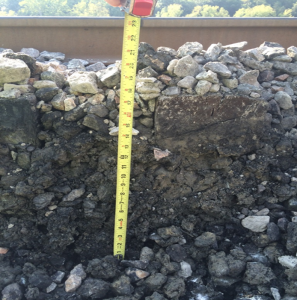
In March 2016 the 18 month inspection of the test sections reported in all locations the track surface and ballast condition was excellent, with no signs of degradation.
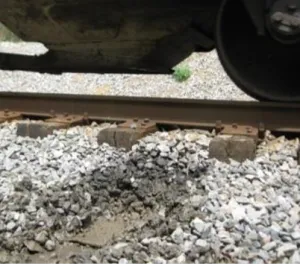
It was observed that mud had appeared at one of the locations in the low-side shoulder of the track, but this was below the TrackTex installation depth and the analysis was that the TrackTex was preventing the mud pumping into the ballast section, which remained clean and structurally sound.
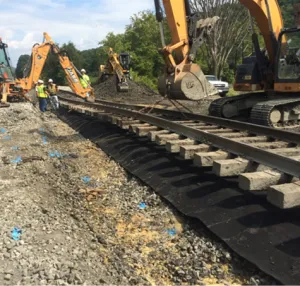
In September 2016, two years after installation, it was reported that the areas treated with TrackTex remained in excellent condition. An untreated section 25 feet west of one test area had deteriorated with visible mud at the surface and track geometry changes, confirming that the substructure problems were still present.
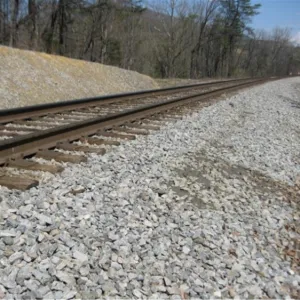
In April 2017 the shoulder boils were removed for detailed investigation. Excavations by hand found mud had penetrated the shoulder leaving the ballast there impacted by firm clay. However the ballast under the ties and in the crib was wet but free of fine grained material. When the TrackTex was exposed it was observed that water was running continuously from beneath the TrackTex.
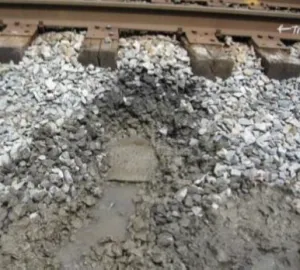
The final Engineer report concluded that TrackTex performed very effectively, completely covering very weak substructure including a low spot and saturated subgrade. The ballast on top of the TrackTex was wet but clean, showing it had stopped upward movement of fines thus preventing the subgrade from fouling the ballast section.
In one area it was noted that even though the track profile had dropped, the track and subgrade were both solid, and there was no track movement evident under traffic.
Research and Tests Engineer, Norfolk Southern, said:By preventing the subgrade from fouling the ballast section, and by more effectively distributing the vertical loads to that subgrade, the TrackTex has greatly extended surfacing cycles and the life of the ballast. The fact that the track needs only occasional shoulder cleaning and surfacing, despite resting on such a weak subgrade, is remarkable.
This article was originally published by TrackTex.