Introduction
The Coos Bay Rail Line is owned and operated by the Port of Coos Bay. It spans 134 miles from Coquille Oregon to Eugene Oregon, providing connections to the North American rail network for manufacturing operations to connect to national and international markets. Since reopening in 2011 it has transported approximately $460 million worth of freight each year, and kept 185,000 trucks off the road.

Coos Bay Rail Line connects Coos Bay Port industry to destinations across the US
Since the late 1800s trains have been critical to the Coos Bay economy, serving logging and coal mining activities in remote areas such as Roseburg and the Willamette Valley. This connection to Coos Bay Port provides businesses with an efficient and cost effective way to move freight ready for export to a variety of markets.
In 2007 the line was closed following years of underinvestment which left a legacy of rehabilitation work and made the line an unviable for the owners at that time. In 2009 the Port of Coos Bay worked with the local business community and various stakeholders culminating in the line reopening in 2011 with a rehabilitation plan for the trackbed infrastructure.
Tunnel 21 is one of nine tunnels on the line which were in need of repair. One aspect of this rehabilitation program was to revitalise the trackbed where it had been affected by mud-pumping. This phenomenon happens where water mixes with sediment in the formation and forms a slurry. The cyclic load of axles passing created a pumping action which forces the slurry up into the ballast, which results in the ballast becoming fouled with sediment, ties being buried and the tunnel drainage ditches being clogged.

Mud-pumping caused the ballast and drainage ditches to become fouled with sediment, and ties were buried
These symptoms all contribute to a weakening of the trackbed, which in turn can be the cause of multiple issues including differential settlement and changes to track geometry.
How TrackTex Helped
The solution is to remove and clean or replace the ballast, however if the root cause is not addressed then mud- pumping will continue and further rehabilitation works will be necessary. In this instance the additional restrictions caused by working in a tunnel environment meant a quick and easy to install solution was key to keeping the works on programme and within budget.

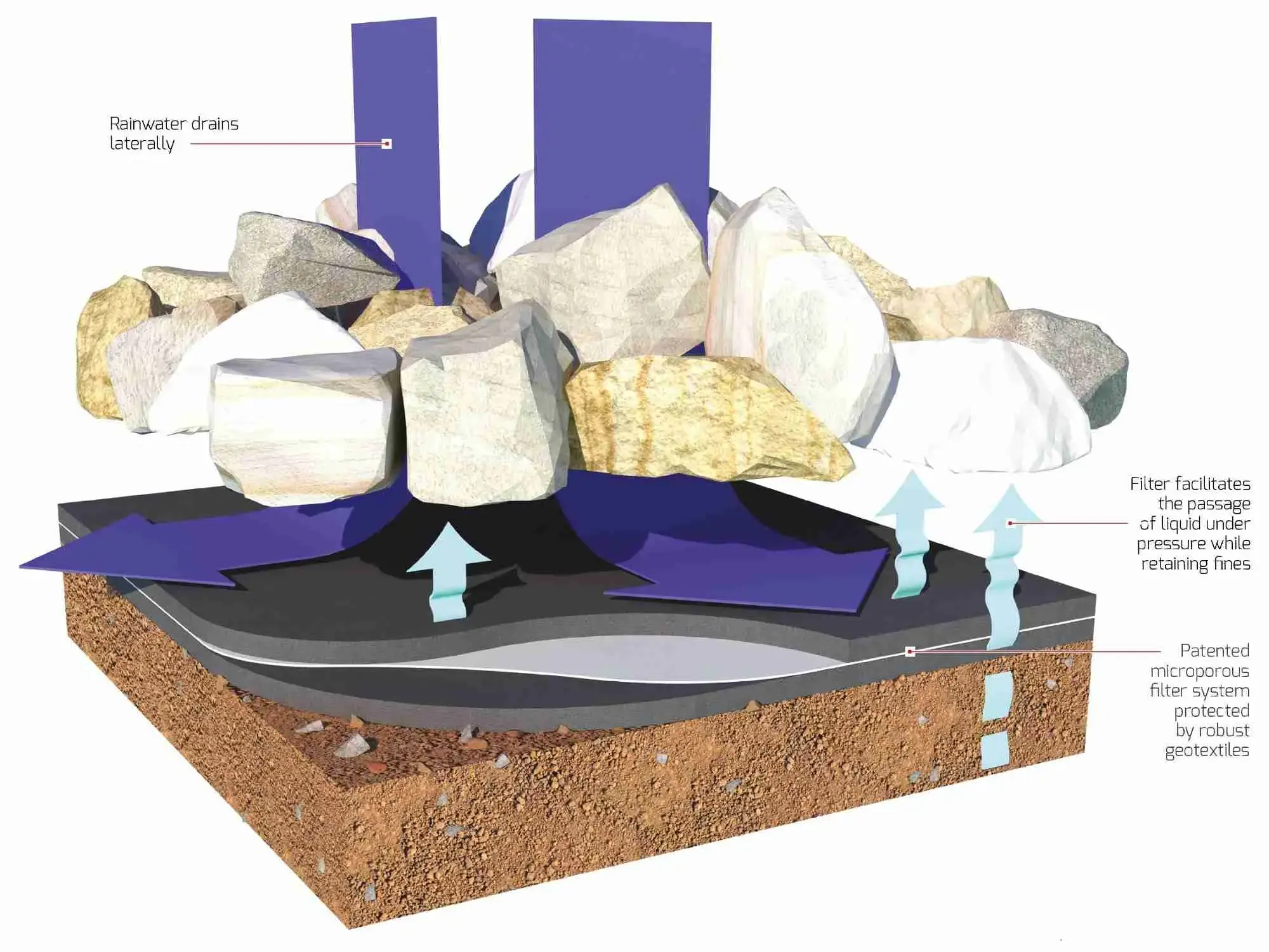
Tracktex was selected as the best solution to prevent future mud-pumping failure. Tracktex provides a separation and protection layer which sits between the formation and ballast layers in the trackbed. The microporous filter at the heart of TrackTex is protected by specially engineered protective non-woven geotextiles. The resulting multilayer geocomposite facilitates the passage of liquid under pressure but does not permit the movement of fines.

Existing rail and ties were removed to allow excavation to firm subgrade
Without pressure water cannot pass through the filter, so surface water does not penetrate. This results in the underlying clay formation drying out over time, and that means the formation modulus actually improves where TrackTex is used.
In this scenario the tight working conditions in the tunnel meant it would be difficult to access with specialist installation equipment.

Inside the tunnel the rail and ballast was removed
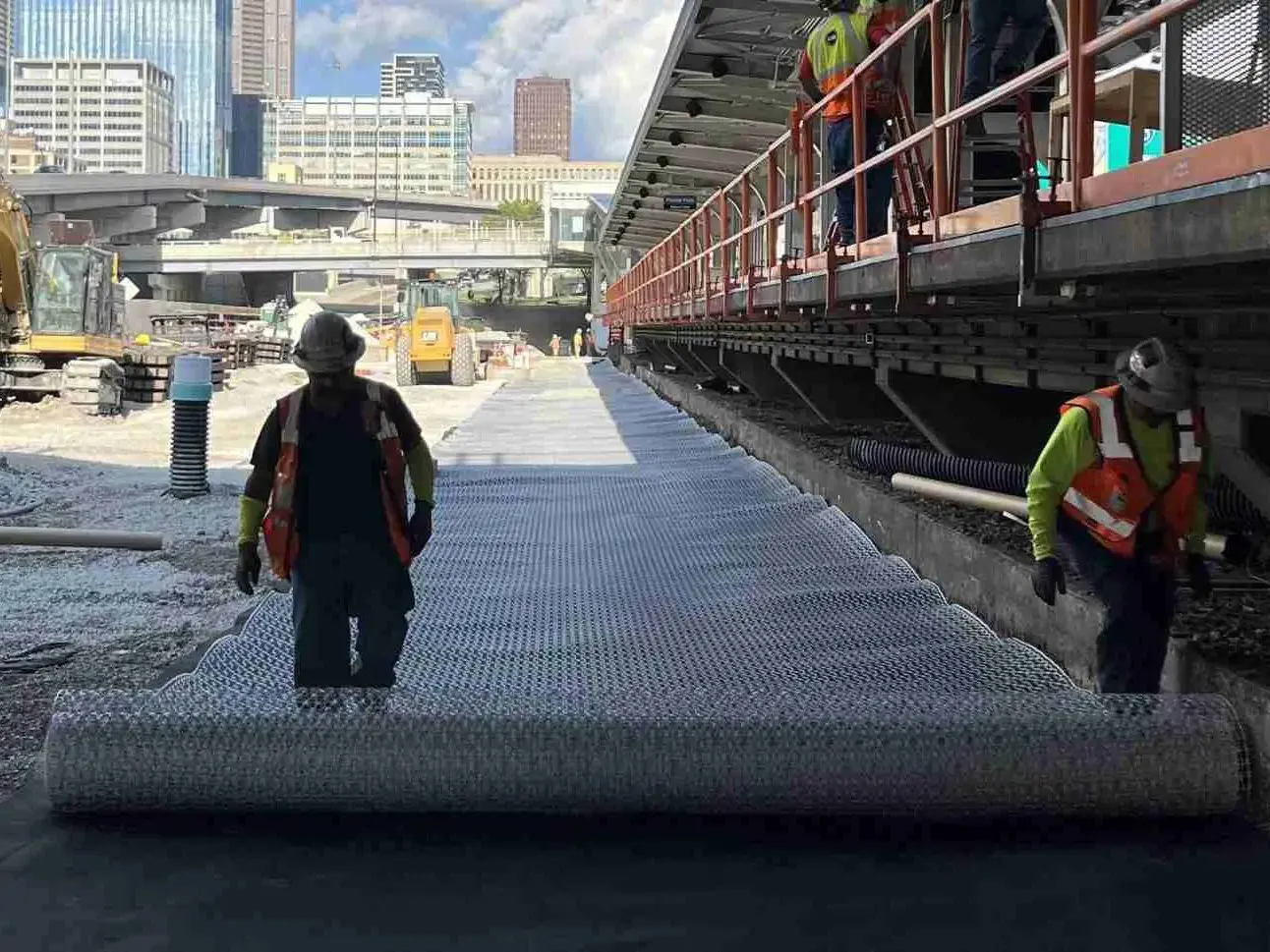
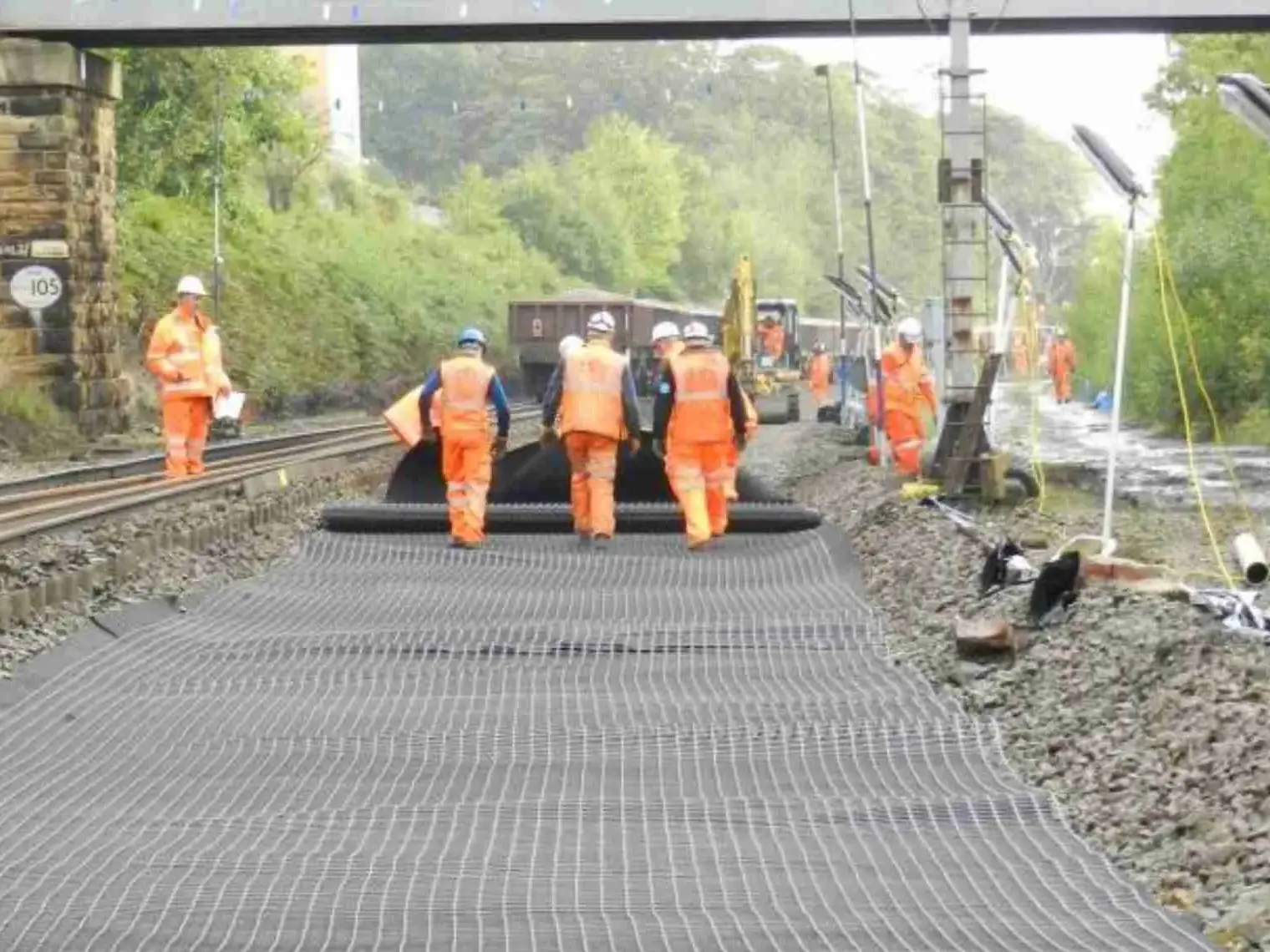
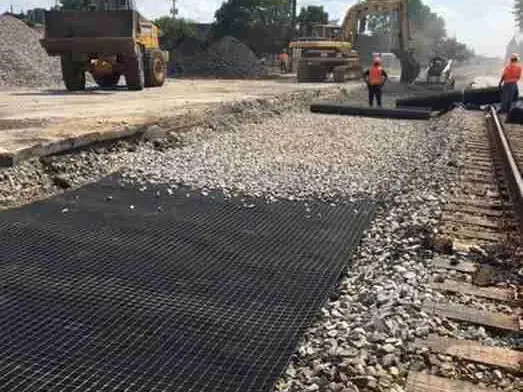
Tracktex was supplied on 12.8ft width rolls to fit the standard trackbed widths, and is easily unrolled with standard earthworks equipment. This facilitates fast and easy installation even in restricted working areas. Tracktex has been shown to increase trackbed maintenance intervals due to pumping failure by more than 25 times so provides significant saving over any available alternative.

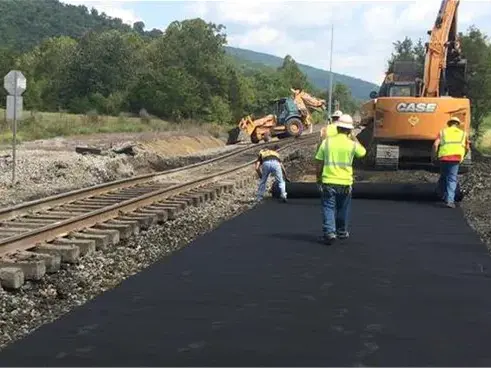
Tracktex installed on the firm subgrade to provide protection and separation from new ballast
While not required here TrackTex can be used in conjunction with other geosynthetics such as geogrids to provide additional stability and strength.

New wood ties installed on top of the Tracktex subgrade protection layer
Tracktex is the result of research and development over many years undertaken in conjunction with Rail Authorities, Contractors, Designs and other industry experts. Geofabrics have been manufacturing and supplying the rail industry with track rehabilitating geotextiles and geocomposites for more than 20 years.

New ballast can be placed and tamped directly onto Tracktex due to its high resistance to damage
Tracktex was developed utilising a full scale, purpose built test facility to simulate mud-pumping failure in the most extreme conditions found in trackbed.

TrackTex prevents mud pumping so maintains the integrity and strength of the ballast
It is a unique, patented geocomposite, and since gaining approval in 2010 Tracktex has been actively used in live rail with more than 7 million ft2 having been installed to date.

New track structure completed inside the tunnel. Tracktex can increase maintenance intervals by more than 25 times compared to other mud-pumping treatments
This article was originally published by TrackTex.