Scheme Overview
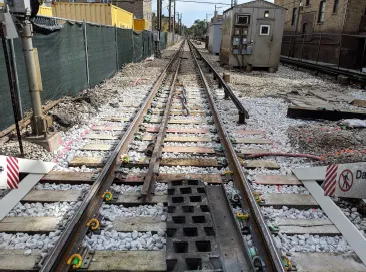
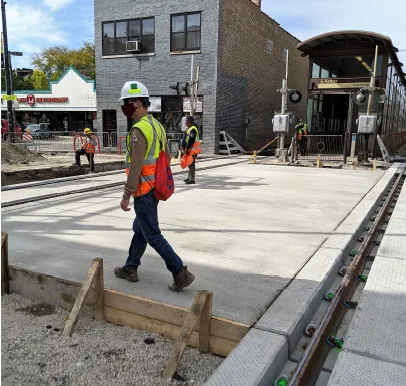
Chicago Transit Authority is responsible for a large number of road/rail crossings across its network. This rehabilitation project aimed to improve a crossing where track geometry was affected by differential settlement. The cause was identified to be fines being pumped up into the ballast, and TrackTex was selected as the most cost effective solution to prevent reoccurrence.
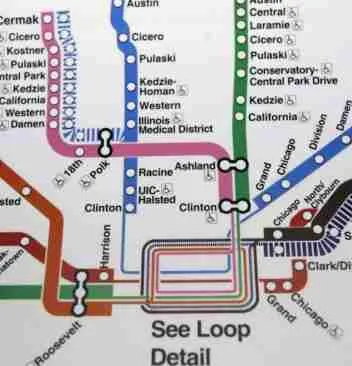
The CTA railroad network comprises 224 miles of track across 8 routes, serving 145 stations and a population of around 3.5m residents. In 2016 more than 750,000 passengers used the service on average each week day. The Ravenswood or Brown Line is an 11.4 mile route with 27 stations, and the third busiest on the network.
Disruption to such a key infrastructure network has costly implications, particularly in high traffic areas such as crossings. It was observed the track geometry had changed at this crossing and there was also evidence of differential settlement. These types of problem can result in train speed or traffic volume restrictions to ensure safe operation, which can have both local and wider network implications as line capacity is reduced. The decision was taken to remove and replace the crossing to avoid major disruption.
Upon further investigation the cause of the settlement was identified to be mud-pumping, a phenomenon which creates a slurry of fines in the formation and mobilises it up into the trackbed. As the ballast becomes clogged with fines it weakens, resulting in a variety of issues.
Asphalt and concrete treatments were considered, but as TrackTex had been used in other CTA rehabilitation works to prevent mud-pumping in similar conditions with a 100% success rate it was the preferred option.
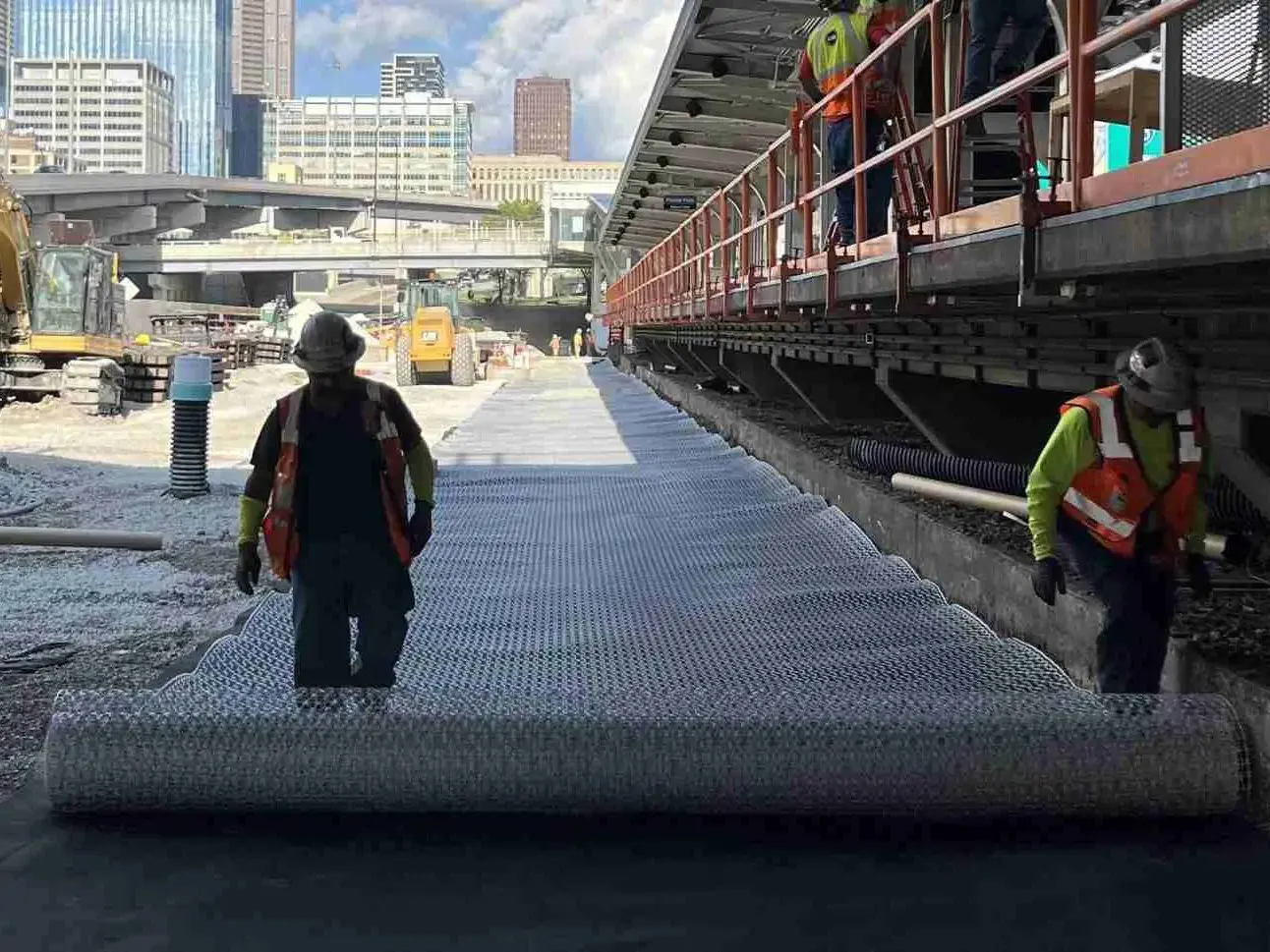
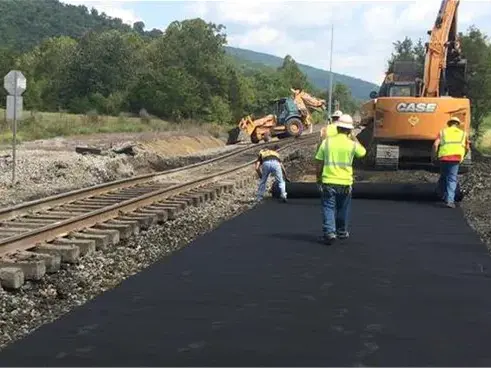
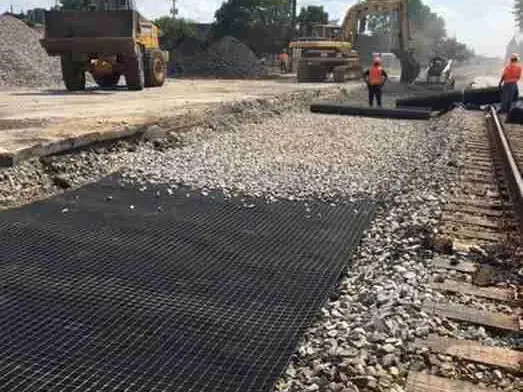
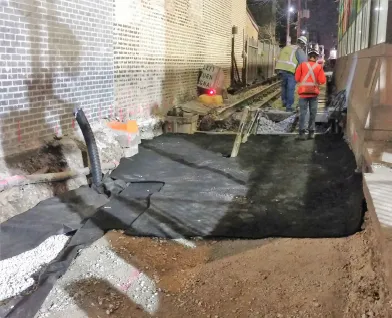
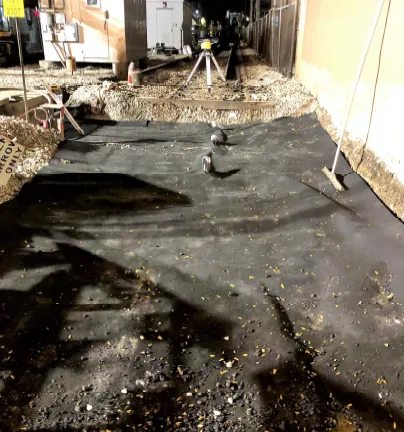
In this case the crossing was removed and TrackTex installed beneath new, clean ballast.
How TrackTex helped
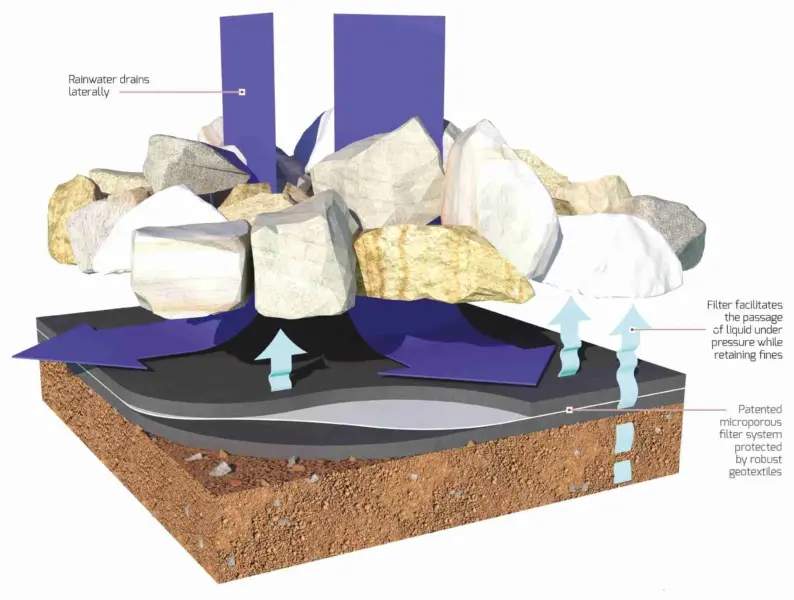
Without pressure TrackTex provides a barrier to water so surface water cannot penetrate to the subgrade, but as trains pass and pressure is applied TrackTex allows the pore water beneath to pass while retaining the fines beneath, thus preventing the contamination of the ballast.
The removal of this pore water also means that over time the underlying formation will dry out meaning improved modulus.
During the installation TrackTex was tied into a new subsurface drainage system as part of a wider drainage strategy for the area.
TrackTex has been shown to increase trackbed maintenance intervals due to pumping failure by more than 25 times so provides significant saving over any available alternative.
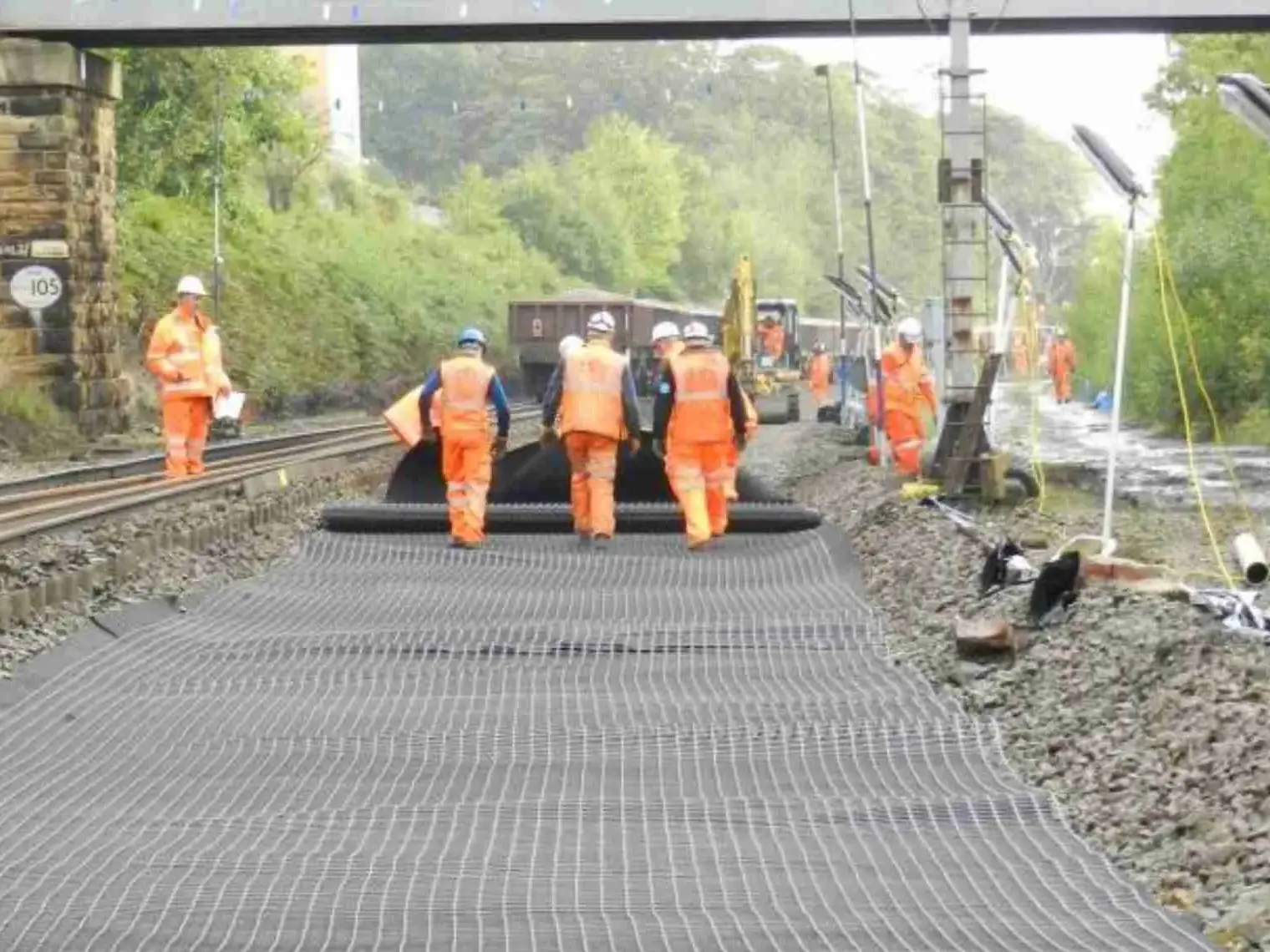
While not required here TrackTex can be used in conjunction with other geosynthetics such as geogrids to provide additional stability and strength.
TrackTex is the result of research and development over many years undertaken in conjunction with Rail Authorities, Contractors, Designs and other industry experts. Geofabrics have been manufacturing and supplying the rail industry with track rehabilitating geotextiles and geocomposites for more than 20 years.
TrackTex was developed utilising a full scale, purpose built test facility to simulate mud-pumping failure in the most extreme conditions found in trackbed. It is a unique, patented geocomposite, and since gaining approval in 2010 Tracktex has been actively used in live rail with more than 7 million ft2 having been installed to date.
This article was originally published by Geofabrics.