Introduction
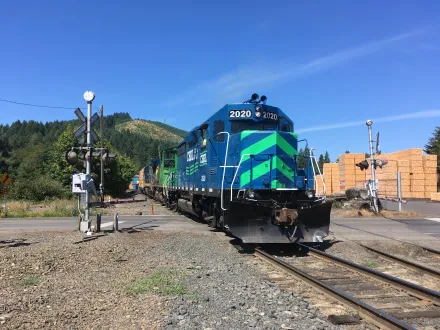
The Wisconsin & Southern Railroad Cottage Grove Subdivision Trackbed Rehabilitation project provided drainage improvements, trackbed rehabilitation and ballast replacement. TrackTex Anti-Pumping Geocomposite was selected as the best solution to the mud pumping of fine sediments into the newly placed trackbed ballast while maintaining overhead clearance specifications.
This project consisted of several areas where drainage improvements and trackbed rehabilitation were required. The mainline trackbed had been lost due to sediment fines pumping up during wet conditions and contaminating the ballast. The fines mixed with the ballast and weakened it, which caused track issues underneath the I-39 overpass and Beltline Areas. After Engineer assessment it was decided the track structure needed a replaced ballast to support train loading. Maintaining an overhead clearance under the Interstate overpass presented a further challenge.
There were two areas (Beltline & Interstate) that required ditching and undercutting to improve drainage away from the track, as well as ballast replacement. The historic issues caused by mud-pumping meant a solution was required to prevent recurrence and various options were considered.
How TrackTex helped
Following technical support from Geofabrics, TrackTex Anti- Pumping Geocomposite was proposed as a solution to the mud pumping of fine sediments into the newly placed trackbed ballast.
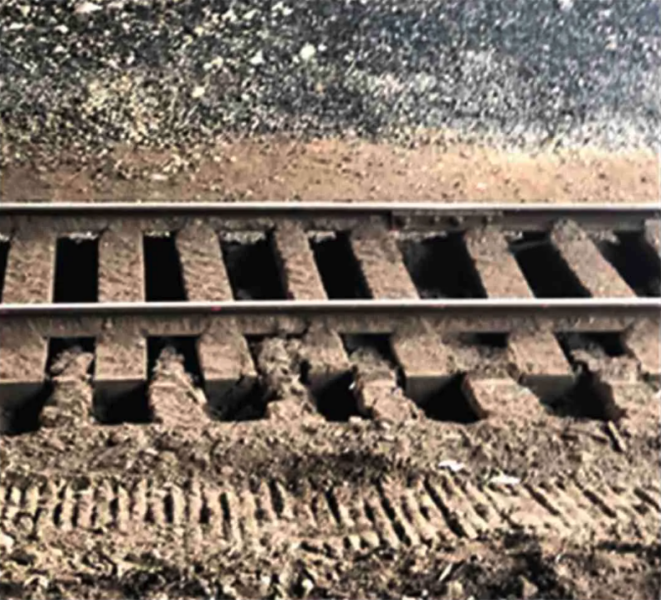
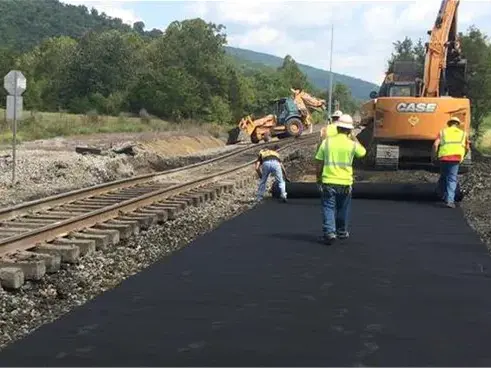
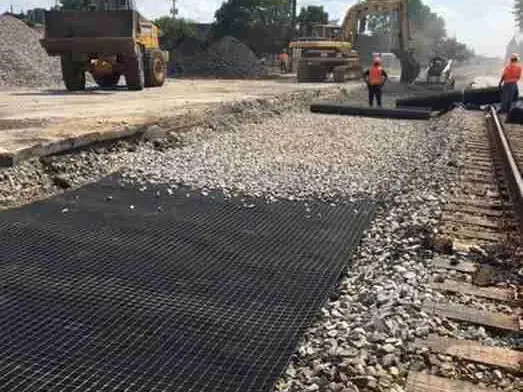
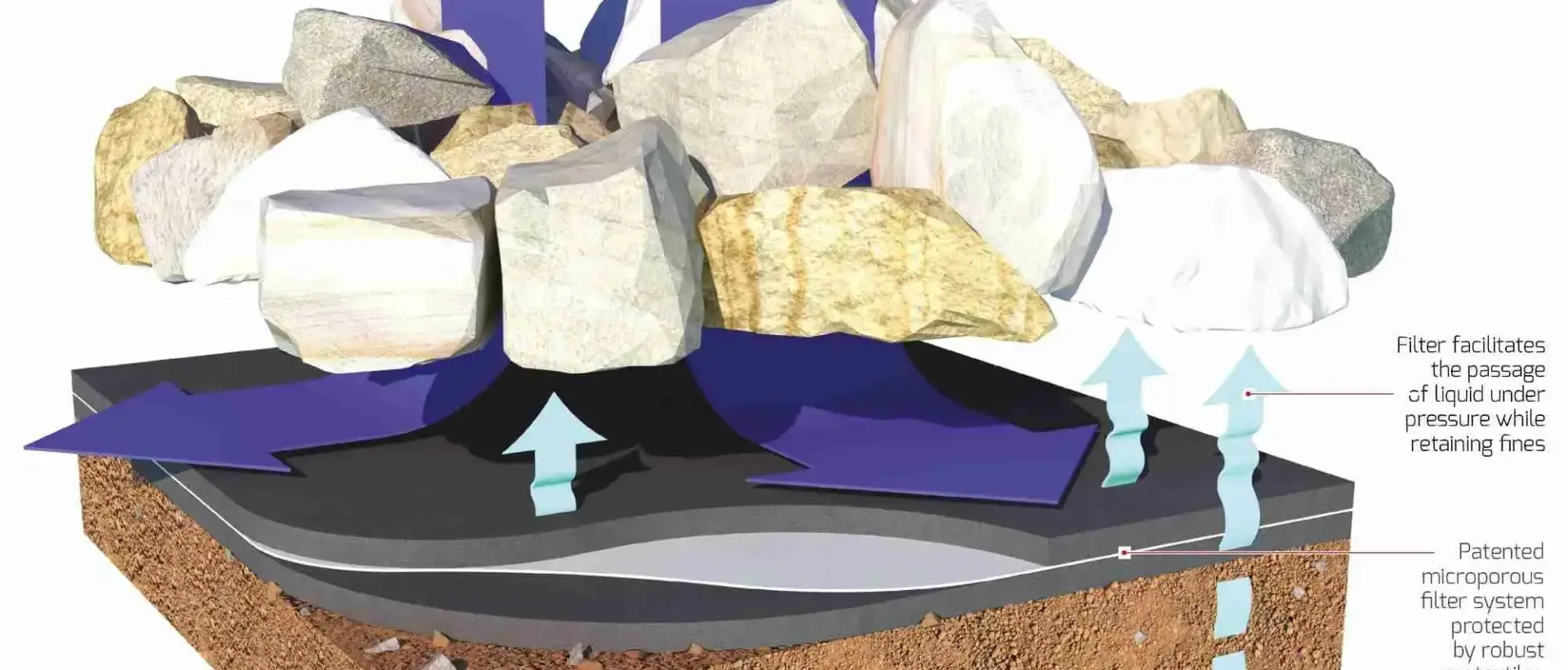
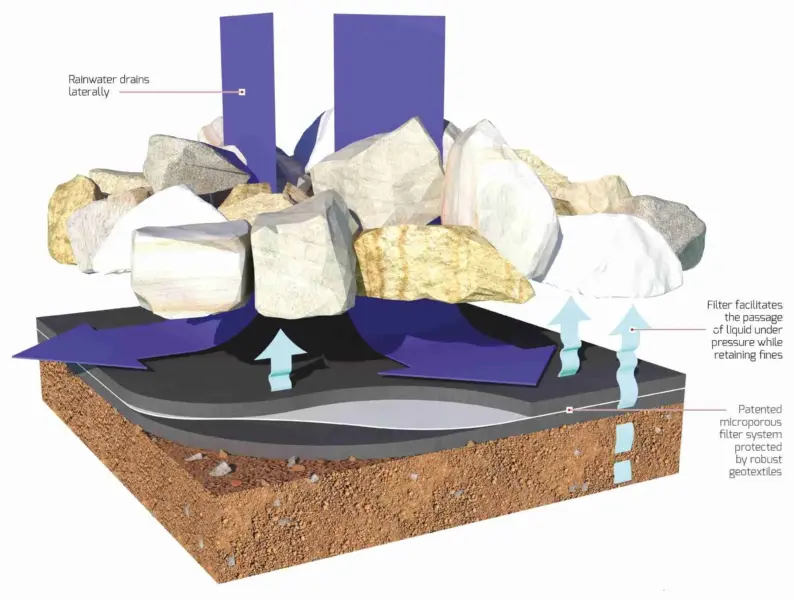
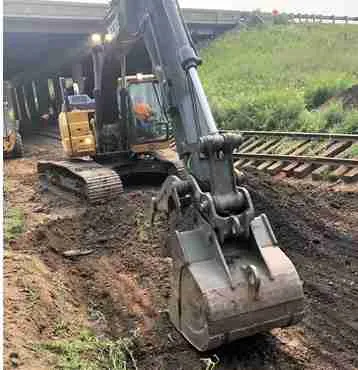
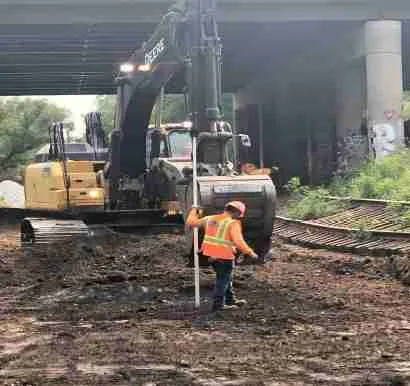
The first area (Beltline) under construction was a 700’ section. Ditching and undercutting work showed that this was a rock cut area, meaning construction depths were shallow and close to the original trackbed. After removal of the track and the excavation was completed, TrackTex was installed, new ballast laid and the tracks reinstated. Tracktex prevents any sediment fines from pumping into new ballast while allowing the upward passage of water when under pressure caused by train loading. This reduces maintenance required to provide proper drainage to the new constructed ditches and preserves the long term strength of the ballast.
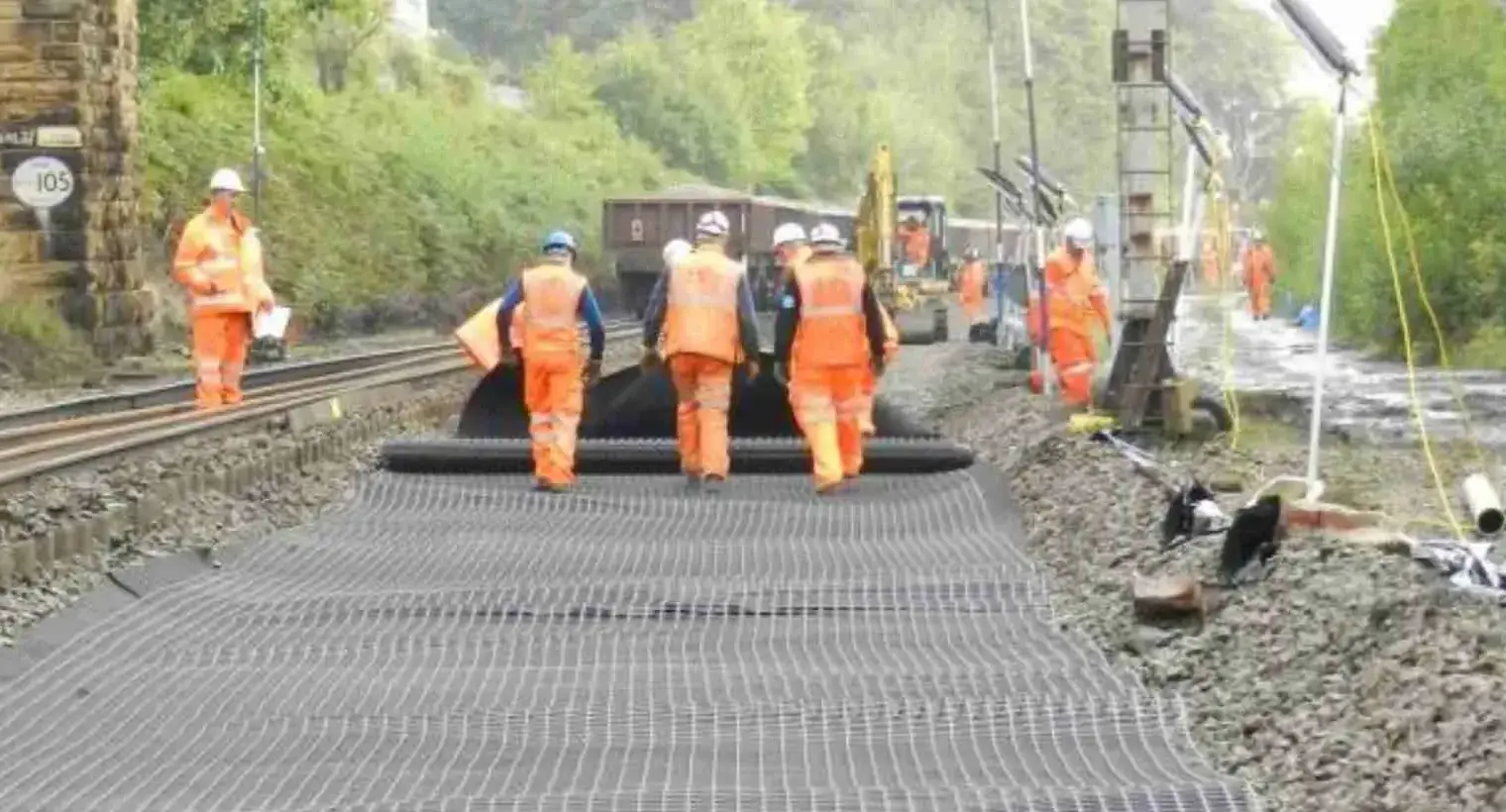
The second area under construction was a 300’ section of trackbed including an Interstate 39 overpass. This section was heavily contaminated with undrainable clay and silt fines. Some of the trackbed did not have any visible ballast and was directly below the overpass. Due to railway specifications a minimum of 23’ headroom had to be maintained, meaning the designed excavation required removal of up to 12” of soil after the track was lifted. Following the excavation TrackTex Anti-Pumping Geocomposite was installed and then 6-8 inches of ballast was placed. The rail and sleeper ties were placed over the ballast to be realigned. Finally after realignment of the track rail ballast was placed and tampered to finish this section of the project.
The Outcome
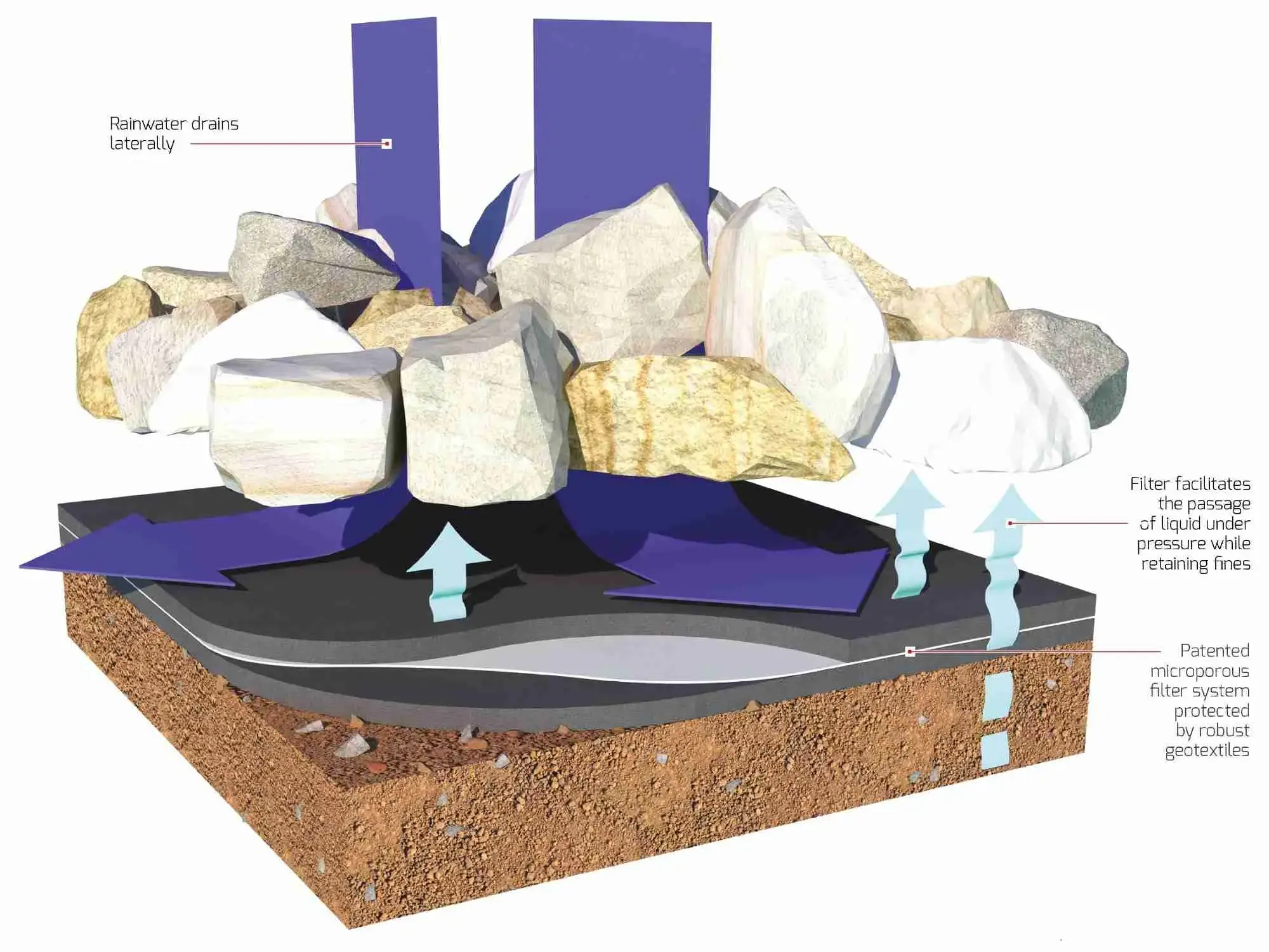
Tracktex is a microporous geocomposite which allows water to escape when under pressure, but remains impermeable without pressure so provides a barrier to prevent saturation from rainfall.
The cyclic loading from axles passing allows dissipation of pore pressures, which facilitates desiccation of any existing subgrade slurry. This drying out of the formation means that over time Tracktex actually improves the quality of the track formation by increasing the modulus.
The thin build up required to meet the height restrictions means little protection can be provided to the membrane. Tracktex has been designed to work in these aggressive conditions so is sufficiently robust for both installation and operational phases. It is also flexible enough to conform to an uneven subgrade to ensure no slurry forming voids exist.
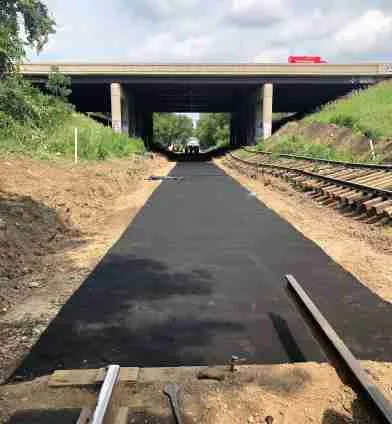
This robustness gives Tracktex a long operational life, and it has been shown to extend maintenance intervals due to pumping failure by more than 25 times providing significant savings over any available alternative for mud- pumping failure.
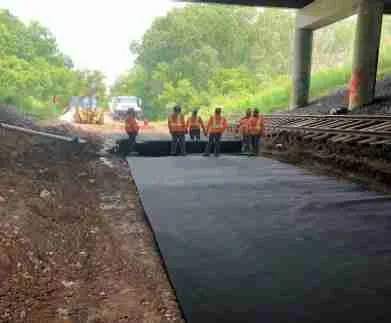
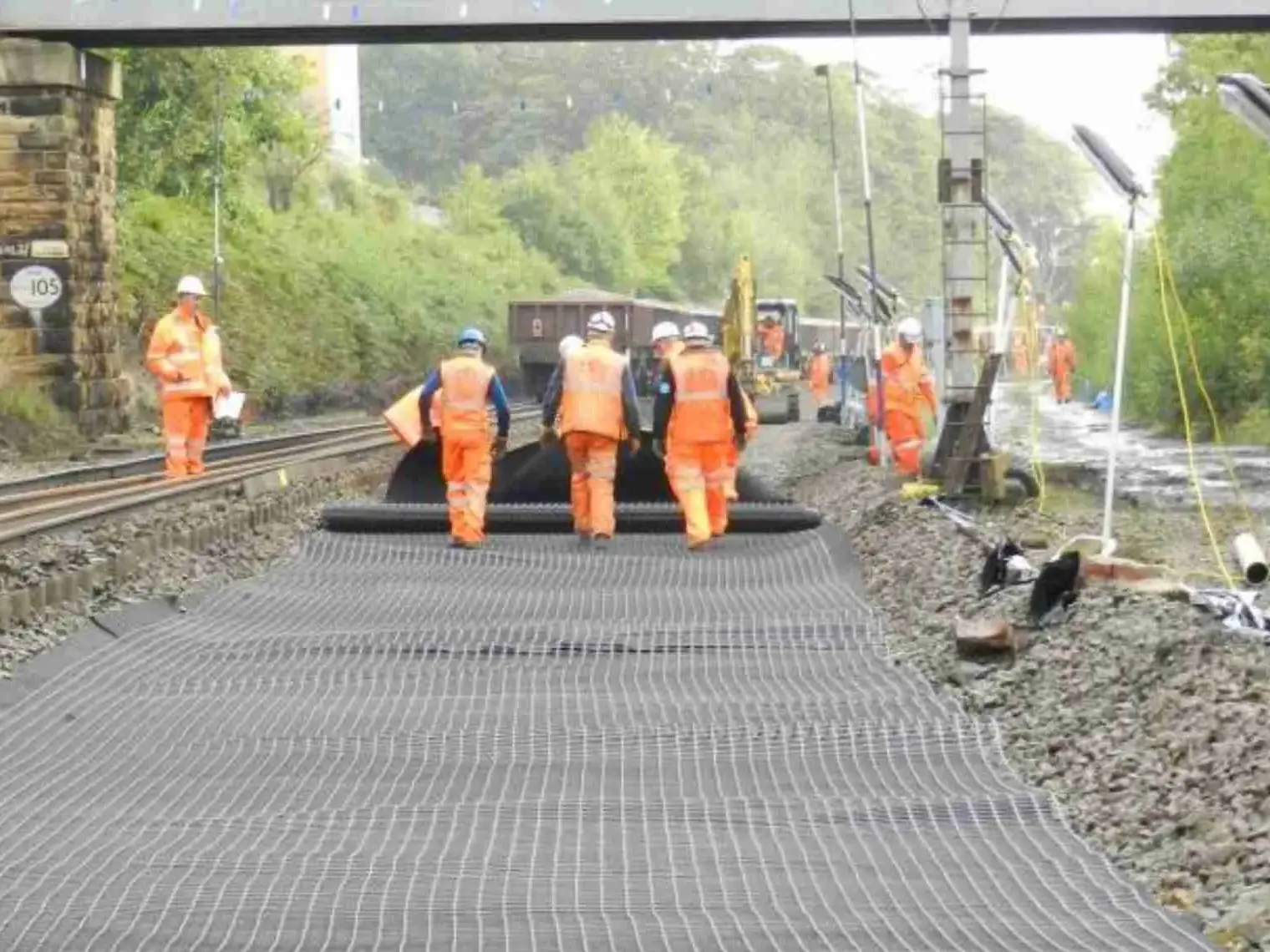
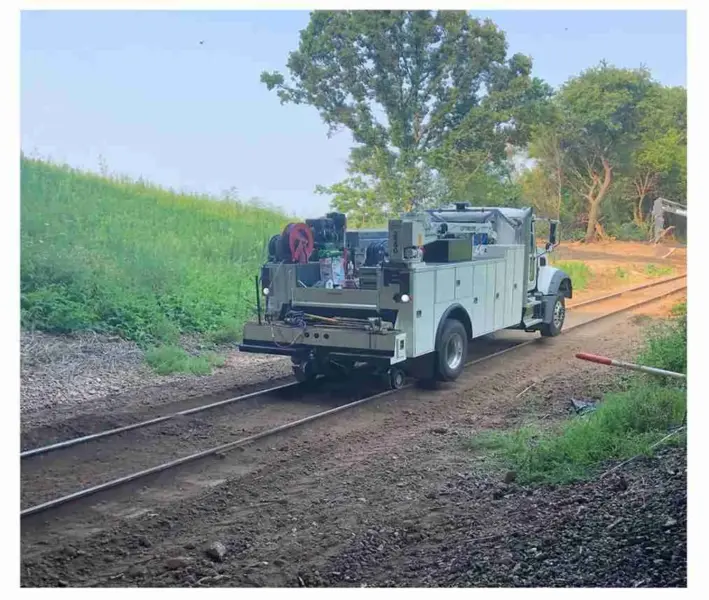
Installation is straightforward and requires no specialist equipment. This simplicity makes for an easy and fast installation and so avoids risk of delay when on site, even when dealing with challenges such as restricted height.
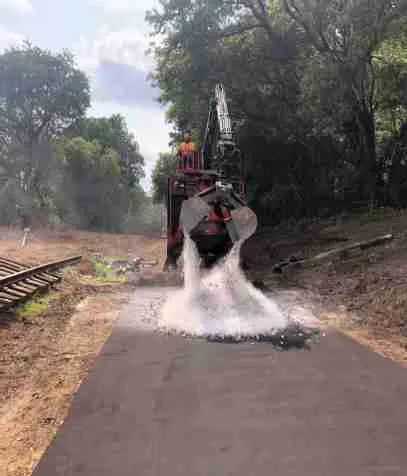
The robust nature of TrackTex allows straighforward and
fast installation
Tracktex is the result of research and development over many years undertaken in conjunction with Rail Authorities, Contractors, Designs and other industry experts. Geofabrics have been manufacturing and supplying the rail industry with track rehabilitating geotextiles and geocomposites for more than 20 years.
Tracktex was developed utilising a full scale, purpose built test facility to simulate mud-pumping failure in the most extreme conditions found in trackbed. It is a unique, patented geocomposite, and since gaining approval in 2010 Tracktex has been actively used in live rail with more than 7 million ft2 having been installed.
This article was originally published by GeoFabrics.