Rail Is Becoming More Digital. Emergency Escape Shouldn’t Depend on It.
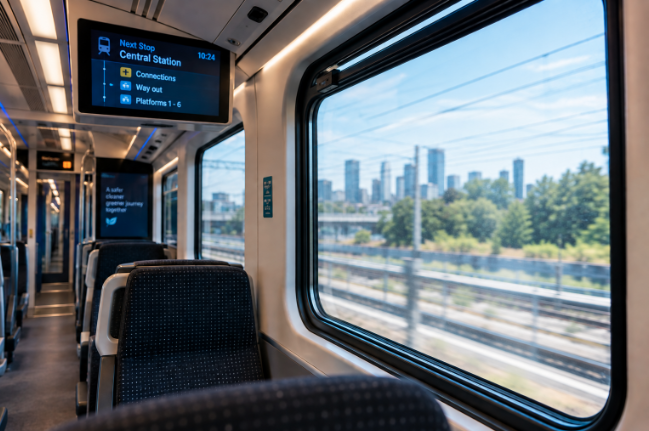
Rail transport systems are becoming increasingly sophisticated and electronically integrated. Automated signalling, predictive diagnostics, digital communications and interconnected operational infrastructure improve coordination, efficiency and visibility across modern rail networks. At the same time, this complexity increases dependence on electrical, electronic and software-based systems within safety-critical environments.
That dependence is one reason mechanical redundancy continues to matter. During emergencies involving smoke, power loss, communications disruption or infrastructure damage, electronically integrated systems may become degraded or unavailable precisely when passengers require immediate escape capability. A resilient design therefore cannot assume that every supporting system will remain fully functional when conditions deteriorate.
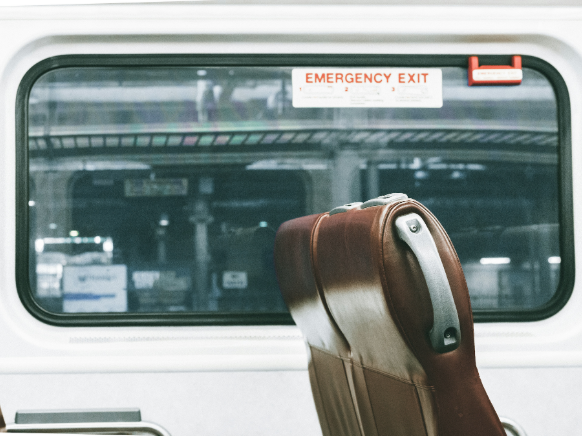
Rail regulation already recognises the importance of independent passenger escape. The EU LOC&PAS TSI defines an emergency exit as a train-borne provision allowing people inside the train to get out during an emergency. Passenger emergency exits must be indicated, accessible, sufficient in size and capable of being opened from inside the train. This provides a rail-specific foundation for designing evacuation capability around degraded conditions rather than normal operation alone.
The same systems perspective is reflected in IEC 62278-1:2025, the railway RAMS standard. It establishes a lifecycle process for managing reliability, availability, maintainability and safety across railway applications, including rolling stock. The principle is not that mechanical systems replace digital technology. It is that safety remains dependable when individual technologies or supporting infrastructures fail.
UNECE Regulation No. 107 provides a useful cross-sector comparison. Although it applies to buses and coaches, its emergency-window provisions reinforce visibility, availability and continued functionality during power failure where electronic devices are used. Rail is governed differently, but the underlying resilience question is similar: what remains available when the primary environment is compromised?
For rail operators and manufacturers, mechanical redundancy therefore serves as an independent safety layer rather than a rejection of digital progress. Emergency systems should minimise unnecessary dependencies and remain understandable and operable under stress.
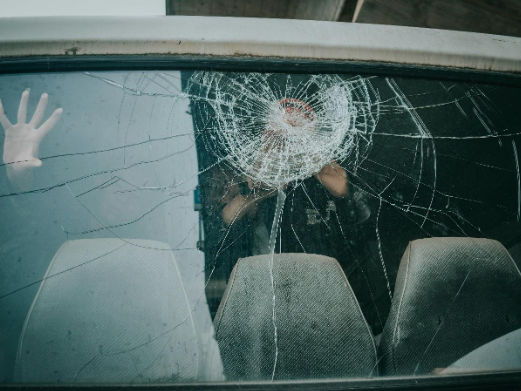
Safe-T-Punch™ applies this principle to emergency glazing. Designed for R43 toughened safety glass, it provides a fixed mechanical means of initiating glass fracture at the point of escape without relying on network connectivity, software logic or vehicle power.
The quiet return of mechanical redundancy reflects a simple engineering reality: as transport systems become more complex, independent physical safety layers can become more valuable, not less.
Sources and Further Reading
EU LOC&PAS TSI – Passenger Emergency Exits
Primary rail regulatory source defining passenger emergency exits and requiring them to be indicated, accessible, sufficient in size and openable by a passenger from inside the train.
IEC 62278-1:2025 – Railway RAMS
Official IEC railway standard establishing the lifecycle process for managing reliability, availability, maintainability and safety across railway applications, including rolling stock.
Safe-T-Punch™ – Emergency Window Escape Devices
Official product source describing Safe-T-Punch™ for R43 toughened safety glass and its fixed mechanical emergency-egress application.
UNECE Regulation No. 107 – Emergency Window Amendment
Cross-sector regulatory source used only as a comparison point for emergency-window visibility, availability and power-failure resilience in buses and coaches.
This article was originally published by Safe-T-Punch™.