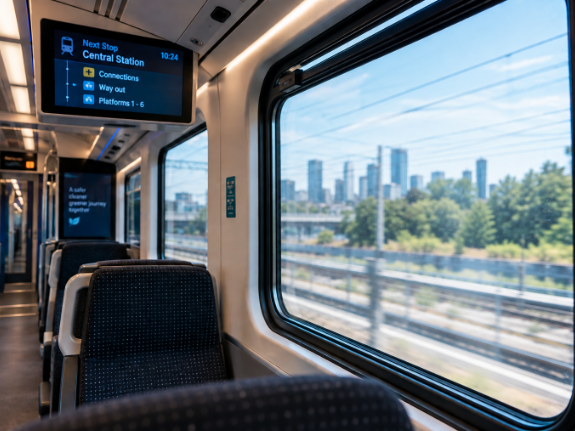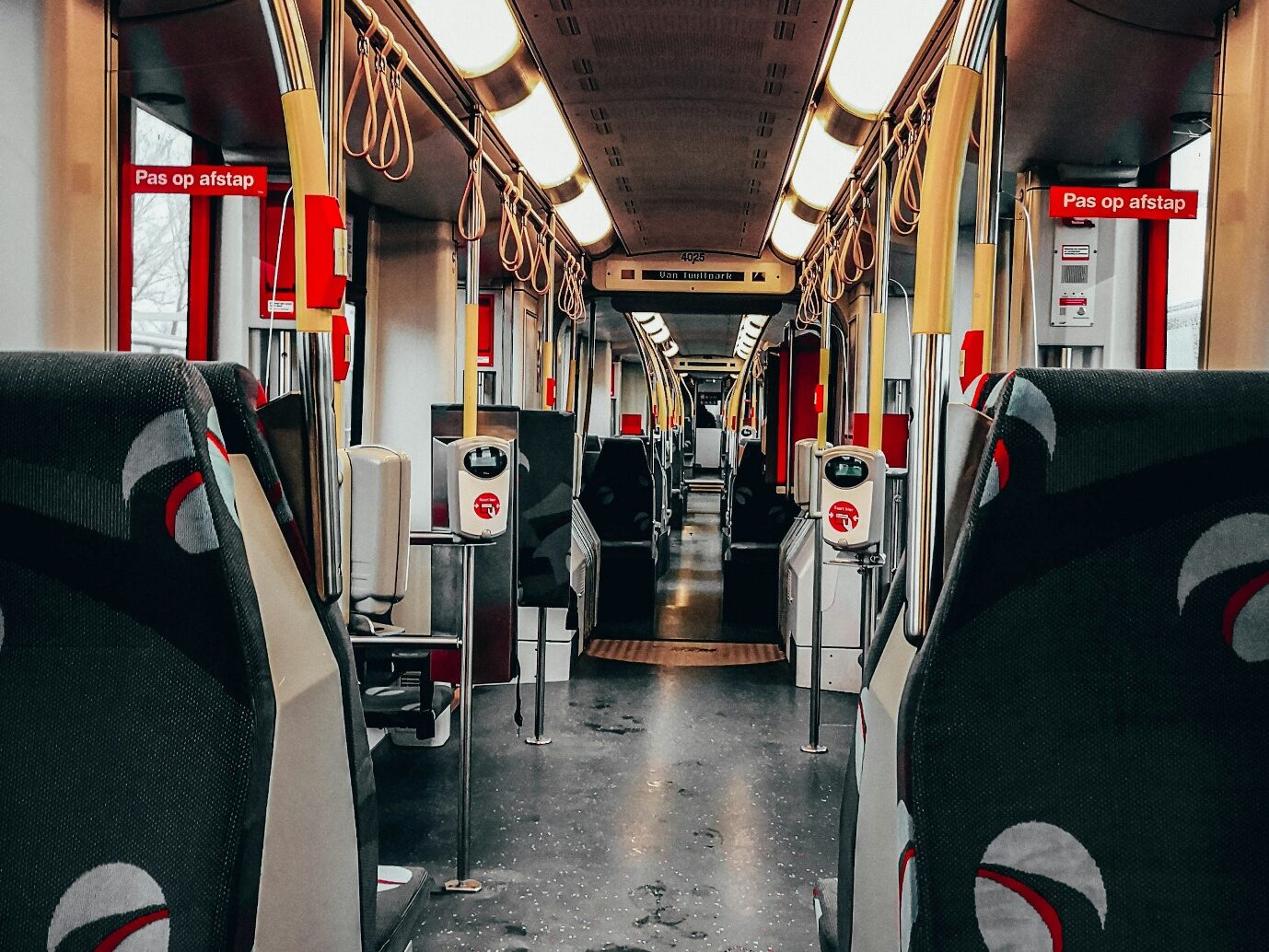
Modern rail environments are becoming increasingly complex and electronically integrated. Automated operational controls, digital communications networks, predictive diagnostics and interconnected infrastructure systems now form part of everyday passenger rail operations. These technologies improve operational coordination and efficiency, but they also increase dependence on stable electronic environments within safety-critical systems.
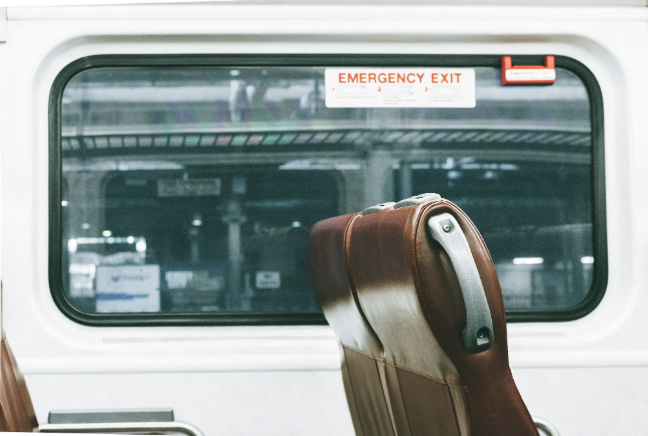
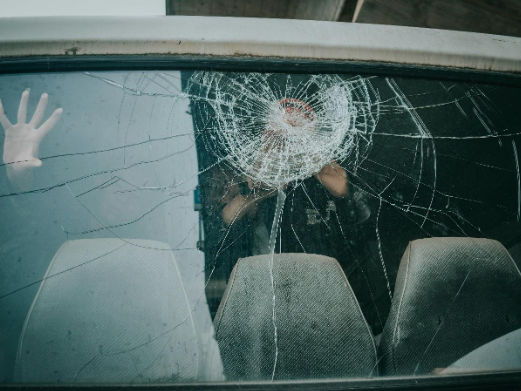
During emergencies, however, conditions rarely remain stable. Smoke propagation, electrical disruption, communications instability, infrastructure damage and passenger panic can rapidly create degraded operating environments where evacuation capability becomes critical. Emergency systems therefore have to be judged not only by how they function during normal service, but by whether they remain usable when several supporting systems are impaired at the same time.
Rail already contains this principle within its own regulatory framework. The EU LOC&PAS Technical Specification for Interoperability defines passenger emergency exits as train-borne provisions allowing people to leave the train in an emergency. It requires emergency exits to be indicated, accessible, sufficient in size, and capable of being opened by a passenger from inside the train. The same framework also recognises power-failure conditions in relation to passenger movement through the train.
This provides a stronger rail-specific basis for worst-case design than relying on road-vehicle standards alone. UNECE Regulation No. 107 remains useful as a cross-sector comparison because its emergency-window provisions explicitly address degraded conditions, device availability and power-failure performance. But for rail, the regulatory and engineering foundation should remain rooted in rail requirements.
That philosophy is reinforced by the IEC 62278 railway RAMS framework. IEC 62278-1:2025 establishes a life-cycle process for specifying and demonstrating reliability, availability, maintainability and safety, while IEC 62278-2:2025 develops the systems approach to safety, including risk assessment, safety requirements and safety demonstration. Together they support a design mindset in which failure modes, interfaces and degraded states are considered deliberately rather than treated as exceptional afterthoughts.
For rail operators and manufacturers, the implication is practical: emergency egress should remain dependable when smoke, electrical faults, communications disruption or structural damage compromise the wider operating environment.
Mechanical emergency egress systems such as Safe-T-Punch™ can form one independent layer within that resilience strategy. Because the device operates through direct physical action rather than software logic, network connectivity or external power, its availability does not depend on the state of digitally integrated onboard systems.
The wider lesson is simple: emergency systems should be engineered for the conditions in which normal systems are least dependable. Worst-case design is not pessimism. It is what turns emergency capability from an assumption into a survivable system.
Sources and Further Reading
EU LOC&PAS TSI – Commission Regulation (EU) No 1302/2014
Primary rail regulatory source for passenger emergency exits and evacuation requirements.
IEC 62278-1:2025 – Railway RAMS, Part 1
Rail-specific life-cycle RAMS framework.
IEC 62278-2:2025 – Systems approach to safety
Rail-specific safety methods, risk assessment and safety demonstration.
UNECE Regulation No. 107 amendment – ECE/TRANS/WP.29/2022/53
Cross-sector reference for degraded-condition emergency-window resilience principles.
Safe-T-Punch™
Product information and technical application context.
This article was originally published by Safe-T-Punch.