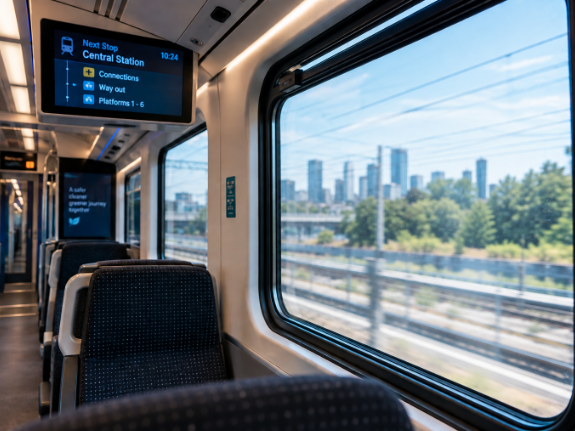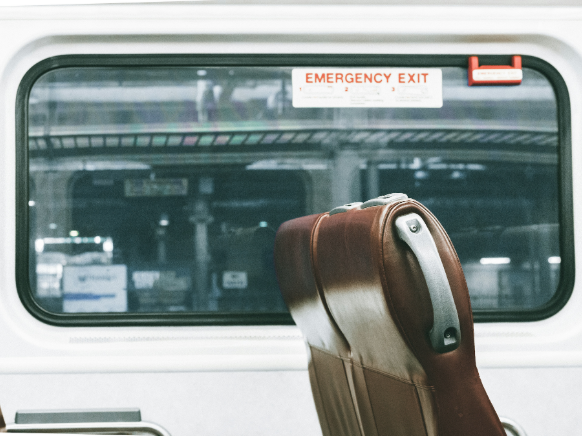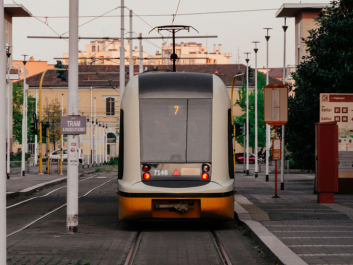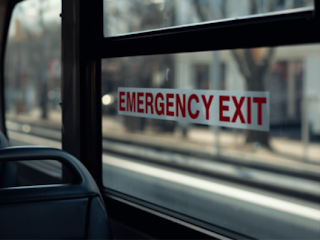
Rail emergencies often develop under conditions involving confusion, smoke, reduced visibility and passenger disorientation. In enclosed rail environments such as tunnels, underground stations or crowded passenger carriages, the ability of passengers to quickly identify emergency escape systems can significantly influence evacuation outcomes.
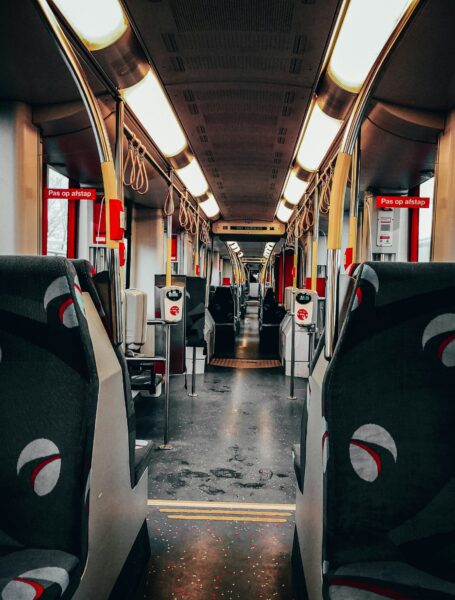
Modern rail systems increasingly rely on electronically integrated operational environments that improve communications, passenger information and operational coordination. Yet during emergency conditions involving power disruption, smoke propagation or systems instability, passengers may need to rely on immediate visual recognition rather than digital guidance systems alone.
Although UNECE Regulation No. 107 Rev.10 applies specifically to buses and coaches, its underlying resilience philosophy provides important lessons for rail transport. The regulation reinforces the importance of emergency devices remaining clearly visible, positioned adjacent to escape points and immediately accessible under degraded conditions.
This reflects an increasingly important engineering principle across public transport sectors: emergency systems must remain understandable and identifiable during moments involving panic, reduced visibility and operational uncertainty. Visibility therefore becomes a critical component of survivability engineering rather than simply a design preference.
The same philosophy also aligns with principles reflected in ISO 26262-1:2018, which emphasises maintaining safe outcomes during abnormal operating conditions and systems failures. Within digitally integrated transport environments, emergency clarity becomes increasingly important because passengers may be forced to make rapid decisions during infrastructure instability or electrical disruption.
For rail operators and manufacturers, this creates growing emphasis on intuitive emergency system design. Emergency devices that rely heavily on digital interfaces, electronically illuminated systems or complex operational sequences may become less effective during degraded conditions.
Mechanical emergency egress systems such as Safe-T-Punch™ support this resilience-focused philosophy because they remain physically visible, immediately accessible and operable independently of software or power availability. Their operational simplicity reduces uncertainty during emergency conditions where passengers may already be experiencing confusion or panic.
As rail systems continue evolving technologically, emergency visibility remains one of the most important factors influencing passenger survivability during critical evacuation scenarios.
This article was originally published by Safe-T-Punch.