Rail Cybersecurity Is Now a Passenger Safety Challenge
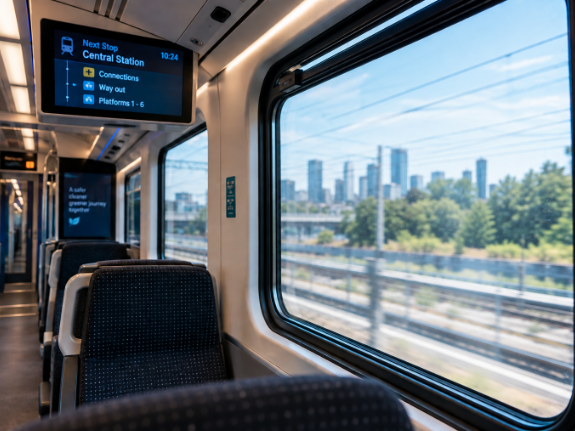
Modern rail systems rely heavily on digitally interconnected infrastructure. Automated signalling systems, remote diagnostics, digital passenger information systems, operational control platforms and electronically integrated communications networks now form the backbone of many rail environments. These technologies improve efficiency, operational visibility and network coordination, but they also increase exposure to cyber-related disruption.

Recent cyber incidents across transport sectors increasingly demonstrate that digital attacks can create operational instability extending beyond information systems alone. As rail environments become more interconnected, disruptions affecting communications, signalling infrastructure or electronically dependent operational systems may begin affecting passenger safety environments directly.
This creates an important resilience challenge for rail operators and infrastructure designers. Emergency evacuation systems must remain dependable even if wider onboard systems or networked operational infrastructure become compromised during cyber incidents, systems failure or electrical disruption.

Although UNECE Regulation No. 107 Rev.10 applies specifically to buses and coaches, its resilience philosophy offers valuable lessons for rail transport. The regulation reinforces the principle that emergency escape capability must remain operational under degraded conditions regardless of wider systems disruption.
This broader engineering approach also aligns closely with principles reflected in ISO 26262-1:2018, which emphasises functional safety, fault tolerance and maintaining safe outcomes during electrical or electronic systems failure. While developed for road vehicles, the underlying philosophy increasingly applies across digitally integrated public transport sectors.
As trains become more software-defined, cybersecurity resilience increasingly intersects with physical passenger safety. Emergency escape systems that depend entirely on connected infrastructure, electronically controlled logic or network availability may become vulnerable during cyber-related disruption.
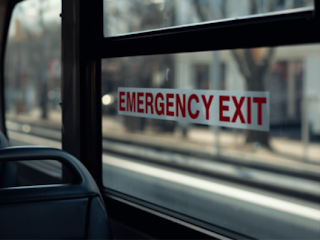
Mechanical emergency egress systems such as Safe-T-Punch™ provide an important independent safety layer because they operate through direct physical action rather than software logic or digital infrastructure. Their functionality remains available during conditions involving network disruption, communications failure or wider operational instability.
This article was originally published by Safe-T-Punch.