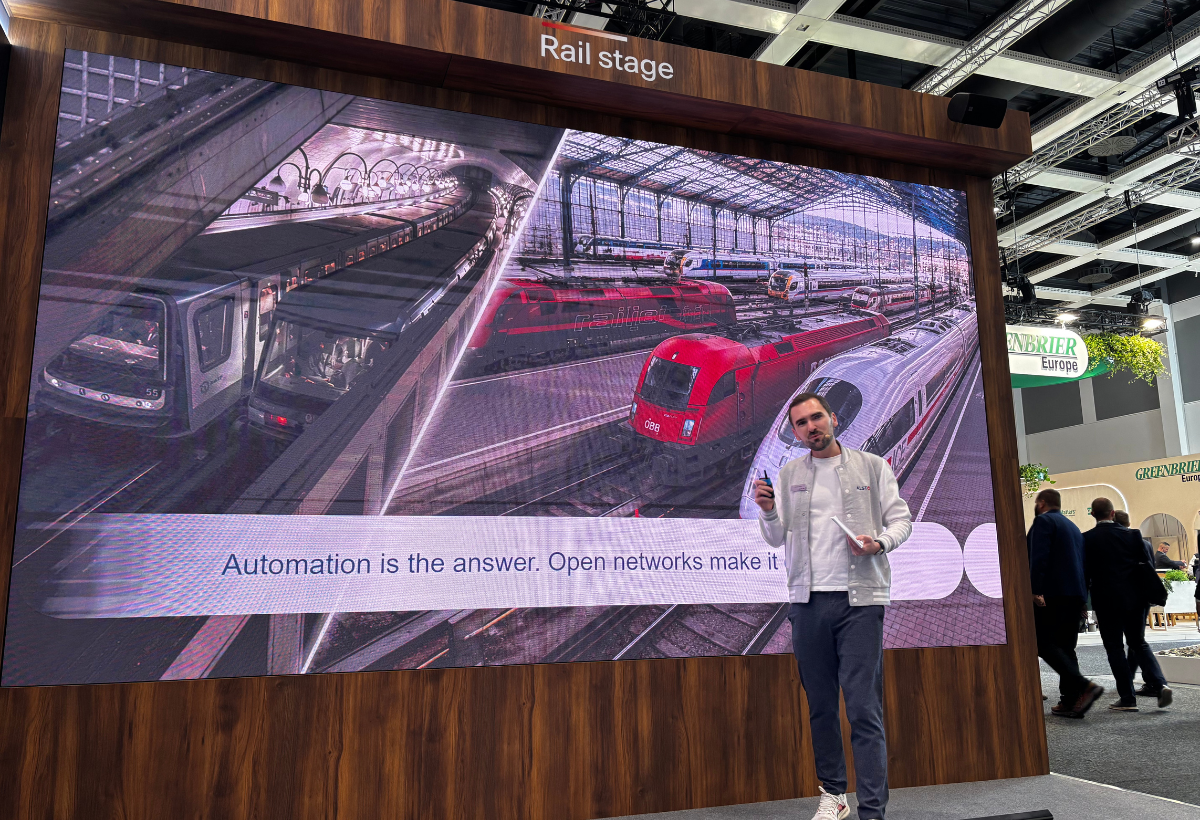
Discover how COMET’s Cinq Edge automatically captures railcar identity, movement direction and timing, turning trackside activity into near real-time visibility for yards, terminals and industrial facilities.
Reliable rail visibility starts with a simple question: What is actually happening on the track?
For rail-served facilities, yards and terminals, answering that question consistently can be more difficult than it sounds. Railcar activity may be documented through spreadsheets, radio communication, physical checks or other manual processes. Those methods can work, but they also create opportunities for gaps, delayed updates and conflicting records.
Automated railcar tracking changes that process by capturing railcar activity where the movement occurs. Rather than relying solely on someone to observe, identify and record each car, trackside technology can automatically create a digital record of railcar identification, direction and timing.
COMET’s Cinq Edge is designed to provide that track-level intelligence. The field-deployable AEI solution captures railcar movement at key locations and sends the resulting data into Cinq™, where physical rail activity becomes near real-time operational visibility.
Why Reliable Rail Visibility Starts at the Track
Rail visibility is only as dependable as the data behind it.
If an arrival is logged late, a departure is missed or the wrong railcar is recorded, the problem does not remain isolated to that single entry. That information can affect inventory records, dwell calculations, operational planning and any reporting built from the movement history.
For operations that depend heavily on manual observation, maintaining an accurate picture becomes increasingly difficult as traffic volumes, track areas or facilities grow. Personnel may need to reconcile information from multiple sources simply to determine which cars have arrived, which are still onsite and which have departed.
Trackside technology creates an opportunity to capture that information automatically and closer to its source. COMET describes its Electronics capabilities as connecting track-level data capture to system-wide operational visibility, including AEI integration, railcar data capture and transmission.
The result is a stronger foundation for everything that follows. Before rail movement data can support dashboards, alerts or analysis, the activity itself has to be captured accurately.
What Is Automated Railcar Tracking?
An automated railcar tracking system uses trackside technology to identify railcars and record movement events as they happen.
Instead of requiring personnel to manually document every movement, the system creates a time-stamped digital record. Depending on the tracking configuration, that record can establish:
• Which railcar passed the monitoring location
• When the movement occurred
• Which direction the railcar was traveling
• Whether the movement represented an arrival or departure
• How movement through multiple tracked areas affects onsite inventory and dwell
This type of automatic railcar identification turns a physical event into structured data that operations teams can use elsewhere.
COMET recently explored the broader operational benefits of this approach in its article on automated railcar tracking and demurrage planning. That article explains how time-stamped arrival, departure and dwell records can help facilities move beyond disconnected tracking processes and build a more dependable view of rail activity.
Automated tracking does not create value merely by collecting more data. Its value comes from creating a consistent record that can be used to understand what is happening now and analyze what has happened over time.
How Cinq Edge Identifies Railcars at the Track Level
Cinq Edge provides trackside railcar tracking at locations where knowing what enters or leaves a facility is critical. COMET positions the system for yards, industrial sites, terminal chokepoints, rail access lanes and other locations that may not have traditional wayside infrastructure.
As rail equipment moves through the monitoring location, Cinq Edge uses a combination of radar presence detectors, wheel sensors and RFID tag readers to capture a more complete picture of the movement event. Each technology contributes a different piece of information, allowing the system to detect that equipment is present, confirm movement at the track and identify the individual railcar.
Radar presence detectors help recognize when rail equipment is approaching or occupying the monitored area. Wheel sensors provide precise detection of wheel movements at the track, helping establish timing and direction of travel. RFID tag readers capture the railcar’s AEI tag information, connecting the physical equipment with its digital identity.
AEI, or Automatic Equipment Identification, is a foundational technology for railcar identification. Railcars carry AEI tags that can be read automatically by trackside RFID antennas, eliminating the need for someone to visually inspect reporting marks and manually enter them into another system. COMET provides additional background on this technology in What You Need to Know About AEI Systems in Rail Operations.
Within Cinq Edge, dual-side RFID antennas help provide a broad read window and can support identification even when one tag is unavailable. That identification data is combined with information from the radar presence detectors and wheel sensors to create a more complete, time-stamped railcar movement record.
For operations teams, the important outcome is more than simply identifying a passing railcar. Cinq Edge automatically captures what equipment moved, when it moved and which direction it was traveling, creating reliable track-level data that can support broader rail visibility and operational planning.
Capturing More Than Railcar ID: Understanding Movement Direction
Knowing which railcar passed is important, but identification alone does not tell the full story.
An operation also needs context. Is the car arriving? Is it departing? Is it moving from one monitored portion of the facility to another?
Cinq Edge is designed to capture both railcar identity and direction of travel. COMET’s C-Suite™ documentation identifies precision wheel sensing as part of that process, with wheel sensors supporting axle counting, speed measurement and direction detection.
That direction information gives each identification event operational meaning.
A railcar identified at a facility entrance while traveling inbound can create an arrival event. A later outbound movement can establish its departure. When additional tracking zones are used, the same concept can help build a clearer picture of movement within an operation.
This is an important distinction in railcar movement tracking. Knowing that a railcar passed a reader is useful. Knowing where it was headed makes the event far more actionable.
How Trackside Sensors Create a Reliable Movement Event
Reliable AEI railcar tracking depends on more than a single sensor.
Within the C-Suite architecture, multiple trackside technologies work together to create a more complete movement record. RFID antennas identify the railcar. Wheel sensors help establish axle activity, speed and direction. Radar presence detection helps determine when a train is present and supports consistent activation of the reading system. COMET says these inputs work together to provide the data needed to create complete rail movement records.
Processing at the edge then brings those inputs together before the information moves upstream.
This matters because every sensor answers a different part of the question. Identification establishes what passed. Detection establishes that something passed. Direction helps establish where it was going. Time data establishes when the movement occurred.
Together, those elements turn a railcar passing a physical point into a usable digital event.
Cinq Edge is also designed for deployment in locations where traditional infrastructure may be difficult or unnecessary. COMET offers solar configurations, managed communications and field installation options intended to reduce the amount of supporting infrastructure required at a site.
From Trackside Event to Rail Visibility Data
Trackside detection is the collection layer. The next step is making that information available to the people managing the operation.
Cinq Edge sends its field data to Cinq, the central platform within COMET’s C-Suite Rail Intelligence Ecosystem. COMET describes C-Suite as a connected rail technology ecosystem that brings automated car detection, tracking and operational visibility together. Cinq serves as the central platform, while Cinq Edge captures activity in the field.
Once movement events enter Cinq, teams can use that data to understand when railcars arrive and depart, their direction of travel and how long cars remain within tracked areas.
The platform also maintains movement history by individual railcar and provides near real-time visibility into tracked zones. COMET says Cinq can support alerts, time-stamped movement logs, dwell tracking and reporting from a centralized web-based environment.
That is the connection between trackside intelligence and broader rail visibility technology. Physical movement at the track becomes information personnel can access digitally.
Where Automated Trackside Tracking Can Improve Rail Operations
Once reliable movement records are available, the value extends well beyond simply locating an individual railcar.
Arrival and departure data can support more accurate inventory visibility. Dwell records can help teams recognize cars that have remained onsite longer than expected. Movement history can provide context for switching plans, track utilization, customer questions and carrier activity.
Historical data can also help operations identify patterns that would be difficult to see from individual movements alone. Recurring congestion, longer dwell in specific areas or changes in arrival patterns can become easier to identify when the underlying activity has been captured consistently.
COMET’s article on data-driven rail operations discusses this broader transition from collecting rail data to using analytics for better decision-making.
Automated tracking cannot eliminate every delay or operational constraint. What it can do is give personnel a more dependable record to work from. Instead of reconstructing what happened after the fact, teams can use captured movement information to support decisions as conditions develop.
Why Trackside Accuracy Matters to the Rest of the Rail Intelligence System
Dashboards and reports may be where users ultimately interact with rail data, but those tools depend on what happened much earlier in the process.
If a railcar is not correctly identified at the track, the resulting inventory record may be incomplete. If direction is incorrect, an arrival can potentially be interpreted differently from a departure. If timing is inconsistent, dwell calculations and historical reporting become less dependable.
The accuracy of the downstream railcar identification system therefore starts at the monitoring point.
COMET’s approach to C-Suite reflects that relationship. Cinq Edge captures movement in the field. Cinq centralizes and presents the resulting information. Existing RailNet AEI systems can also integrate with the ecosystem, giving COMET a way to connect both established AEI infrastructure and newer field-deployable tracking technology within a broader visibility strategy.
Strong rail intelligence does not begin with a dashboard. It begins with dependable data at the track.
Bringing Trackside Intelligence into C-Suite with Cinq Edge
Facilities looking to move away from manual railcar tracking need more than a digital replacement for a spreadsheet. They need a dependable way to capture rail activity automatically and turn those movements into information people can use.
Cinq Edge provides that trackside layer within COMET’s C-Suite ecosystem. It combines automatic railcar identification, movement and direction detection, field processing and connectivity to create a digital record as railcars move through monitored locations. That data feeds Cinq, where operations teams can access near real-time visibility, movement history, alerts, dwell information and reporting.
For industrial facilities, terminals, yards and other rail operations, the result is a more connected path from physical rail movement to operational intelligence.
Accurate visibility starts at the track. With Cinq Edge, COMET gives rail operations the technology to capture that activity automatically and build a more reliable view of rail movement from the track up.
Explore Cinq Edge and talk with COMET about automating railcar tracking at your facility.
This article was originally published by COMET Industries.