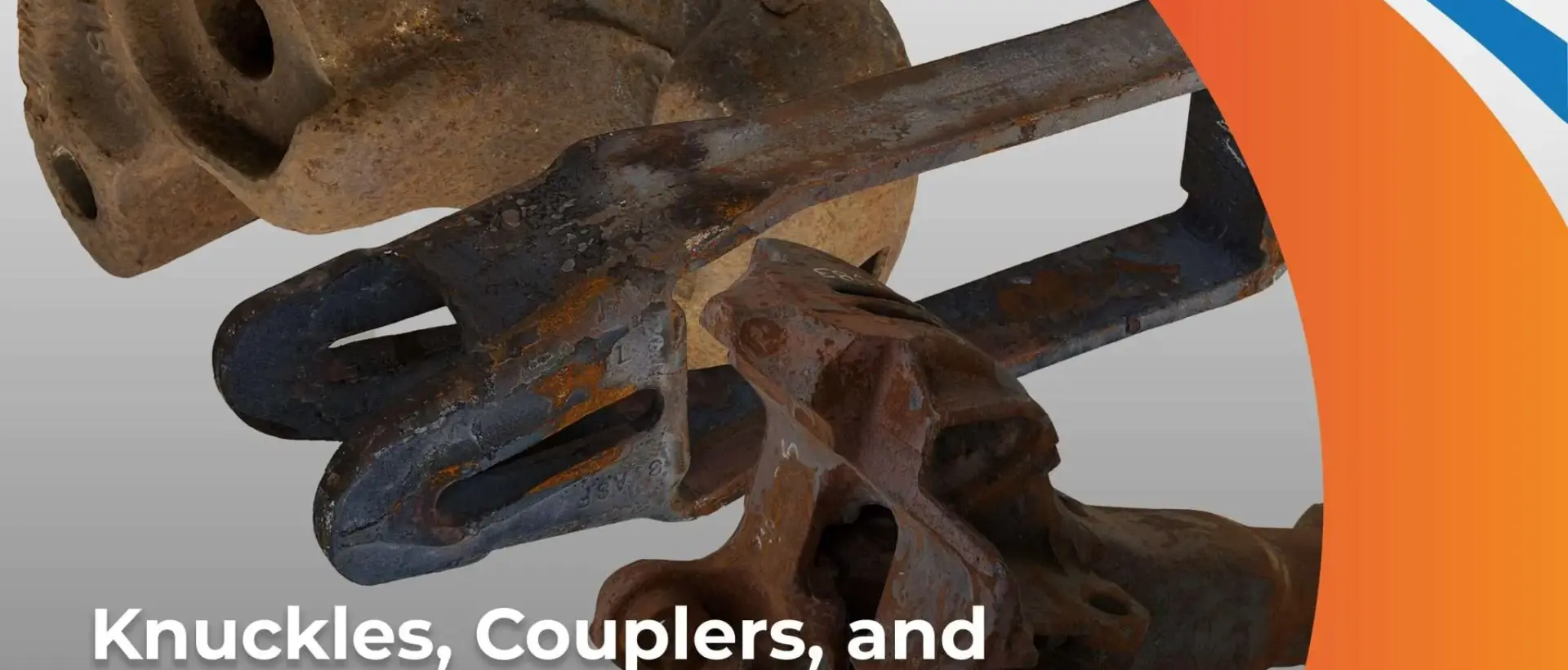
A freight car’s braking system depends on more than a single valve, hose, or mechanical assembly. It is a network of air brake parts and mechanical rigging components that must work together to apply, transfer, and release braking force reliably.
For maintenance teams, understanding these individual components can make it easier to identify wear, plan repairs, and source the right replacement parts when a railcar comes into the shop. Even relatively small components such as pins, clevises, and rod eyes can play an important role in keeping the larger system functioning as intended.
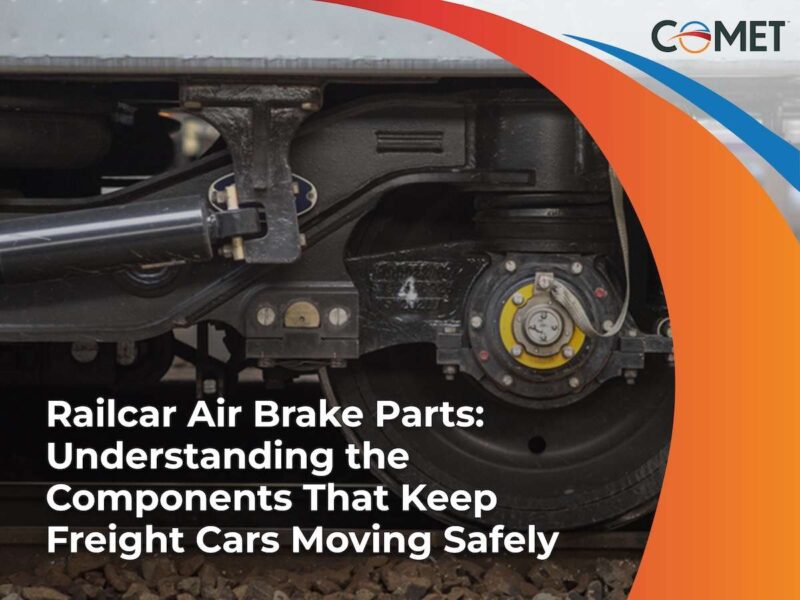
COMET’s Air Brakes & Rigging catalog reflects that variety, with categories ranging from air brake components and hoses to levers, clevises, slack adjusters, brake rods, pins, brake shoes, and related hardware.
Understanding the Railcar Air Brake System
Freight railcars rely on interconnected pneumatic and mechanical components to create and transfer braking force. A reduction in air pressure initiates brake application, while the mechanical rigging transfers that force through the railcar’s braking system.
It is useful to think about a railcar air brake system as two closely connected groups of components.
The pneumatic side includes items such as valves, trainline hoses, fittings, and other components involved in controlling or carrying air through the system. COMET’s air brake components catalog includes trainline hoses, valves, end cocks, fittings, and other related parts.
The mechanical side includes the levers, rods, clevises, pins, slack adjusters, and related hardware that help transfer braking force toward the brake shoes and wheels.
Because these parts operate as a system, wear or damage to one component can create problems elsewhere. Maintenance personnel therefore need to evaluate not only the major assemblies but also the smaller connecting components that keep those assemblies properly positioned and functioning.
Common Railcar Air Brake Parts and What They Do
The exact configuration of railcar air brake parts can vary depending on the railcar and brake system, but maintenance teams regularly encounter several types of pneumatic and mechanical components.
Brake Levers
An air brake lever is part of the mechanical rigging used to transfer braking force through the system. Levers work in combination with rods, pins, clevises, and other connections.
Because lever dimensions and configurations can differ by application, identifying the correct replacement is important when repairing existing rigging.
Brake Rods
Brake rods connect portions of the rigging and help transmit movement between components. COMET’s Air Brakes & Rigging offering includes brake rods and bottom rods as distinct product categories.
Wear, deformation, or incorrect sizing can interfere with proper alignment and movement, making rods an important part of a rigging inspection.
Clevises
An air brake clevis provides a mechanical connection between components within the brake rigging. Although clevises are relatively small compared with assemblies such as brake beams or valves, the connection they provide is important to the overall geometry of the system.
This is a good example of why maintenance teams cannot focus only on the largest or most expensive air brake system parts. Small connecting hardware can be just as important to a successful repair.
Pins and Keys
Pins create and secure connections at different points in the rigging. Because they may function at pivot or connection points, their condition and fit are important considerations during maintenance. COMET offers multiple brake pin sizes and configurations, which reinforces why accurate part identification matters even for components that may initially appear interchangeable.
Brake shoe keys serve another specific function by securing brake shoes within the brake rigging. Maintenance teams can explore these and other components through COMET’s Air Brakes & Rigging catalog.
Slack Adjusters
Slack adjusters help control brake shoe clearance as components wear and the system operates. Maintaining the appropriate relationship between the brake shoes and other rigging components is important for consistent brake operation.
COMET offers slack adjusters in multiple configurations for freight car maintenance applications.
Air Brake Hoses and Pneumatic Components
Railcar air brake hoses carry air between portions of the braking system, while valves, fittings, and related components control or support pneumatic operation.
Unlike metal rigging components, hoses and sealing components may experience deterioration associated with age, movement, and environmental exposure. Their inspection therefore involves different considerations than evaluating pins, rods, or levers.
COMET’s air brake category includes multiple trainline hose configurations as well as valves, fittings, and related components.
How Air Brake Rigging Transfers Braking Force
Once a brake application is initiated, mechanical rigging is responsible for transferring that force through the freight car braking system.
Levers, rods, clevises, pins, and related components create a connected mechanical system. Each component must move and remain positioned correctly for the rigging to function as intended.
That makes several characteristics particularly important during maintenance:
- Component condition
- Proper connections
- Correct alignment
- Appropriate dimensions
- Movement at pivot and contact points
- Proper brake shoe clearance
Wear at one location can introduce excess movement or change the geometry of the rigging. Over time, that can affect how efficiently force travels through the system.
Brake shoes are another critical part of this process because they provide the braking surface at the wheel. COMET offers several freight car brake shoe configurations for maintenance applications.
Inspection and maintenance should always follow the applicable requirements and operating practices for the equipment being serviced.
What Causes Railcar Air Brake Components to Wear?
Freight car brake components operate in a demanding environment. Repeated movement, vibration, loading, and exposure to environmental conditions can gradually affect both mechanical and pneumatic components.
Mechanical rigging components such as pins, rods, bushings, levers, and clevises can experience wear around contact and pivot points. Fasteners and connecting hardware can also require attention as components cycle repeatedly in service.
Pneumatic components experience different forms of deterioration. Hoses, gaskets, and seals can be affected by age, movement, and operating conditions, while valves and other assemblies may require inspection, maintenance, or reconditioning according to the requirements of the application.
The rate of wear will not be identical for every railcar or component. Service conditions, usage, and equipment configuration can all influence maintenance needs.
Regular inspection helps maintenance teams identify components that are damaged, worn, or approaching replacement before a relatively small problem becomes a larger maintenance issue.
Why Correct Part Identification Matters
Identifying a worn component is only one part of the repair process. Maintenance and purchasing teams also need to determine exactly which replacement part fits the application.
Two brake levers may look similar while having different dimensions. A brake pin may be available in several lengths or grades. Brake hoses can vary by connection type and overall length. Slack adjusters are available in different configurations.
COMET’s online Air Brakes & Rigging catalog illustrates these distinctions by organizing components into specific categories and providing part information for individual products.
Ordering the wrong component can turn a relatively straightforward repair into additional downtime while another part is identified, purchased, and delivered.
When sourcing railway air brake parts, teams should use as much information as possible, including:
- Existing part numbers
- Component dimensions
- Equipment and railcar information
- Manufacturer or system specifications
- Details from the component being replaced
- Historical purchasing or maintenance records
An organized parts catalog can also make the identification process easier by allowing maintenance and purchasing personnel to compare categories, part numbers, and available configurations.
Building a More Efficient Air Brake Parts Strategy
Part sourcing does not have to begin every time a railcar enters the shop.
Maintenance history can help identify the air brake parts and rigging components an operation replaces most frequently. Depending on fleet requirements and purchasing practices, frequently used wear items may be candidates for stocking or advance ordering.
Standardizing how parts are identified internally can help as well. Recording complete part numbers, specifications, and application details makes it easier to reorder the same component later instead of repeating the identification process.
Coordination between maintenance and purchasing personnel is particularly useful. Maintenance teams often know which components are creating recurring needs, while purchasing teams have visibility into availability, sourcing history, and lead times. Bringing that information together can support a more proactive parts strategy.
This approach fits into a broader maintenance strategy COMET has discussed in its article on choosing the right freight car parts and its overview of the benefits of integrated rail solutions, where parts availability, coordinated support, and streamlined procurement can all influence maintenance efficiency.
The goal is simple: spend less time searching for routine replacement components and more time completing repairs and returning equipment to service.
Finding Railcar Air Brake Parts with COMET
COMET supplies a broad range of freight car components, including air brakes and rigging, brake shoes, levers, rods, clevises, brake pins, gaskets, slack adjusters, brake beams, and other related components.
Maintenance and purchasing teams can start by browsing COMET’s Freight Car Parts catalog or going directly to the Air Brakes & Rigging section. COMET also offers a connected parts catalog with more than 500 SKUs and access to its freight and locomotive parts inventory.
Individual products can be added to a quote directly through the online catalog. When the exact component is difficult to identify, COMET’s rail product specialists can also help customers identify and source the appropriate component for the application.
Explore COMET’s Air Brakes & Rigging catalog and build a parts quote for the components your operation needs.
This article was originally published by COMET Industries.