As funding from the Infrastructure Investment and Jobs Act (IIJA) winds down, public transportation agencies in the US are confronting a critical question: determining where the next generation of investment will come from.
With no comparable federal funding package on the horizon, agencies are increasingly looking to state and local revenue sources to fill the gap and sustain long-term capital programs.

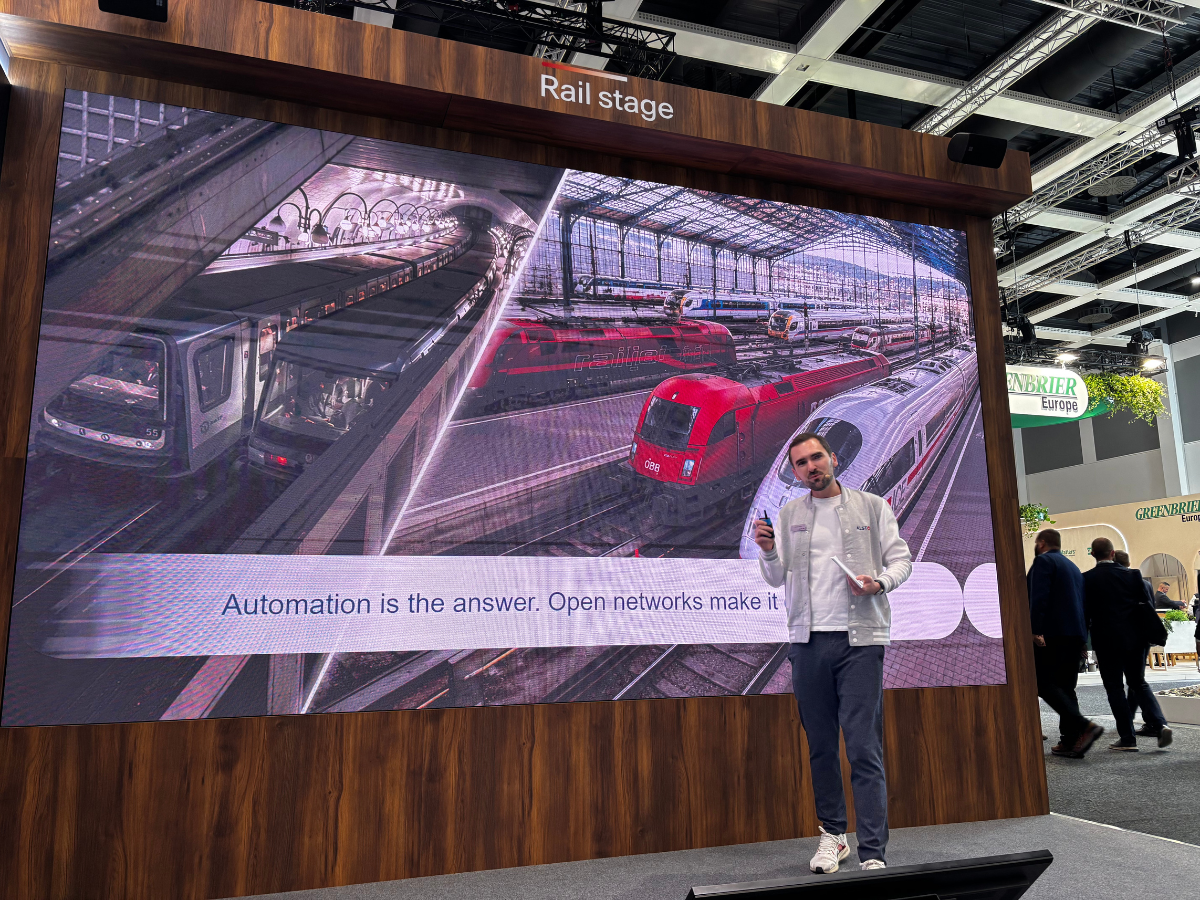
This challenge was a key focus at the APTA Rail Conference in Baltimore, where transportation leaders from New York, Chicago, San Francisco, and the private sector discussed how they are responding to financial uncertainty and developing new funding strategies.
New York’s Congestion Pricing
Jaibala Patel, Chief Financial Officer of New York’s MTA, opened the discussion with an evaluation of the city’s controversial congestion pricing scheme.
For years, critics argued that congestion pricing would damage New York’s economy and discourage people from visiting Manhattan. However, at the conference, Patel presented data demonstrating the opposite, as businesses have since been thriving.
Meanwhile, the first year of the programme reduced vehicle entries into Manhattan’s congestion zone by 11 percent, while improving traffic speeds by 15 percent. Bus service became more reliable, subway and bus ridership increased, and the city experienced its lowest recorded traffic fatalities.
Furthermore, Patel highlighted that public opinion changed dramatically once people experienced the benefits firsthand. Initial opposition steadily declined as commuters began seeing shorter travel times, less congestion, and tangible improvements to daily life.
Critically, the program also generated more than 700 million USD in revenue during its first year, exceeding initial projections and providing a dedicated revenue stream for approximately 15 billion USD in future transit capital improvements.
It is therefore unsurprising that other major US cities such as Chicago and San Francisco are also examining the potential of congestion pricing. New York’s successful rollout has shifted the policy from abstract debate to a live reference point for other regions struggling with congestion and transit funding shortfalls.
Chicago’s Regional Transportation Authority
While New York demonstrated the power of a dedicated revenue source, Robert Nash of Chicago’s Regional Transportation Authority illustrated the importance of building broad political consensus.
Chicago faced a looming fiscal cliff that threatened service cuts, layoffs, and fare increases. Nash explained that rather than focusing solely on closing a budget gap, leaders determined a plan that also pushed for an improved, more attractive network.
This shift in framing helped build a broad coalition to produce legislation, creating approximately 1.2 billion USD in new annual operating funding through the Northern Illinois Transit Authority (NITA) Act. The legislation establishes NITA to coordinate planning, funding, fares, and service across the Chicago Transit Authority, Metra, and Pace, replacing the previous regional oversight structure with a more integrated model.
The new funding consists of 73 million USD from the redirection of existing taxes, leveraging a sales tax on motor fuel. It also includes 478 million USD from a 0.25 per cent increase in RTA sales tax.
Nash emphasised that this funding package succeeded because it was paired with reforms, rather than simply requests for money. The legislature expected clearer accountability, centralised planning, and measurable service standards in exchange for new public investment.
San Francisco’s Municipal Transportation Agency
Likewise, Julie Kirschbaum, General Manager of San Francisco’s Municipal Transportation Agency (SFMTA), described a challenge representative of many American cities. San Francisco’s transit agencies currently face substantial operating deficits as temporary federal pandemic relief funding disappears.
To tackle this hurdle and prevent service cuts that would undermine the region’s economic recovery, she described a coalition bringing together city leaders, labor unions, business organisations, environmental advocates, and regional transportation agencies. Here, she observed that stakeholders who normally disagree on most topics united behind preserving public transportation.
Unlike in Chicago, San Francisco’s strategy focuses on stabilising rather than expanding service through a combination of new regional sales taxes, local revenue tax measures and operational efficiencies. This citizen-led movement to authorise the regional sales tax will appear on the November 2026 Ballot as the Connect Bay Area Act. Meanwhile, a parcel tax has also been proposed as a tax on real estate per square footage.
Kirschbaum argued that such revenue streams are necessary, as American transit agencies operate under funding structures very different from those found in Europe and Asia. While many international systems receive substantial national operating support, California’s transit agencies rely heavily on county-level funding.
Solarion International
The panel’s final presentation came from Michael Hoghooghi, CEO of Solarion International. Rather than discussing taxes or fare revenue, Hoghooghi challenged attendees to rethink the value of transit infrastructure.
He argued that agencies cannot continue to rely on additional taxes to close fiscal gaps. Instead, he argued that they need to leverage the long-term asset of the transportation corridors.
If corridors are viewed as multi-purpose platforms instead of single-purpose transportation routes, they could host energy infrastructure, data networks, logistics services, autonomous technologies, drone operations, and future innovations that do not yet exist. Hoghooghi stated that these additional uses could generate continuous revenue streams that reduce dependence on taxes and government appropriations.
Hoghooghi challenged transit leaders to think beyond conventional funding debates and imagine transportation infrastructure as an economic platform rather than simply a public expense.
Overall, the discussion in Baltimore reflected a sector in transition, battling against the turbulence of the next surface transportation authorization cycle and a broader reduction in federal support. With no clear replacement for the scale of federal investment seen in recent years, transit agencies are being pushed into a more uncertain fiscal environment, where long-term capital planning increasingly depends on state, local, and regional revenue decisions.
Against that backdrop, the conference highlighted the urgency of closing immediate operating gaps. In doing so, agencies are being forced to rethink governance structures, revenue tools, and even the economic role of transit infrastructure itself in order to secure sustained investment.
Meanwhile, the industry is urging Congress to provide greater investment for public transportation across the country.