Knuckles, couplers, and yokes are critical railcar connection components that impact safety, reliability, and uptime. Learn how proper maintenance and sourcing help reduce downtime and keep fleets moving.
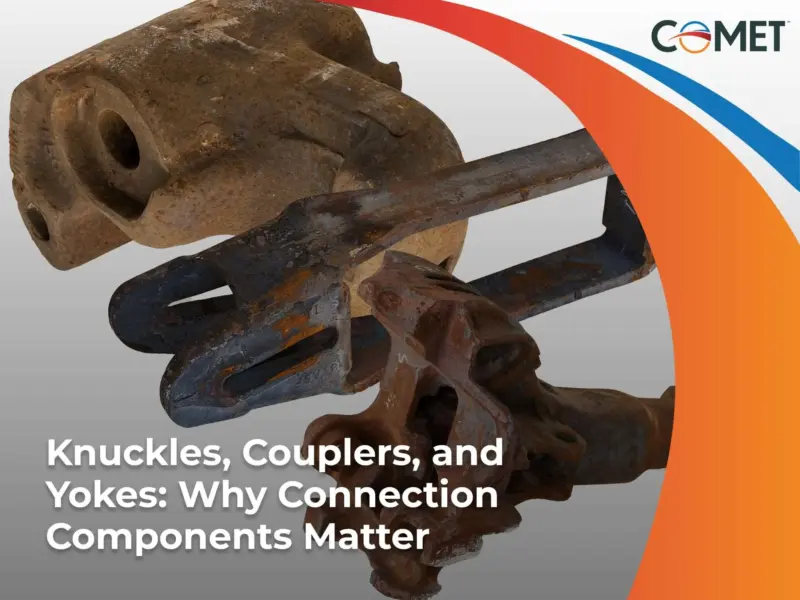
In the world of rail operations, the most vital components are often those that endure the highest levels of physical stress. While heavy machinery and advanced logistics software often dominate the conversation, the physical connection between railcars is what truly keeps a fleet moving. Connection components, specifically knuckles, couplers, and yokes, are the unsung heroes of railcar reliability. They support secure connections and ensure that rail movement remains consistent, secure, and efficient.
For maintenance teams, parts buyers, and fleet managers, these components deserve significant attention. They may not always be in the spotlight, but when they are worn, damaged, or simply unavailable, railcar movement can grind to a halt very quickly.
What Are Railcar Connection Components?
To understand why these parts are so critical, it is important to look at how they function as a unified system. While each has a specific role, they work together to manage the immense forces generated during rail travel.
- Knuckles: The knuckle is the “hand” of the railcar. It is the moving part of the coupler that swings open to accept a connection and locks with the knuckle of another car to secure the link.
- Couplers: The coupler serves as the primary connection point between railcars. It is the heavy-duty assembly that allows cars to be linked together into a cohesive train for movement.
- Yokes: Often hidden from immediate view, the yoke is a vital structural component that connects the coupler system to the draft system. Its job is to transfer both pulling and compressive forces from the coupler into the car’s frame, protecting the asset from the shocks of starting and stopping.
You can browse our catalog of railcar components on the COMET website.
The Foundation of Railcar Reliability
The operational importance of these components cannot be overstated. Because they experience repeated stress during daily operation, enduring thousands of pounds of force every time a train accelerates or brakes, their condition directly affects fleet readiness.
A single issue with a connection component can take a railcar out of service immediately. If a coupler fails or a knuckle becomes too worn to lock securely, the car is no longer safe to move. This makes connection parts a primary focus for maintenance planning.
Common Issues and Operational “Trigger Points”
Maintaining these high-stress parts requires an understanding of where they are most likely to fail. Common issues include:
- Wear and Tear: Repeated coupling and uncoupling naturally wears down the contact surfaces of knuckles and couplers.
- Physical Damage: Cracks, deformation, or impact damage can occur during heavy handling or as a result of misaligned connections.
- Environmental Factors: Corrosion and material fatigue can weaken the integrity of the steel over time, leading to potential failure under load.
- Fitment Issues: Improper fit or compatibility issues can lead to accelerated wear and reduced safety.
The challenge for fleet managers is that these issues rarely just create a “part replacement” need; they trigger a cascade of operational disruptions.
The True Cost of Component Failure: Downtime
When a connection component fails, the cost of the physical part is often the smallest portion of the total expense. The bigger issue is the resulting downtime.
Cars must be removed from service for inspection and repair, which immediately impacts asset availability. If the necessary part is not in stock, repairs are delayed while the team searches for a replacement. This often leads to “emergency sourcing,” where parts are purchased at a premium and shipped with urgency, adding significant cost and unpredictability to the maintenance schedule.
Why Parts Availability is a Competitive Advantage
In the rail industry, having the right parts on hand, or having a partner who does, is a strategic necessity. Connection components are essential repair items that should never be an afterthought.
Stocking or sourcing the right parts quickly helps reduce delays, especially for older or specialized railcars that may require components that are harder to find on the open market. A reliable inventory support system allows maintenance teams to plan their repairs with confidence, knowing they won’t be sidelined by a missing yoke or a backordered knuckle.
Choosing the Right Path: New vs. Reconditioned
When it comes time to address a worn component, fleet managers face several critical decisions. Is the component eligible for reconditioning, or does it require a full replacement?
Choosing between new and reconditioned parts depends on several factors, including operational urgency, the condition of the surrounding components, and long-term cost considerations. In many cases, a high-quality reconditioned part can offer the necessary reliability at a lower price point, while a new part might be required for specific high-specification applications or when time is of the essence.
How Experienced Partners Help
An experienced railcar parts partner does more than just fill an order; they act as a resource for identification and repair planning. They understand the nuances of railcar maintenance and can help teams move faster by providing:
- Decades of Industry Experience: Practical knowledge of what works and what doesn’t in the field.
- Diverse Inventory: Access to both new and reconditioned parts for running gear and connection systems.
- Sourcing Support: The ability to track down hard-to-find components for aging fleets.
- Inventory Depth: Sufficient stock to ensure quick response times when an unexpected failure occurs.
Conclusion: Reliable Connections Start with Reliable Parts
Knuckles, couplers, and yokes are the literal links that hold a rail operation together. By prioritizing the inspection and sourcing of these critical components, maintenance teams can protect their uptime and keep their fleet operations moving with greater confidence. Reliable rail movement starts with a reliable connection, and those connections are only as good as the parts that support them.
FAQs
A railcar knuckle is the moving part of the coupler system that opens, closes, and locks with another knuckle to create a secure connection between railcars during operation.
These components function as a unified connection system. The coupler links railcars together, the knuckle creates the locking connection, and the yoke transfers pulling and compressive forces into the railcar structure.
Common issues include excessive wear on contact surfaces, cracks, deformation, corrosion, material fatigue, and fitment problems that can affect safety and performance.
The largest cost is often downtime rather than the replacement part itself. Failed components can remove railcars from service, delay repairs, and create additional expenses through emergency sourcing and expedited shipping.
The best option depends on the component’s condition, operational requirements, budget, and repair timeline. High-quality reconditioned components can provide reliable performance while helping reduce maintenance costs in many applications.
This article was originally published by COMET Industries.