A new modular footbridge design, a lighting brief balancing dark-sky requirements, a tight budget and a curved composite structure, and three online meetings that shaped the outcome. Geoff Jones, Director of i-vision Lighting Solutions, explains why involving lighting specialists early can influence far more than the lighting itself.

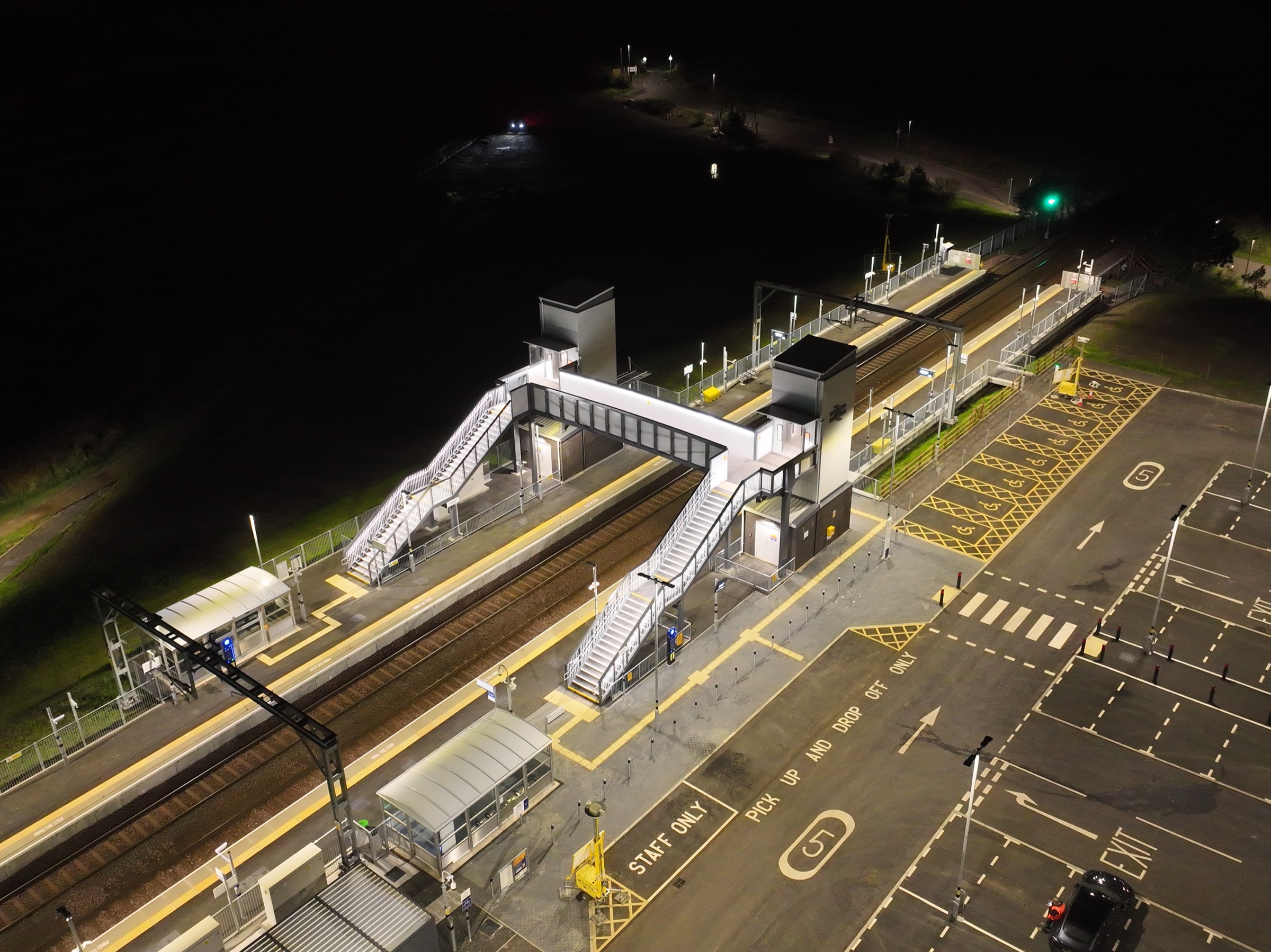
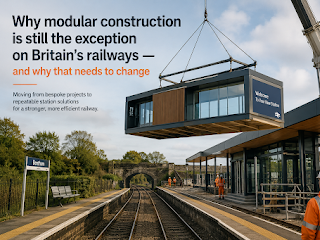
Network Rail’s Flow footbridge is a modular design built from fibre-reinforced polymer rather than steel, intended to replace high-risk rural footpath crossings at a fraction of the weight and cost of a traditional structure. It’s still in development, but the lighting for it has already been through a proper design process. It’s a useful illustration of what early involvement can achieve when the brief is genuinely difficult.
A Brief with Several Competing Demands
The designers came to the table with a clear concept and a demanding set of objectives to satisfy alongside it. The lighting had to support the designer’s architectural intent rather than sit on top of it, run on very low power, control light spill carefully given the rural, often dark-sky settings the bridge is aimed at, work within a tight budget, install quickly and simply, and adapt across the different module sizes the modular system allows for. None of these were negotiable, and several pulled in different directions at once.
Two further constraints came from the structure itself rather than the brief. A composite footbridge moves through a significantly wider range of expansion and contraction than a steel or concrete equivalent, and this particular structure can sit over a live high-speed line, meaning it also has to tolerate the substantial vibration of trains passing beneath at speed. Both had to be designed for from the outset.
What Two Meetings Produced
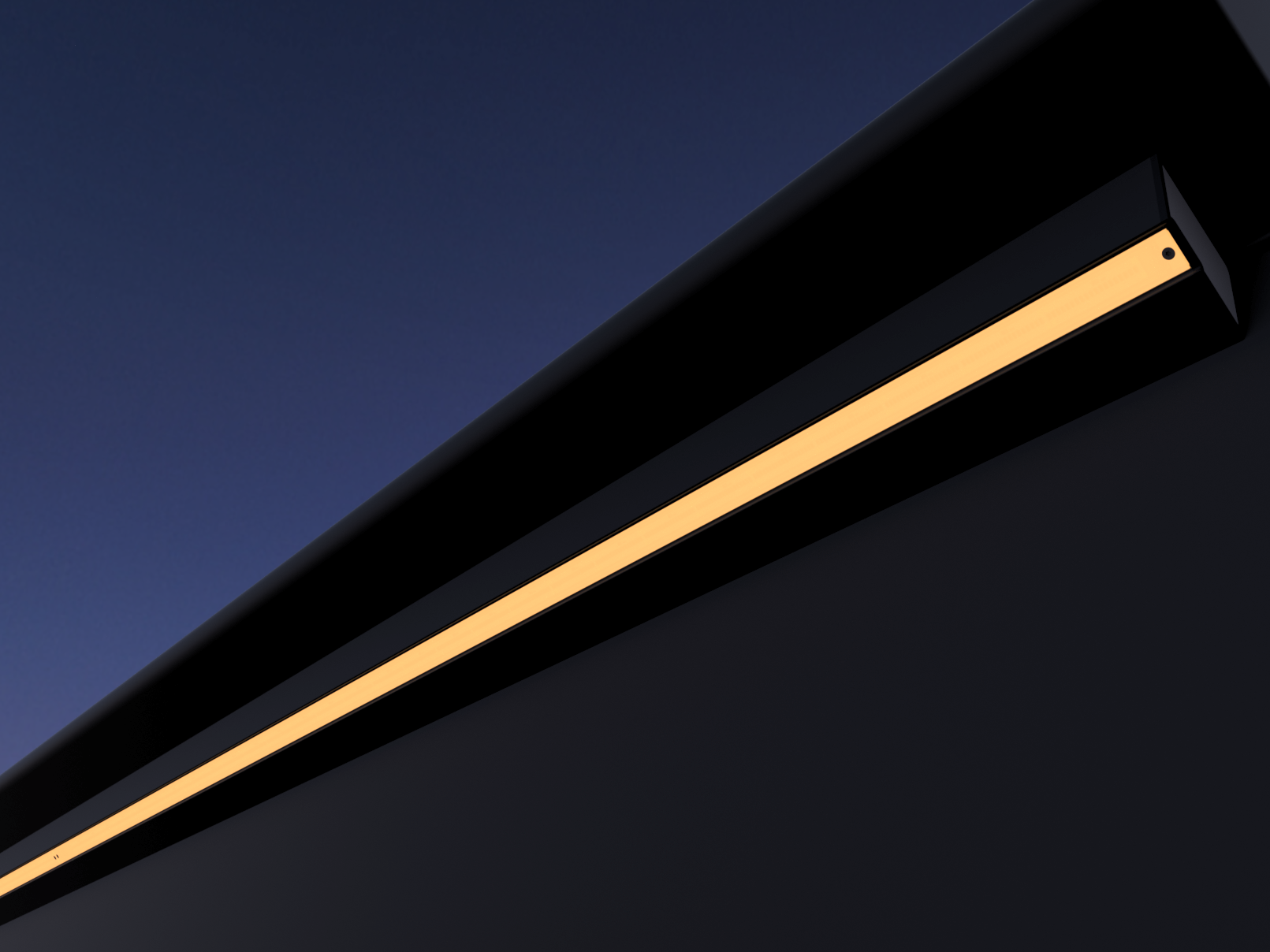
That brief, discussed early with the right people from the project over just three online meetings, led i-vision to develop a bespoke lighting approach specifically for the bridge’s curved composite geometry — something no off-the-shelf linear luminaire could have followed, and one that also had to accommodate the structure’s greater thermal movement and the vibration of high-speed trains passing beneath. We can’t share the design detail while the project is still live, resulting in a bespoke lighting solution developed around the bridge’s geometry and operating environment, rather than adapted from an existing product.
Feedback from those early conversations was folded straight back into the design — refining fixing positions and clearances before anything was committed to production, rather than after.
Identifying Constraints Beyond the Original Brief
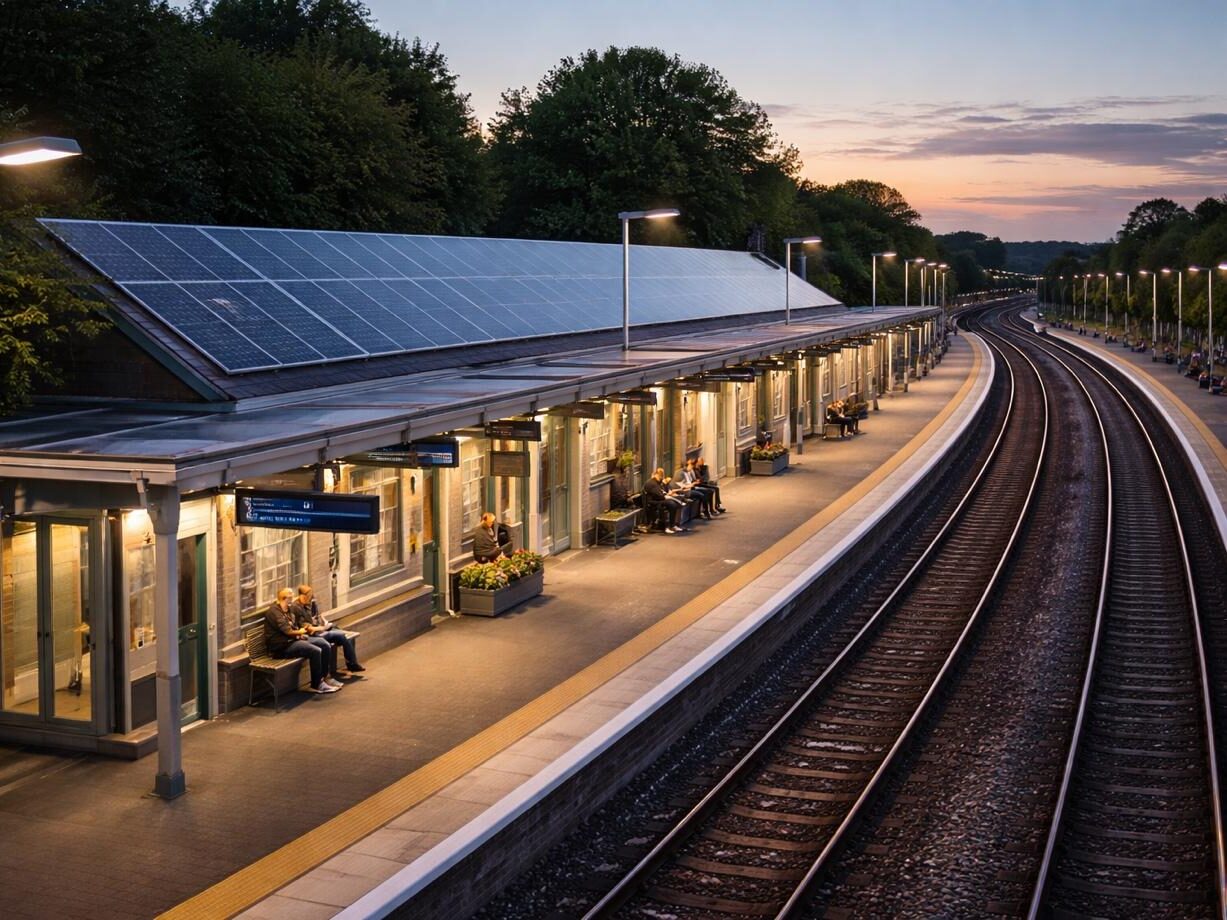
The most telling part of the process wasn’t something the client asked for. Rural crossings are often a long way from a mains power connection, and running power to a remote site can cost more than the lighting itself. i-vision raised this early, before it became a problem, and proposed stand-alone solar and battery options as an alternative — including the possibility of solar-active glazing built into the bridge’s own glass panels, so the power source becomes part of the structure rather than an addition to it.

It’s the kind of constraint that only surfaces once someone with the right experience is in the conversation early enough to look beyond the immediate brief — and exactly the kind of value that’s lost when lighting is brought in after the design is fixed.
What It Took to Get There
None of this needed a lengthy engagement. Three online meetings, with the designers, engineers and technical leads who actually held the answers, were enough to work through a genuinely unusual structure, a demanding set of constraints, and a problem the brief hadn’t even mentioned. The same shortlist that made those meetings productive applies to any project reaching feasibility or early concept stage:
A clear concept or outline design — doesn’t need to be finished, just enough to show the geometry and intent.
The real constraints — budget, power availability, site conditions, planning or environmental policies.
A sense of what has to stay flexible — modular sizing, phased delivery or anything likely to vary between sites.
The right people in the room — whoever actually holds the answers to the above.
The Main Factor at This Stage Is to Resolve Any Issues Early. As the Flow Project Demonstrated, That’s Often Considerably Easier Than Revisiting Them Later.
The Difference Timing Makes
Lighting rarely represents a large proportion of a rail project’s capital cost, but decisions made during the earliest design stages often determine how straightforward, efficient and maintainable the final installation will be. Bringing a lighting specialist into the conversation while ideas are still flexible can uncover opportunities, avoid unnecessary constraints and help ensure that the lighting package reaches procurement fully resolved rather than still evolving.
For further information about i-vision Lighting Solutions, visit ivisionuk.com.
Starting the Design Conversation
What you need to take to the first meeting:
- A clear concept or outline design
- The real constraints
- Know what needs to stay flexible
- The right people in the room
Two or three conversations — no cost, no obligation, no site visit required.