Train couplers keep every railcar connected. Learn how AAR Type E, F and H couplers work, which coupling components wear first and when to choose new or reconditioned parts.
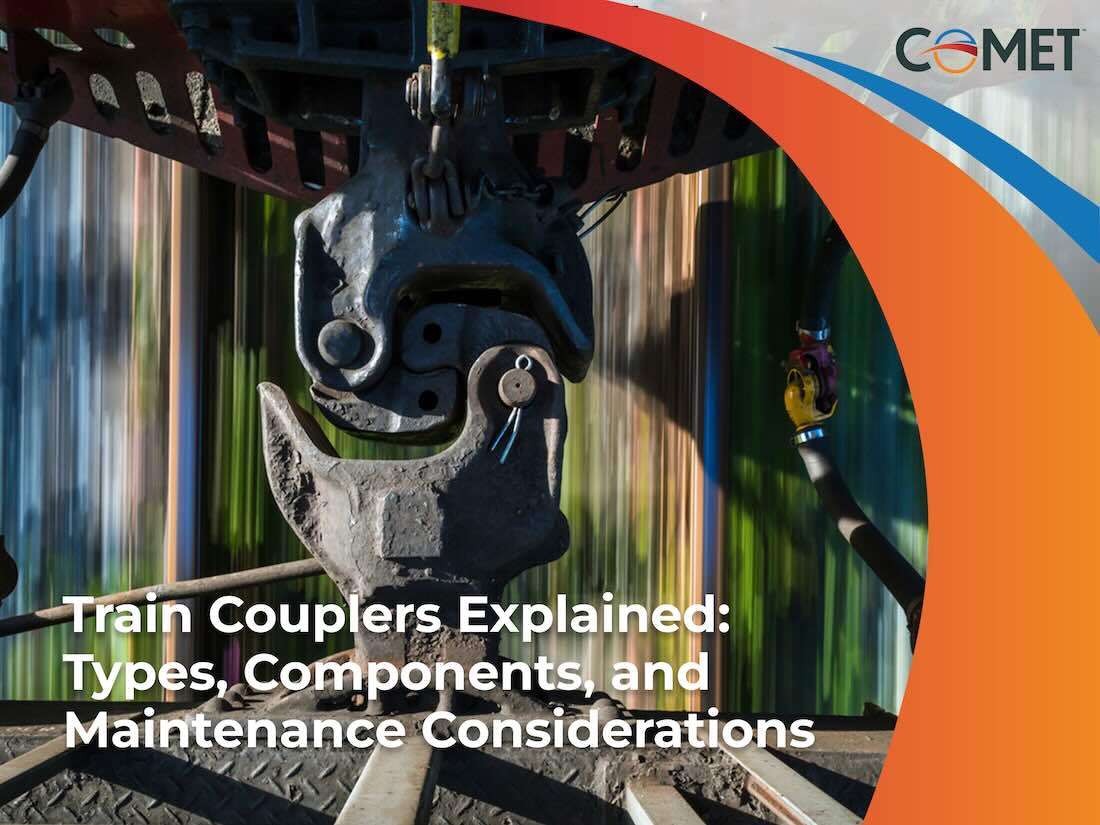
Every freight train is only as reliable as the connections between its cars. Trains today often run a mile or longer, and every car in that consist is held to the next by a pair of train couplers. Those couplers have to lock automatically, carry heavy pulling and pushing forces through every start, stop, and grade, and release cleanly when the car is switched out. When a coupler or one of its parts is worn or damaged, the car it’s attached to stops moving.
That’s why coupling systems deserve more attention than they usually get. For fleet managers, car shop crews, and parts buyers, understanding how train couplers work, which types are in service, and which components wear first makes it easier to plan inspections, keep the right spares on the shelf, and avoid unplanned bad orders.
This guide covers the main train coupler types, the components that make up a railcar coupling system, the wear points to watch, and what to weigh when choosing between new and reconditioned parts.
What Is a Train Coupler?
A train coupler is the mechanical device at each end of a railcar or locomotive that connects it to the next piece of equipment. In North America, nearly every freight car, passenger car, and locomotive uses a version of the Janney knuckle coupler, a design Eli Janney patented in 1873. It works like two hands clasping. When two cars are pushed together with at least one knuckle open, the knuckles close around each other and a lock drops into place. The result is a train coupling that stays locked until someone deliberately releases it.
Before automatic couplers, railroads relied on link-and-pin couplers, which required a worker to stand between moving cars to guide a link into place. The Safety Appliance Act of 1893 required automatic couplers on trains operating in interstate commerce, and the knuckle design became the standard. Today’s railroad car couplers follow the same basic principle, with stronger steels, tighter tolerances, and designs standardized by the Association of American Railroads (AAR).
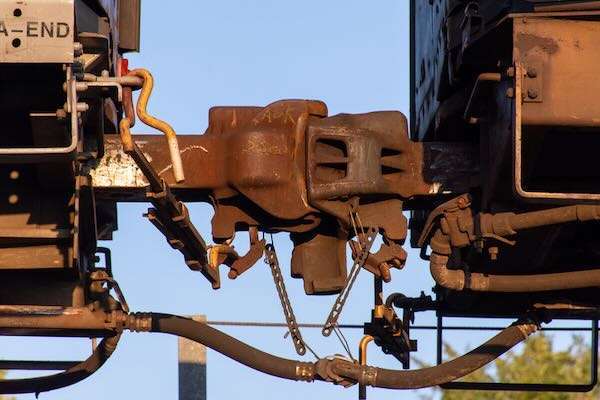
To separate cars, a worker raises the coupler lock with the uncoupling lever, often called the cut lever, from the side of the car. The knuckle swings open and the cars can be pulled apart without anyone stepping between them.
Understanding Train Coupler Types and Applications
Every railcar coupler does three jobs. It connects automatically, it transfers draft (pulling) and buff (pushing) forces between cars, and it allows enough movement for cars to negotiate curves and changes in grade. The main AAR coupler types handle those jobs in slightly different ways:
- Janney (knuckle) couplers: The family name for the automatic knuckle design used throughout North American rail. AAR Type E, F, and H couplers are all Janney-style couplers with compatible contours, which is why a freight car can couple to a locomotive or to a car from another railroad.
- Type E couplers: The standard freight car coupler. The AAR adopted the Type E in the early 1930s, and it remains the most common coupler on North American freight cars. It connects to the yoke with a horizontal key and allows some vertical movement between mating knuckles. Shelf versions add a top shelf, a bottom shelf or both to help keep coupled cars from separating vertically in a derailment.
- Type F couplers: Designed with interlocking features that help limit vertical disengagement between coupled cars. Type F couplers connect to the yoke with a vertical pin. They’re common on tank cars in hazardous materials service and on cars that run through rotary dumpers, where rotary versions let the car turn over to unload without uncoupling.
- Type H couplers: Tightlock couplers machined to tighter tolerances, which reduces slack between cars. Type H is the standard on North American passenger cars.
Locomotives use the same E, F, and H head designs, paired with shanks built for locomotive yokes and draft gears. That’s why locomotive couplers are specified separately from freight car couplers, even when the head types match.
How application affects coupler selection
Choosing the right train coupler isn’t only about the head type. Shank length, butt style, steel grade, and shelf configuration all have to match the car’s draft system and the service the car is in. Tank cars, for example, must carry couplers that resist vertical disengagement, which in practice means double-shelf Type E or Type F couplers. A part that fits physically can still be the wrong part if it doesn’t match the car’s specification, so replacement couplers are identified by AAR catalog number rather than by a general description.
Coupler height matters too. Federal rules set the standard drawbar height for freight cars on standard-gauge track at 31½ to 34½ inches above the top of the rail. Worn components elsewhere on the car can push a coupler out of that range, so height is worth checking whenever coupling parts are replaced.
Key Components of a Railcar Coupling System
The coupler head gets most of the attention, but it’s only the visible end of the system. Behind it, several components work together to hold the connection and carry force into the car body:
- Couplers: The coupler body provides the mechanical connection between railcars. The head holds the knuckle and lock, and the shank extends back into the car to connect to the yoke. Browse COMET’s freight couplers, including rotary couplers.
- Knuckles: The pivoting piece that closes and locks against the mating coupler’s knuckle. Knuckles carry the pulling load of the train, which makes them one of the most frequently replaced coupling parts. See our railcar knuckles, or read more about why knuckles, couplers, and yokes matter to fleet uptime.
- Yokes: The railcar yoke connects the coupler shank to the draft gear and helps transmit longitudinal forces into the car. Each yoke must match the coupler’s shank and butt design and the length of the draft gear it holds. Shop railcar yokes.
- Draft gears: Cushioning units seated in the yoke that absorb and cushion buff and draft forces during starts, stops, and slack action. Without them, every one of those shocks would go straight into the coupler, the car body, and the lading. Explore freight draft gears.
- Coupler-related hardware: Knuckle pins, locks, locklifts, knuckle throwers, draft keys, follower blocks, carrier wear plates, and uncoupling levers. These are small parts, but several of the defect conditions in federal freight car rules involve them. Find coupler pins, locklifts, and uncoupling levers in our catalog.
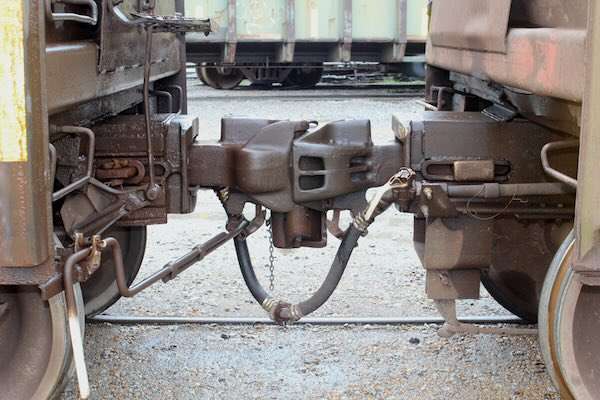
Because these parts work as a system, replacing one worn component without checking the others can shorten the life of the new part. COMET’s coupling components catalog groups these parts together so you can source a full assembly in one place.
Common Coupler Wear and Maintenance Considerations
Every coupling, start, stop, and run-in of slack puts stress on the coupling system. Over time, repeated impacts, longitudinal forces, weather, and corrosion wear down contact surfaces and fatigue the steel. Most coupler problems develop gradually, which is why routine inspection can catch them before they take a car out of service.
Common maintenance considerations include:
- Wear or damage to coupler heads and knuckles: Worn pulling faces and contour surfaces add slack between cars, and more slack means harder run-ins. Federal rules don’t allow a car to be placed or continued in service with a knuckle that is broken or cracked on the inside pulling face.
- Cracks, deformation, or excessive wear in coupling components: A crack in the highly stressed area where the coupler shank meets the head is a defect, as is a shank bent so far out of alignment that the coupler won’t couple automatically.
- Worn locking mechanisms or related hardware: A missing or inoperative knuckle pin, knuckle thrower, or locklift is a defect. So is a missing, bent, or cracked lock, or a coupler assembly without anticreep protection to keep the lock from releasing unintentionally.
- Yoke and draft gear condition: A cracked yoke or a draft gear that has lost cushioning capacity sends more shock into the coupler and the car. Check these parts whenever the coupler is replaced.
- Proper inspection, compatibility, and replacement requirements: Replacement parts should match the AAR catalog designation for the car, mate correctly with the existing yoke and draft gear, and leave the coupler within standard height.
Build your inspection program around applicable AAR requirements and established inspection procedures. The AAR Field Manual of Interchange Rules includes specific rules for Type E, E/F, and F couplers, yokes, draft gears, and uncoupling levers, and federal freight car safety standards set the minimum conditions a car must meet to stay in service. For a broader view, see our strategies for effective railcar maintenance.
New vs. Reconditioned Coupling Components
When a coupling component reaches the end of its service life, maintenance teams usually have two options: a new part or a reconditioned one. Both have a place in a well-run railcar maintenance program, and the right choice depends on the part, the car, and the timeline. When sourcing replacement parts, consider:
- Component condition and service requirements: Think about what the part is being asked to do, including the car type, the service it runs in, and how much life the car has left.
- Applicable AAR standards and specifications: AAR specifications cover both new and secondhand coupling parts. M-211 sets foundry and product approval requirements for new couplers, yokes, knuckles, and follower blocks, while M-212 covers the classification and reconditioning of secondhand couplers and yokes. Ask your supplier how a reconditioned part was inspected, gauged, and classified, and what documentation comes with it.
- Availability and maintenance schedules: A part that’s in stock today can be worth more than a cheaper part that’s weeks away when a car is waiting on the repair track. Reconditioned inventory can help keep cars moving when new castings are hard to get.
- Cost considerations and component lifecycle management: Reconditioned components generally cost less than new ones and keep usable steel in service longer. Weighing repair against replacement over the full component lifecycle helps you spend where it matters most.
COMET supplies both. Our catalog includes new knuckles alongside stenciled and gauged qualified knuckles, plus reconditioned freight couplers, locomotive couplers, yokes, and draft gears. COMET operates an AAR M-214-certified reconditioning shop and an AAR M-1003-certified facility in Kansas City. Parts reconditioned in our shop are evaluated against applicable AAR criteria before returning to service. Learn more about our reconditioning services.
Finding the Right Coupling Components with COMET Industries
COMET has served the rail industry since 1963. From our 7-acre core inventory in Kansas City, we supply new and reconditioned freight car parts, including couplers, knuckles, yokes, draft gears, and the hardware that holds coupling systems together.
Working with a supplier that understands railcar maintenance makes the job easier. Our team can help you match the right AAR catalog number, confirm compatibility with the car’s draft system, and find a part that’s available when your car needs to move.
Start in our online Freight Car Parts Catalog to identify the components you need and add them to a quote request. Prefer to browse offline? Request a print or digital parts catalog, or call our sales team at 888-700-4214, Monday through Friday, 8 a.m. to 4 p.m. Central.
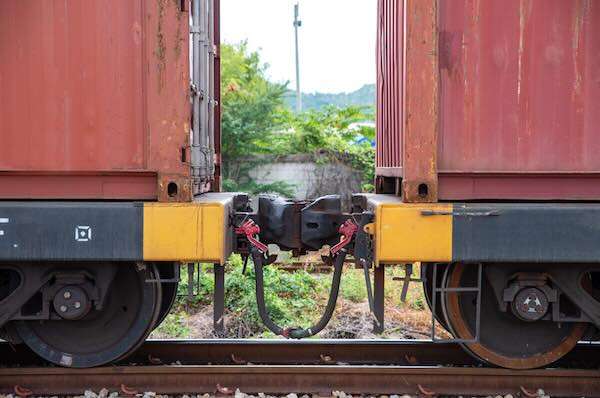
Ready to source your next coupling components? Explore COMET’s Freight Car Parts Catalog and request a quote.
FAQs
What is a train coupler?
A train coupler is the device at each end of a railcar or locomotive that connects it to the next car. In North America, train couplers use the Janney knuckle design, which locks automatically when cars are pushed together and transfers pulling and pushing forces between cars.
How do train couplers work?
When two cars meet with at least one knuckle open, the knuckles close around each other and a lock drops into place behind them. To uncouple, a worker raises the lock with the uncoupling lever from the side of the car, which lets the knuckle swing open.
What are the main AAR coupler types?
The main AAR coupler types are Type E, the standard freight car coupler; Type F, which interlocks vertically and is common on tank cars and rotary-dump cars; and Type H, the tightlock coupler used on passenger cars. All three are Janney-style couplers with compatible contours.
What’s the difference between a coupler and a knuckle?
The coupler is the full casting, including the head and the shank that connects to the yoke. The knuckle is the pivoting part mounted in the coupler head that closes and locks against the mating car’s knuckle. Knuckles can be replaced on their own when they wear.
Can train couplers be reconditioned?
Yes. Secondhand couplers and yokes can be inspected, classified, and reconditioned under AAR specifications, then returned to service. Ask your supplier for the part’s classification and documentation so you know it meets the requirements for your car.
This article was originally published by COMET Industries.