As conflict rages across the world, more and more questions are being asked about the preparedness of states throughout Europe, and as NATO demands the theoretical deployment of 100,000 troops within 10 days, these queries turn to the region’s railways.
Is Europe’s railway infrastructure equipped to handle such situations, and can fragmented networks, incompatible gauges and limited rolling stock meet military mobility requirements?
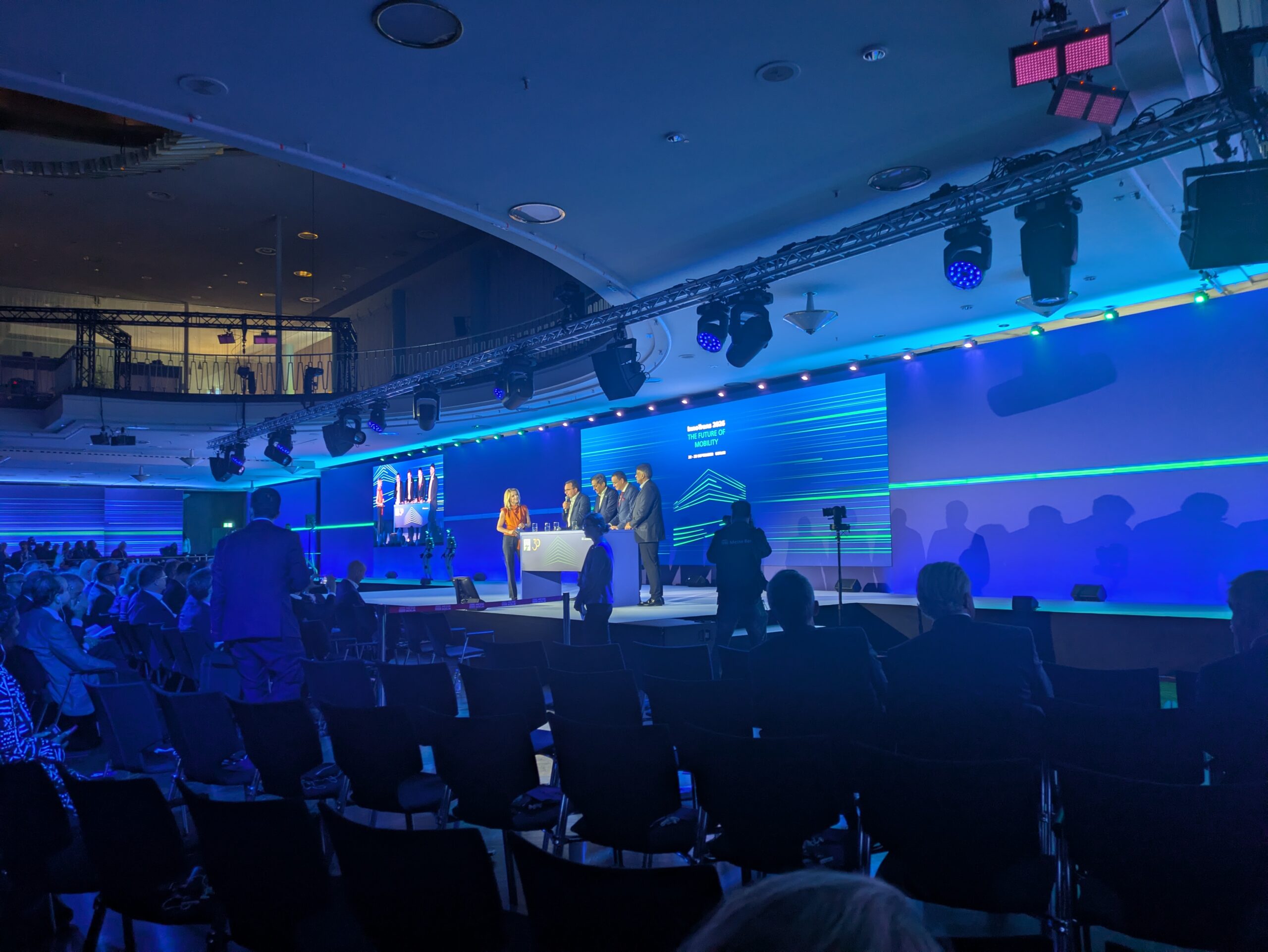
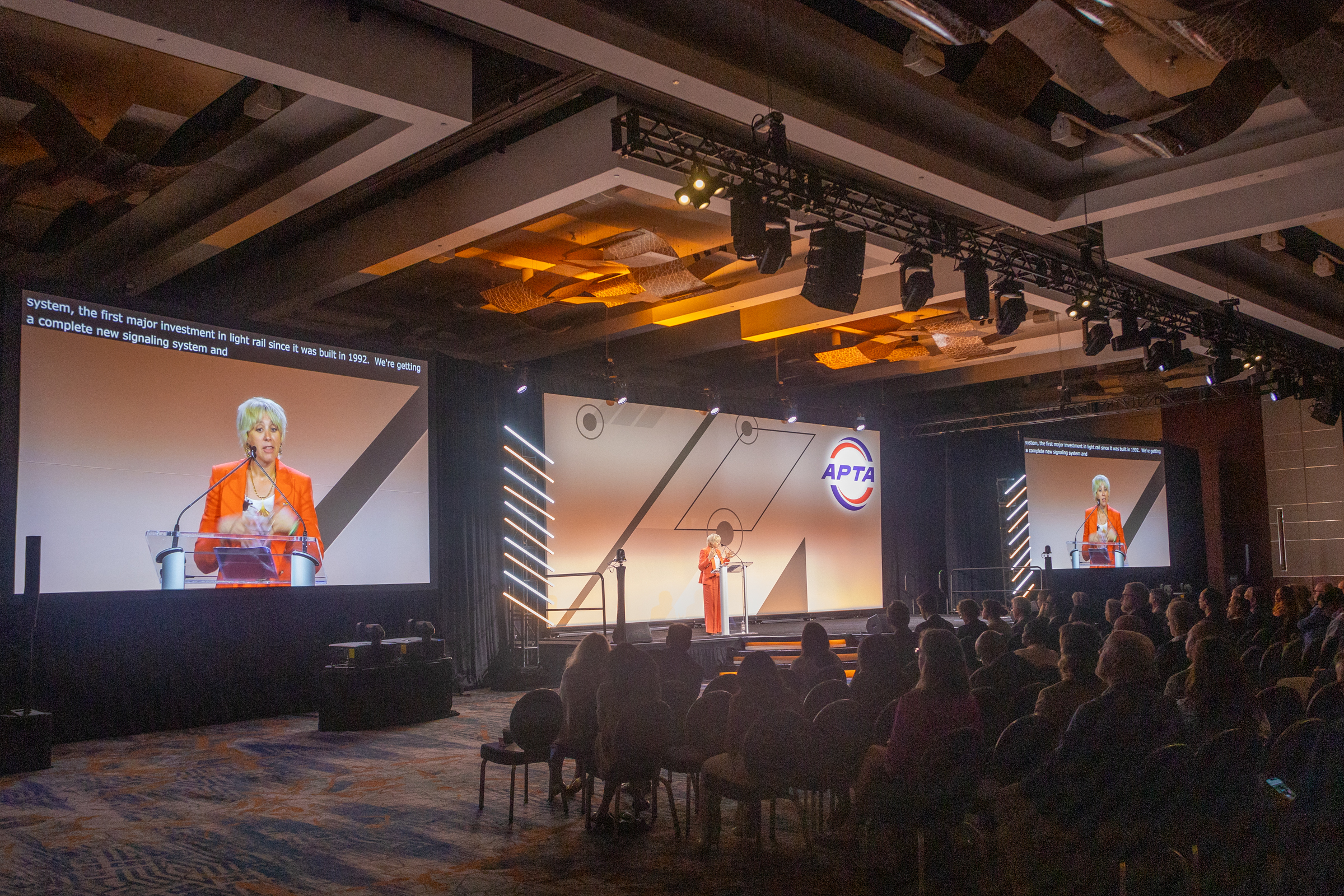
At the 14th International Railway Summit, railway infrastructure managers, cargo operators and port authorities gathered with political and military leaders to discuss some of the critical gaps in cross-border permissions, infrastructure capacity, and dual use readiness.
Appearing via video link for a special opening keynote; Oleg Yakovenko, Senior Representative at Ukrainian Railways discussed some of the ways in which his country has shifted its existing railway infrastructure in order to provide support for the ongoing war effort.
As a crucial backbone not just for the country’s defences but for the safe movement of its people; Ukraine’s railway has been forced to adapt to unforeseen circumstances – and quickly. Following the beginning of the war in 2022; the railway has transported more than 4.2 million people away from active combat areas, and has become instrumental in enhancing the country’s overall resilience.
Currently, Ukrainian Railways is the biggest employer in the country, and has developed a robust, comprehensive defence strategy against the threat of attacks – which, according to Yakovenko, often come up to six times per day.
The country has now employed the use of Electronic Warfare protection across more than 500km of its railway, as well as at 20 stations – and it is ready to share its newfound resilience expertise with EU railways and policy makers in an effort to aid those living within potential danger zones with their own preparedness for attack.

In 2025, the European Commission and the High Representative announced the adoption of the Military Mobility Package, a set of measures that aim to ensure the swift, coordinated and secure movement of military personnel and equipment across the European Union. The package, which builds on measures first introduced in the equivalent Package from 2024, was devised in an effort to strengthen Europe’s defence position by addressing barriers to military mobility across a number of regulatory, infrastructure, and capability dimensions.
Speaking during his own keynote speech; Keir Fitch, Advisor, Transport Innovation & Industrial Policy at DG MOVE stated that whilst EU member states may not currently have a desperate need for such measures, the need for a deterrent is certainly evident at this time – and with the package proposing the establishment of what would essentially become a harmonised ‘Military Schengen’, the working plan will involve the potential pooling of resource and infrastructure across all member states, enabling seamless military transport across the entire region.
Currently, information between states regarding the availability of assets that can be used for military uses is murky, with those in need left unsure on the potential capacity of not just rail but ferries, trucks etc – and this proposal, according to Fitch, will cover it.
Speaking later during the panel discussion ‘Are Europe’s Railways Ready for Military Mobility?’; Fitch posits that a key necessity of any and all military mobility measures is the assurance that any infrastructure must present a dual purpose use case – that is, any plans must have a clear benefit for the public, not just the military.
In a stated example, Fitch proposes the idea of strengthening the resilience of centralised digital systems – whilst this would, of course, serve a significant purpose in the protection of a country’s system in a wartime scenario, it would also have the added benefit of increasing resilience in the face of storms, accidental damage or other natural disasters.
Indeed, the concept of dual use pervades much of the conversation throughout the day’s programme. With such assurances of wider use, it would be argued that there would be no disadvantage to implementing such measures – bringing us to a term used by Yakovenko during his keynote speech earlier in the day – the ‘no regret investment’.
These types of investments, as explained by Yakovenko, are those which no matter the cost, will have some level of utility regardless of their intended purpose. For those situated near certain bordering countries, these types of investments will be crucial – and if they end up proving more useful for civilian operations, that can only be a positive outcome – leaving legislators and decision makers with, once more – no regrets.
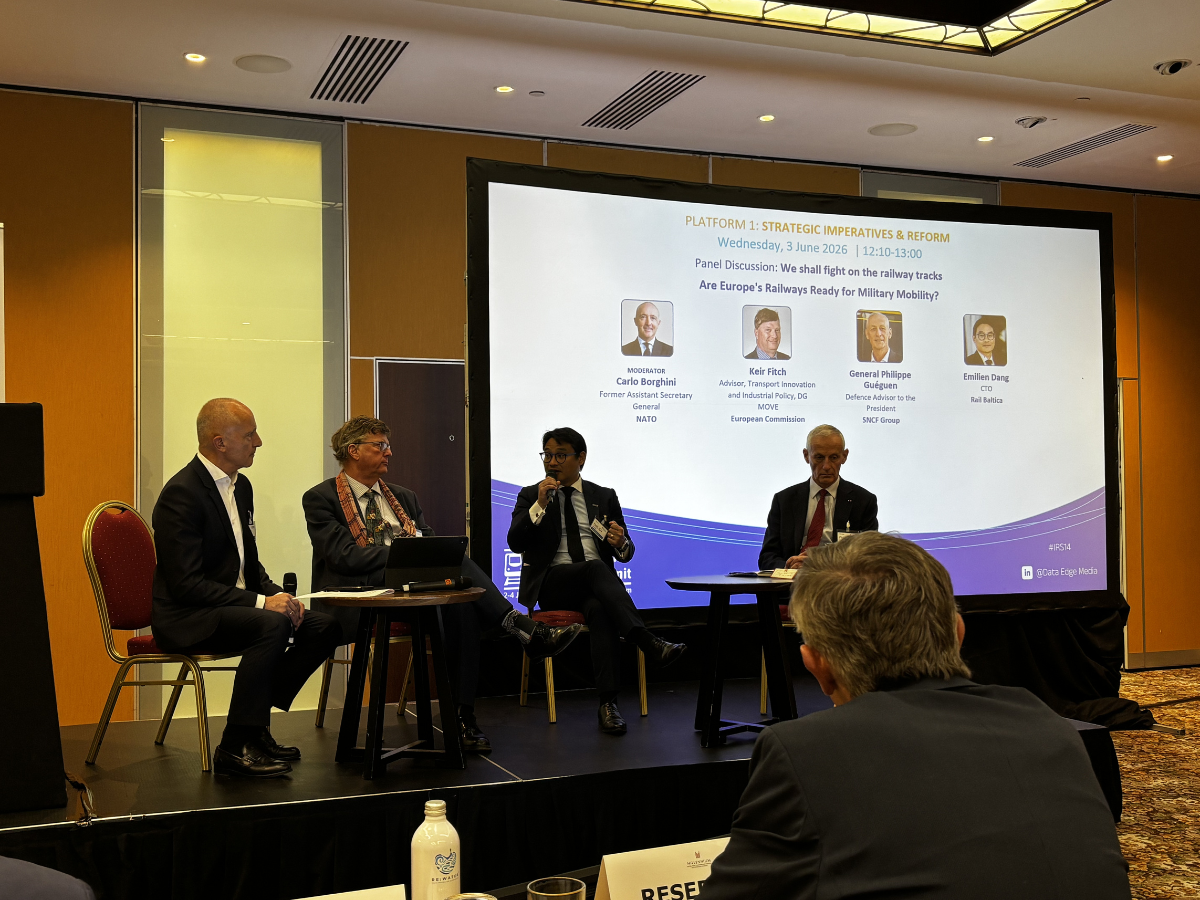
During the panel discussion; Emilien Dang, CTO at Rail Baltica (RB), discussed the precautionary steps his project has taken to increase its own resilience. With the Baltic states recently coming under the microscope of certain superpowers, Dang stated that the need for resilient, ready infrastructure couldn’t be more important. Early in the project’s development, bosses were given the opportunity to incorporate a number of military mobility measures – an opportunity they grasped with both hands.
Initially a project focused purely on civilian transportation; RB has gradually shifted its focus towards a rail system with a robust secondary use case. Speaking of the situation in Ukraine; Dang stressed that certain scenarios that were not initially considered quickly became a top safety priority for the project’s design, with the resulting infrastructure provisions representing another case of a no regret investment, and presenting the Baltic population with, according to Dang, not just a transport network, but a pillar of regional security.
However, with an existing rail network system relying largely on outdated Soviet-era infrastructure, issues are persisting when it comes to the project’s moving of significant amounts of cargo. Dang lamented that with much of the system’s current setup utilising a different track gauge to that of the proposed gauge of Rail Baltica; cargo is halted once it reaches the Polish border, creating significant technical issues yet to be solved and preventing a fully free-flowing route for both civilian and military operation.
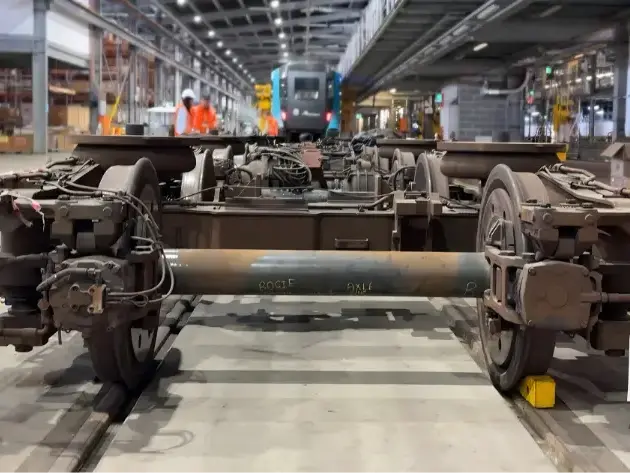
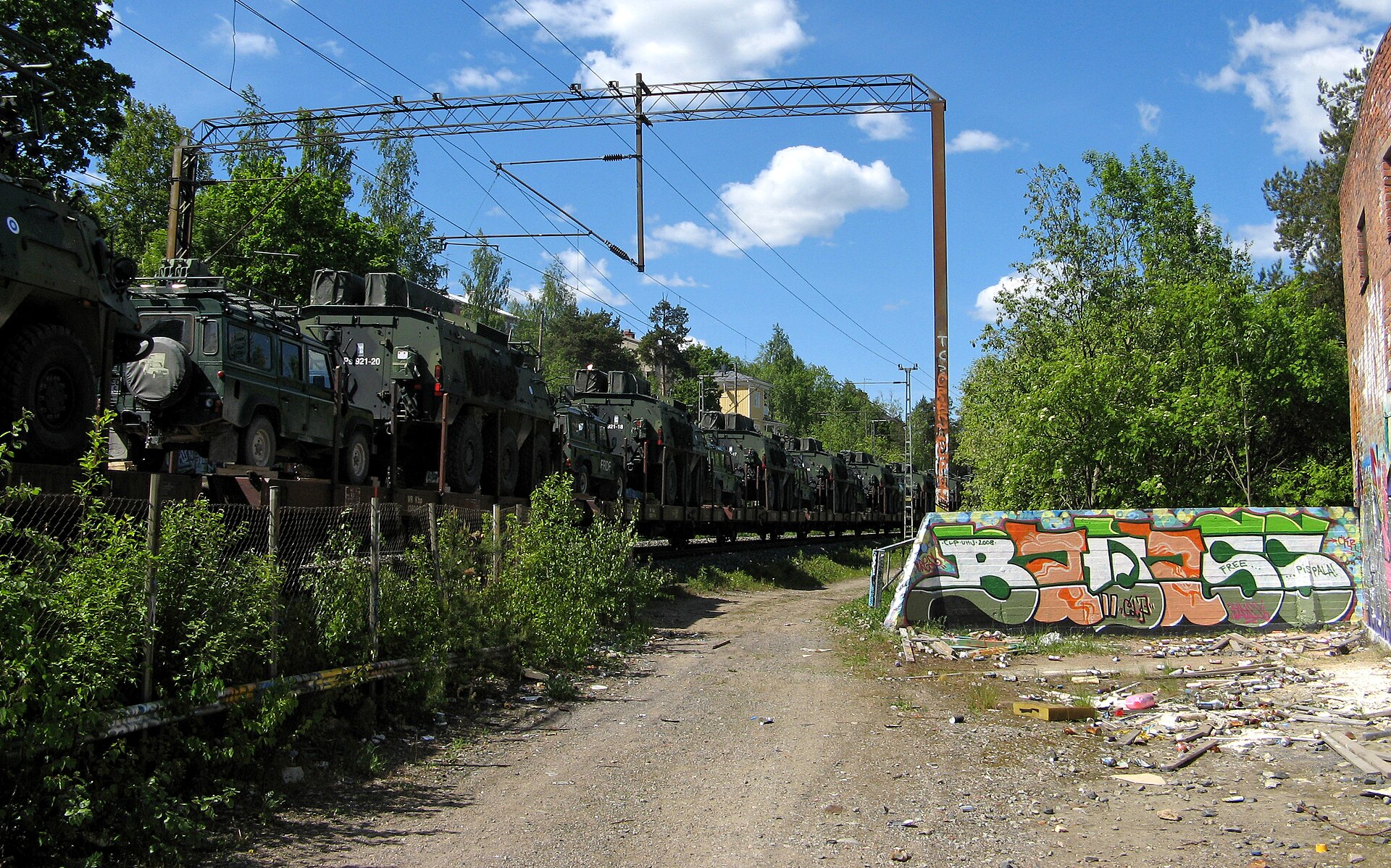
With cargo in mind, then, the question turns to a very simple one: once the issue of transportation has been solved, what will carry it? Currently, Europe lacks a concentrated supply of specialised rail wagons capable of handling heavy military equipment, creating severe issues, such as the lack of a capability to move a single line division – which typically requires around 8,400 wagons – as well as any full-scale defence scenarios, which would multiply this demand significantly.
Fitch mentions the idea of a pool of common resources, something echoed across the panel as a solution that could reduce bottlenecks and allow for swift decision making with regards to mobilisation and potential infrastructure repairs. However, whilst clearly a viable solution in theory, the reality is a lot more complicated.
Prior to his appointment as Defence Advisor to the President at the SNCF Group, General Philippe Guéguen served as the French Commander of the CSOA, a position that predominantly involved the management of both the transportation of military and handling of rolling stock requests for the French army. The General handled the planning of military movement, including ensuring that roads, rail and air spaces were clear for mobilisation.
Currently, the French military owns all of its own rolling stock – however, as Guéguen points out, all of this stock is leftover from the Cold War. Yes, there is talk of pooling & sharing military stock, however, with existing provisions spanning not just decades but eras of change, true harmonisation, at least right now, could be considered impossible – and that’s to say nothing of the state of infrastructure, which shares many of the same issues.
Speaking of experiences both past and current; Guéguen stressed the ‘physical safety’ felt by French forces with the support of the SNCF, stating that the link between rear and frontline operations is absolutely crucial – as is the prospect of reactivity, and with the current state of dedicated military rolling stock, this is very much seen as a sticking point in the journey toward a harmonised transportation network across EU states.
In a world with such an uncertain future, it’s clear, then, that though it may not be pleasant, internal discussions of this nature must continue, and these issues must be solved. Whilst nobody wants these preparations to be necessary, they cannot be ignored, and it’s safe to say that the current infrastructure, rolling stock and general conditions of some areas of Europe are simply not yet adequately prepared for the prospect of an unforeseen attack.
Work must continue to improve conditions, investments must be made into a more unified set of rolling stock, and a harmonised network must be explored in order to create a seamless transportation network for both military and civilian use. Truly, there can be no regrets.