By Mirko Blazic, EULYNX Technical Lead
As railway networks across Europe face increasing pressure to modernise ageing infrastructure, digital transformation has become a cornerstone of the industry’s evolution. Central to this transformation is EULYNX, a consortium comprising national rail infrastructure managers (see box) that is dedicated to standardising railway signalling and facilitating a future defined by interoperability, cost efficiency and technological cohesion. This feature explores how EULYNX is driving these changes and provides key trends in railway signalling.
Bridging Complexity: The Vision of EULYNX
The origins of EULYNX lie in the recognition of an industry-wide challenge: the diversity and complexity of interlockings and their interfaces, which have historically driven high lifecycle costs. Infrastructure managers across Europe faced the urgent need for a unified strategy to address the obsolescence of signalling systems and foster an environment that would support efficient digital transformation.
Modular Architecture as a Game Changer
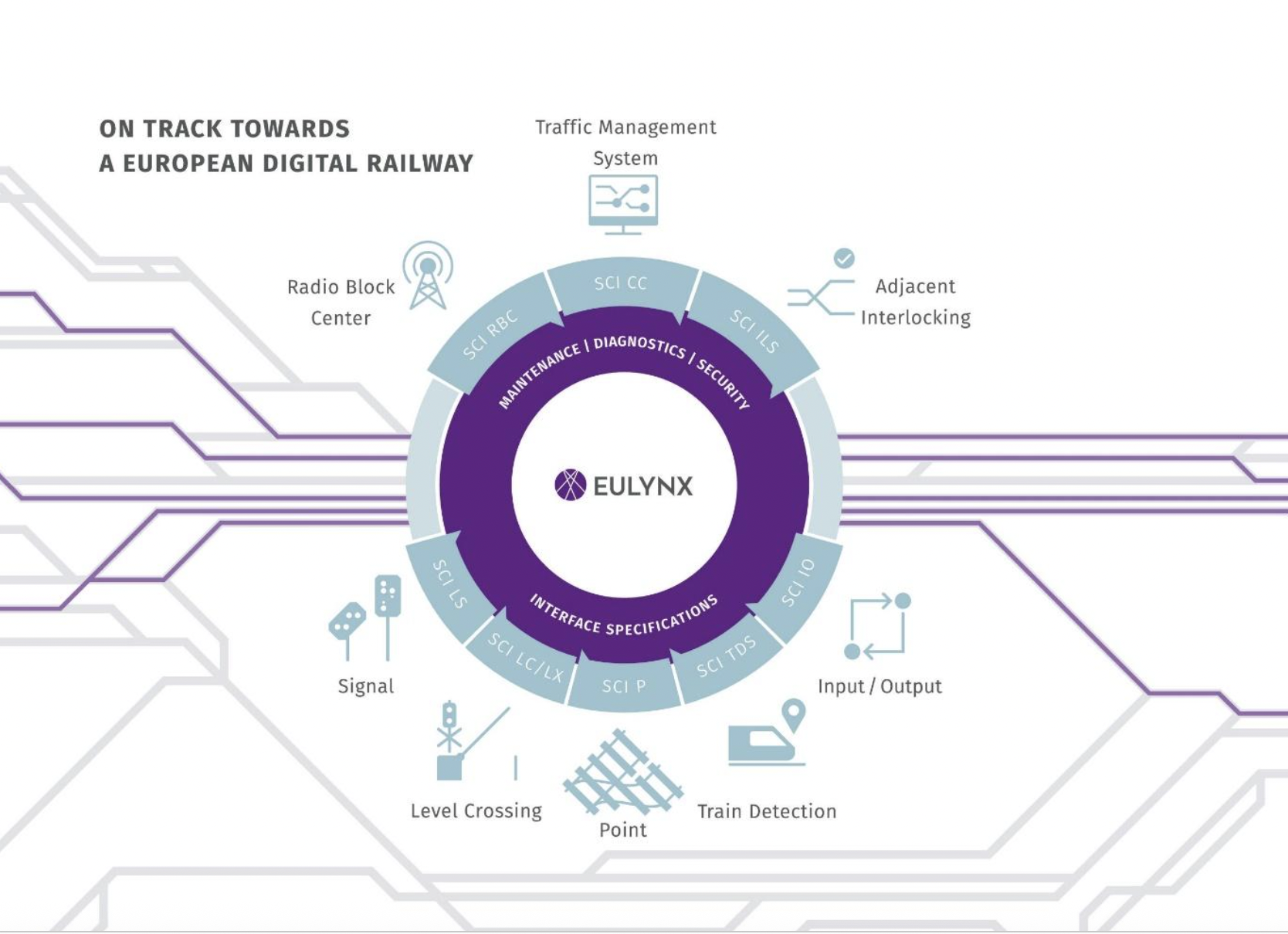
EULYNX’s response to this challenge is an innovative modular architecture. By decoupling the signalling core from field components through harmonised and standardised interfaces, EULYNX has laid the groundwork for flexibility and cost savings. This approach optimises the use of system components, facilitates seamless migration strategies and reduces vendor lock-in risks by enabling access to multiple suppliers.
The consortium’s initiative aligns seamlessly with ongoing digitalisation trends in Europe, positioning it as an enabler of future-ready railway infrastructure.
Interface Specifications and Model-Based Systems Engineering
EULYNX’s main activities revolve around developing interface specifications. These specifications support a modular, standardised signalling architecture, covering aspects from signalling data, diagnostics, maintenance and security. Model-based systems engineering (MBSE) underpins the development process, improving efficiency and clarity. This methodology allows for the creation of simulators to test interface behaviour, ensuring robust compliance and integration.
The EULYNX Academy and Compliance Testing
To address the growing demand for expertise in railway signalling systems, EULYNX has launched the EULYNX Academy. This programme offers online and onsite training, structured into modular courses to cater to various levels of expertise. Such initiatives ensure that professionals across the sector are equipped to navigate and leverage the new architecture effectively.
Moreover, EULYNX’s commitment to facilitate industry adoption is evident in its investment in product compliance testing. Plans are in place to establish a testing laboratory, enabling infrastructure managers and industry partners to validate products prior to deployment. The laboratory will offer an open database with a comprehensive test case catalogue.
Key Trends and Current Discussions in Railway Signalling
The railway signalling sector is in a critical phase of transformation, driven by the urgency of replacing obsolete systems and embracing digital solutions. The shift towards standardisation and modularity is at the forefront of industry discussions. This shift allows infrastructure managers to reduce system complexities and lifecycle costs while empowering suppliers to streamline product portfolios and develop products that can be deployed across a broader market beyond their traditional reach.
A Landmark Example: Nationwide Rollout in Norway
One notable example of EULYNX’s impact is the nationwide rollout in Norway, led by Bane NOR as part of its ETCS rollout. The Norwegian infrastructure manager has fully embraced EULYNX’s modular standardised framework, setting a benchmark for other railways. This project shows that digitalisation and standardisation enhance operational efficiency, lower maintenance costs and bring longer life cycles.
Challenges and Solutions
Despite its benefits, the adoption of EULYNX standards is not without challenges. Currently, the specifications hold the status of voluntary industry standards, rather than being part of a regulatory framework. This requires infrastructure managers to adopt a proactive approach, applying EULYNX specifications in their procurement strategies to harness the potential for reduced costs and vendor independence.
EULYNX’s collaborative work with the System Pillar of Europe’s Rail, which acts as a generic system integrator and architect of the future European railway system, marks an important step towards regulatory integration. Some specifications have already been jointly published by EULYNX and Europe’s Rail, signalling a shift towards EULYNX as a binding standard.
The Future Path for EULYNX
Looking ahead, EULYNX is poised for significant growth. The latest publication of Baseline Set 4 Release 3 expands the consortium’s portfolio, offering 54 comprehensive documents that further specify its modular architecture. This release, part of a collaborative effort with Europe’s Rail System Pillar, is expected to strengthen the adoption of EULYNX’s solutions across more European projects.
EULYNX’s future also includes expanding its membership base, with new infrastructure managers from both Europe and beyond expressing interest. This growth reflects a global recognition of the benefits brought by EULYNX’s strategic standardisation and modular architecture.
Preparing for Deployment
For infrastructure managers and sector professionals, preparation for the deployment of EULYNX requires tackling integration challenges. Integrating EULYNX into national specifications and preparing tenders that align with its modular approach are essential steps. This evolving demand creates new opportunities for rail professionals, with integration services becoming increasingly crucial.
To support this, EULYNX has established a deployment support team. This team assists members by conducting gap analyses, advising on migration strategies and ensuring that the integration of EULYNX specifications is as seamless as possible.
Conclusion: A Unified, Digital Future
EULYNX’s dedication to redefining railway signalling through standardisation and modularity sets a powerful example of how digitalisation can impact infrastructure. Its proactive strategies, including the launch of the EULYNX Academy and the development of a testing facility, underline its commitment to creating an ecosystem that supports adoption and long-term sustainability.
As more projects across Europe and beyond align with EULYNX’s specifications, the vision of a unified, interoperable railway network becomes clearer. In this new era, digitalisation is more than a trend—it is the foundation of future railway signalling, with EULYNX acting as both guide and enabler.