Undetected magnetism can disrupt communication between track magnets and onboard receivers and produce costly maintenance loops, yet the fix takes less than two minutes, writes Christian Spiess, Chief Operating Officer of Maurer Magnetic.
Modern rail safety systems rely on track magnets to trigger automatic responses. These magnetic markers communicate with a train’s onboard systems as it passes, confirming position, relaying speed information and activating safety systems such as automatic braking. They form a critical link in the communication chain between track and train, and if that link is disrupted, the consequences can be serious.
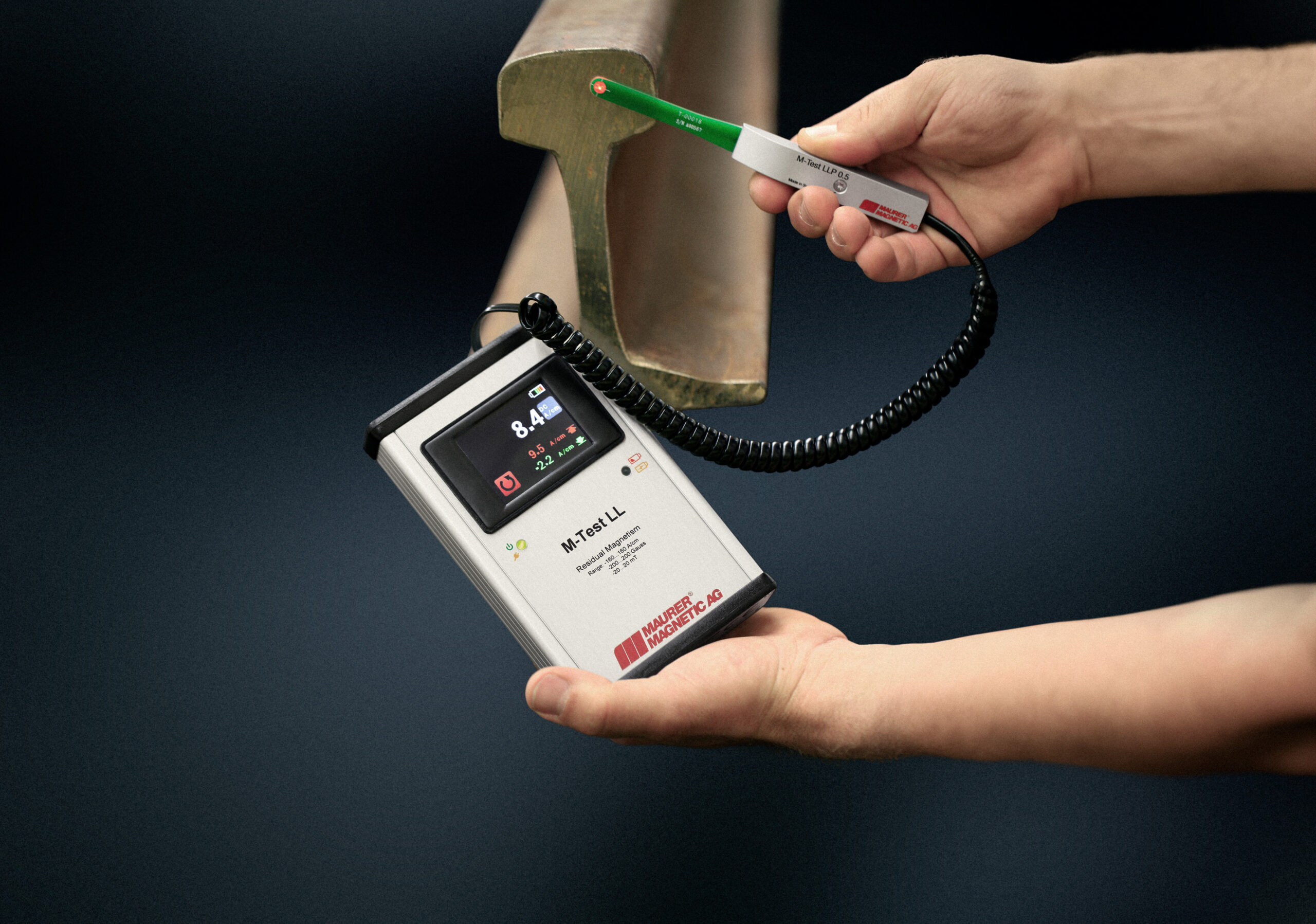
Disruption occurs when surrounding rail or train components become magnetised. Components may arrive with residual magnetism if handling during manufacture or logistics involves electromagnetic lifting gear, for example. High-current DC welding is a common cause during maintenance, as without proper grounding or post-process demagnetisation, the welding current permanently aligns the magnetic domains within the steel. Electrical faults such as short circuits can also leave significant residual magnetism in infrastructure at points of high current density.
Once present, unintended fields interfere with detection in two ways. Where rail near a detection point is magnetised, its field superimposes onto the track magnet’s field, distorting the signal and potentially causing a sensor to miss a pass event or trigger a false positive. Where train components are magnetised, they can generate a localised static field that acts as background noise, preventing the receiver from accurately reading trackside signals.
When Magnetisation Goes Undetected
On the track, residual magnetism in vehicle components can blind the onboard receiver – the static local field prevents the sensor from reaching the threshold needed to trigger when passing a track magnet. The typical result is a forced emergency brake application, as the system interprets the missed signal as a malfunction.
The reverse is equally disruptive. Highly magnetised rail segments or welds can mimic the signature of a track magnet, causing sensors to register signals that aren’t there. In axle counter systems, this produces ‘ghost occupancies’ – track sections shown as occupied when no train is present. In automatic train protection (ATP) systems, a ‘phantom’ magnet signal triggers an immediate emergency stop. A third failure mode occurs where magnetisation distorts rather than masks the signal: the magnetic telegram sent from trackside to train becomes corrupted, and the onboard computer rejects it as invalid.
In depots, the damage tends to be financial. If localised magnetisation interferes with a pre-release go/no-go test, the train fails, not because anything is broken, but because the magnetic environment is too noisy for the sensor to read correctly. Technicians frequently replace perfectly functional sensors or cables because the actual root cause, such as a magnetised bogie frame, is never checked. These ‘no fault found’ scenarios are among the costliest consequences.
The Solution – Magnetic Field Measurement
Measurement is the only way to turn magnetic fields into actionable data. Without it, teams cannot distinguish between a hardware defect and magnetic interference, which is why so many cases end in unnecessary component replacement.
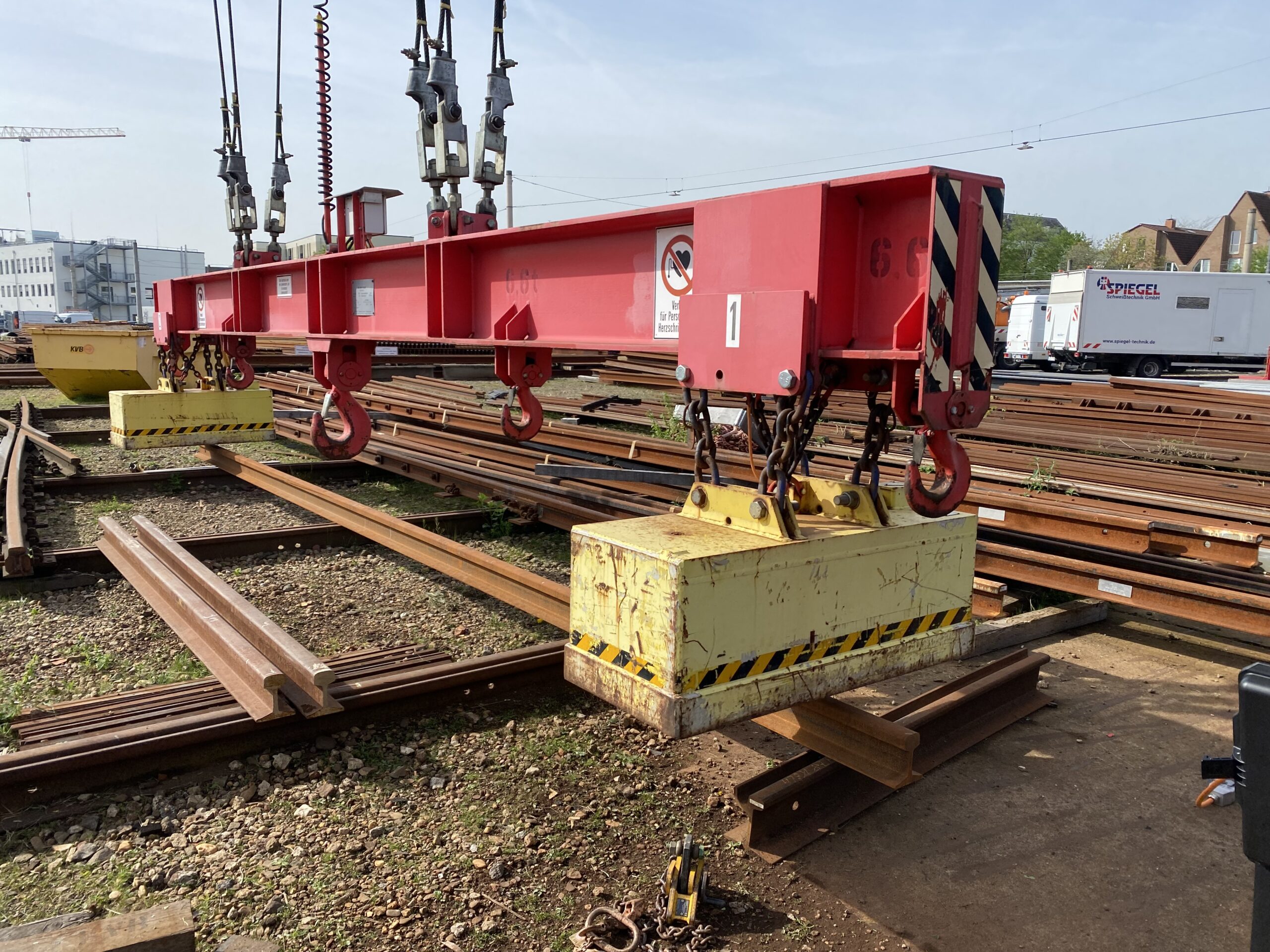
Attempting demagnetisation without prior measurement is equally unreliable: without knowing the field strength and orientation, critical local hotspots cannot be identified, often forcing full-length track sections to be treated resulting in significantly higher cost and effort.
Maurer Magnetics’ M-Test LL
To address this problem Maurer Magnetics developed the M-Test LL, a precision handheld magnetometer for detecting residual magnetism. It audits rails, welds and vehicle components before service entry, verifies demagnetisation through before-and-after measurement, and pinpoints magnetic hotspots for targeted intervention. A standard check takes one to two minutes, making it easy to integrate into existing maintenance protocols.
Three patterns indicate a problem reading. High field strength (above around 1mT) suggests significant interference risk, particularly where the field extends beyond the material surface. A polarity reversal across a short section indicates a magnetic dipole, which is especially disruptive to axle counters, while a localised inconsistency at a weld points to a maintenance-induced issue requiring attention.
Measurement should be treated as a quality gate, not a one-off check. At commissioning, all incoming ferromagnetic parts should be screened on delivery to prevent built-in faults from being embedded in the system. For trackside infrastructure, measurement is most critical before and after high-current work such as welding, and whenever signalling anomalies suggest magnetic interference.
The Case for Acting Now
You cannot manage what you don’t measure, and undetected magnetic interference leads to unnecessary component replacement, disproportionate interventions and direct compromise of ATP systems where reliable signal detection is a safety requirement.
At one to two minutes per check, the barrier to measurement isn’t technical, it’s awareness. For operators who’ve not yet included magnetic conditions alongside electrical and geometric checks, the question isn’t whether it’s worth doing, but how much undetected magnetism is already costing them.
Maurer Magnetic is a leader in the demagnetisation of railway components, and its M-Test LL magnetism measurer is available for both rental and purchase. For more information, please contact Christian Spiess at [email protected] or via maurermagnetic.com/en/contact/.