ASC RAIL Series: Accurate. Precise. Certified.
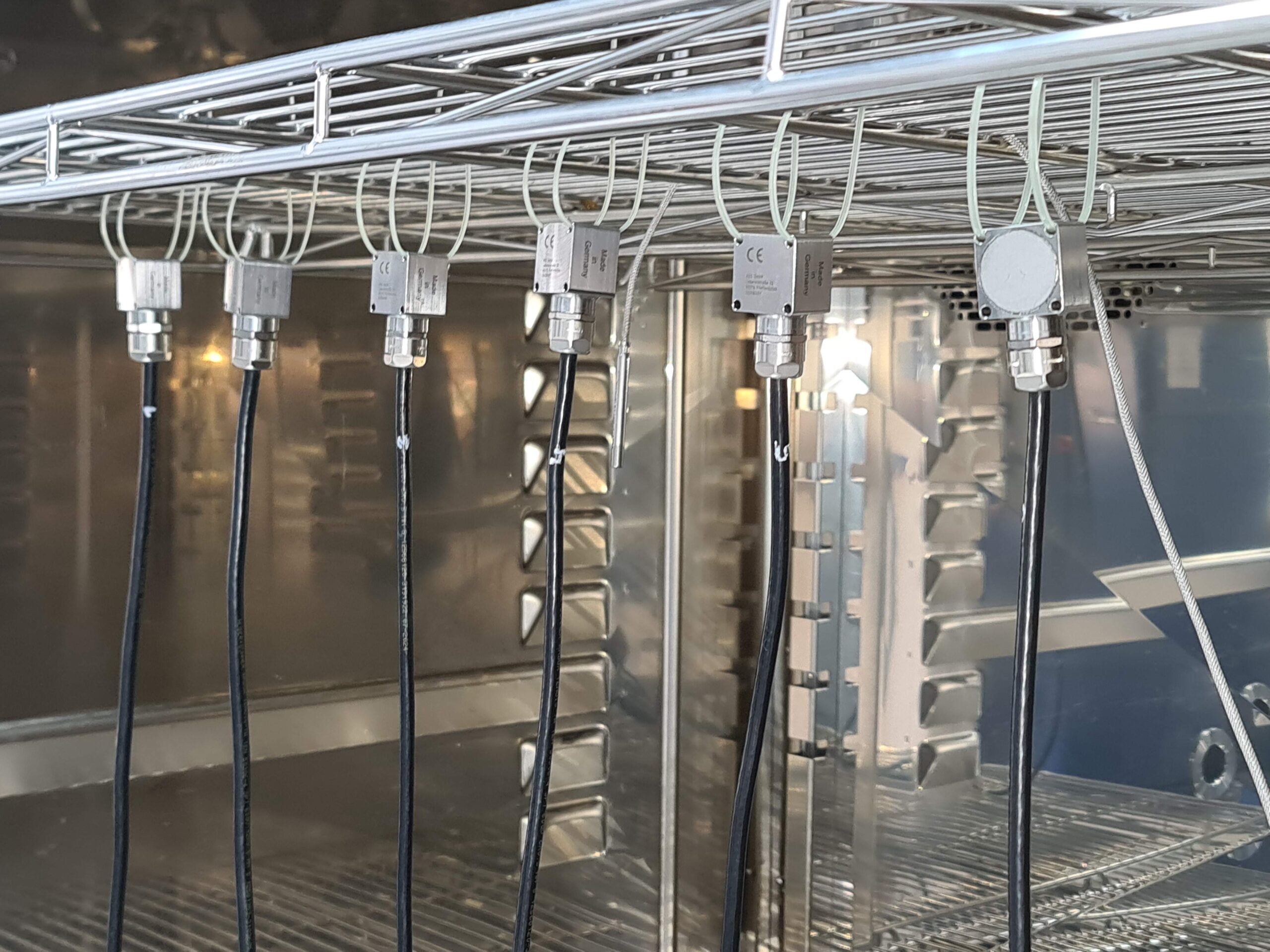
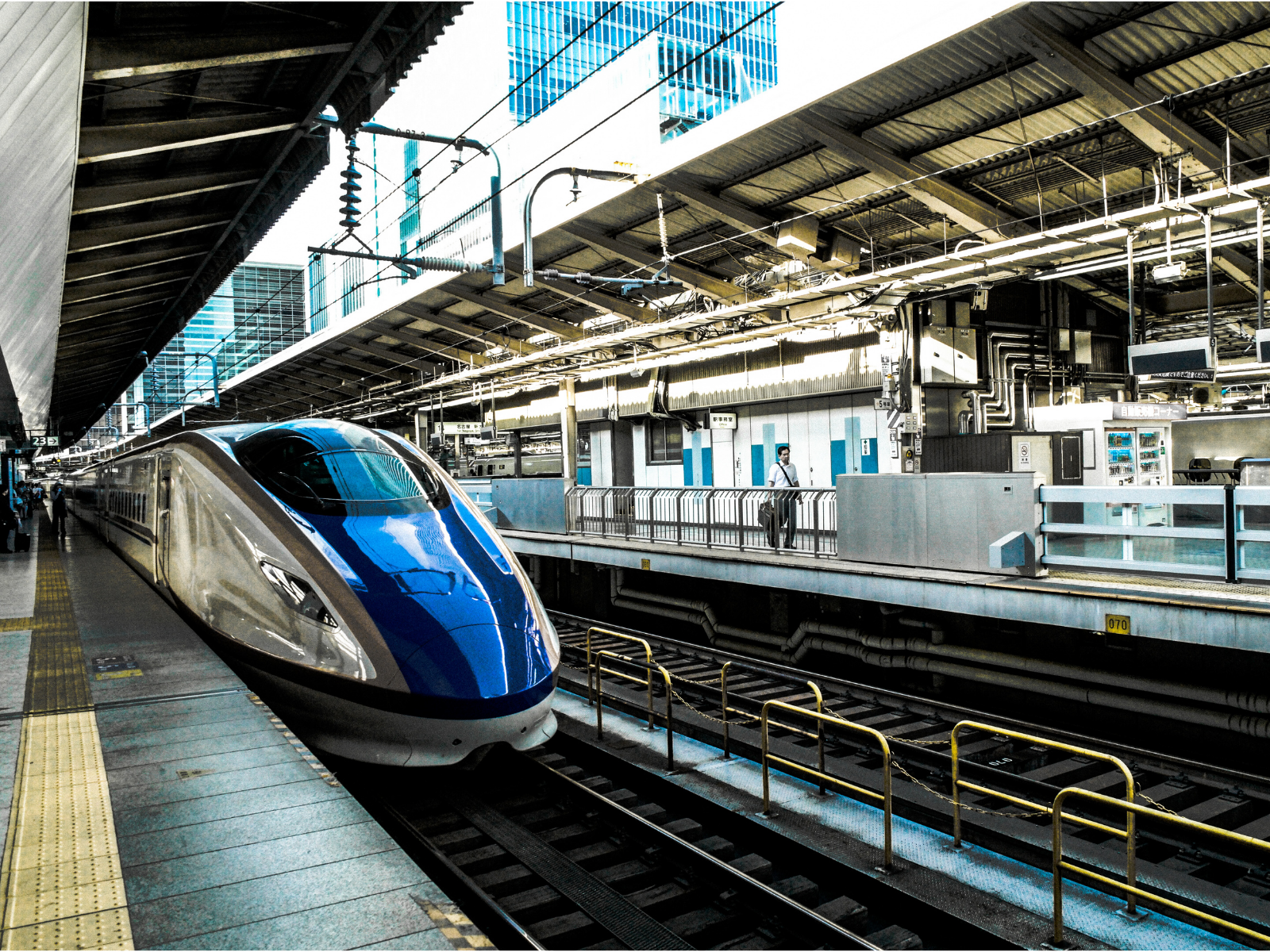
With the ASC RAIL series of MEMS-based precision accelerometers and gyroscopes certified to EN 50155 and other relevant industry norms, ASC Sensors empowers railway networks across the world. These robust analog, digital and smart sensors set new milestones in railway safety, capacity and productivity.
- Analog accelerometers
- Analog gyroscopes
- Digital accelerometers and smart sensor solutions
Train Monitors Track: Infrastructure Monitoring Without Service Disruption
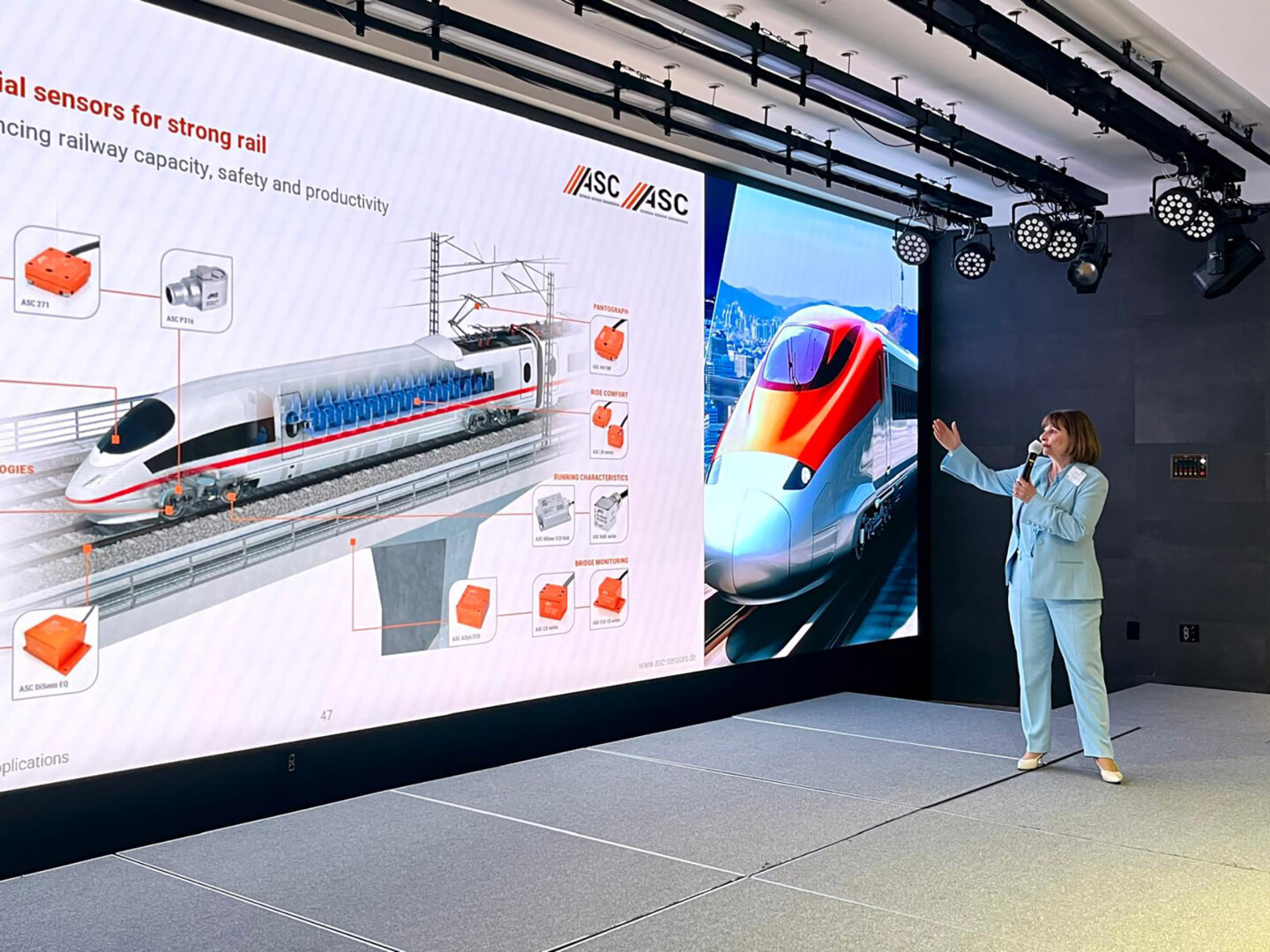
Inertial sensors play a critical role in accurately measuring vibrations – impacting vehicles as well as rail infrastructure. Beyond their key role in the testing and certification of new train models, ASC’s RAIL accelerometers and gyroscopes are ideally suited for permanent installation on regular and high-speed trains. They are integrated in tailored measurement systems to enable continuous track monitoring from regular in-service trains without service disruption. Based on accurate results, deviations in longitudinal height, dynamic direction or distortion of tracks are calculated. Applications include:
- Characterising track geometry (EN 13848)
- Specifying structural requirements for bogie frames (EN 13749)
- Dynamic interaction pantograph/overhead contact line (EN 50317)
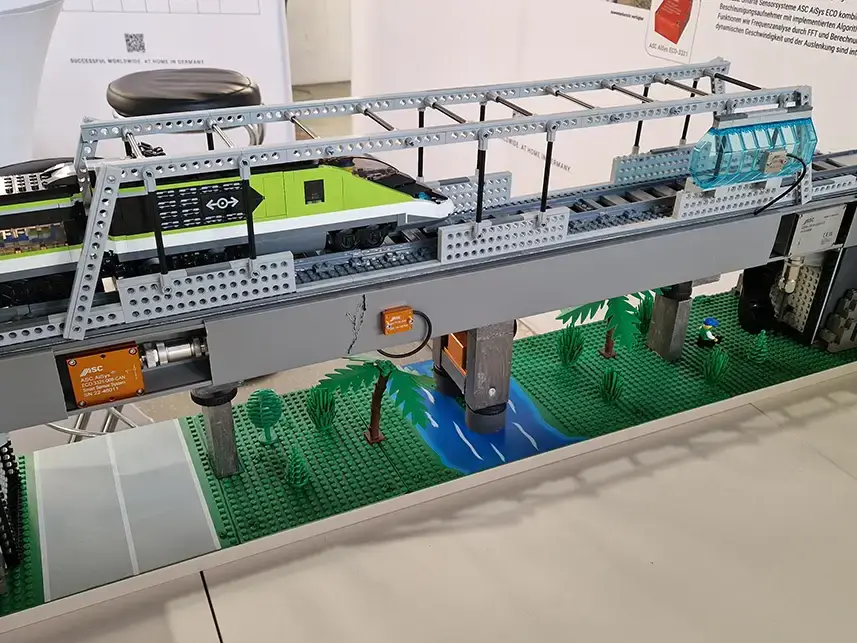
As across the globe, a substantial share of network delays and disruptions are owed to track alignment errors and related issues. These necessitate low-speed zones and service discontinuations that further compound delays and inefficiencies. Based on ASC RAIL sensors dedicated and certified to rail applications, tracks and infrastructure assets can be monitored from active trains in real time. This means they are maintained predictively and issues addressed proactively, before service disruptions or more serious consequences happen.
Train Monitors Train: Safety-Critical Driving Dynamics Evaluation on the Bogie

Rolling stock, too, is constantly being monitored to ensure safe, efficient operation and cost-effectiveness. Particularly on high-speed trains, inertial sensor technology helps achieve appropriate driving dynamics, running stability and to avoid derailment.
This is because rail vehicles at higher speeds tend to exhibit what is known as ‘sinusoidal motion’, which in unstable systems can turn into dangerous swaying. This motion around the z-axis is sinusoidal at small amplitudes with a constant wavelength; its frequency, therefore, increases with travel speed. At top speeds, the dynamic forces can cause hunting oscillation, potentially leading to a zigzag motion with the wheel flanges forcefully striking the rails.
Extremely robust inertial ASC sensors installed at the axle box, bogie frame and various points across the vehicle body accurately determine all relevant acceleration forces. They feature an excellent signal-to-noise ratio and a precise frequency response below 10Hz – essential requirements for the demanding measurement of low frequencies and lateral accelerations of a few tenths m/s². Applications include:
- Running characteristics of railway vehicles (EN 14363)
- Passenger ride comfort (EN 12299)
The ASC RAIL Series
Meeting diverse relevant railway norms, the ASC RAIL series’s performance significantly facilitates implementation. Vehicle manufacturers, infrastructure and railway operators, system integrators as well as engineering and testing service providers rely on a proven set of precise, stable sensors ready for installation that drastically reduces individual documentation requirements.
ASC RAIL sensors have been designed to resist the toughest challenges – for optimal performance and long-term use in harsh conditions. With this flexible, dedicated sensor portfolio, rail operators can realise custom solutions. The outcome:
- Enhanced safety
- Stable long-term performance
- Increased profitability of rolling stock
Superior sensor technology made in Germany, solving complex measuring challenges across the world, to ensure the highest precision paired with great customer focus, flexibility and rapid delivery.
Analog accelerometers
- MEMS capacitive
- Uniaxial, biaxial, triaxial
- Wide measurement range: 2 | 5 | 10 | 25 | 50 | 100 | 200 | 400 g
- Outstanding noise density
- Select to fit a wide variety of applications
- From low noise ride comfort to high shock load measurements on the bogie
Analog gyroscopes
- MEMS vibrating ring
- Uniaxial, biaxial, triaxial
- Wide measurement range: 75 | 150 | 300 | 900 °/s
- Enables angular rate measurements for running characteristics, derailment protection and track quality
Digital accelerometers and smart sensor solutions
- MEMS capacitive
- Triaxial
- CAN interface
- Flexible measurement range: 2 | 4 | 8 g or 10 | 20 | 40 g
- Real-time data processing
- Smart through integrated algorithms, e.g. for FFT frequency analysis
ASC RAIL sensors meet key railway standards including:
- EN 50155
- Evaluated for climatic resistance and dynamic-mechanical robustness
- Maximum operational reliability and system availability
- Robust sensors prevent failures caused by weather or vibration in demanding railway operations
- EN 50121-3
- Tested for electromagnetic compatibility (interference emission, interference immunity)
- Ensures neither the sensors nor other critical on-board systems are affected by electromagnetic environment
- EN 45545
- Robust, non-flammable, laser-welded stainless-steel housing
- Protection class IP68
- Rail-certified cables and PG cable glands
- Meets latest fire protection standards for electronic equipment on rolling stock