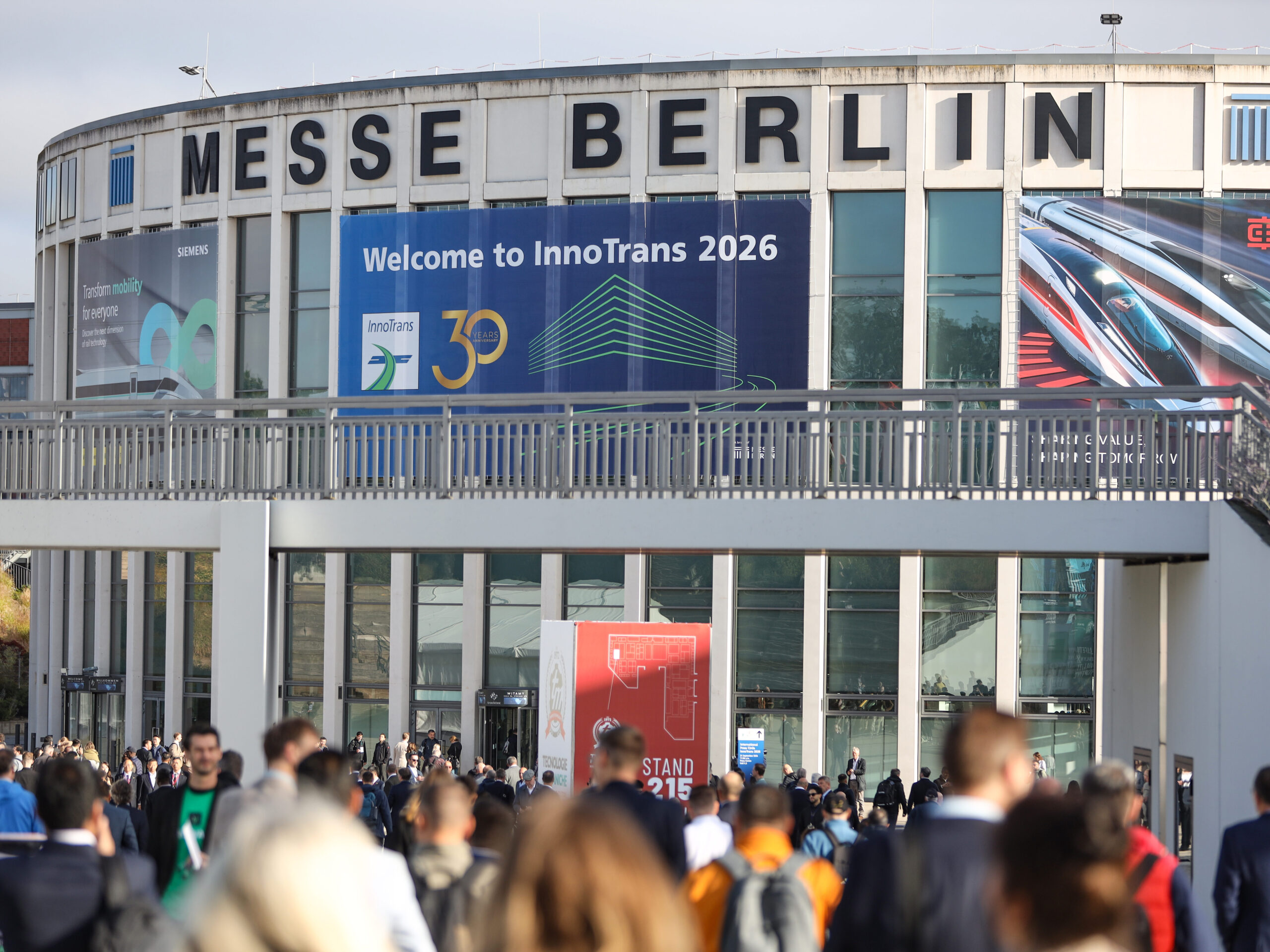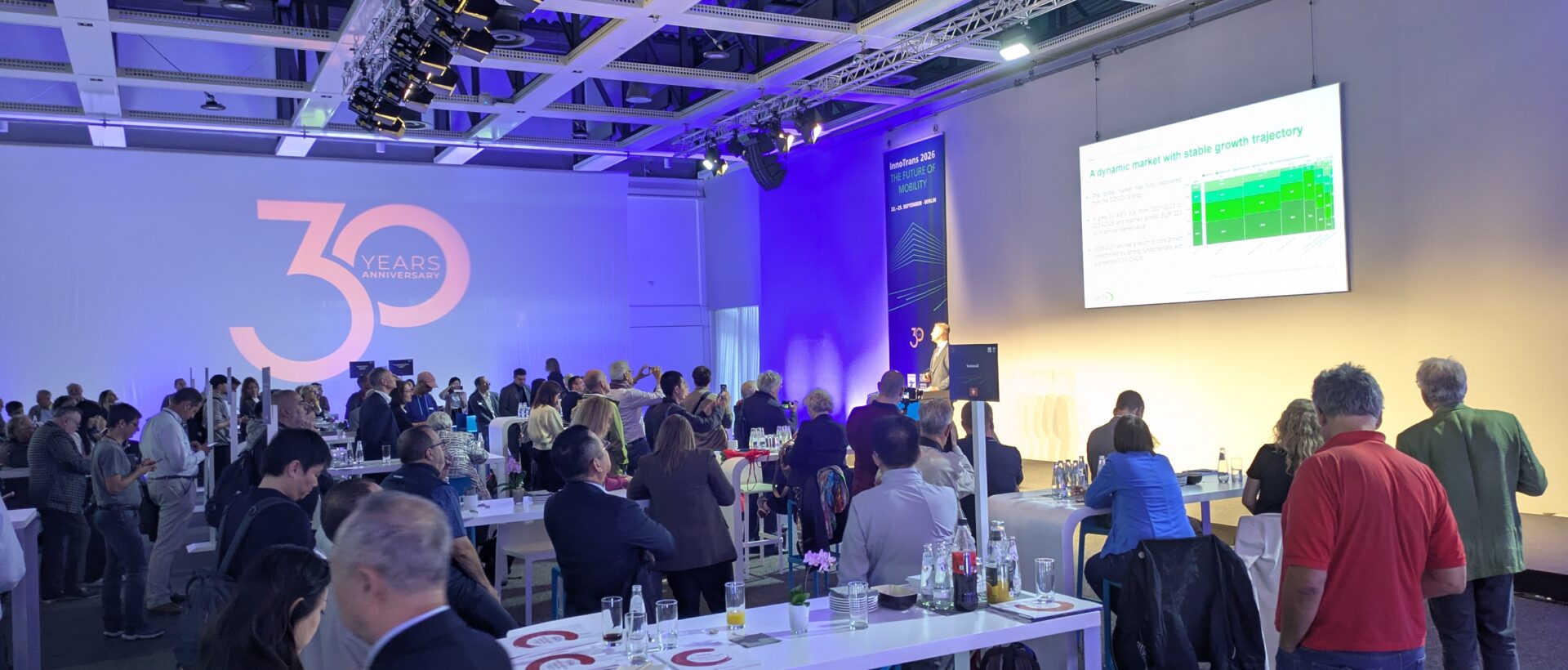
During the opening ceremony at InnoTrans 2026; key figureheads gathered to discuss the future of rolling stock within both the European market and beyond.
Panellists Martin Sion, CEO of Alstom; Micahel Peter, CEO of Siemens Mobility; Petr Novotny, CEO & Executive Chairman of Skoda Group; and Ian Choudri, CEO of California High Speed Rail Authority focused on the use of artificial intelligence, digitalisation and cost reduction, whilst touching on supply chains, resilience and more.
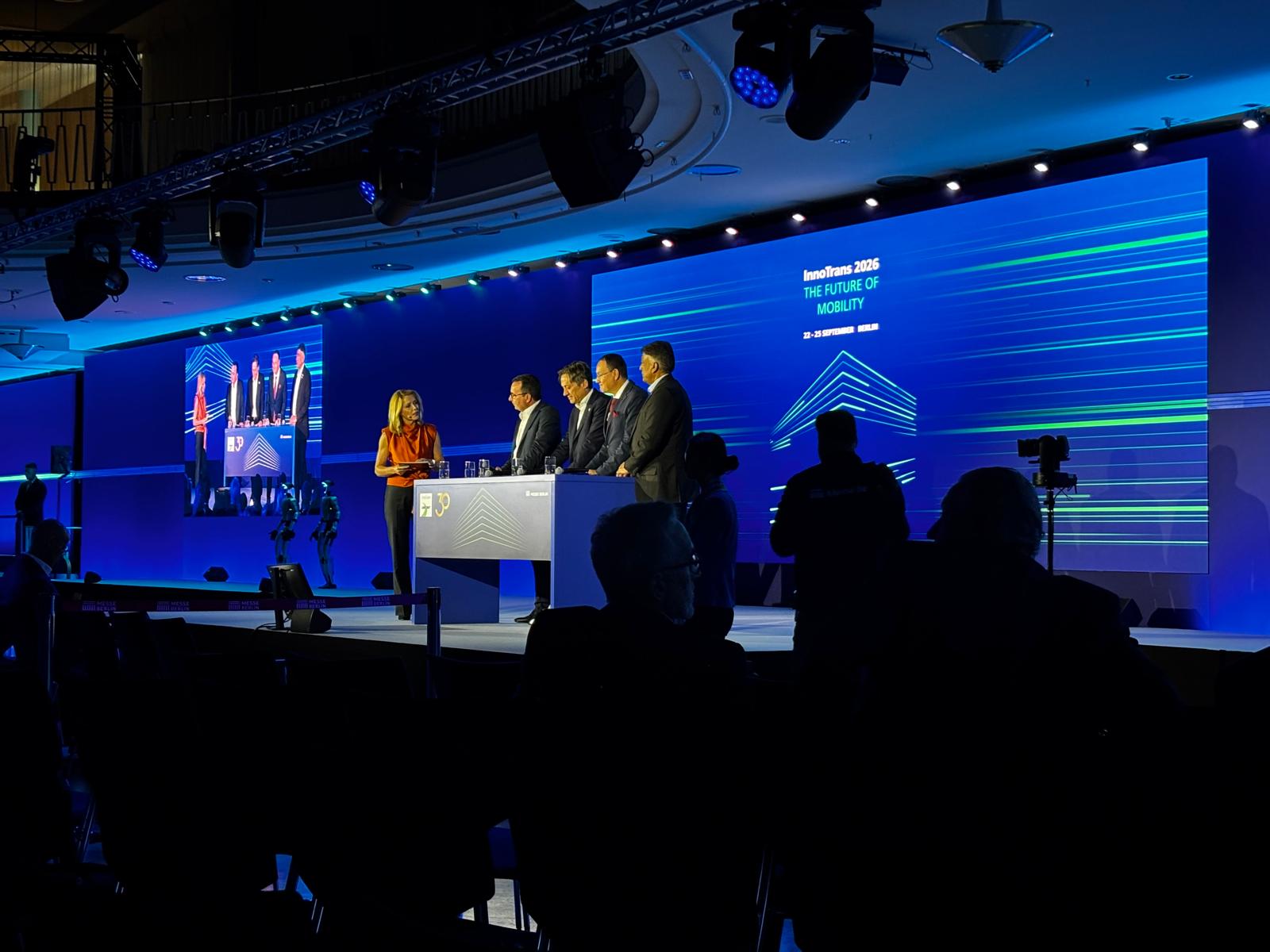
Opening the panel discussion, proceedings initially began with talk on the importance of Europe within the international rail market, with Scion stating that the continent possesses ‘all the technology’ to make the most of rail, stressing the importance of increases in capacity, as well as overall improvements in resilience and reliability – a statement echoed across the table.
Leading on from this and speaking on the importance of data in the future of the rail market; Peter quickly turned discussions to the topic of artificial intelligence, stating that the technology has the potential to not only improve the aforementioned shortfalls, but provide further benefits for maintenance, as well as bolster the use of existing infrastructure and rolling stock to the best of its ability.
Bringing the topic back to the physical; Novotny spoke of the importance of resilience of rolling stock, as well as its potential to create support for a range of other industries within the EU following the introduction of new propulsion technologies such as electric and hydrogen. Novotny discussed the challenges currently being felt across the continent with regards to fragmentation, before finalising his introduction by proposing that both cost and speed must be addressed in order for the market to move forward in a meaningful way.
Moving the discussion across the Atlantic; Choudri presented a brief summary of the major California High Speed Rail project, before stressing the importance of stable financing both within the United States and around the world, later mentioning that the Authority has resorted to locking price orders for steel and copper in order to keep prices lower and make sure they arrive when necessary.
With all panel members duly introduced; the topic was briefly kept within the parameters of work within the United States. Speaking of Alstom’s recent contributions; Sion discussed the recent service commencement of its new Acela “high-speed trains”, which now operate along the Northeast Corridor between Washington, D.C., New York, and Boston, before going on to state that recent developments within Mexico represent one of the company’s ‘biggest opportunities to date’.
Speaking of Škoda’s contributions within the market; Novotny stated that the company is now investigating plans to carry out a slew of upgrades for current fleets across the country, and will soon look to invest in a formal component business base within the United States in order to strengthen the local supply chain and reduce potential disruption – an issue later echoed by Choudri, who revealed that the California High Speed Rail Authority has already locked down its orders for steel and copper in order to both keep prices reasonable and make sure they arrive when necessary.
Moving back to Europe; Sion stated that forward planning and cybersecurity measures form a key requirement for the improvement of long-term rolling stock resilience, prompting Novotny to stress that Škoda now aims to create rolling stock that will last for up to 25-30 years, remain fully maintainable and provide stronger incentives to invest in their future lineups.
Finally; Peter ushered the panel into the last topic of discussion, and one that, arguably, is driving the majority of discussion across the halls this week: artificial intelligence (AI) and digitalisation. Peter proposed that the use of AI could help to mitigate a number of problems before they occur, including missed trains, cancellations and more, ensuring smooth operation and reducing downtime, maintenance and costs. With Siemens Mobility now pivoting toward a digital only future with regards to its on-board systems, Peter stated that the company now only wishes to develop entirely digital trains because they believe it will provide an advantage for everybody – within Europe and beyond.
Whilst Siemens are moving to remove proprietary systems and embrace a fully digital future, it’s fair to say that other panellists are taking a more cautious approach. Sion proposed that Alstom’s use of AI will initially focus on benefits that can first be introduced to the customer, proposing that the technology could be used to improve the passenger experience, whilst Novotny displayed a slightly more skeptical attitude, but expressed desires to use the technology to advance engineering, data gathering, predictive maintenance and a future reduction in costs.
In the United States; Choudri revealed that thus far, the California High Speed Rail project has utilised AI in order to map the potential routes for the future service, as well as mapping underground sections and completing inspections along the way. Elsewhere, the project will also use the technology to manage future construction.
Coming back to round us off, Sion stated that whilst AI may be important to the future of the rail market, regulation of the technology is just as crucial, proposing that companies must be vigilant and that they ‘cannot underestimate the criticality of its implementation’ – a small reminder that the use of AI for future development may need more scrutiny before a full enrollment across the sector, and a fitting end point for the opening panel discussion at InnoTrans 2026, an event focused keenly on the future of mobility – be that artificial intelligence or the development of other, brand-new technologies.
For more coverage of InnoTrans 2026, be sure to follow Railway-News for updates as and when they happen – including unveilings, editorial content, overviews and more.