Built on the same radar technology used in self-driving cars, GCF’s PAI-PL system, a radar-based level crossing protection, has just awarded the RFI homologation.
GCF‘s PAI-PL Level Crossing Protection (LCP) v3.0 system received the homologation certification from Italy’s rail infrastructure manager Rete Ferroviaria Italiana (RFI). Granted this April, the status confirms not just that the system works, but that it keeps working, at scale, on a live track.
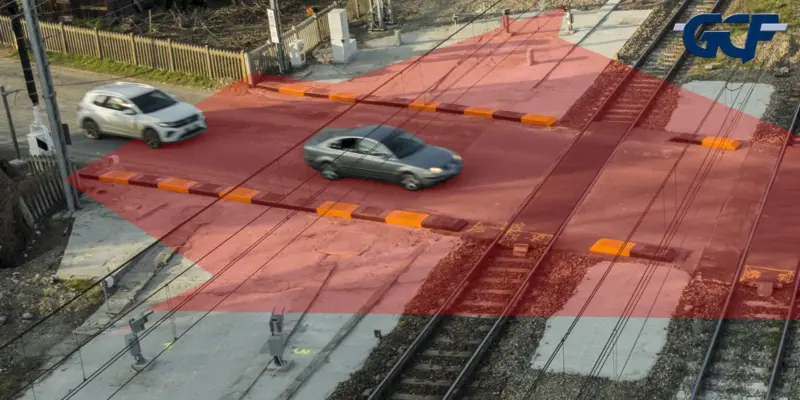
For an industry where level crossings remain one of the network’s most persistent safety weak points, that distinction matters. Designed for the automatic monitoring of level crossings, GCF’s SIL4-certified system uses automotive-derived radar technology to detect obstacles inside the crossing area while barriers are closed, preventing the risk of impact between vehicles of any kind.
Achieving that combination of performance and practicality takes time. Before developing its own system, GCF identified a gap that most obstacle detection technology on the market wasn’t filling: something infrastructure managers could roll out at scale, without the installation constraints or ongoing maintenance burden that had limited earlier solutions.
Choosing the Right Sensing Technology
Early feasibility studies tested several sensing technologies before settling on radar, chosen for the best balance of detection performance, installation flexibility and maintenance requirements. The result is GCF’s proprietary PAI-PL LCP v3.0, built around exactly that brief: straightforward to install, easy to maintain, low energy needed and capable of delivering high availability throughout its service life.
The first prototypes were based on industrial radar technology, but the performance wasn’t good enough to achieve the level of accurate detection GCF wanted. The company’s engineers then evaluated an automotive 24GHz MIMO radar, which, despite its limitations, represented a significant improvement over the industrial solutions available at the time. In 2016, the new generation of 77GHz automotive MIMO radars was becoming available, and recognising the technological leap they represented, GCF decided to base its system on this new platform.
Optimising for the Rail Environment
The main challenge was adaptation: automotive radars are designed for highly dynamic scenarios, whereas a railway level crossing is a predominantly static environment with many fixed objects. The system was primarily designed to reliably detect any vehicle that could obstruct the passage of a train. The real challenge was tuning the detection algorithms to guarantee this under all operating conditions while avoiding unnecessary alarms caused by harmless objects or environmental effects. As a result of this optimisation process, the system’s capable of detecting many smaller obstacles, including people and animals.
Meeting SIL4, the highest level of functional safety integrity, was the next hurdle, as this meant building an extensive validation campaign under the technical supervision of RFI’s engineering department. Concept studies had begun in 2016 with the system reaching independent safety assessor certification in 2019, and while this work extended the development timeline, it enabled GCF to build extensive know-how in the application of radar technology to real railway environments, providing a much deeper understanding of its capabilities and operational limits.
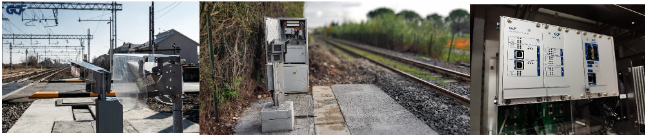
The system that emerged from this process runs on four subsystems, each with a clearly defined role. The monitoring subsystem uses radar sensors positioned at different viewpoints to scan the protected area. The processing subsystem is the SIL4 safety core: it reads the crossing closure signal from the interlocking, triggers a radar scan once the barriers are down, and makes the safety-critical call on whether the area is clear. Then there’s a separate video subsystem, which provides a live visual view of the level crossing and when necessary, streams live footage to the central post for remote supervision. This central post monitors and maintains every installation, pulling up live video automatically whenever an intrusion alarm fires.
Certificate of Validation
To demonstrate SIL4 compliance and secure product certification, GCF had validated the technology under controlled conditions – an experimental programme across four test level crossings and a dedicated in-house facility. But certification isn’t the same as being market-ready. RFI’s homologation asked a different question: not whether the system worked in principle, but whether it kept performing in real railway operation, install after install.
Rather than sign off on testing alone, RFI spent several years collecting operational data from dozens of live installations, tracking both predicted reliability (MTBF) and, critically, false-alarm performance. Only once that long-term monitoring held up did GCF clear that bar. This is proof, for infrastructure managers, that the system’s real-world performance matches what was demonstrated in testing.
That reliability shows up in how the system performs today. It’s been proven to operate in extreme weather – from heavy rain through to snow and fog – and certification to RFI’s IT268 specification means it can now interface with systems built on different technologies too, for example the laser one. More broadly, the PAI-PL v3.0 offers a genuine alternative to civil works such as underpasses and overpasses, with clear advantages in design, approval and construction time, as well as lower costs.
Ease of Installation
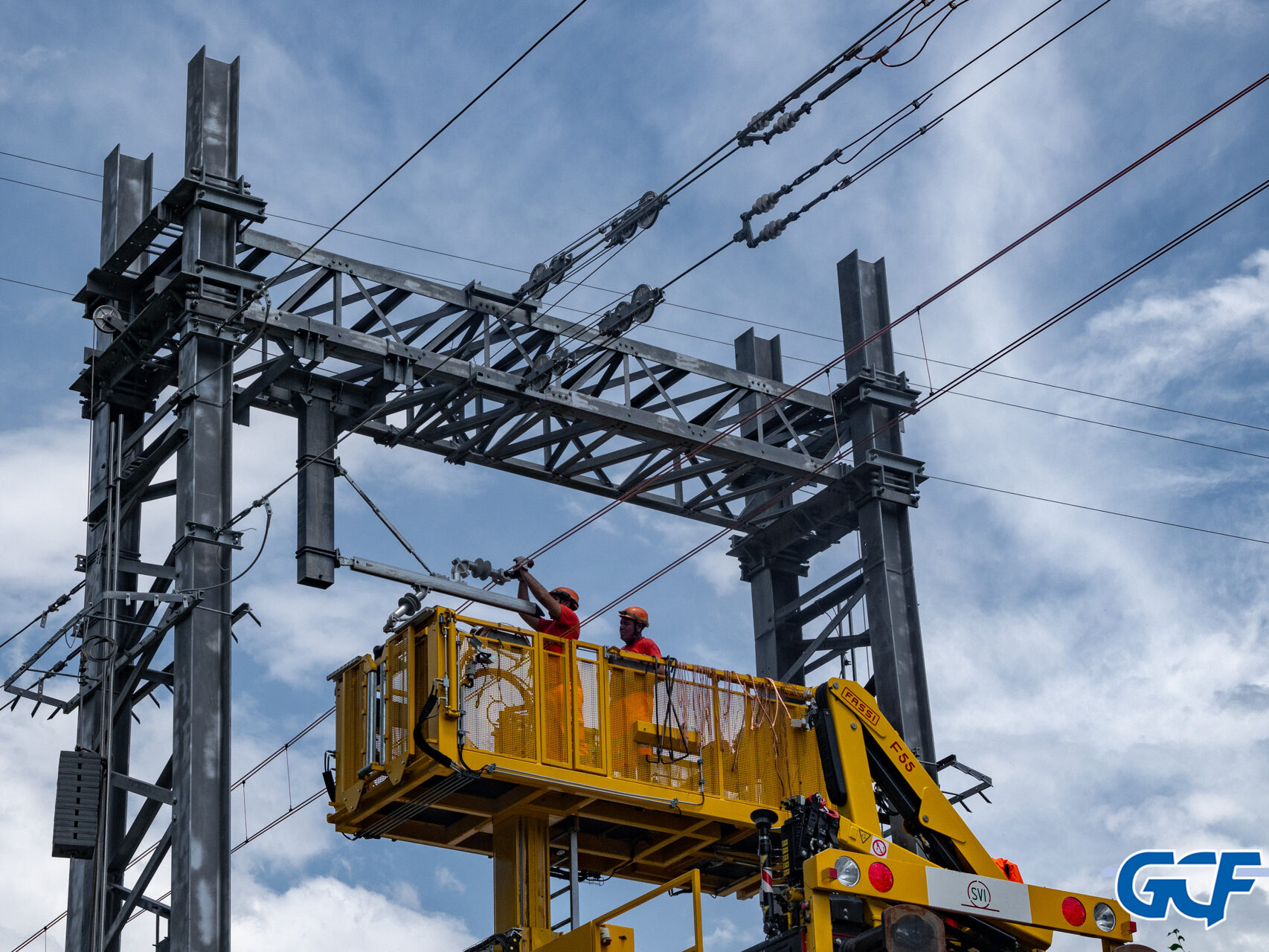
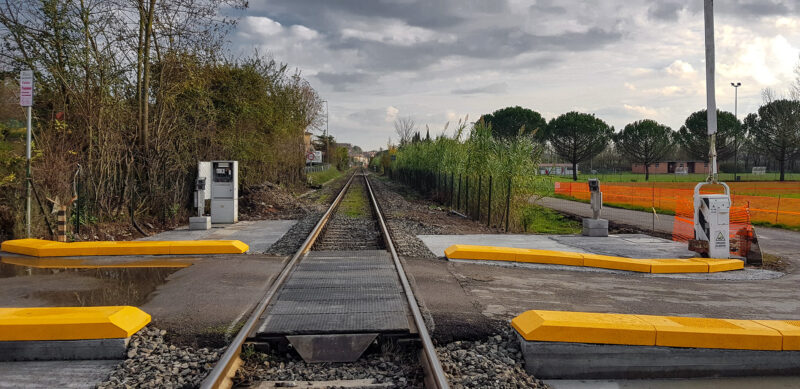
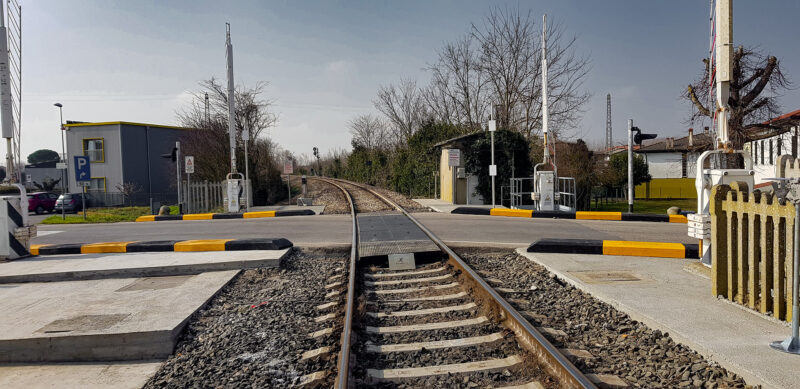
Installation avoids heavy civil engineering altogether – no large structures, no heavy equipment, so work can often happen between train movements rather than requiring a full traffic closure. Maintenance is just as straightforward. Field equipment is easily accessible, so upkeep doesn’t require de-energising the overhead line, and the system’s low power draw keeps running costs down over its lifetime.
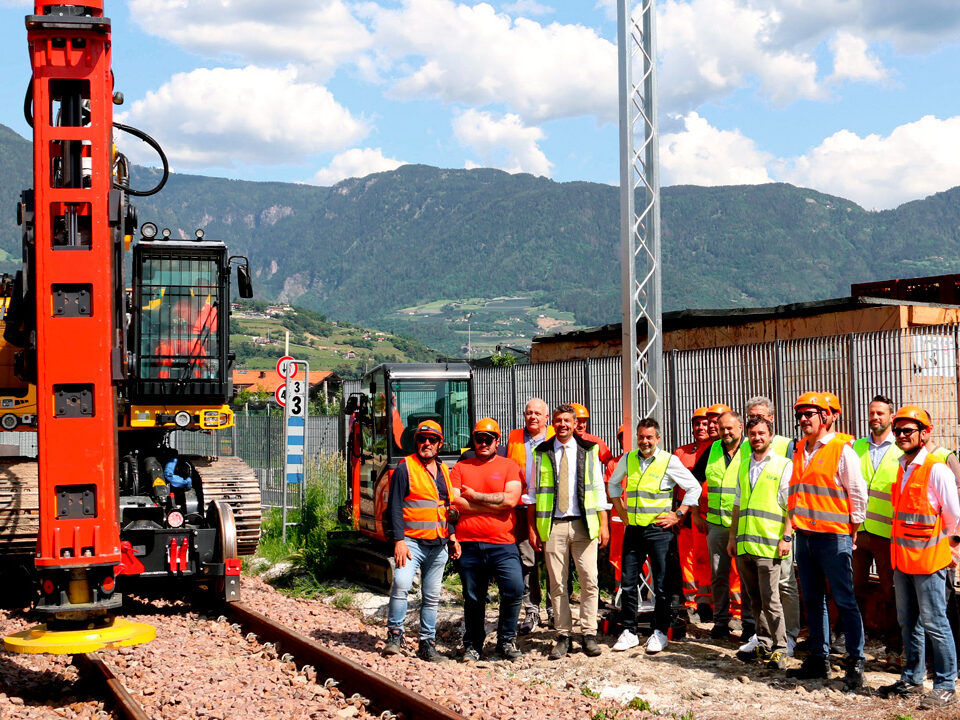
In practice, a typical rollout starts with a site survey to map the crossing’s geometry and existing infrastructure, before GCF’s engineering team designs the layout and works with the infrastructure manager on interlocking and cabling changes. Installation can be carried out by GCF or a qualified contractor, and GCF’s test and commissioning team then configures the system, runs functional tests and signs off the certificates confirming it’s ready for service.
Sensing the Future
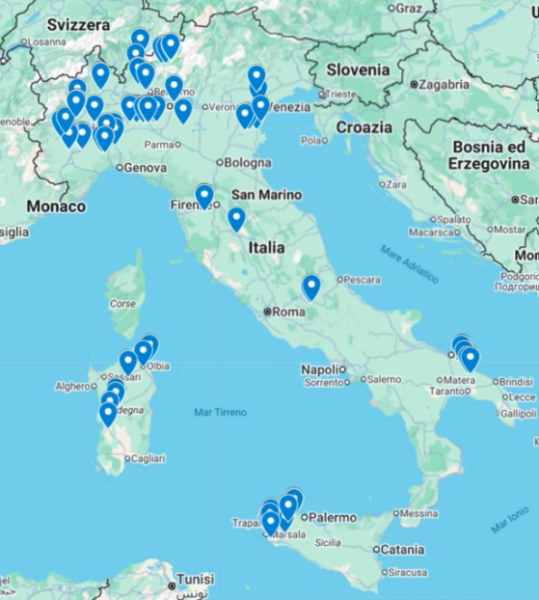
After having in operation 90 LCP GCF systems since 2020 for RFI and other Italian railway companies, GCF is now developing some commercial agreement with international partners.
GCF continues to monitor technological advances within the obstacle detection market. Computer vision and AI are attracting significant attention, and the company is actively evaluating these technologies for future level crossing applications.
For safety-critical obstacle detection systems, however, GCF’s approach remains evidence-based. Any new technology must demonstrate clear technical advantages and, above all, be suitable for certification in a SIL4 application.
The same applies to radar technology. In recent years, the automotive industry has introduced a new generation of 3D imaging radars, and GCF is already evaluating these sensors to determine whether they can deliver measurable improvements in obstacle detection under real railway operating conditions.
Piqued your interest? Why not contact GCF to find out more about its PAI-PL LCP system.
This article was originally published by GCF.