Technology, Innovation and Sustainability Along 60 km of Railway
With the introduction of the first electric trains into service, the Val Venosta Railway is entering a new era for rail mobility in South Tyrol, driven by sustainability and efficiency. This milestone has been made possible by the completion of the complex railway electrification works, to which GCF S.p.A., together with INEO Scle Ferroviaire, contributed through the construction of the overhead contact line and the main traction power systems.
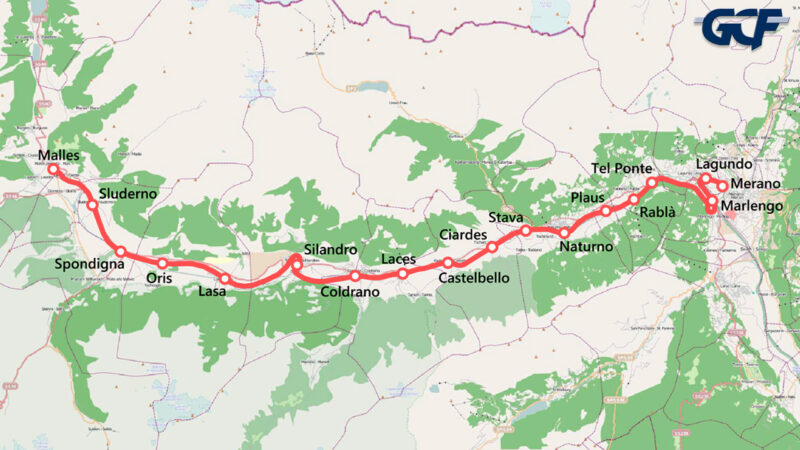
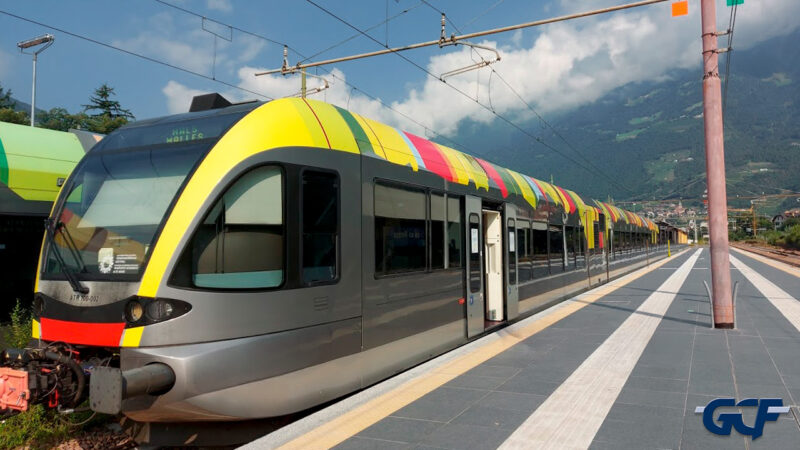
The project covered the entire Merano-Malles route, approximately 60 kilometres in length, transforming a railway previously operated exclusively by diesel trains into an infrastructure designed for 25 kV AC electric traction, one of the most advanced and widely adopted standards across European railway networks. The new system will reduce local emissions, lower operating costs and enable energy recovery during train braking, while improving service performance and ensuring high standards of reliability, safety and ease of maintenance.
A Railway Designed Around Its Territory
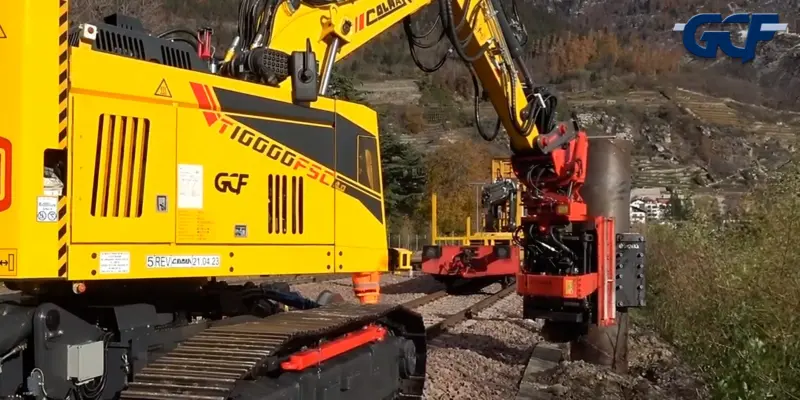
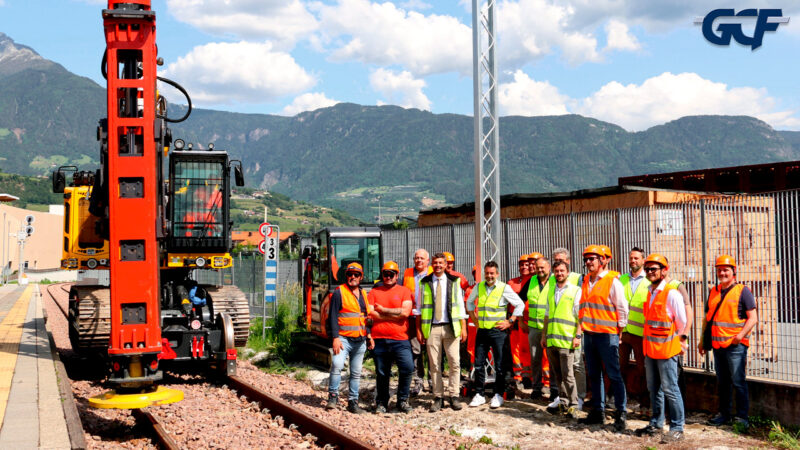
The project required numerous engineering solutions specifically developed to meet the characteristics of both the railway line and the surrounding environment. One of the most significant, although invisible to passengers, concerned the construction of the foundations for the approximately 1,700 overhead contact line masts.
Giuseppe Canneti, Project Designer at GCF, said:Based on the results of comprehensive geological and geotechnical investigations, it was possible to identify the various geomechanical categories of the subsoil and consequently select the most suitable type of foundation for each ground condition: foundations using driven steel tubes in the gravelly and alluvial soils of the valley floor; prismatic reinforced concrete foundations where driven installation was not feasible; and foundations directly anchored to the bedrock wherever exposed rock provided the required structural performance.
The foundations were designed to accommodate the maximum future load requirements, thereby eliminating the need for strengthening works should the infrastructure be upgraded in the future.
Particular attention was also paid to existing civil engineering structures. Dedicated steel anchoring systems were designed for bridges, while bespoke solutions were developed for tunnel portals and other reinforced concrete structures.
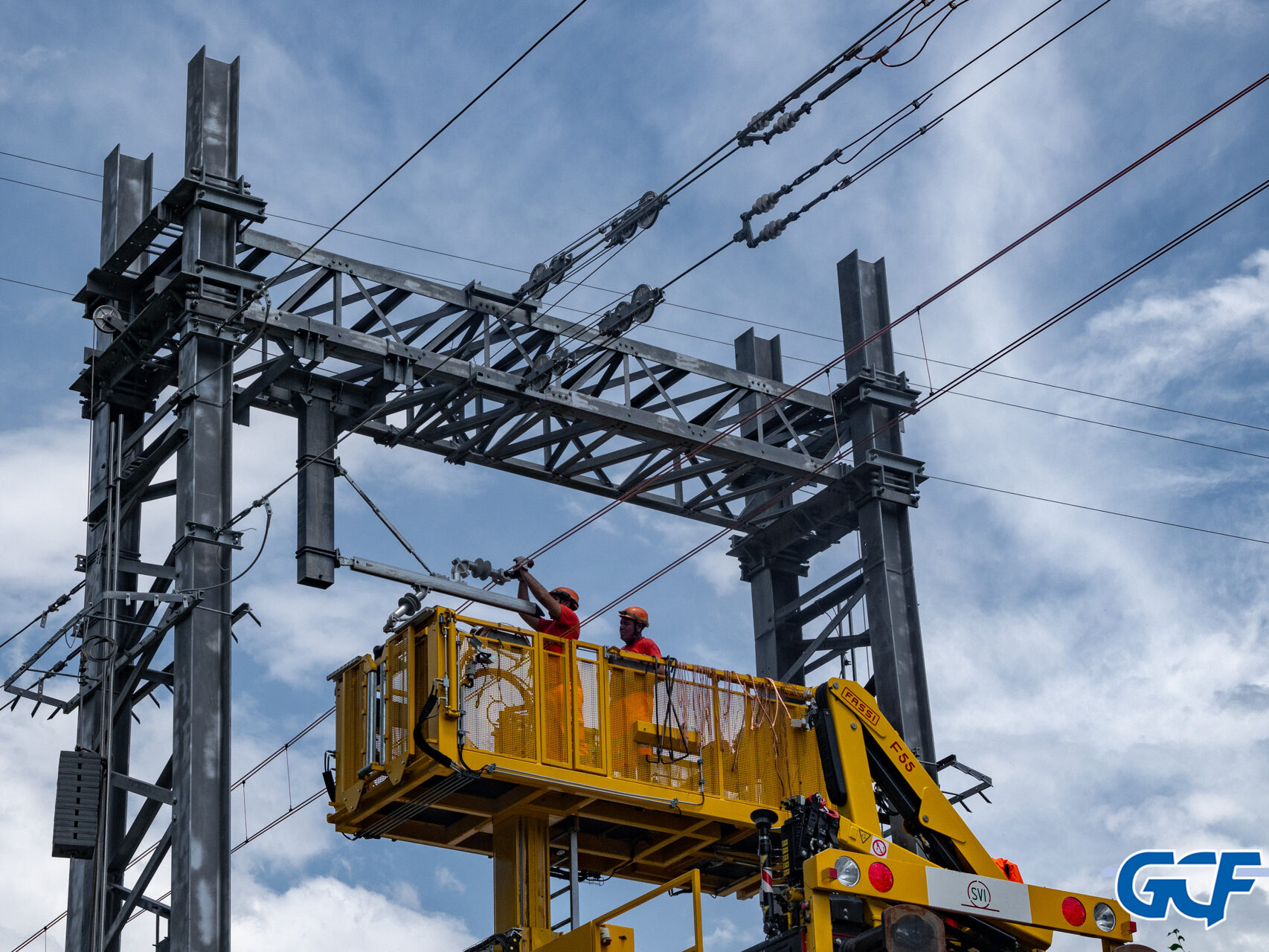
The galvanised steel masts, selected to combine high mechanical strength with reduced weight, were designed to blend into the valley landscape and, wherever possible, positioned on the uphill side of the railway in order to minimise the visual impact of the infrastructure.
Overhead Contact System: Different Technologies for Open Line and Tunnels
Advanced technological solutions were also adopted for the overhead contact system. On open sections, a tensioned flexible catenary was installed, supported by the new Omnia aluminium-alloy cantilevers derived from the latest railway applications and kept under constant mechanical tension by automatic counterweight devices capable of compensating for temperature-induced dimensional variations and ensuring continuous, reliable contact between the pantograph and the contact wire under all operating conditions.
Giuseppe Canneti, Project Designer at GCF, said:Inside the four tunnels, covering a total length of approximately 2 km, a rigid overhead contact system was adopted instead. This technology reduces structural clearances, improves reliability and minimises maintenance requirements in confined environments. Dedicated transition assemblies ensure uninterrupted power supply between the flexible overhead contact line and the rigid system at the interfaces between open-air sections and tunnels.
Traction Substations: The Energy Backbone of the New Railway
The line is supplied by a main traction substation located at Coldrano-Vezzano, fed from the 132 kV high-voltage grid. Equipped with two 7.2 MVA single-phase transformers, the substation converts the incoming power into the 25 kV AC traction supply required by the railway. Under exceptional operating conditions, the installation can be reconfigured to supply the entire line even with only one transformer in service.
Two additional traction substations, located at Lagundo and Malles and each equipped with 2 MVA transformers, ensure continuity of service under extraordinary operating conditions. All substations are remotely supervised and controlled.
Overhead Contact Line Monitoring System
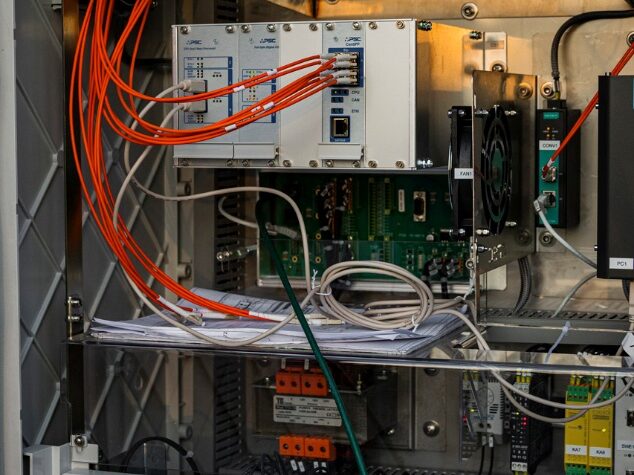
Among the technological innovations introduced on the Val Venosta Railway is a permanent overhead contact line monitoring system capable of continuously checking the correct movement of the automatic tensioning counterweights in real time. The system verifies that the mechanical tension of the catenary remains within the specified operating limits and immediately reports any anomalies before they can affect service reliability.
This innovation makes it possible to move from predominantly scheduled maintenance to a predictive maintenance approach, enabling maintenance activities to be planned and carried out before minor irregularities can impact railway operations.
VIP System – Video Inspection Pantograph
Particularly significant from an infrastructure safety perspective is the VIP (Video Inspection Pantograph) system. Installed along the railway line, this network of dedicated high-performance cameras automatically captures images of the pantograph of every passing train, verifying its integrity and promptly detecting any deformation or anomaly that could damage the overhead contact line. Should a fault be detected, the system immediately alerts maintenance personnel, enabling rapid intervention before service is affected.
A Smart Railway
The electrification of the Merano-Malles line has provided the opportunity to implement the latest railway technologies. The outcome is not simply an electrified railway but a smart infrastructure integrating continuous monitoring, remote supervision of traction substations and sectioning switches, overhead contact line diagnostics, monitoring of the automatic tensioning system, automatic pantograph video inspection and predictive maintenance.
Dr Giuseppe Brecciaroli, CEO at Generale Costruzioni Ferroviarie S.p.A., said:This project brings together and capitalises on some of the best expertise and execution strategies developed over the years by GCF's designers and technical specialists. In particular, the project's digitalisation and innovation features look to the future by shifting infrastructure maintenance towards a data-driven model, in which the infrastructure itself is capable of identifying and reporting anomalies before they have any impact on railway operations.
POC: A Technological Interface Between Two Railway Systems
Among the most sophisticated works delivered along the line is the POC (Boundary Interface Point), where the Val Venosta Railway network, electrified at 25 kV AC, connects with the Italian national railway network, which operates on 3 kV DC.
Giuseppe Canneti, Project Designer at GCF, said:The engineering challenge consisted of enabling trains to pass seamlessly between two completely different electrification systems while maintaining mechanical continuity of the overhead contact line and, at the same time, ensuring strict electrical separation between the two power supplies. To achieve this objective, a particularly refined engineering solution was adopted. The neutral transition section was created by overlapping the contact conductors over a distance of approximately 26 metres, allowing the pantograph to pass without any mechanical discontinuity while ensuring complete electrical independence between the two systems.
A further noteworthy feature concerns the separation equipment itself and the POC isolation transformer. Rather than being integrated into the overhead contact line masts, these components were installed on a dedicated, structurally independent support structure. This solution improves accessibility for maintenance operations, clearly separates the mechanical functions of the overhead line from the electrical functions of the installation, and enhances the overall reliability of the interconnection system.
This article was originally published by GCF.