When comparing air compressor technologies, the debate between rotary vane and rotary screw has long been dominated by market familiarity rather than engineering merit. A closer technical look, however, reveals a consistent story: rotary vane compressors are fundamentally superior in long-term efficiency, reliability and suitability for demanding environments like rail and transportation.
How They Work: Two Very Different Philosophies
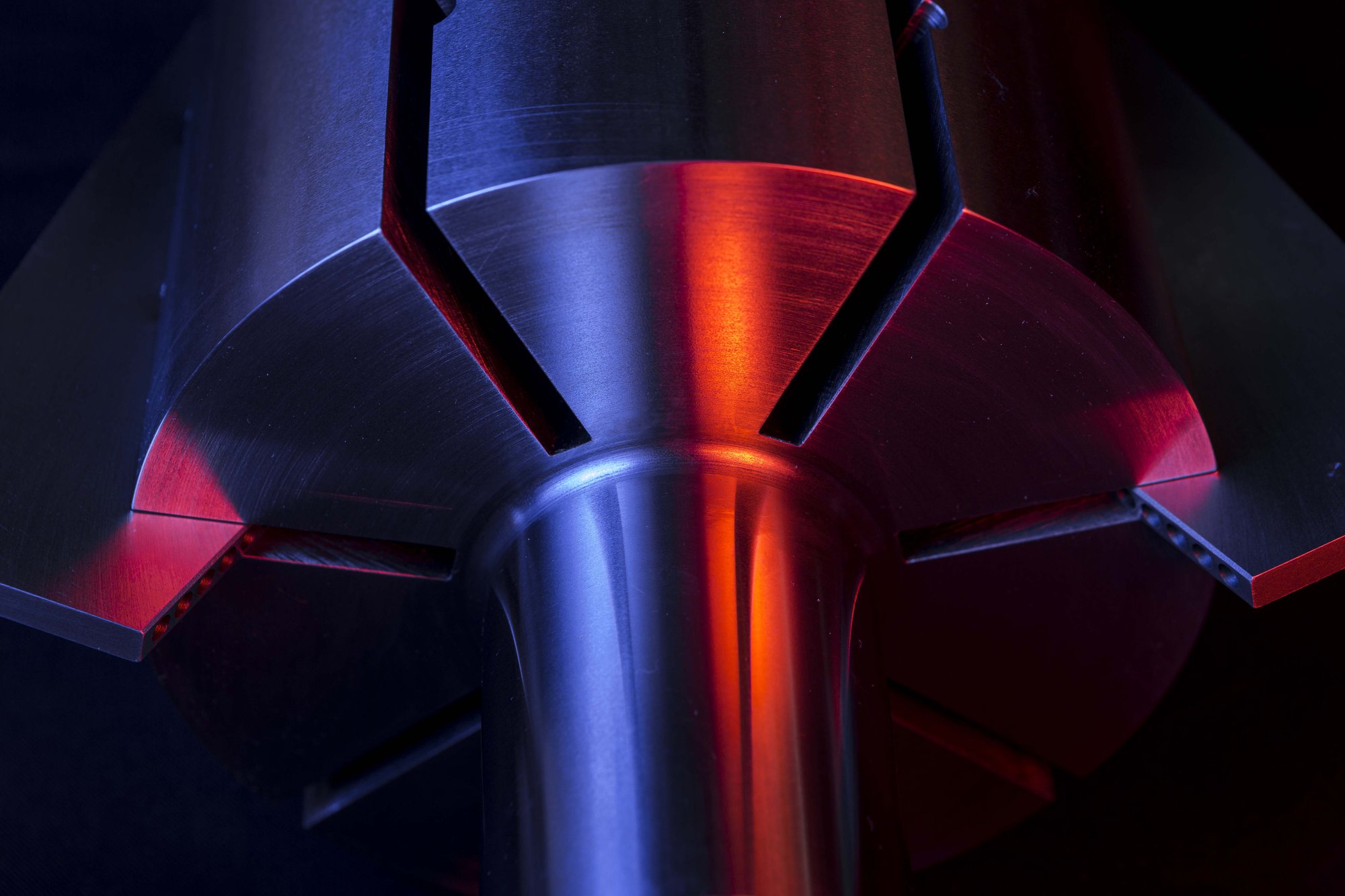
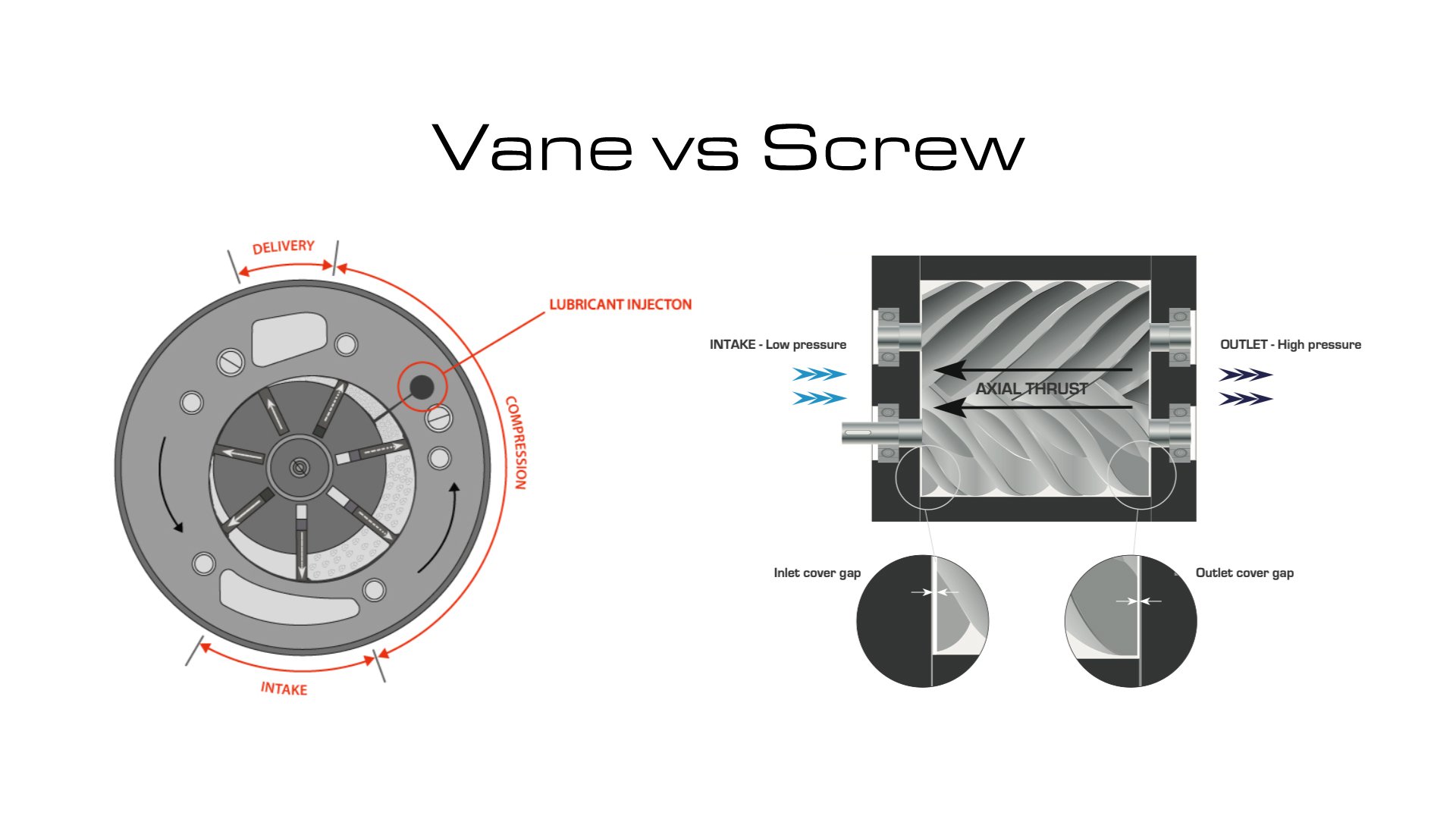
At their core, the two technologies take opposite approaches to sealing and compression. A rotary screw compressor relies on two precision-machined helical rotors that mesh inside a stator, maintaining micrometric clearances to prevent internal leakage. Nothing physically holds those gaps in place – they depend entirely on bearing precision. A rotary vane compressor, by contrast, uses a single offset rotor fitted with free-sliding vanes that ride against the stator wall on a continuous hydrodynamic film of lubricant. The seal renews itself with every revolution.
This distinction in sealing architecture is not a minor engineering detail – it defines the entire performance trajectory of each machine over its working life.
The Screw’s Silent Decline
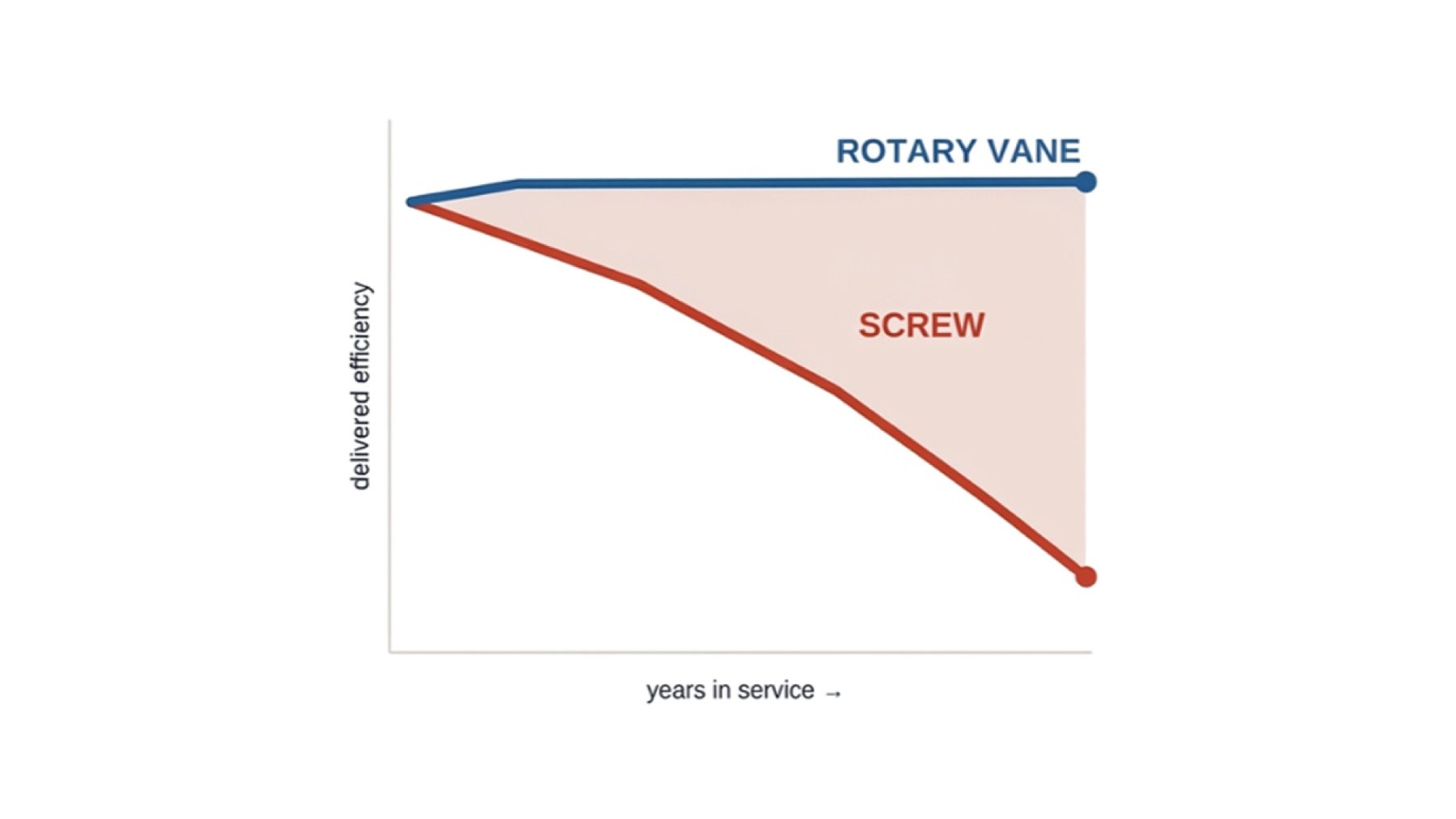
In screw compressors, bearing wear begins from the very first hour of operation. As bearings degrade, rotors shift, clearances open and the so-called ‘blow-hole’ – the default leakage path between meshing rotors – grows wider. High-pressure air slips back towards the inlet, and the machine delivers progressively less air for the same energy input. Independent field studies have measured efficiency losses in double digits over a screw compressor’s lifetime.
The problem is compounded by the screw’s need for regular bearing overhauls. In standard industrial settings, bearings must typically be replaced every 20,000 to 30,000 hours. The degradation occurs silently – no audible or visible warning – and a full air-end overhaul is generally recommended every four to six years, which restores geometry temporarily before the cycle of decline begins again.
The Vane’s Improving Curve
Rotary vane compressors behave in the opposite direction. In the first hours of operation, the vane flanks polish smooth as they slide in and out of their rotor slots, cutting internal friction and actually reducing power draw. After this initial bedding-in period, performance stabilises and holds. There is no clearance to widen, no thrust bearing whose wear opens a leakage path, no blow-hole that grows. Verified independently by Intertek, rotary vane compressors improve efficiency within the first 500 operating hours and then maintain that level while comparable screw compressors decline.
Why Rail & Transportation Changes Everything
In a controlled factory environment, screw compressors can at least operate within predictable degradation parameters. Onboard a train, those parameters collapse entirely.
Rail applications subject compressors to continuous vibration, extreme temperature swings (from -40°C to +60°C), high humidity, and contamination – conditions that dramatically accelerate bearing wear. Screw compressor bearing life, which might reach 20,000–30,000 hours in a clean stationary environment, is cut to just 10,000–12,000 hours under typical rail operating conditions. Missing an overhaul in this context is not just a performance risk: rotors can make physical contact, causing catastrophic failure of the entire compression block.
Rotary vane compressors, being self-adjusting and self-balancing machines floating on two continuously lubricated bush bearings, are inherently unaffected by vibration and environmental stress. Bush bearings have been proven beyond 200,000 hours in industrial use, and rail-deployed rotary vane units have been recorded running past 35,000 hours on their original factory-fitted vanes and bearings – with no performance degradation.
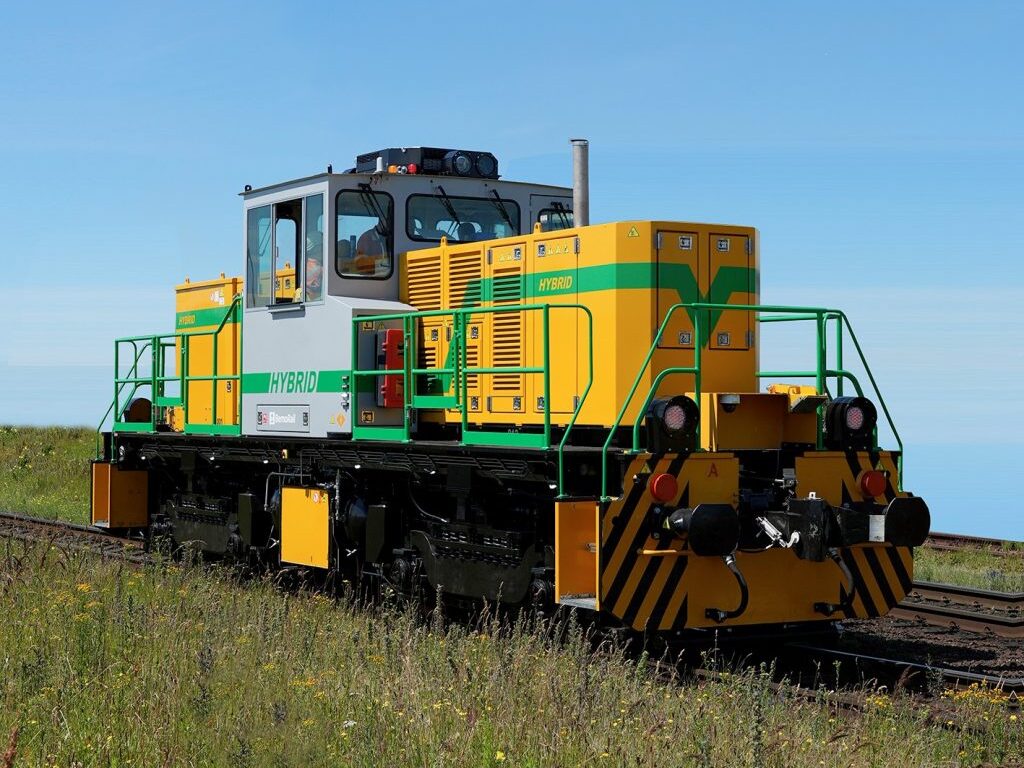
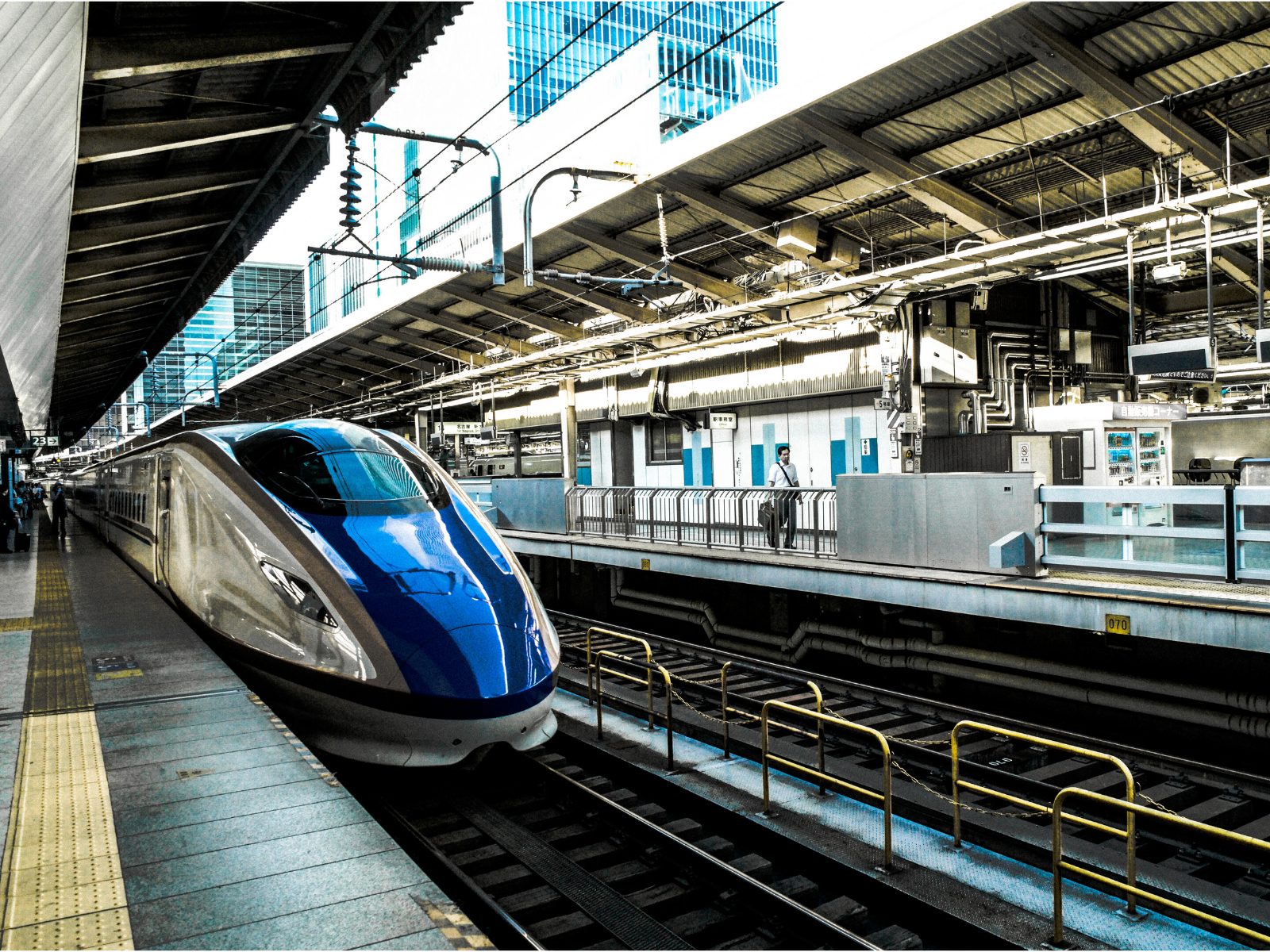
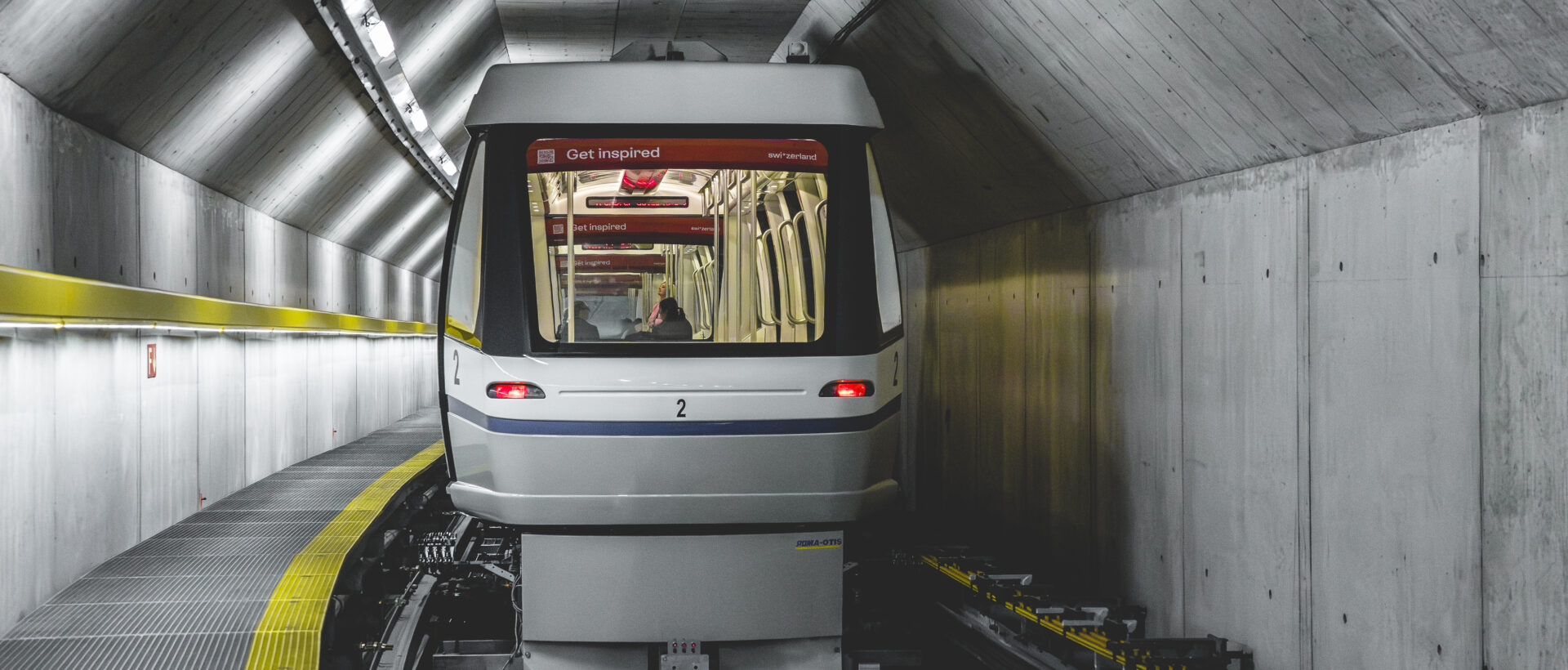
The application range is broad: rotary vane compressors for rail serve clients across Europe, Scandinavia, North and South America, China and Southeast Asia, covering everything from light rail and metros to high-speed trains and freight locomotives. Package specifications cover flows from 160 to 6,000 l/min, pressures from 6 to 13 bar, voltage compatibility from 120V to 3,000V, and sound pressure levels of 60–80dBA.
The Bottom Line
For rail operators, where uptime, safety, and total cost of ownership are non-negotiable, the choice of compression technology carries real operational weight. Rotary vane technology doesn’t just start better – it stays better.