Supporting the Next Generation of Rolling Stock with Integrated Solutions
As trains become more complex, the connections between their critical systems are becoming just as important as the systems themselves. At InnoTrans 2026, Stäubli will demonstrate how integrated electrical and fluid connection solutions can help simplify the design and operation of next-generation rolling stock.
A System-Level Approach Built for Rail Realities
Connection technology may not be the most visible part of a train, but every critical onboard function depends on reliable electrical and fluid interfaces. These connections must withstand vibration, thermal cycling, electromagnetic interference and decades of continuous operation – while remaining easy to maintain.
For more than forty years, Stäubli has supported the railway industry with connection solutions designed specifically for these demanding environments. As Michel Schmitt, Global Business Head for Railway at Stäubli, puts it:
Michel Schmitt, Global Business Head for Railway at Stäubli, said:Our job is to ensure the continuity of critical energy and fluid systems throughout a train’s entire service life, and to do so safely, reliably and sustainably.
But today’s trains incorporate more onboard systems, run at higher frequencies and increasingly rely on battery technologies alongside traditional electrification. At the same time, rail operators are under pressure to do more with less: less installation space, less downtime and lower lifecycle costs – ultimately placing greater demand on the connections that link every subsystem together.

Alexandre Lagrange, Product Manager for Railway at Stäubli, said:In cities such as London or Paris, trains are running every 90 seconds. If one train stops during commercial operation, you affect traffic across the entire network. The margin for error is essentially zero.
This is forcing designers, and suppliers, to think more carefully about how different onboard systems connect – especially where electrical power and thermal management have to coexist within the same limited space.
Reliable Power Across the Traction Chain
The traction chain is one of the areas where a train’s electrical architecture is most exposed to stress, with connectors required to perform under continuous vibration and extreme temperature variations.
Alexandre Lagrange, Product Manager for Railway at Stäubli, said:The EvoTrak range was designed to address that challenge across multiple rolling stock types and power levels.
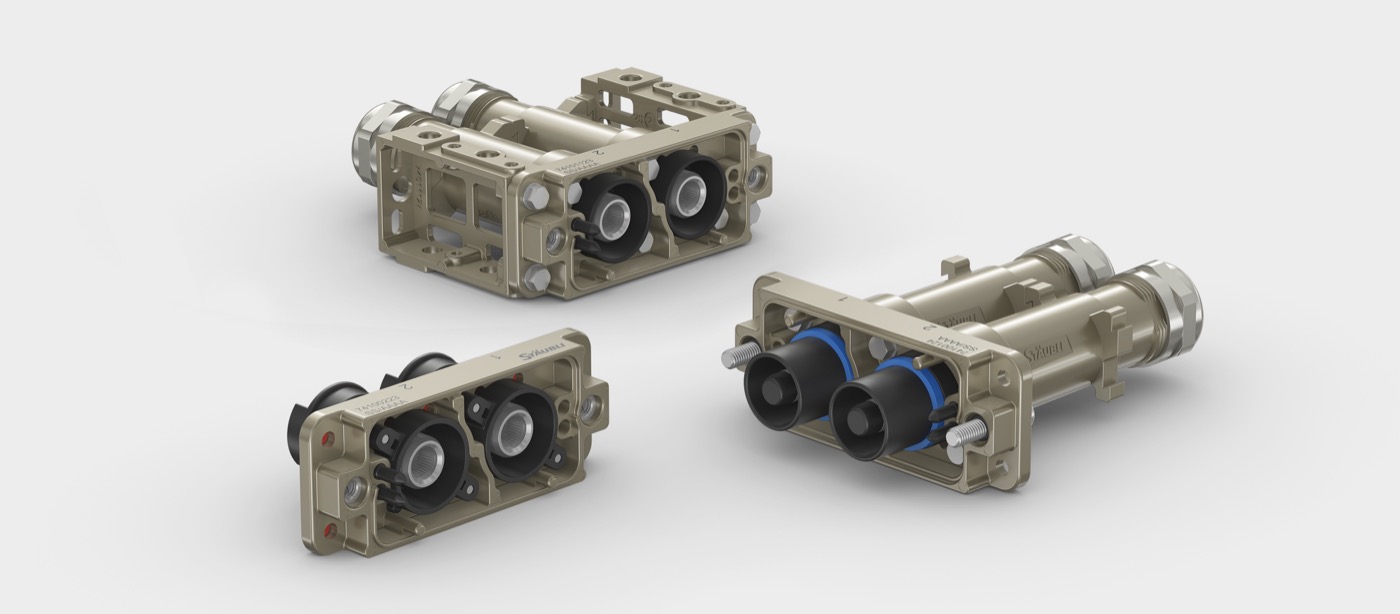
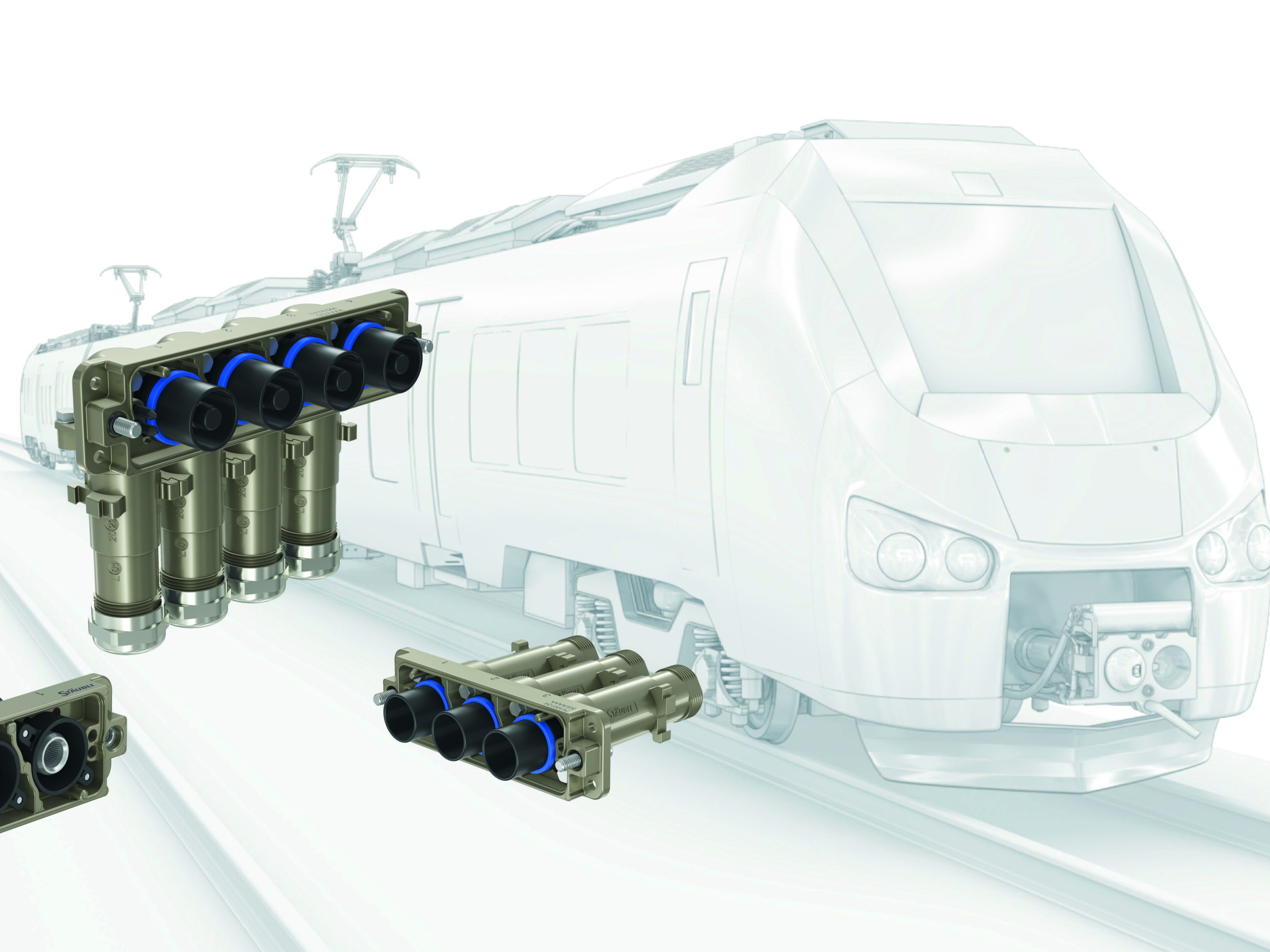
That range includes EvoTrak MPC and EvoTrak Shield, for high-power applications up to 3,000V, connecting transformers, converters and traction motors on locomotives, electric multiple units and high-speed trains. Meanwhile, EvoTrak lite, developed for urban rail applications, addresses voltages up to 1,500V – designed in direct response to what Alexandre Lagrange considered a need in the range.
A newer addition to the traction chain offer is EvoTrak Shield, developed in response to increasingly digitalized rolling stock.
Alexandre Lagrange, Product Manager for Railway at Stäubli, said:Every new generation of train has more communication systems on board.
Integrated Solutions for Battery Systems
Battery applications, too, reflect broader shifts across the rail market, particularly on non-electrified lines where alternatives to diesel are gaining importance. But as battery capacity increases, so does the need for effective thermal management.
Alexandre Lagrange, Product Manager for Railway at Stäubli, said:When you increase the power in a battery system, you also increase heat generation. And when you increase heat, you need more cooling.
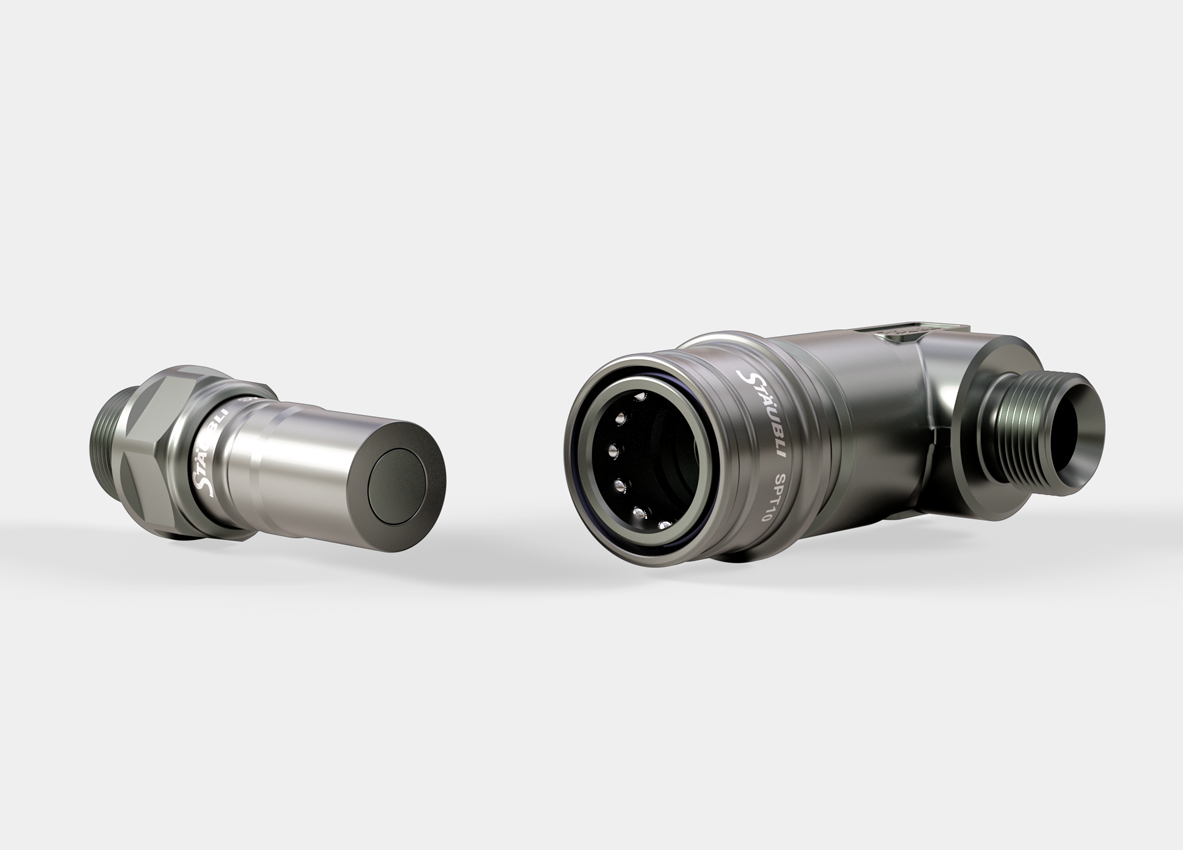
A traction battery therefore requires both electrical connections for power transfer and monitoring, and fluid connections to manage cooling circuits. Stäubli’s approach is to address these requirements together, combining electrical and fluid expertise within a single connection strategy.
The company’s portfolio includes CombiTac CT-HE for blind and rackable power and monitoring interfaces inside battery enclosures, EvoTrak lite for the electrical connection between battery and vehicle, and SPT and RME fluid connectors for thermal management.
Alexandre Lagrange, Product Manager for Railway at Stäubli, said:Most importantly, we can integrate both technologies into one product and one interface.
This integration philosophy is already reflected in Stäubli’s multi-connections for cooling applications (MCC) range, designed for power electronics applications such as converters, transformers and inverters. By combining electrical and cooling circuits into a single docking operation, MCC helps simplify installation while reducing the risk of connection errors. Meanwhile, integrated guidance features support accurate positioning during assembly, while non-spill disconnection and overpressure protection enable repeated maintenance operations throughout the vehicle’s service life.
Engineered for Forty Years of Service
That focus on long-term performance is essential in the railway industry, where the value of connection technology is measured by its ability to perform over decades.
Michel Schmitt, Global Business Head for Railway at Stäubli, said:Train platforms are built for forty to forty-five years with midlife operation at 20-25years. There is no opportunity to change a connector halfway through their operational life.
To meet these expectations, Stäubli develops, qualifies and manufactures its products in-house. Supported by railway-related activities certified to IRIS ISO/TS 22163, the industry’s quality management standard, Stäubli also relies on a dedicated railway testing laboratory. There, products undergo comprehensive validation under conditions encountered throughout railway service, including shock, vibration, thermal cycling, salt spray and electromagnetic stress.
Meanwhile, the company’s patented MULTILAM contact technology helps ensure consistent electrical performance over the lifetime of the connection, maintaining low contact resistance over hundreds of mating cycles – particularly valuable in railway applications where connectors are repeatedly disconnected and reconnected during maintenance.
Michel Schmitt, Global Business Head for Railway at Stäubli, said:We have forty years of experience in this market. We develop our products, we qualify them, we produce them. We manage the complete value chain. That's what stands behind the reliability we talk about.
One Partner. All Railway Connections.
For Stäubli, this lifecycle approach goes beyond individual products. It means supporting customers from the initial engineering phase through integration, operation and maintenance.
Michel Schmitt, Global Business Head for Railway at Stäubli, said:Whatever connection challenge exists on a train – electrical, fluid, or both – there is one team to talk to, and one supplier accountable for the solution across the full lifecycle.
Michel Schmitt, Global Business Head for Railway at Stäubli, said:Combining electrical and fluid systems within a unified approach simplifies installation, facilitates maintenance and reduces operational risk over the lifetime of the train. But beyond a portfolio of products, what we offer is a cross-functional approach to connections – reducing complexity for our customers and ultimately saving both time and cost.
As rolling stock becomes more sophisticated, the ability to manage these interfaces effectively will become increasingly important. By combining electrical and fluid connection expertise with decades of railway experience, Stäubli aims to provide customers with a single, reliable partner for the critical connections that keep trains running.
Visit Stäubli at InnoTrans
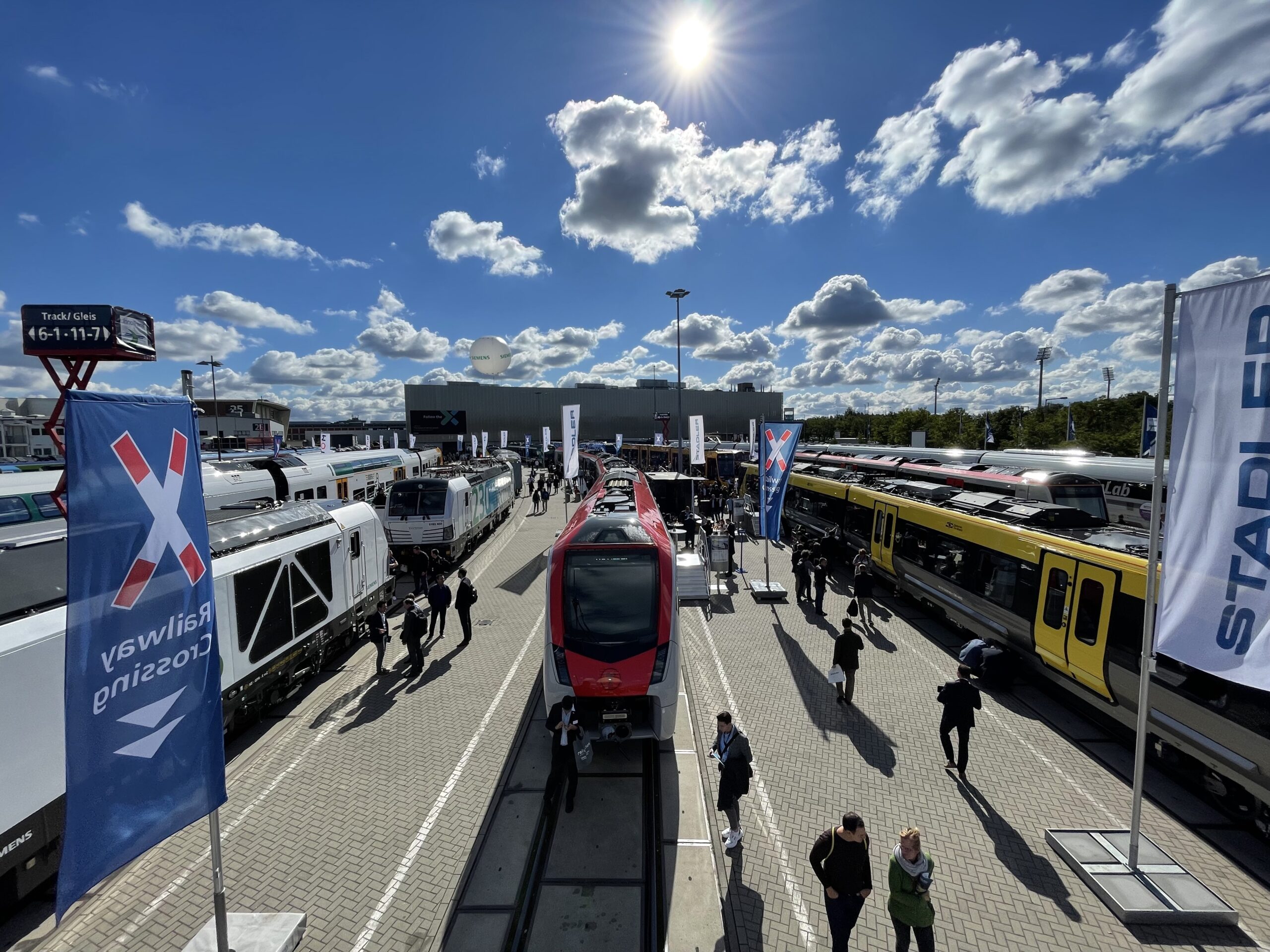
Visitors to Stäubli’s stand at InnoTrans 2026 in Berlin (Hall 12 / Booth 350) will be able to explore this integrated approach through demonstrations of the company’s latest electrical and fluid connection technologies, including a model train illustrating traction chain and battery applications in their operational context.