The Škoda Group has officially unveiled the next generation of RegioPanter battery train (BEMU) during the 2026 edition of international Rail Business Days 2026 in Ostrava.
Designed primarily for regions with partially electrified railway infrastructure, the BEMU is hoped to enable the rapid introduction of emission-free trains on lines without overhead electrification.

Škoda is now working to produce 15 of these new trains for České dráhy, which will enter operation in the Moravian-Silesian Region.
The company has also secured its first foreign orders for up to 16 battery trains for Latvia and up to 36 trains for Slovakia which, together with an order for up to 34 battery trains equipped with a diesel generator for RegioJet, represent orders for more than 100 battery-powered trains now being in active fulfilment.
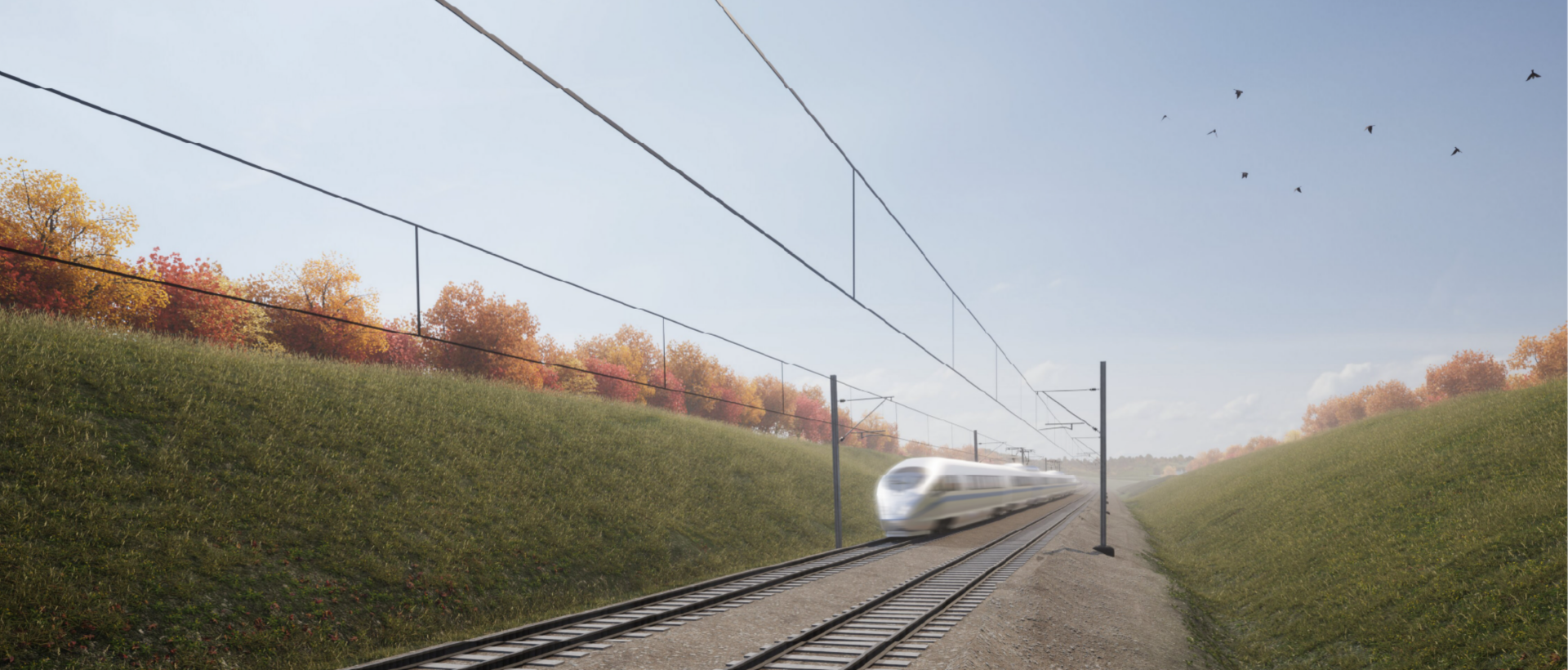
Combining electric and battery propulsion, the new RegioPanter battery trains are capable of running under overhead lines whilst batteries are continuously recharged, with non-electrified sections allowing the train to use energy stored within its batteries.
The train offers a range of 80 kilometres in battery mode, a maximum speed of 160 km/h under overhead lines and 120 km/h in pure battery mode. Onboard batteries are capable of being recharged during breaking via regenerative braking – including on non-electrified sections.
Tomáš Ignačák, Vice Chairman of the Board of Škoda Group, said:Our new battery trains demonstrate that emission-free regional transport does not have to wait for complete railway electrification.
They provide operators and transport authorities with a rapidly deployable solution that enables non-electrified local lines to be connected directly with major electrified corridors without transfers.
Passengers benefit from faster, more comfortable and quieter travel, while regions gain a modern transport backbone with significantly lower emissions.
The new generation RegioPanter battery trains represent a significant technological shift compared to the first battery trains introduced into the Moravian-Silesian Region in December 2024, having been designed from the outset as a fully-fledged battery train.
Each unit features a new arrangement of battery blocks on the roof, an optimised traction system, and an overall more efficient vehicle design. They utilise LTO (lithium-titanate) batteries, which offer higher levels of fire safety, longer service life and high performance.
Finally, the new trains offer higher capacity at 150 seats, meeting the needs of regional lines with growing demand for modern transport.