Alstom has announced the introduction into commercial service of France’s first two battery-powered regional trains (TER), launched in the Occitanie and Sud regions as part of a 41 million EUR national programme.
The programme was launched alongside SNCF Voyageurs, as well as the Auvergne-Rhône-Alpes, Hauts-de-France and Nouvelle-Aquitaine regions, where the initiative will later be rolled out.
Funding for the major project is split between the five regions (30 million EUR), SNCF Voyageurs (6 million EUR) and Alstom (5.5 million EUR).
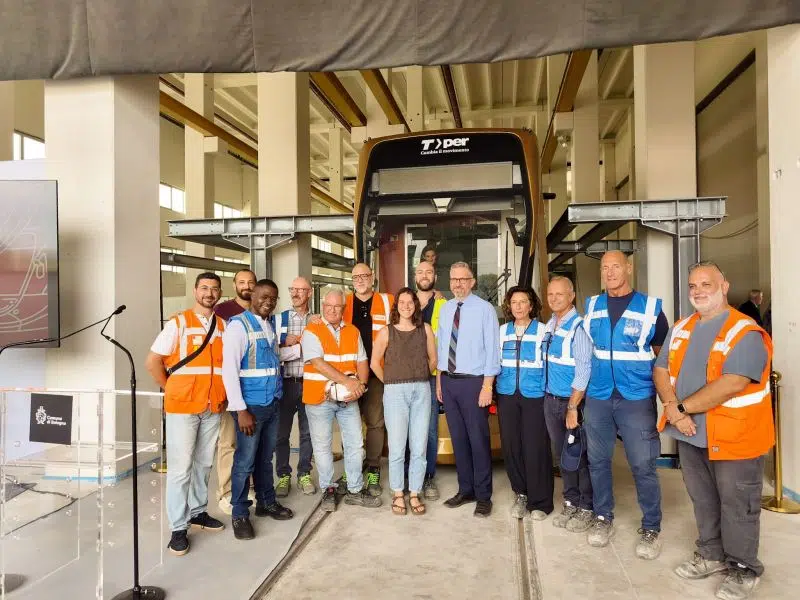
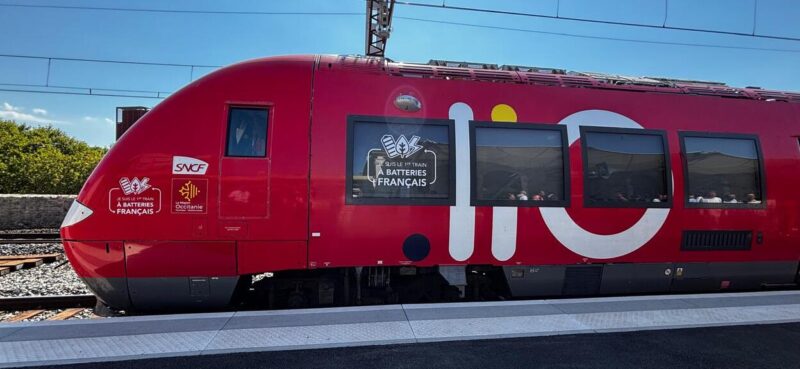
Occitanie’s battery-powered liO train entered service on the Nîmes–Vauvert line on 31 August, launched by regional and SNCF officials including Jean-Luc Gibelin, the region’s Vice-President for Mobility and Transport Infrastructure. The train adds two extra weekday return journeys to the route.
This marks the continued innovation and energy transition in the Occitanie region.
The region is already trialling a hybrid (electric, diesel, battery) Régiolis train on the Toulouse network and will soon deploy hydrogen-powered Régiolis trains on the Montréjeau–Luchon line.
This makes Occitanie the first French region to test three separate technologies—hybrid, battery, and hydrogen—all aimed at cutting diesel use in rail transport.
In the Sud region, a battery-powered train has been operating commercially on the line between Avignon and Carpentras since 28 July 2026.
The train runs on electric power on sections of the line equipped with overhead lines, switching to battery power at Sorgues station to run on its batteries as far as Carpentras, on the non-electrified stretch of the journey.
Delphine Couzi, Regional Director of SNCF Voyageurs Sud and Regional Coordinator of the SNCF Group, said:This project, carried out in partnership with the Sud Region and Alstom, illustrates the SNCF Group's ability to advance technologies in the service of more sustainable mobility, without compromising on the quality of service offered to passengers.
The introduction of this battery-powered train marks a new step in this ambition, providing a response to the challenges of decarbonising lines that are not fully electrified.
Having initially been AGC railcars, both trains were converted with lithium-ion batteries replacing their diesel engines, giving them a range of over 80km.
Regenerative braking feeds energy back into the batteries, cutting energy consumption by up to 20%, as well as benefiting passengers with a far quieter ride.
Frédéric Wiscart, President of Alstom's France BeLux region, said:This innovation provides a concrete example of how the rail sector can continue its transition towards ever more efficient and energy-efficient transport.
Battery trains offer a complementary solution to decarbonising rail transport. The performance of these first two trains is being evaluated under real operating conditions ahead of wider rollout across France’s non-electrified regional network.