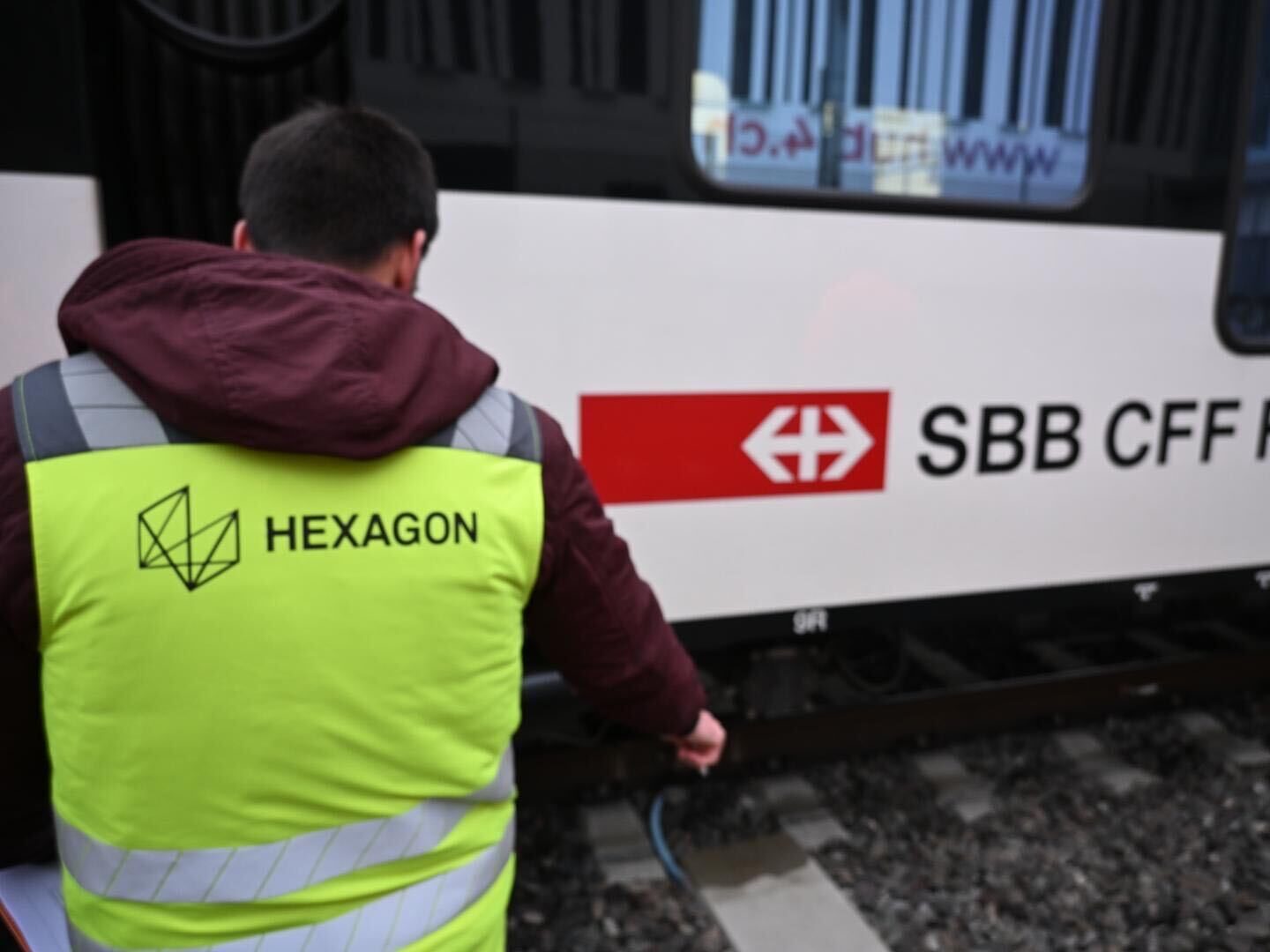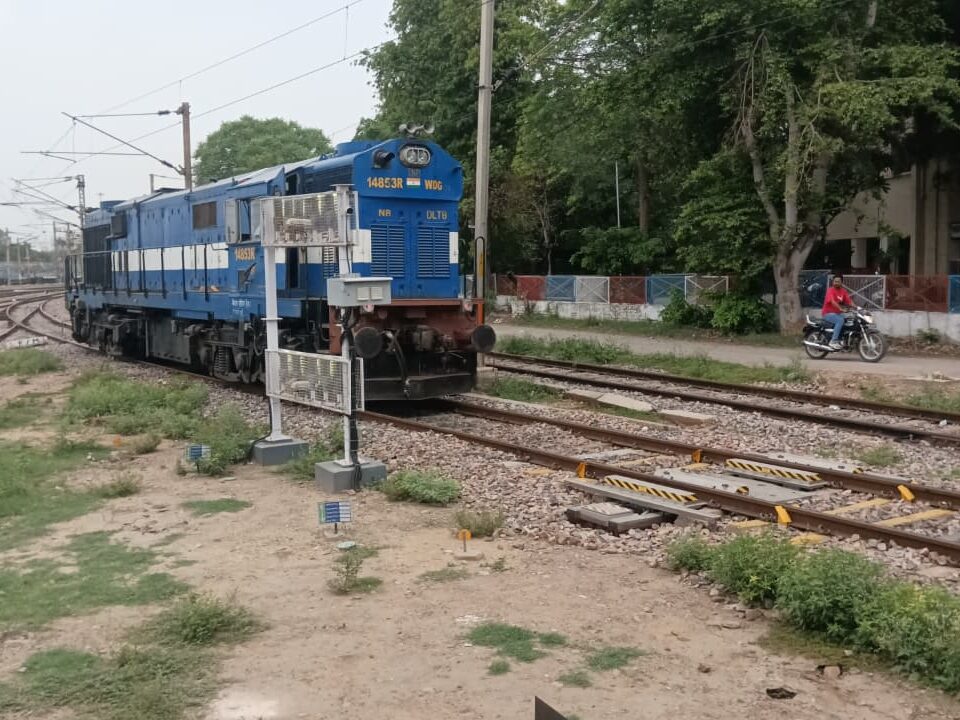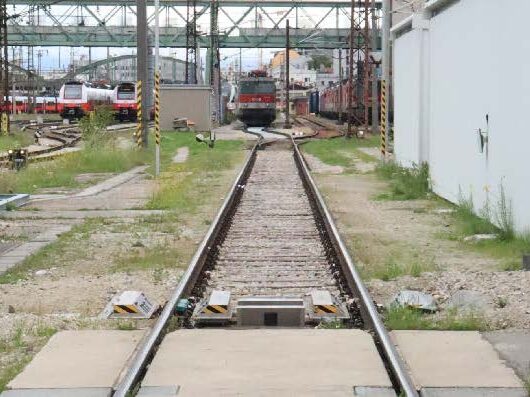
Hexagon AB has gained certification from Deutsche Bahn (DB) for its CALIPRI X automated measurement system: an optical, non-contact wheel profile measurement device designed for drive-through use on railway vehicles.
This certification means the system has been qualified by an independent calibration body, which checked accuracy and repeatability not just in the lab, but also in real-world conditions.
How Deutsche Bahn put CALIPRI X to the test
Measurements were taken in line with standards such as DIN EN 13715:2020-10 and DIN EN 15313:2016-09. These tests focused on wheelsets that had not been freshly reworked, but had various degrees of wear as in normal railway operation. Following the NEXTSENSE’s manufacturer guidelines, the key parameters were then determined according to JCGM 100:2008 and DIN 27201-9:2017-06.
The extensive testing took place between February and December 2024, looking at simulation, accuracy, speed and load. This multi-step qualification ultimately confirmed that the system met DB’s demanding quality criteria, with 95% of all measurements made by the CALIPRI X falling within the specified bandwidth.
Simulation
The first stage of certification involved simulation data, which was the quickest way to test a wide variety of wheel types and wear conditions. DB supplied NEXTSENSE with 100 different artificial wheel profiles, created through 3D modelling. These models included wheels with deliberate defects, such as flat spots, broken material and other profile irregularities, to mimic real-world conditions.
Testing took place over six months, and involved close interaction between NEXTSENSE and DB.
Peter Lehofer, Head of Product Management at NEXTSENSE, said:It wasn’t simply a case of ‘here are the models, provide results’.
Instead, there was ongoing feedback and fine-tuning of our evaluation methods. Working together, we refined the criteria for distinguishing between acceptable variation and genuine defects, which ultimately strengthened the robustness of the measuring methodology.
A key principle of the system is that no wrong result is ever allowed. If the data shows too much deviation or uncertainty, the system will not provide an output at all. This ‘better no result than an incorrect result’ approach ensures 100% fail-safe operation. It means operators can trust that any measurement reported meets strict accuracy requirements, reinforcing safety and reliability as non-negotiable standards.
Accuracy and repeatability
After the simulation stage, real measurements were carried out using 10 highly accurate reference wheels produced by DB. The system was tested both statically (50 repeated measurements on the same wheel in the same position) and dynamically (running the wheel over the system multiple times) to assess repeatability and accuracy. Tests were conducted under different conditions – first in August, then again in December – to account for temperature variations, which are a known influence in real-world rail operations.
The results of these accuracy tests showed that systematic deviation remained well within specification, while repeatability proved even stronger, with each measurement highly consistent.
Speed
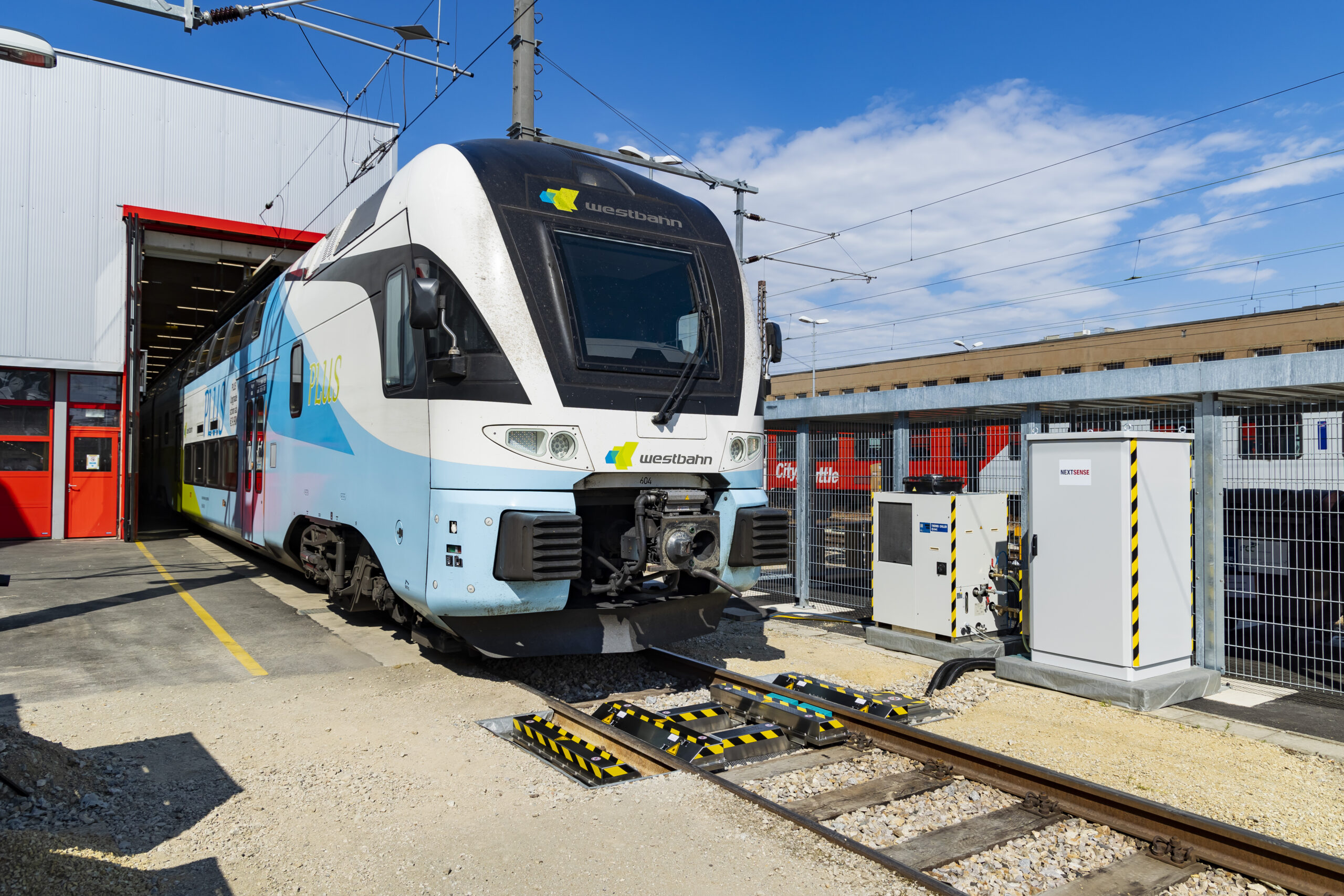
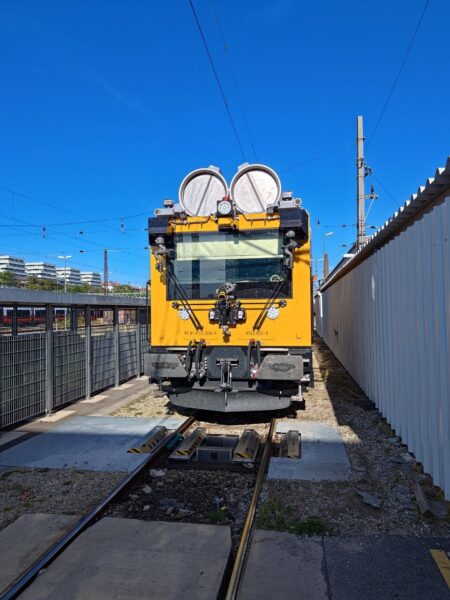
Next were real vehicle trials at different speeds, carried out at an independent maintenance hub in Vienna where both Westbahn and DB trains are serviced.
NEXTSENSE was given access to a DB train and conducted extensive testing: 50 passes at each speed, with the train running at three different speeds. With a 24-axle train, each test cycle involved moving forward, stopping and then reversing direction.
In total, the programme required 20 hours of measurement split across two days, and two drivers were needed to keep the operation continuous, since regulations prevent operating the train backwards from a single cab.
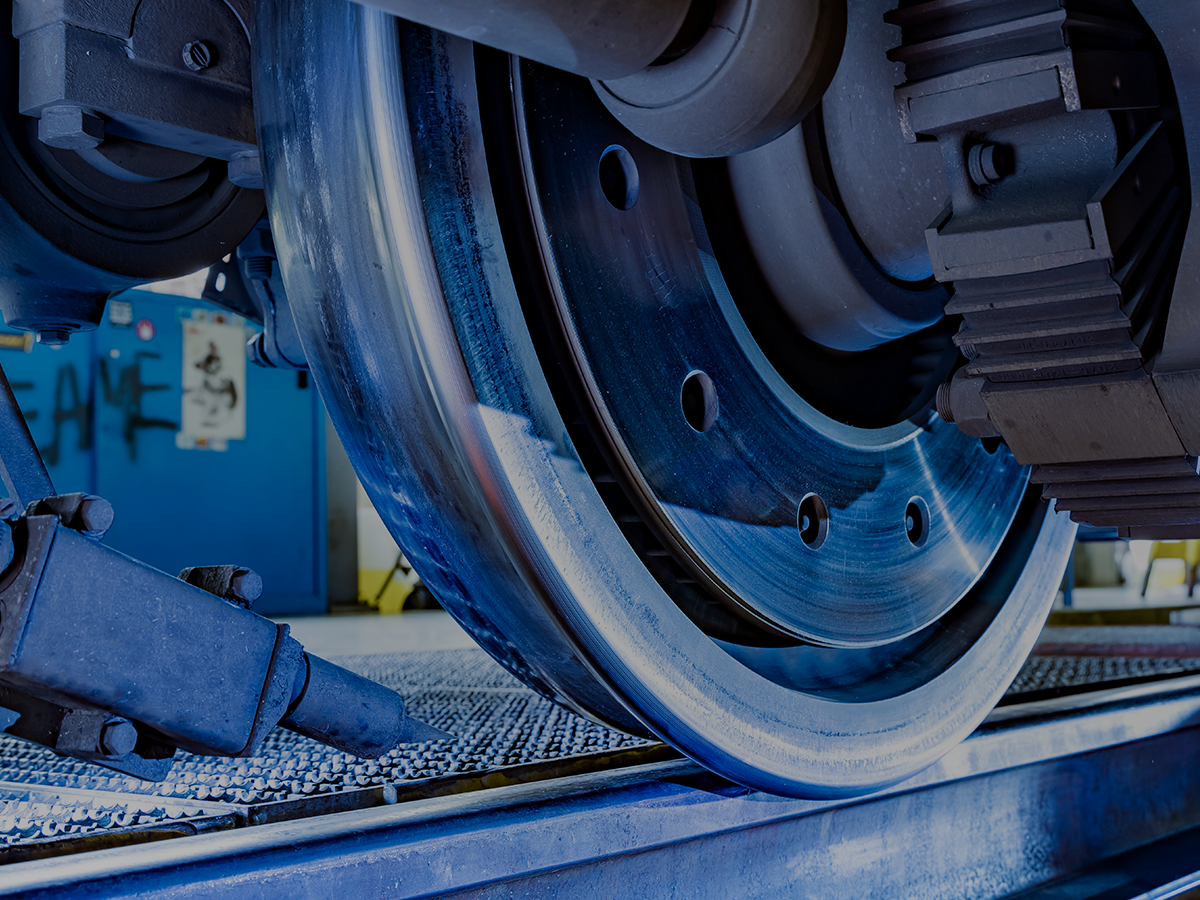
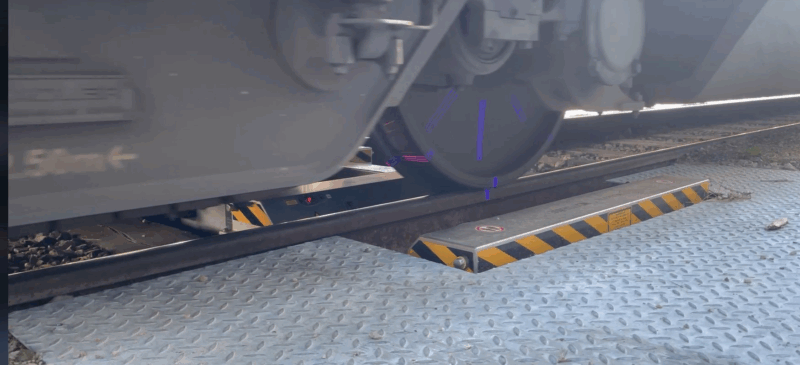
During these trials the wheel flange height and thickness, flange gradient, hollow tread, back-to-back distance and rolling circle diameter were all measured, with the CALIPRI X’s laser sensors – firing in microsecond bursts – capturing the wheel profiles in high precision. Blue lasers projected from one side and red lasers from the other, with overlapping data combined to form full cross-sections.
Lehofer notes:One challenge observed was that slight variations in wheel position occurred with each pass. When the train moved forward and then back, minor slips in rotation meant the wheels were not measured at exactly the same point each time, introducing small deviations. These findings were incorporated into the analysis to account for speed-related factors and ensure the robustness of the results.
Load
The final stage involved load checks using a Stadler ServiceJet – a train designed for tunnel maintenance and emergency operations. It’s equipped with powerful ventilation fans for smoke extraction, thermal imaging cameras, and most importantly for this situation, the ability to carry up to 40,000 litres of water. This is because, by filling or draining the tanks, the total train weight can be varied significantly, creating ideal conditions to test how load influences measurement results.
NEXTSENSE conducted four series of 20 measurements each, starting with the train fully loaded, then progressively removing 15,000, 28,000 and finally all 40,000 litres. This allowed the company to compare results on the same vehicle, on the same day, under identical wheel conditions, with load being the only variable.
Proof of performance
The outcome of all these tests was a 700-page report stating that the CALIPRI X met or exceeded all defined measurement tolerances, and is now certified by DB for real-world, drive-through wheel monitoring applications at speeds of up to 30 km/h.
A benchmark for global rail customers
Certification also acts as a door opener for the CALIPRI X, because DB will only purchase and use devices that have achieved this. For example, at Munich Metro this certification was a prerequisite for signing the contract; the system has since been deployed and is now in operation.
Lehofer concludes:This certification confirms our system fulfils DB’s demanding requirements – essentially giving us permission to sell to DB,” says Lehofer. “Other customers internationally also value DB certification as a seal of quality, so it provides further proof and helps differentiate us from the competition.