The METKA project (Metro Capacity and Reliability Improvement Programme) renews key train control and train detection systems in the Helsinki Metro. The objective is to improve capacity, reliability, and life cycle sustainability while creating technical conditions for shorter headways and semi-automatic operations.
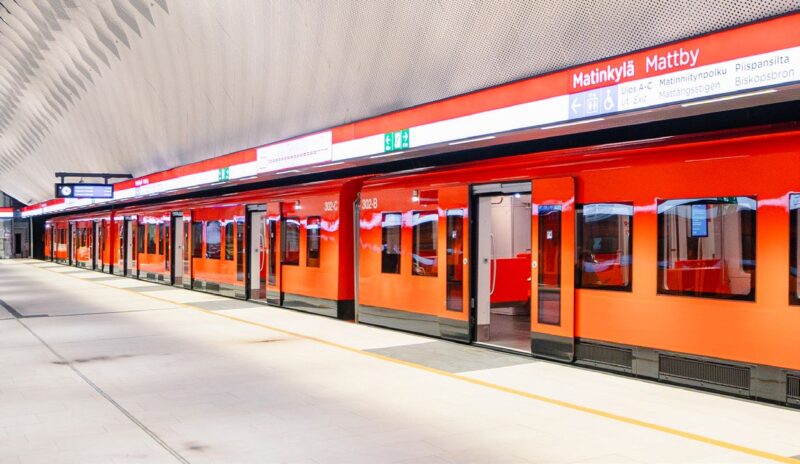
Mipro plays a key role in integrating next-generation technologies into the existing metro interlocking system. The delivery includes interfaces between the Mipro Computer-Based Interlocking (CBI), the new Automatic Train Control system (ATC), and the new axle counting system.
The project demonstrates how an existing safety-critical signalling platform can be successfully developed further as surrounding technologies and operational requirements evolve.
The METKA programme continues Mipro’s long-term development of the Helsinki Metro signalling environment. The project combines life cycle management of an existing SIL4-certified signalling system, multi-vendor integration and standardised interfaces to support the next generation of metro operations. The approach enables the Helsinki Metro signalling system to be modernised progressively while maintaining a proven interlocking platform.
Long-Term Development of the Helsinki Metro Signalling System
Mipro has been supporting the development of the Helsinki metropolitan area metro signalling system for more than ten years.
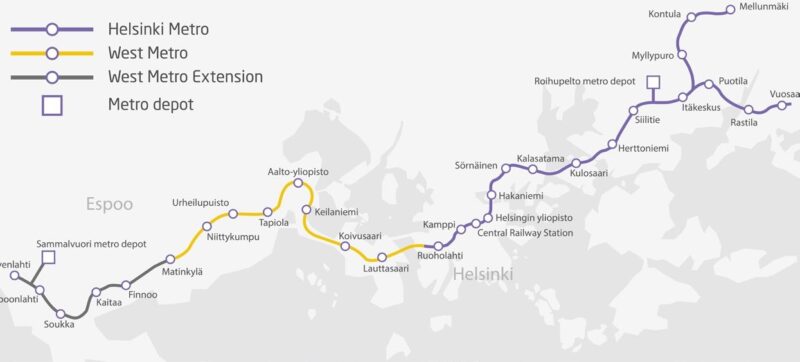
In the West Metro project in 2015–2017, Mipro delivered the interlocking system, Automatic Train Supervision (ATS), passenger information system and related interfaces between the old and the new metro sections. This greenfield project included 14 km of double track and 8 new stations. Mipro interlocking includes also interfaces with several auxiliary systems, like rolling fire doors, traction power, station emergency handles and fire warning systems.
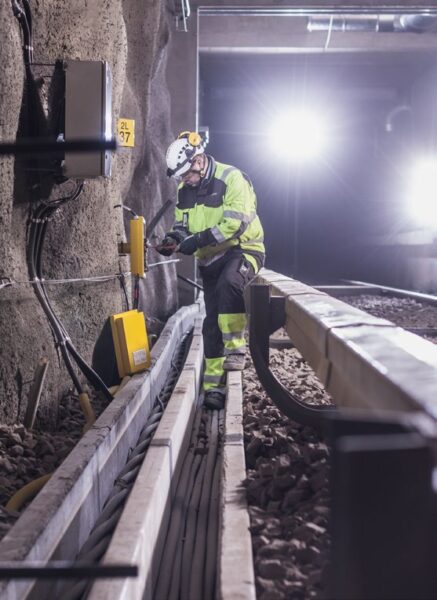
The cooperation continued with the renewal of the original Helsinki Metro interlocking system in 2016–2019. Mipro replaced the safety-critical interlocking core while retaining a significant part of the existing trackside equipment and cabling. At the same time, Mipro’s ATS system was extended to cover the entire metro network. This brownfield project for 21 km of double track, metro depot and 17 stations was installed and tested alongside the old signalling system without disrupting metro services. The commissioning of the new system and the launch of services took place over a single weekend, as planned.
The most recent expansion took place for the West Metro in 2020–2022. Mipro delivered signalling systems for the 7 km double track, new underground depot and 5 new stations.
These projects established the Mipro CBI and related traffic management systems as a central part of the metro signalling architecture, providing a stable platform for ongoing modernisation initiatives such as the METKA programme.
Improving the Metro’s Capacity and Reliability
The current Helsinki Metro train control system services are reliable and efficient, with trains running at 150-second intervals. The train is operated manually (GoA 1) using the Automatic Train Protection (ATP) system which monitors the train’s speed and track signals. If the driver goes too fast or misses a red signal, the ATP system applies emergency brakes automatically.
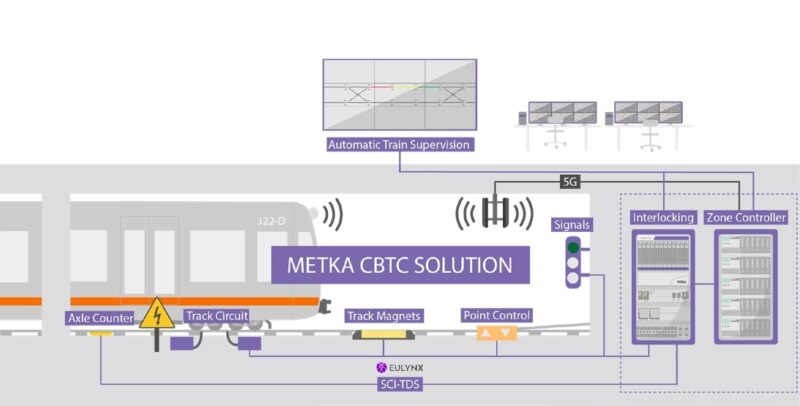
To meet future capacity and improved reliability requirements, the train control system is being modernised with a CBTC system, which ensures the reliability and efficiency of services. The METKA programme involves replacing the existing emergency braking system’s on-board and trackside equipment with CAF’s on-board CBTC radio-based continuous train control system. The aim is to shorten the headway by enabling semi-automatic driving. (GoA2). This upgrade will enable a 25 per cent increase in metro capacity.
Mipro’s Scope in METKA
The current Mipro Computer-Based Interlocking will remain a key part of the safety system, and the CBTC system will be integrated on top of it. The METKA programme introduces a new Automatic Train Control system supplied by CAF and a supporting mobile radio network supplied by Telia Finland.
Mipro is responsible for the implementation of the new functionality and new interface between the interlocking and the new ATC system with the existing Mipro CBI. The delivery includes:
- design and implementation of the CBI–ATC interface
- design and implementation of the Automatic Train Supervision interface
- functional modifications to the interlocking system
- system testing, validating and commissioning
In parallel, the legacy track circuit technology currently in use on the oldest section of the Helsinki Metro is being replaced by a modern axle counting system. Both the track circuits and the axle counters will continue to form the basis for train detection in the new CBTC environment. Mipro is responsible for the interface between the axle counting system and the existing interlocking environment. The scope includes interface design, protocol development, system modifications, testing and commissioning.
The key feature of the solution is the use of the standardised EULYNX SCI-TDS interface. The use of a standardised interface reduces dependence on supplier-specific integrations and supports compatibility with axle counting systems from different manufacturers.
Phased Migration
The project is introduced in phases, starting with the development of the current traffic control system so that a new train control system can be integrated into it. At the same time, work will begin modifying the existing M300 trains to enable the integration of the train control system alongside the current ATP system. The procurement of the new CBTC-equipped M400 trains has begun to replace the oldest rolling stock. Older M100 and M200 trains will not be retrofitted with CBTC on-board units, as they are being gradually taken out of service following the introduction of the new M400 trains.
The implementation approach enables both the existing and new train control system environments to operate in parallel during the transition period. New interfaces and functionality can therefore be tested, verified and commissioned step by step before the corresponding operational functions are transferred to the new system configuration.
The phased approach is particularly important in a multi-vendor environment where interlocking, train control, train detection and communications systems must operate together as one safety-critical system. It also reduces the amount of functionality changed during each commissioning phase and supports controlled verification of the complete system before operational use.
Commissioning and Rollout
System testing starts in a virtual environment where the Mipro Simulator will be tested against physical interfaces to comply with the new functionalities. Testing will continue then in a test track section at the Metro depot. Before new functions are finally rolled out, they are tested at night within a designated test area on the metro line. Once the required interfaces and system functions have been verified, the project proceeds to controlled commissioning.
During each commissioning phase, the relevant functionality is transferred from the existing configuration to the new operational environment. The Mipro interlocking remains as the safety-critical core, while the connected ATC and train detection systems are gradually introduced.
Following successful commissioning and acceptance, the new configuration becomes part of the operational metro system, and the rollout continues to the next phase. The Metro will operate in a mixed mode system until the entire M300 fleet has been upgraded with CBTC and the existing M100 and M200 vehicles have been replaced by the new M400 fleet. Once all trains are fitted with CBTC, it will be possible to transition smoothly to GoA2 operations and a more frequent service interval.
This article was originally published by Mipro.