Why America’s HSR Ambitions Depend on Modern Methods, Precision Planning, and Delivery-Minded Execution
By Keith Tarkalson, VP Mountain States at Stacy Witbeck
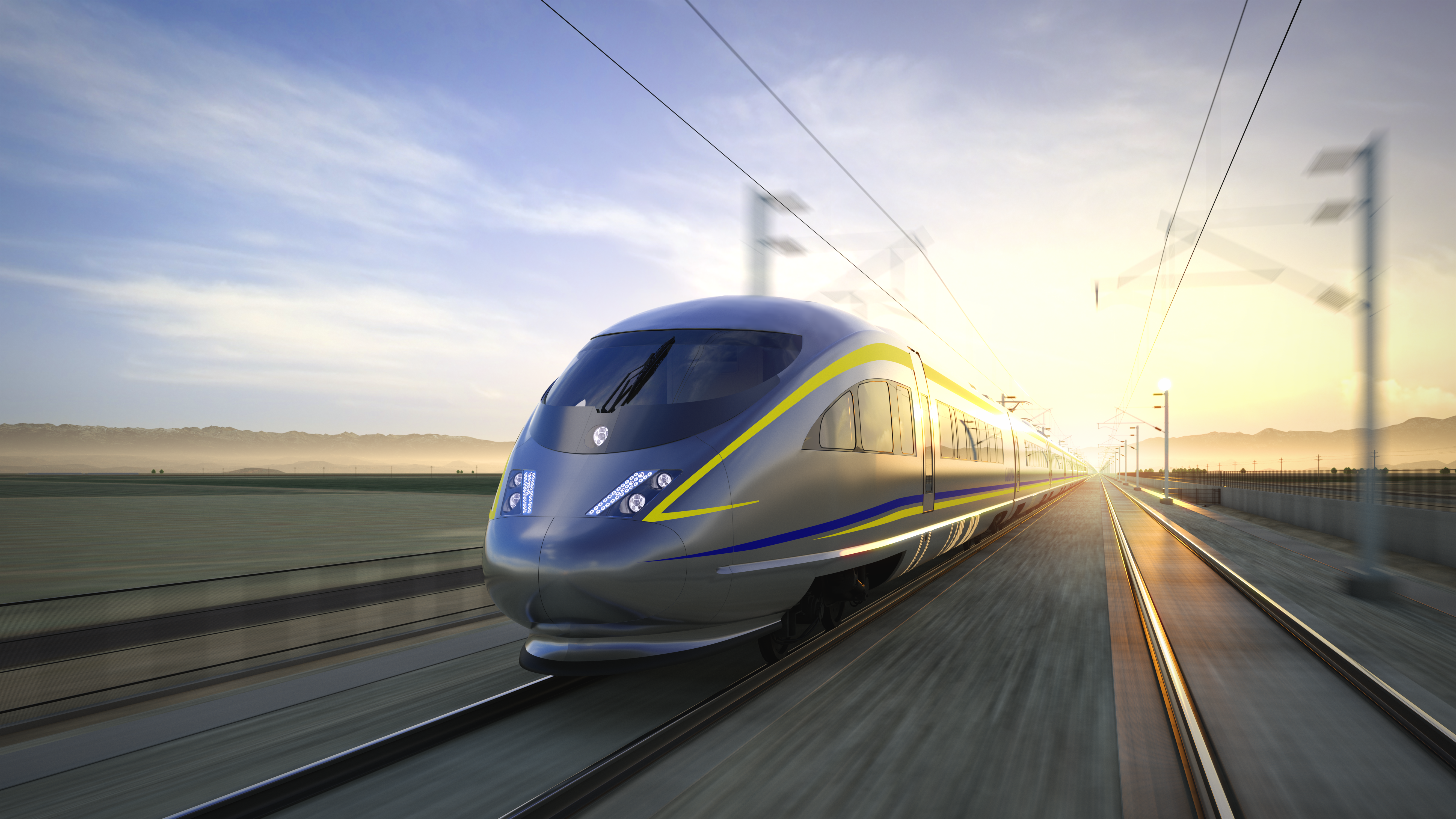
The advancement of high-speed rail (HSR) in the United States is gaining traction—and not just on the tracks. Constructing high-speed rail is unlike any other rail infrastructure project. The difference is defined by three key characteristics:
1. Long, linear alignment of HSR demands high productivity.
2. High daily material consumption requires alternative supply solutions due to stockpile limitations driven by right-of-way constraints.
3. Integrated logistics planning between construction teams and supply partners ensures efficient, uninterrupted operations.
Behind every mile of HSR is a carefully planned system, shaped by thoughtful approaches, proven methodology, and coordinated logistics. It’s this alignment of strategy and execution that helps turn an ambitious vision into a working reality.
Approach: Mindset on Delivery
HSR is a fundamentally different infrastructure system that requires a unique approach.
The difference is not just in the track technology or the rolling stock—it’s in the way we build it, manage it, and deliver it.
No two approaches are the same. Each is tailored to the unique needs, constraints, and challenges of the project at hand, such as rail connectivity, supply chain challenges, access logistics, and scheduling goals.
The approach to building HSR is the culmination of solutions that comes from understanding all constraints, challenges, and goals. With these inputs accounted for, an approach can then be derived.
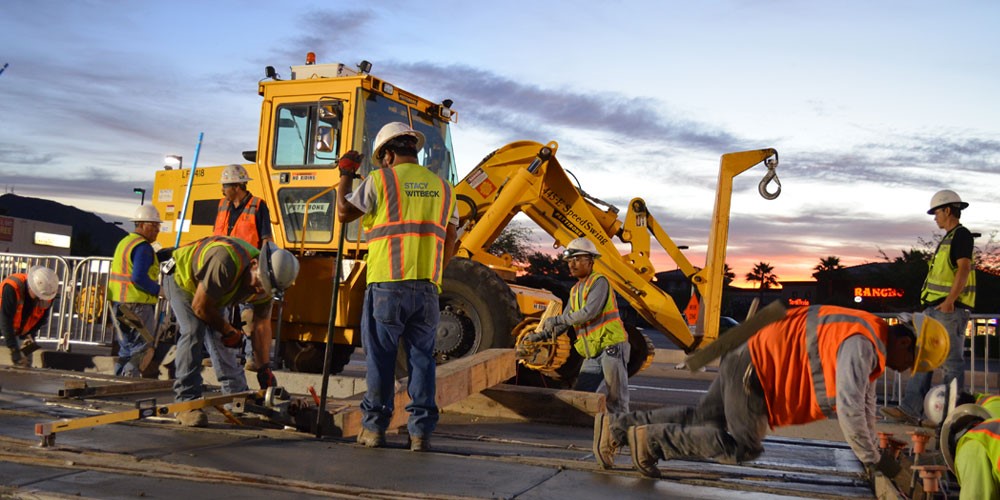
Once the approach is established, it informs us how we deploy our teams and equipment to execute the work. In this way, methodology becomes a deliberate, adaptive strategy where every piece of equipment and labor is integrated into a singular mission: to move forward.
Methodology: Productivity by Design
HSR construction demands a methodology that is a direct result of the project’s specific approach.
At its core, we look beyond outdated methodologies in favour of scalable, production-driven systems. To meet the demands of high-speed rail construction, we’ve turned to equipment like track laying machines (TLMs), or tie-handling machines, which are all tools used globally that bring high output, consistent performance, and integrated operations. TLMs streamline operations by integrating multiple steps—tie placement, rail threading, and fastening skeletonised track —into one continuous process.
Another methodology for increasing tie placement productivity comes through pieces of equipment, such as the Geismar tie handler. These tools improve tie placement rates, increase labour efficiency, and provide modular, portable solutions for varied terrains. These solutions reflect the broader modernised construction methods that lead contractors are applying to HSR projects across the United States.
These machines represent a step-change in productivity and efficiency, enabling faster, safer, and more consistent track installation. But even the most advanced machinery needs a coordinated strategy behind it. That’s where logistics—and innovation—come into play.
Logistics: Invisible Driver of Innovation
What most overlook is that logistics is the innovation.
HSR construction succeeds or fails based on the flow of materials to the site, because no matter how fast machines move, if the rail, ties, and ballast delivery cannot keep up with the pace of construction, the process comes to a halt.
Whether to use completed infrastructure as a means of conveyance of materials or not, real estate is often constrained, and each operation needs an unrestricted flow of materials and the space to work efficiently.
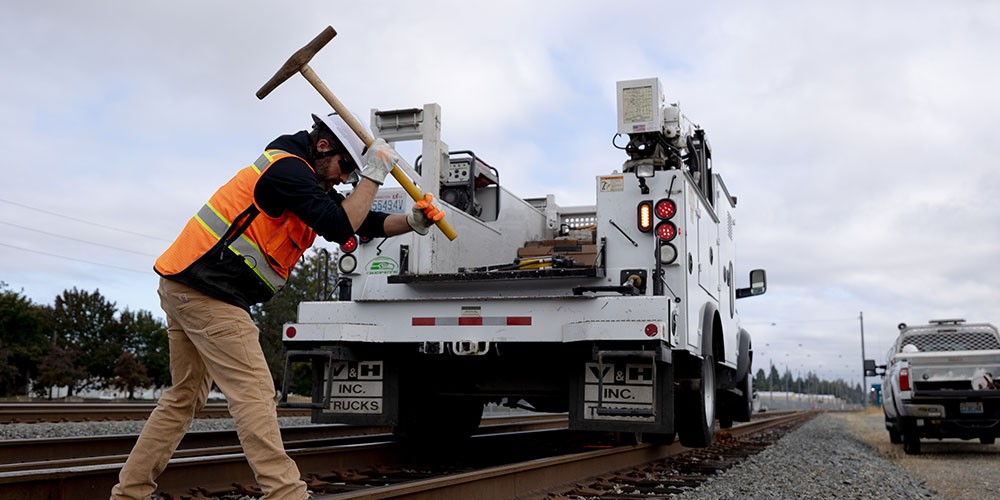
Access constraints and the distance to the closest railhead locations typically govern how materials will be delivered to the location of installation. The sequence of material replenishment and staggering of work activities along the alignment is an intricately choreographed dance of construction precision.
For example, on a project with high daily material consumption, right-of-way and real estate constraints can limit stockpile capacity, making traditional supply strategies unworkable. In such cases, having reliable alternative supply solutions becomes critical. That’s where long-standing relationships with key supply partners make the difference.
Recognising that “just-in-time” manufacturing often cannot meet the pace of construction, we have seen success in working with partners to develop tailored logistics strategies to ensure a consistent flow of materials. These partnerships are built on trust and decades of collaboration. To us, these suppliers are more than vendors; they are essential partners in execution.
To illustrate the scope: building a single mile of HSR requires over 2,500 concrete ties, 200+ tons of steel rail, and approximately 4,000 tons of ballast. These materials must be delivered at precise volumes, at precise times, to keep pace with track-laying operations.
Here, logistics is the driver, not the constraint – and this systems-level coordination is central to how we at Stacy Witbeck approach high-speed rail delivery, treating logistics as a primary innovation rather than a secondary concern.