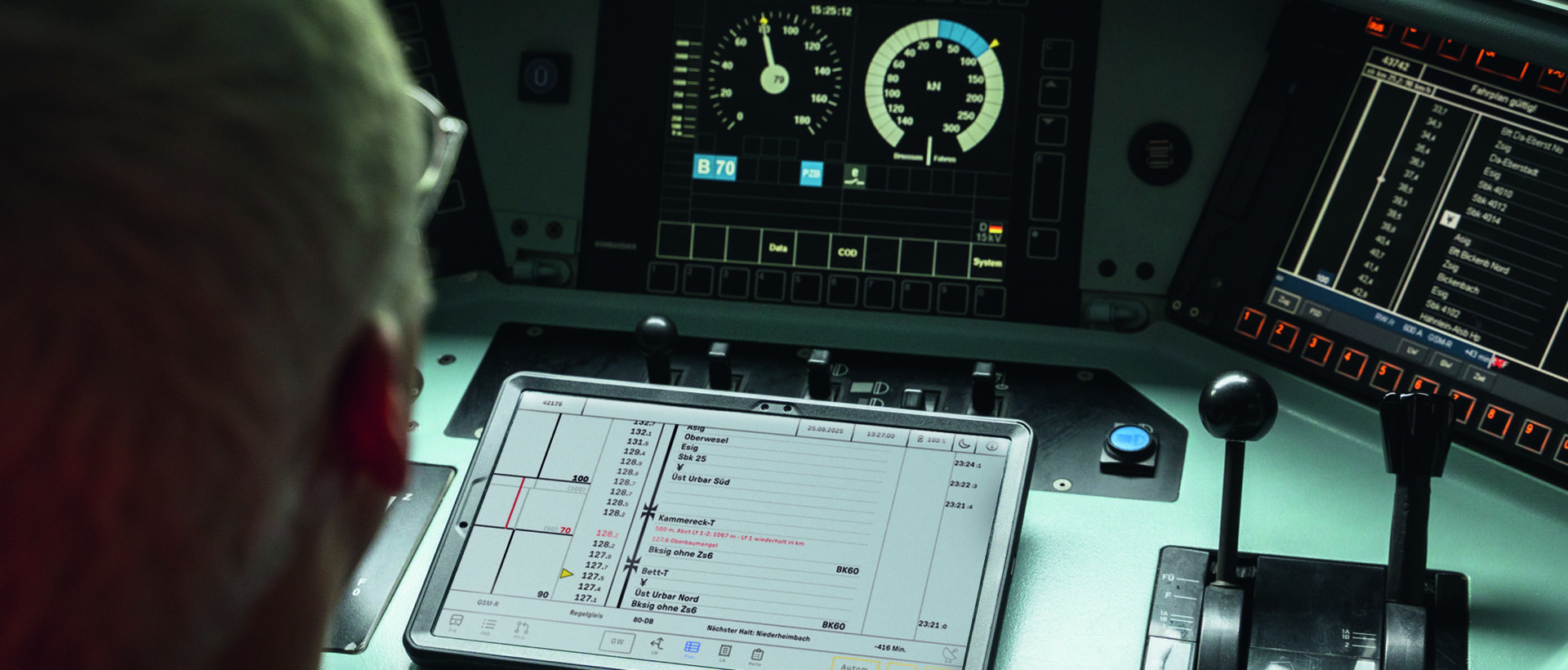
Passenger audio and communication technology is undergoing a fundamental shift from legacy PA infrastructure to intelligent, integrated systems that deliver accessible, personalised information across stations and rolling stock, writes Henning Franke, Head of Hardware Manufacturing at cn-mobility.

Poor quality announcements have long been an accepted fact of rail travel, but evolving passenger expectations, new accessibility obligations and emerging technologies are driving a long overdue change.
Over the years, rail passengers have adapted to scratchy, unintelligible announcements by picking out patterns, glancing at the nearest display and piecing together what they can. But the gap between what’s technically possible and what passengers actually experience has become impossible to ignore. Used to wireless earbuds that deliver high-quality audio and smartphones that can answer any question in seconds, passengers find rail’s poor quality PA systems increasingly hard to excuse.
Why the Status Quo Persists
The issue isn’t a lack of available technology – the digital tools to deliver clear, reliable audio in a rail environment have existed for years. The problem is that legacy systems were never fundamentally rethought. Components were updated, specifications revised at the margins, but the underlying logic of how passengers receive travel information has remained largely unchanged.
One bottleneck lies in procurement. Rolling stock tender documents are routinely copied from previous versions, with audio specifications carried forward unchanged from earlier generations of vehicles. Vehicle manufacturers have little commercial incentive to propose upgrades beyond what the specification demands, and within the broader passenger information ecosystem, audio has consistently been treated as a secondary concern rather than a strategic priority.
On a train, a passenger who mishears an announcement adapts, guesses or checks their phone. The inconvenience is real but invisible to the operator, and what they can’t measure, they rarely fix. Breaking that cycle requires movement from both sides: operators willing to write a higher standard into their tenders, and a supplier community ready to meet it.
Leave No Passenger Behind
Accessibility requirements are adding a new dimension to the conversation. For visually impaired rail passengers, audio is the primary means of receiving safety-critical information on board. For those with hearing impairments, current provision centres on induction loops: analogue technology dependent on the passenger being within range, correctly positioned and using a compatible device set to the right mode. In a moving, crowded train those conditions aren’t always met, but regulatory compliance can be achieved without delivering reliable audio to the passengers who need it most.
What’s shifting is the relationship between accessibility obligations and technological possibility. For much of the past decade the two have operated on separate tracks: regulations set a floor, technology advanced beyond it, and the gap widened quietly. The emergence of personal audio delivery technologies means genuine inclusion and next-generation infrastructure are now pointing in the same direction. Accessibility is no longer an argument for incremental improvement; it’s becoming an argument for a fundamentally different approach.

Auracast – A Step-Change in Passenger Audio
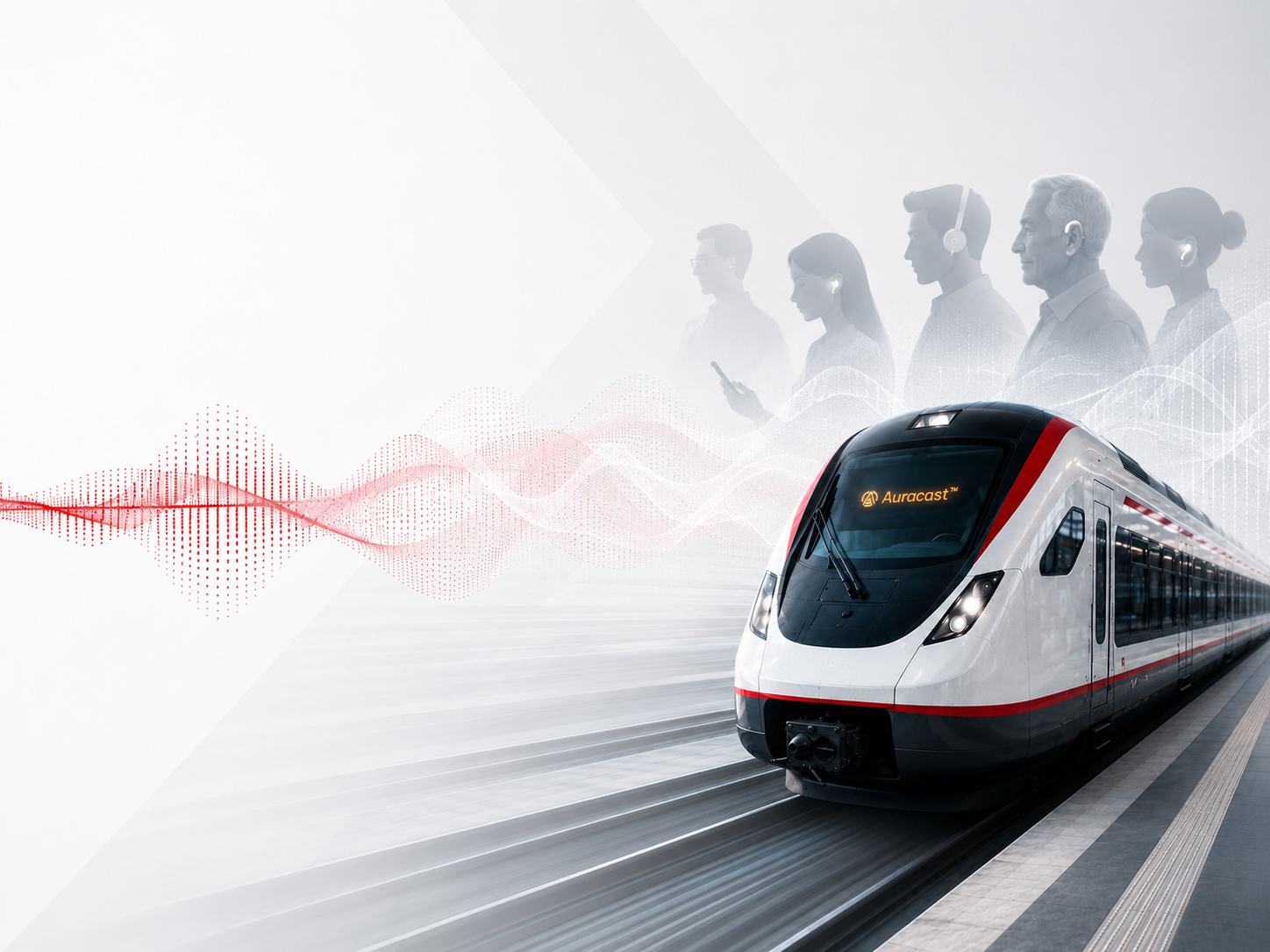
Rather than optimising the acoustic environment and hoping the result is good enough for everyone in the carriage, our Bluetooth Auracast solution transmits audio directly to the passenger’s own device.
For hearing aid users in particular this is a step change: rather than straining to extract an announcement from ambient noise, they receive it as a personal audio stream at the volume and profile their device is set to deliver. The multilingual potential is equally significant. Parallel channels can carry the same announcement in multiple languages simultaneously, removing the need for repeated announcements in sequence.
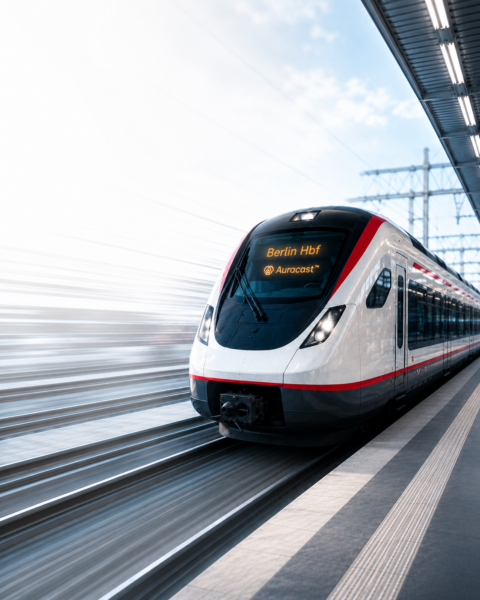
Intelligent Systems, Smarter Environments
While Auracast addresses the personal audio channel, it’s important to note that room-based PA is not going away. Safety-critical announcements must be audible to everyone, regardless of what they’re carrying, and the loudspeaker remains essential infrastructure. What’s changing is how intelligently it can be managed.
A train isn’t an acoustically uniform space. cn-mobility’s zone-based systems allow announcements to be directed to the areas where they’re needed, at levels appropriate to the local noise environment. Adaptive level control adjusts output in real time, responding to tunnel noise, door cycling and passenger load, rather than running at a static setting throughout the journey. The result is more consistent intelligibility with less cabin noise overall.
Where integration with displays, apps and other passenger information channels is concerned, the industry is still finding its way. Some operators are already combining announcement audio with on-screen content; others are exploring how personal device notifications might complement cabin announcements.
But the direction is clear even if implementation remains uneven. What’s now technically possible is a coordinated passenger information environment where audio, visual and personal channels work together, but getting there requires operators to think about audio as one layer of a broader information architecture, and to specify accordingly.
The constraint is no longer capability, it’s will, specification and the readiness of operators to demand something better.
Someone will be first. The question is whether it’s you. cn-mobility will be at InnoTrans in Berlin this September – find us at Hall 2.1, Stand 620/720, and let’s talk about what better passenger audio looks like for your network.