Alstom has signed a contract with Mexico’s Railway Transport Regulatory Agency (ARTF) for the supply of 47 diesel multiple unit (DMU) passenger trains, as well as associated maintenance services. The trains have been ordered for service on the Mexico City–Querétaro–Irapuato and Saltillo–Monterrey–Nuevo Laredo corridors.
The agreement, announced on 15 December 2025, forms part of Mexico’s National Development Plan 2025–2030.
The contract is valued at approximately 20.2 billion MXN (920 million EUR). It covers the supply of 33 long-haul and 14 short-haul trains, five years of maintenance, the fitting out of depots, inspection and refuelling stations, technical training, and commissioning of the trains.
Maite Ramos, Alstom’s general manager for North Latin America said:This project exemplifies Alstom’s commitment to Mexico. 76.6% of the content for the trains will be made in Mexico. This level of local content boosts the Mexican railway industry, promotes technical specialisation and strengthens the network of local suppliers, creating attractive jobs across the value chain. Manufacturing trains for Mexico, made in Mexico, isn’t about just one project, it is our long-term contribution to sustainable mobility and the development of the country.
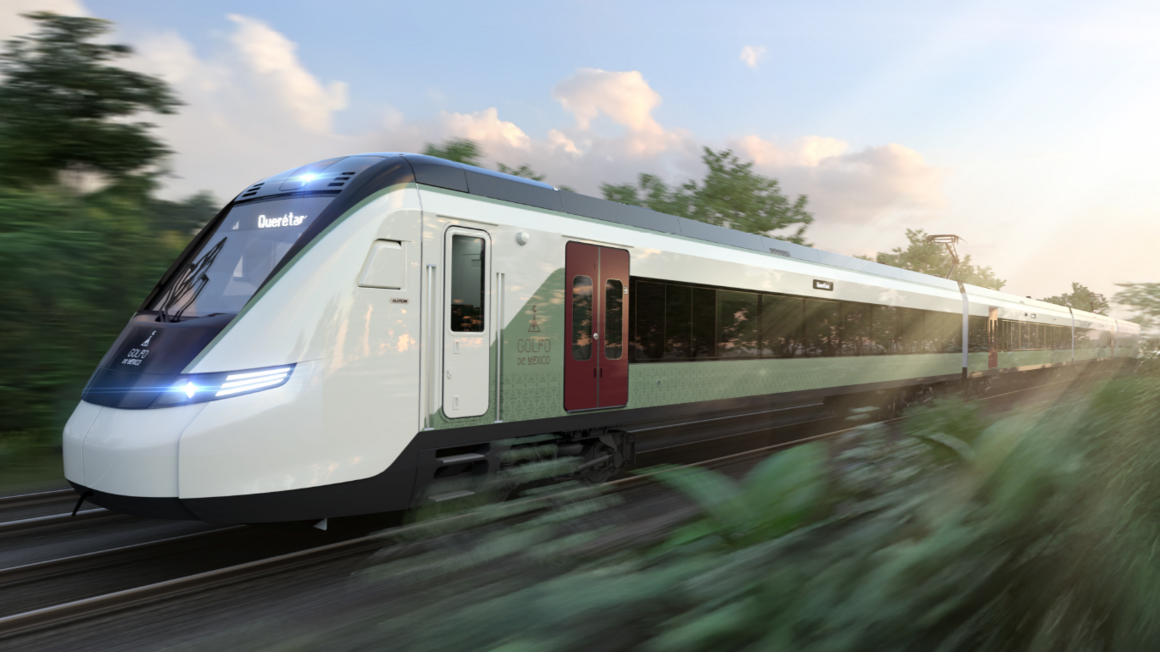
The new trains, known locally as Trenes del Norte, will operate catenary-free and reach maximum speeds of around 165 km/h. Each unit will be approximately 100 metres long and allow double coupling for configurations of up to eight cars. Capacity will be flexible, with around 300 passengers on long-haul services and up to 600 on short-haul services. The trains will include accessibility features for passengers with reduced mobility and real-time information systems.
The design of the Adessia Stream trains incorporates elements inspired by Mexican culture, drawing on the Nahuatl language and the Codex Boturini manuscript. The exterior features a black ribbon along the roof, green accents, and earth-toned doors. The front of the train incorporates three horizontal lights, a reference to the puma, a symbol of strength and agility.
Alstom’s contract also includes maintenance for five years, supported by the company’s global operations and systems engineering capabilities. Maintenance services will cover corrective and preventive work, overhauls, obsolescence management, and depot operations. Alstom’s HealthHub predictive monitoring system will track train performance to improve reliability and reduce energy consumption.
The Ciudad Sahagún plant has received the Made in Mexico certification, recognising that the trains are designed, manufactured, and assembled in Mexico under national quality standards. The plant’s location provides connectivity with key logistics corridors, facilitating the transport of materials, components, and completed trains across the country and internationally.
The project forms part of a broader effort to develop passenger rail mobility in Mexico, connecting central and northern regions and supporting the expansion of the country’s high-speed and regional rail services.