The Škoda Group has announced the completed delivery and handover of twenty four-car electric multiple units to the Ministry of Transport and Communications of the Republic of Bulgaria.
Following testing on local infrastructure, the vehicles have now received type authorisation and authorisation for placing on the Bulgarian market from the country’s Railway Administration Executive Agency (IAJA).
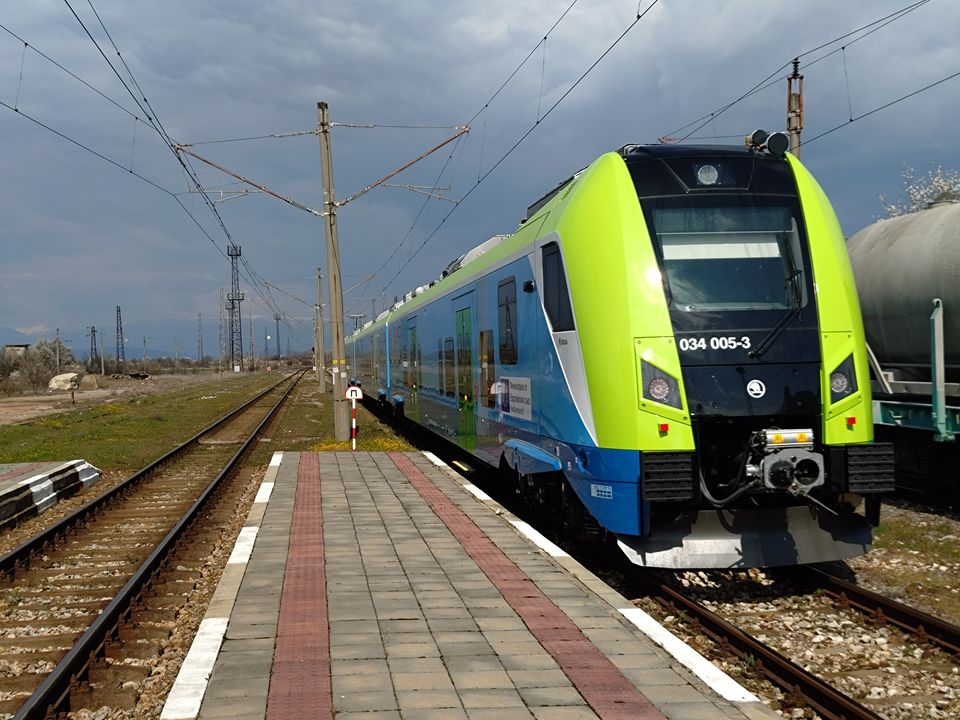
All units were entered into the European Vehicle Register (EVR) on 7 August 2026, and have been officially authorised to operate in Bulgaria. From 10 August, some of the units were being prepared for the start of operations, including test runs without passengers on some selected routes.
As of 14 August, the trains are now gradually being introduced into passenger service. By completing the delivery, Škoda has concluded a major phase of one of its largest railway projects in Southeast Europe in recent years.
With a total value of approximately half a billion EUR; The contract itself includes the delivery of 20 electric multiple units, an option for additional vehicles, and 15 years of comprehensive maintenance services, which Škoda Group will provide directly in Bulgaria.
The first two trains were officially presented in Sofia earlier this year, where they then entered testing on Bulgarian infrastructure, during which their readiness for operation on the local railway network was verified.
At the time of the contract signing, Škoda committed to the delivery of all twenty electric multiple units within a timeframe of 24 months – a milestone which was achieved, with the first trains entering passenger service 23 months after the agreement was finalised.
Meanwhile, the Ministry of Transport and Communications of the Republic of Bulgaria also played a crucial role by assigning the project a high priority and deploying a range of experts, all of which helped to ensure that the project was completed on schedule and to the required quality standards.
Olesea Lachi, Vice President South & East Europe, Škoda Group, said:We adapted the units to the customer’s specific requirements and to the conditions of the Bulgarian railway network. We are pleased that they can now begin serving passengers and contribute to the further development of public transport in Bulgaria.
Modern vehicles are one of the main reasons why rail is once again gaining a strong position in European transport. This is precisely why this project is so important.
At the same time, it confirms that Czech technologies can play an important role in improving not only public transport in Bulgaria, but also transport throughout the entire Southeast European region.
The new four-car electric multiple units are closely based on the RegioPanter platform, which is already in service in a number of European countries, including Czechia and Slovakia, as well as on broad-gauge networks in Latvia and Estonia.
All units were modified in line with customer’s requirements for the Bulgarian market, including a specific colour scheme and interior design to the passenger information system, as well as the integration of signalling technology and other safety features.
Each train possesses over 300 seats, a maximum operating speed of 160 km/h, and power supply from the 25 kV AC / 50 Hz alternating-current traction system. The units offer ETCS Level 2, air conditioning, Wi-Fi connectivity, interior and exterior CCTV systems, ergonomic seats, and multifunctional areas for passengers with reduced mobility, parents with pushchairs, and cyclists.
Finally; the partially low-floor design of the vehicles is expected to enable easier access, as well as barrier-free boarding and alighting.