Rail operators are under increasing pressure to improve financial performance, attract more passengers and make better use of existing capacity. Yet one of the most commercially important decisions they make – what to charge passengers for a journey – is still too often treated as a technical function rather than a strategic one.
For Eric Nordling, General Manager of Expretio, that needs to change.
With more than four decades of experience in revenue management across aviation and passenger rail, Nordling believes pricing should sit at the heart of an operator’s commercial strategy. It is not simply another function to be incorporated into a wider technology platform or something to be adjusted in response to what is happening on the network.
Eric Nordling, General Manager at Expretio, said:Pricing is one of the most important commercial decisions any business makes. In rail, it determines not only what you earn from a passenger, but also where and when people choose to travel. That makes revenue management a strategic function, not just a technical one.
The distinction matters because rail is dealing with a finite product. A seat on a train has no residual value once that train has left the station. If it is empty, the opportunity to generate revenue from it has disappeared.
At the same time, demand is rarely consistent across a train’s entire journey.
A service travelling from London to Edinburgh might be heavily booked between London and a major sporting event several stops north, while having significant spare capacity further along the route. The operator therefore needs to understand demand for each individual journey and decide how to allocate seats between passengers travelling different distances.
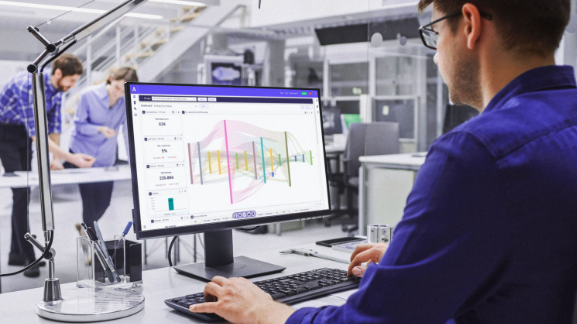
Modern revenue management technology can analyse hundreds of potential itineraries on a single train and forecast demand for each one.
Eric Nordling, General Manager at Expretio, said:The challenge isn't simply knowing how many seats are left. You need to know who is likely to want those seats, where they are travelling to and how much they are prepared to pay. That is what turns pricing into a genuinely strategic decision.
This is where Nordling believes the industry’s growing enthusiasm for integrated technology platforms needs to be approached carefully.
There are obvious advantages to consolidating data and systems. But simply bringing information together does not guarantee better commercial decisions. The important question is what happens to that information once it has been collected.
Eric Nordling, General Manager at Expretio, said:Having all your data in one place can make things faster, but speed isn't the same as optimisation. If you're collecting information quickly but not using it to forecast demand properly, you're not necessarily getting a better answer. The real question is whether you're solving the commercial problem as effectively as possible.
That is particularly important as the rail industry increasingly focuses on real-time data. Being able to see what is happening on the network at any given moment is valuable, but revenue management is fundamentally forward-looking. Operators need to anticipate demand before it materialises, rather than simply responding once passengers have already booked.
This also changes the way pricing should be viewed by passengers.
Revenue management is sometimes associated with dynamic pricing and the prospect of fares increasing when demand rises. But Nordling argues that a sophisticated pricing strategy should be just as much about making travel more affordable as maximising revenue.
Eric Nordling, General Manager at Expretio, said:The objective isn't to put prices up whenever demand is strong. It's about finding the right balance. You can charge a sensible price on a busy departure while using significant discounts to encourage people onto quieter services.
That approach can also help operators serve different passenger groups more effectively. Business travellers may place a high value on travelling at a particular time, while families and leisure travellers may be prepared to travel later in the morning or outside peak periods if the price makes the journey more attractive.
Nordling saw this first-hand during his time at Amtrak, where automated discounts for small groups were used to encourage families to choose quieter departures.
The principle is simple: don’t try to make every passenger behave in the same way. Use pricing to influence when people travel and match different levels of demand with different fare options.
For a railway facing pressure to increase passenger numbers while reducing reliance on public subsidy, that could be a significant opportunity.
Eric Nordling, General Manager at Expretio, said:There are still plenty of empty seats on Britain's trains. If you can use better pricing to put more people into those seats, you can increase ridership and revenue at the same time. Lower fares in the right places can actually produce more revenue overall.
The implication for operators is clear. Revenue management should not be viewed as something that happens somewhere within the technology stack after the commercial strategy has been decided. It is part of the strategy itself.
As Britain’s rail industry undergoes reform, the operators that understand that distinction could be best placed to turn pricing from a source of passenger frustration into a tool for growth.
This article was originally published by Expretio.