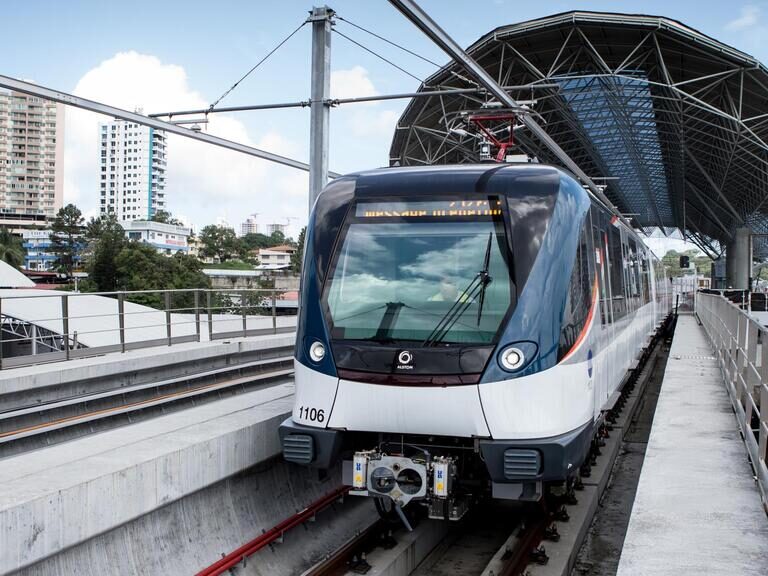
For decades, the aviation industry has relied on sophisticated revenue management to maximise capacity, balance demand and offer passengers a range of fares. While the technology has become increasingly advanced, the underlying principle remains remarkably simple: charge the right price, to the right customer, at the right time.
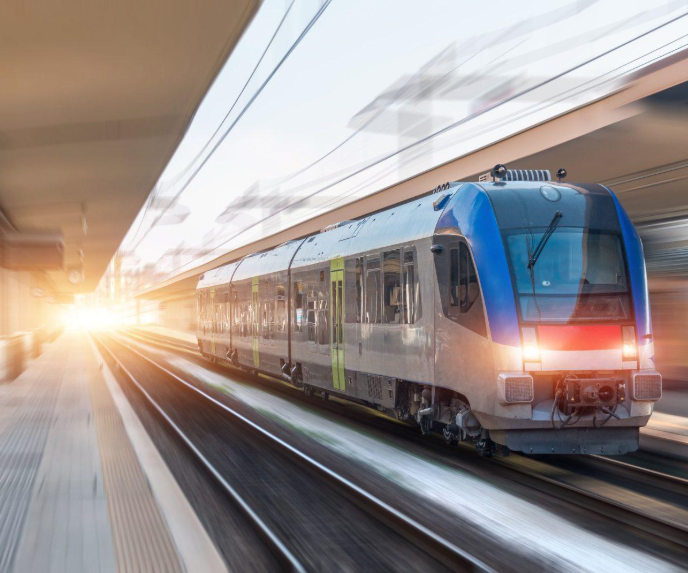
Now, as Britain’s rail industry embarks on one of its biggest periods of reform in a generation, there is growing recognition that many of the lessons learned by airlines over the past 50 years could help create a more efficient, affordable and financially sustainable railway.
According to Eric Nordling, General Manager of Expretio, the similarities between aviation and rail are greater than many people realise.
Eric Nordling, General Manager at Expretio, said:At their core, both industries face the same commercial challenge. You've got a fixed number of seats that lose all their value once the train or aircraft departs. Revenue management is about understanding demand well enough to make the best possible use of that capacity.
The airline industry’s journey began in the early 1970s with the arrival of larger aircraft such as the Boeing 747. Suddenly, airlines had significantly more seats to fill on every flight. Offering a single fare was no longer commercially viable, prompting the introduction of discounted advance tickets to stimulate demand while protecting capacity for higher-paying business travellers who tended to book later.
That balancing act became the foundation of modern revenue management and has since been adopted across sectors including hotels, car hire and entertainment.
Rail, however, presents an even greater challenge.
Eric Nordling, General Manager at Expretio, said:People often assume airlines have the more complicated operation, but rail is actually far more complex from a pricing perspective. A single long-distance train can generate more than 800 different journey combinations. Every one of those journeys has its own demand pattern, and they're all competing for the same seats.
Take a service travelling from London to Edinburgh. While one passenger may only be travelling to Peterborough, another is heading to York and another all the way to Scotland.
If too many low-fare tickets are sold for short journeys at the start of the route, operators risk turning away higher-value passengers travelling longer distances later in the booking cycle. Equally, failing to offer competitive fares on quieter sections of the route can leave seats empty for much of the journey.
Historically, solving that puzzle was beyond the capabilities of available technology. Today’s revenue management platforms are different. Advances in computing power mean operators can analyse years of booking history, forecast demand across hundreds of different scenarios and optimise pricing for every individual itinerary.
Eric Nordling, General Manager at Expretio, said:The economics haven't changed. What's changed is our ability to understand demand. Modern forecasting models allow us to make much better decisions because we're working with far more data and far more sophisticated algorithms than we had even ten years ago.
This isn’t simply about increasing ticket prices. In fact, effective revenue management often has the opposite effect.
By identifying quieter services and sections of routes where demand is lower, operators can introduce attractive fares to encourage more people to travel. Meanwhile, busier departures where demand already exceeds capacity can be priced to help manage overcrowding.
The result is fuller trains, more passengers travelling at times that suit both them and the operator, and a more efficient use of existing capacity.
For the UK rail industry, the timing is particularly significant. With Great British Railways expected to simplify the way the network operates and continued pressure on government to reduce subsidy, improving commercial performance without reducing services has become a priority.
Nordling believes pricing has an important role to play.
Eric Nordling, General Manager at Expretio, said:Good revenue management isn't about charging everyone more. It's about understanding where demand exists and giving people better value where there's spare capacity. If you can attract more passengers onto those quieter services, everyone benefits — customers get lower fares, operators carry more people and the railway generates more revenue overall.
For years, aviation has demonstrated that intelligent pricing can improve both profitability and customer choice. As Britain’s railways continue to modernise, those same principles could prove instrumental in shaping a network that is both commercially stronger and more attractive to passengers. The technology is no longer the limiting factor. The opportunity now lies in applying decades of learning from aviation to create a smarter, more responsive railway for the future.
This article was originally published by Expretio.