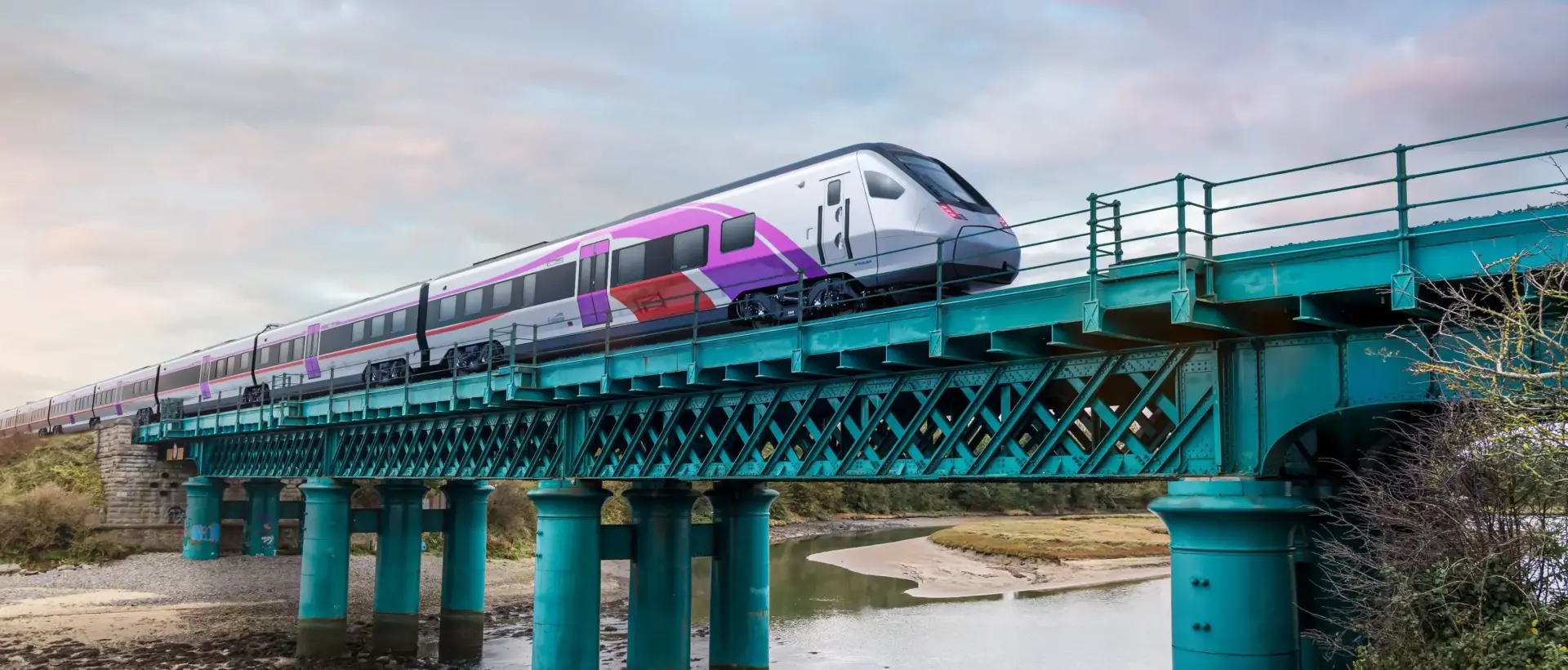
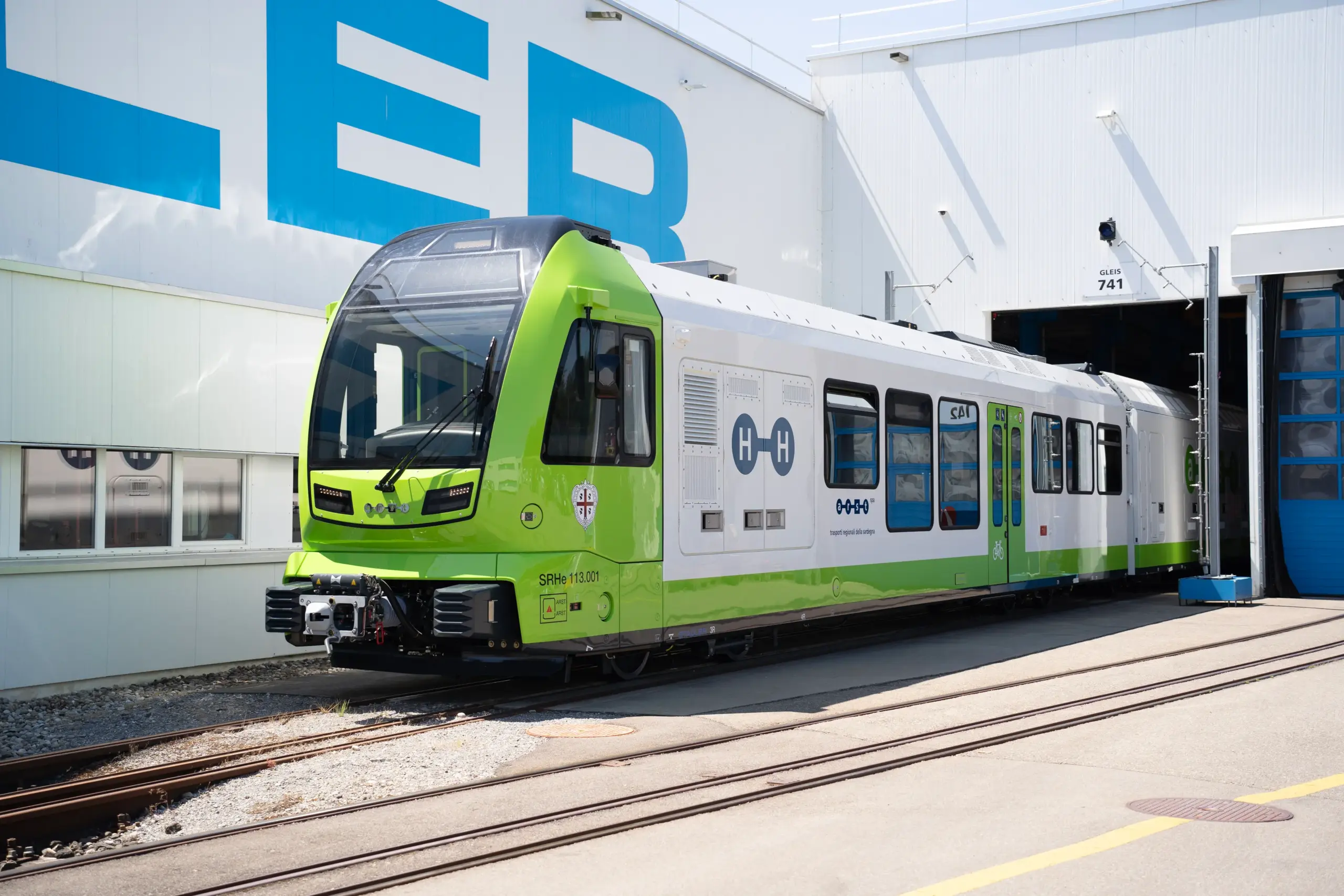
Stadler and Italian transport operator ARST have unveiled the world’s first hydrogen-powered train designed for narrow-gauge railways.
The train was presented at Stadler’s commissioning centre in Erlen, Switzerland, and is expected to enter passenger service in Sardinia from 2028. The vehicles will operate on ARST’s narrow-gauge network, including the Alghero Airport–Mamuntanas, Sassari–Alghero and Sassari–Sorso routes.
This project forms part of Italy’s wider efforts to decarbonise regional rail transport through the introduction of hydrogen-powered rolling stock on non-electrified lines.
The ten hydrogen trains ordered for Sardinia are expected to reduce carbon dioxide emissions by more than 2,100 tonnes annually compared with diesel-powered alternatives.
The trains have been developed to meet the specific requirements of Italy’s narrow-gauge railways, where infrastructure constraints require vehicles with low axle loads. The units have been built using lightweight materials and a bespoke vehicle profile to comply with these operational conditions.
The propulsion system combines hydrogen fuel cells, onboard hydrogen storage tanks and traction batteries. Hydrogen is converted into electrical energy within a central power module, which supplies power to the train and recharges the batteries during operation. The design enables services to run on non-electrified routes without the need for overhead infrastructure.
The hydrogen used to power the trains will be produced using electricity generated entirely from solar energy, creating a renewable energy chain from production through to rail operations.
Barbara Manca, Regional Minister for Transport of the Autonomous Region of Sardinia said:With the commissioning of the first hydrogen-powered train designed for narrow-gauge railways, Sardinia is proving itself a pioneer of technological innovation in the transport sector. This is the first train of its kind, specifically designed for contexts similar to ours with the aim of turning a limitation into a great opportunity. The hydrogen trains, which will be deployed on ARST lines, are a shining example for the environment, the local economy and the development of key skills in our region.
Passengers travelling on the new trains will have access to air-conditioned interiors, large panoramic windows and low-floor boarding designed to improve accessibility. Hydrogen-powered operation also produces less noise and vibration than conventional diesel trains.
Before entering commercial service, the trains will undergo testing and certification in accordance with requirements set by Italy’s National Agency for the Safety of Railways and Road and Motorway Infrastructure (ANSFISA).
Maurizio Oberti, Stadler’s Sales & Marketing Director for the Italian market said:This is a world first in the global rail sector, combining innovative technological development with sustainability. The train we are presenting today sets new standards in Italian regional rail transport and demonstrates the commitment of Stadler and the Autonomous Region of Sardinia to more environmentally responsible rail transport. We would like to thank ARST for the trust they have placed in us and for the excellent collaboration established during the project.
The Sardinian order was placed under a framework agreement signed between ARST and Stadler in 2023 covering ten vehicles.
Stadler reports that it is currently the only train manufacturer producing hydrogen-powered trains for narrow-gauge railways.
Hydrogen rail projects are also progressing elsewhere in southern Italy. Stadler is currently building nine hydrogen trains for Ferrovie della Calabria and two units for Ferrovia Circumetnea in Sicily. All of the vehicles are being manufactured at the company’s facility in Bussnang, Switzerland.
The Sardinian fleet is expected to become the first hydrogen-powered narrow-gauge trains to enter passenger service, marking a new application of hydrogen technology within regional rail transport.