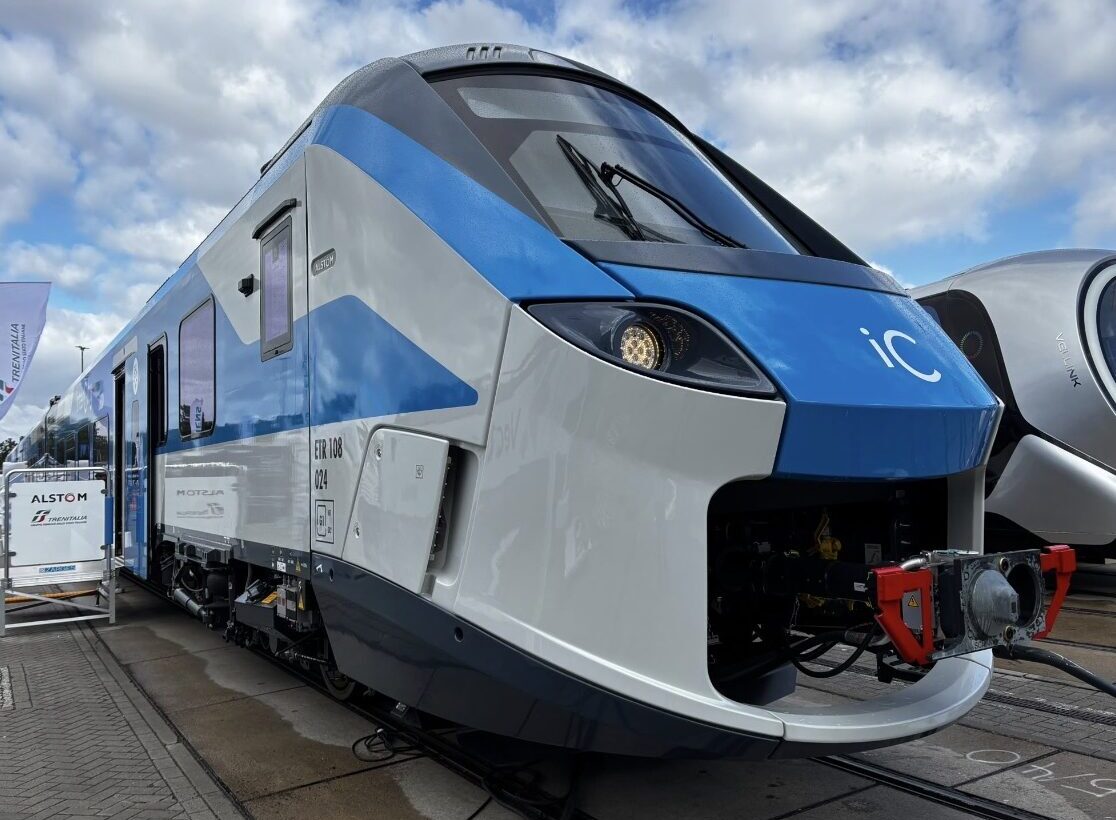
Škoda Group has presented its second-generation battery electric multiple unit (BEMU) at InnoTrans 2026, highlighting changes to increase capacity, reduce energy consumption and improve performance on non-electrified routes.
The two-car RegioPanther unit is being delivered to Czech operator České dráhy under a contract signed two years ago. The first units are expected to enter operation at the beginning of 2027, with 15 units purchased.
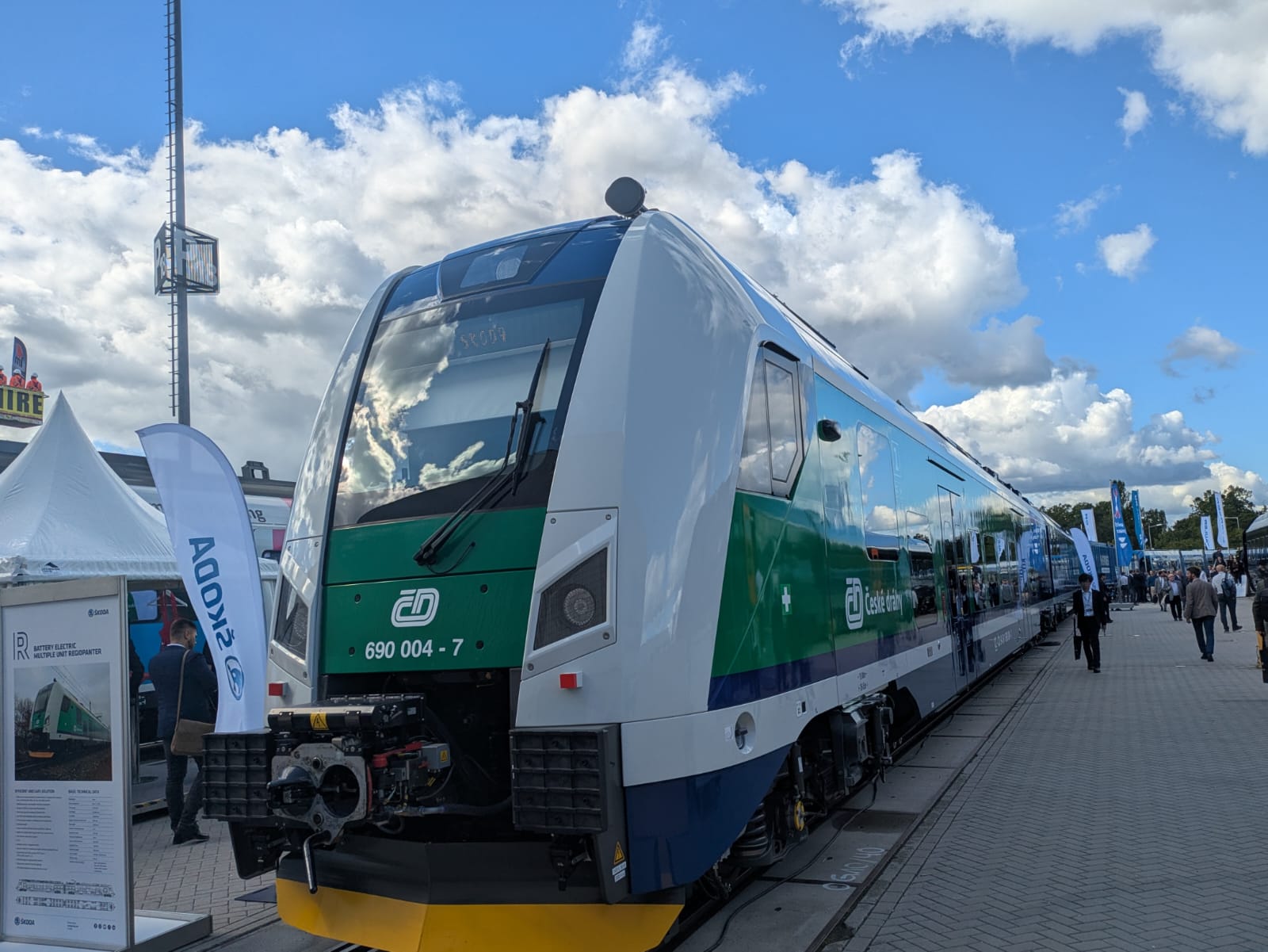
The new train builds on Škoda’s experience with battery-electric rolling stock in the Czech Republic. Its first-generation battery trains have been operating in the Moravian-Silesian region for almost two years. Indeed, the first four units have already travelled more than 1.25 million kilometres in passenger service.
This operational experience has now been incorporated into the second-generation design.
The new BEMU retains a two-car configuration but has three entrance doors on each side, compared with four on the first-generation units. Škoda said this allows the train to accommodate 150 seats, an increase of 10 compared with the previous generation.
The vehicle has also been redesigned to reduce its weight. This contributes to lower energy consumption and operating costs.
Changes to the traction components and the vehicle’s electrical layout have also been made to improve efficiency.
At InnoTrans, Škoda Group said:We also lowered the weight of the vehicle, which is very important in the operation and from the economic perspective because it’s cheaper to operate and the energy consumption is lower.
The redesigned traction system also increases the train’s power when operating on non-electrified lines. Škoda said the unit can now provide the same power in both catenary and battery operation.
The maximum speed is 160 km/h on electrified lines and 120 km/h on non-electrified routes.
Furthermore, the second-generation train has a larger battery capacity than its predecessor and can operate for at least 80 kilometres on non-electrified lines.
This is particularly relevant in the Czech Republic, where only around one-third of the rail network is electrified.
A representative of České dráhy noted that this creates a challenge for journeys between smaller towns and villages and the country’s main railway corridors, as passengers may otherwise have to change services, making it less appealing to travel by rail.
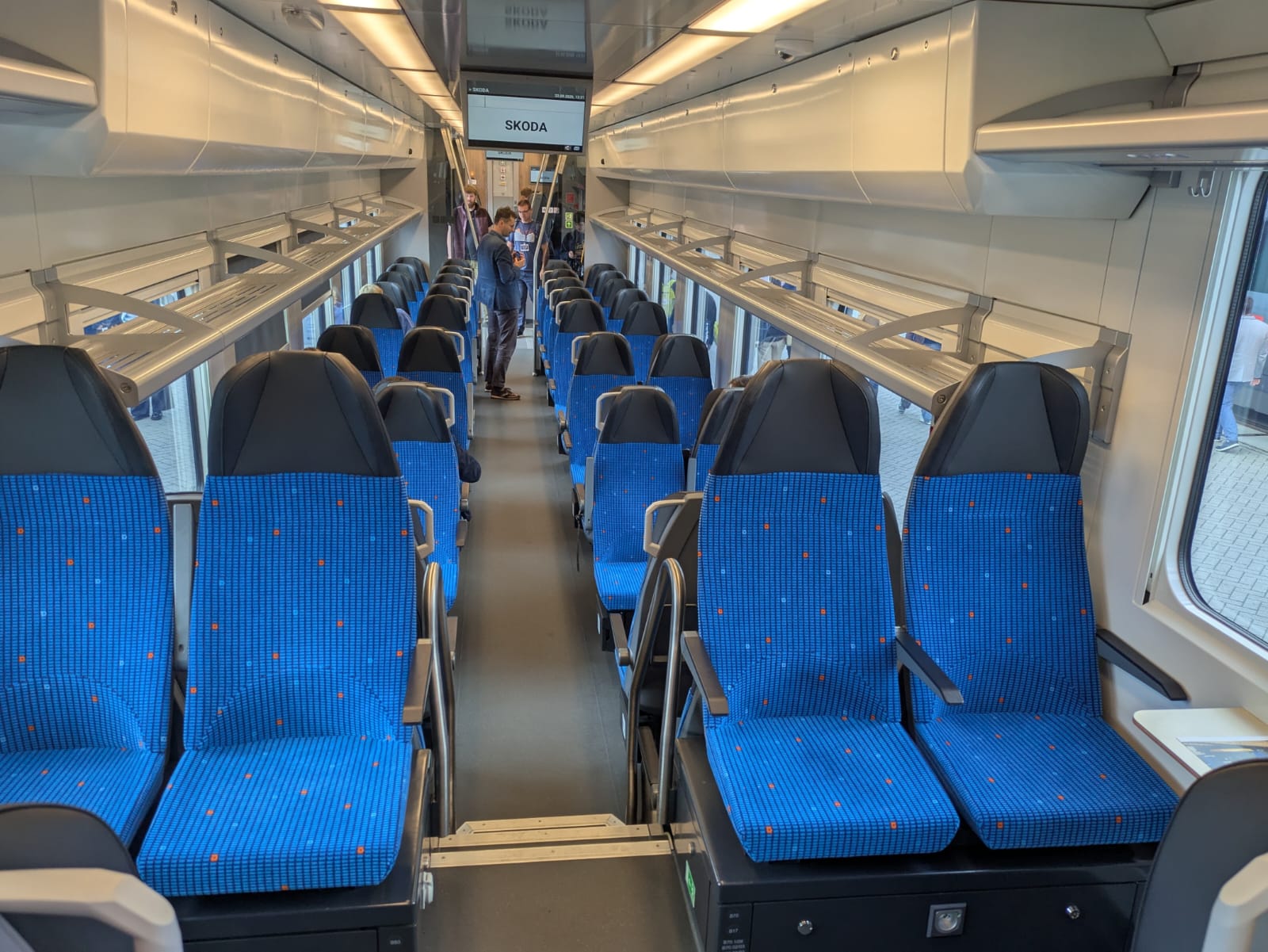
České dráhy is already operating four first-generation Škoda battery electric units in the Moravian-Silesian region. The operator said passenger demand on the line where the trains have been operating has increased by 22%.
The operator linked the increase to the introduction of new rolling stock, as well as the ability to provide a direct service without changing between battery and conventional trains.
The operator also highlighted the design of the train for Czech regional routes, where lines can include curves and other infrastructure characteristics that influence rolling stock requirements.
Škoda said the 15 new second-generation units will add to the existing battery fleet, with further deliveries planned.