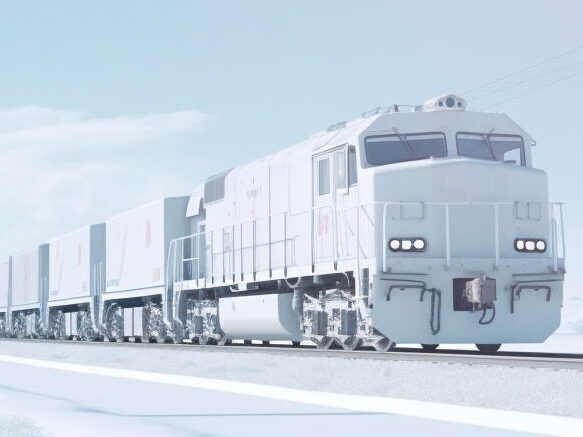
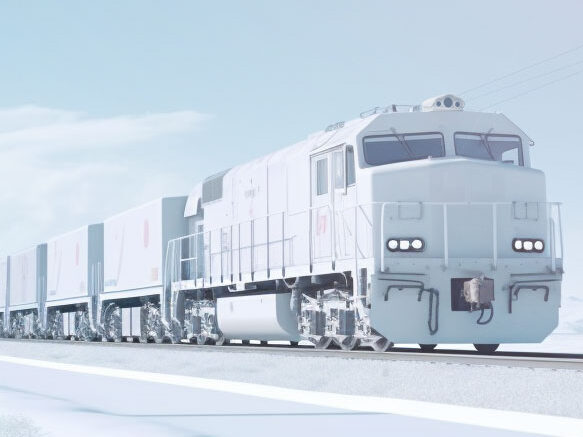
The testing is part of the TCCO Technology Roadmap Program, managed by MxV Rail under the Association of American Railroads, introducing Rail Vision’s AI-powered perception technology to Class I railroads.

Ra’anana, Israel, Sept. 03, 2026 (GLOBE NEWSWIRE) — Rail Vision Ltd. (Nasdaq: RVSN, FSE:C80) (“Rail Vision” or the “Company”), an early commercialization stage technology company transforming railway safety through advanced AI-integrated sensing systems, today announced its selection for MxV Rail’s locomotive sensor pre-integration testing program. The initiative directly supports the North American freight rail industry’s development of Restricted Speed Enforcement (“RSE”) capabilities, an important building block for the rail industry’s transition toward increased automation. MxV Rail is a subsidiary of the Association of American Railroads (“AAR”).
The upcoming testing marks a key progression in Rail Vision’s collaboration with MxV Rail‘s Train Control, Communications, and Operations (“TCCO”) committee, following its initial inclusion in the Technology Roadmap Program reported in December 2024. This testing phase transitions Rail Vision from participation in the broader technology roadmap into active real-world evaluation of its sensor capabilities.
As the research and testing subsidiary of the AAR, MxV Rail conducts railroad equipment testing and provides training for U.S. member railroads, while also supporting the development of industry requirements and standards and advancing rail safety across North America.
RSE represents a critical growth catalyst for rail automation, supplementing traditional manual monitoring with automated perception. Participating in this program is expected to provide Rail Vision’s AI-powered perception technology with an opportunity to be evaluated by Class I railroads, positioning the Company to help set performance standards and potentially capture long-term demand as North American operators increasingly leverage technology to improve operating efficiency and safety.
David BenDavid, Chief Executive Officer at Rail Vision, said:Being selected for MxV Rail’s testing program is an important milestone for Rail Vision. This evaluation moves us beyond preliminary frameworks and places our advanced perception technology directly in front of the industry's primary decision-makers. We believe the testing will demonstrate the performance and capabilities of our technology in real-world rail operating environments, reinforcing Rail Vision’s position at the forefront of next-generation rail safety and automation. As Class I operators move toward Restricted Speed Enforcement and broader automation, we believe that we are well positioned to support this transition and help define the performance standards for the next generation of rail safety.
About Rail Vision Ltd.
Rail Vision (Nasdaq: RVSN, FSE: C80) is an early commercialization stage technology company transforming railway safety through advanced AI-integrated sensing systems. The Company develops and commercializes proprietary, multi-spectral electro-optic platforms that provide extended-range situational awareness and real-time hazard detection. Using machine learning algorithms to identify and classify obstacles, Rail Vision’s technology enhances safety, improves operational efficiency, and supports continuity across deployments.
The Company’s cloud-based platform complements its products by transforming railway operational data into actionable insights that help optimize performance, reduce downtime, and improve safety. As the Company expands its global footprint, it delivers AI-driven perception that supports safer operations, reduces operational risk, and enables the transition to fully autonomous operations.
Rail Vision holds a 51% stake in Quantum Transportation, which has an exclusive sub-license for rail technologies under an innovative pending patent in quantum error correction owned by Ramot, the technology transfer company of Tel Aviv University.
For more information, please visit https://www.railvision.io/
This article was originally published by Rail Vision.