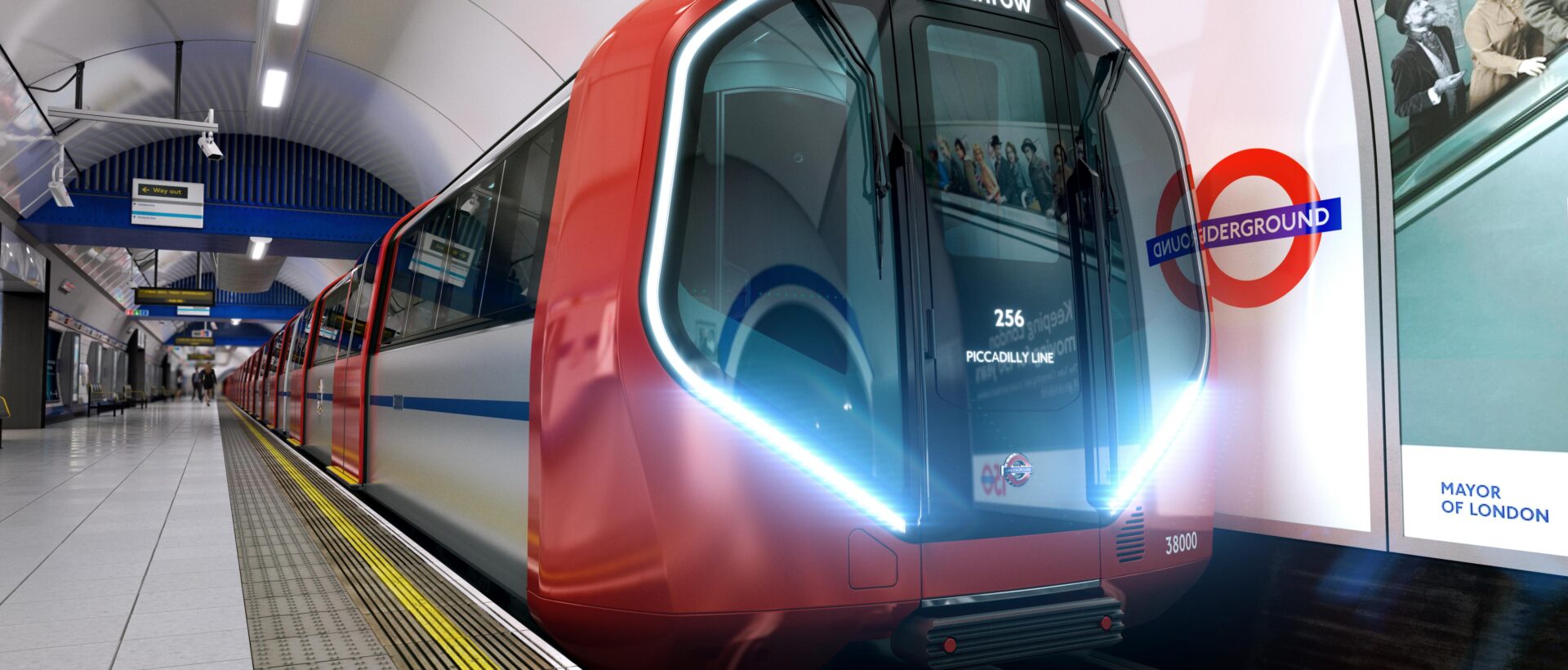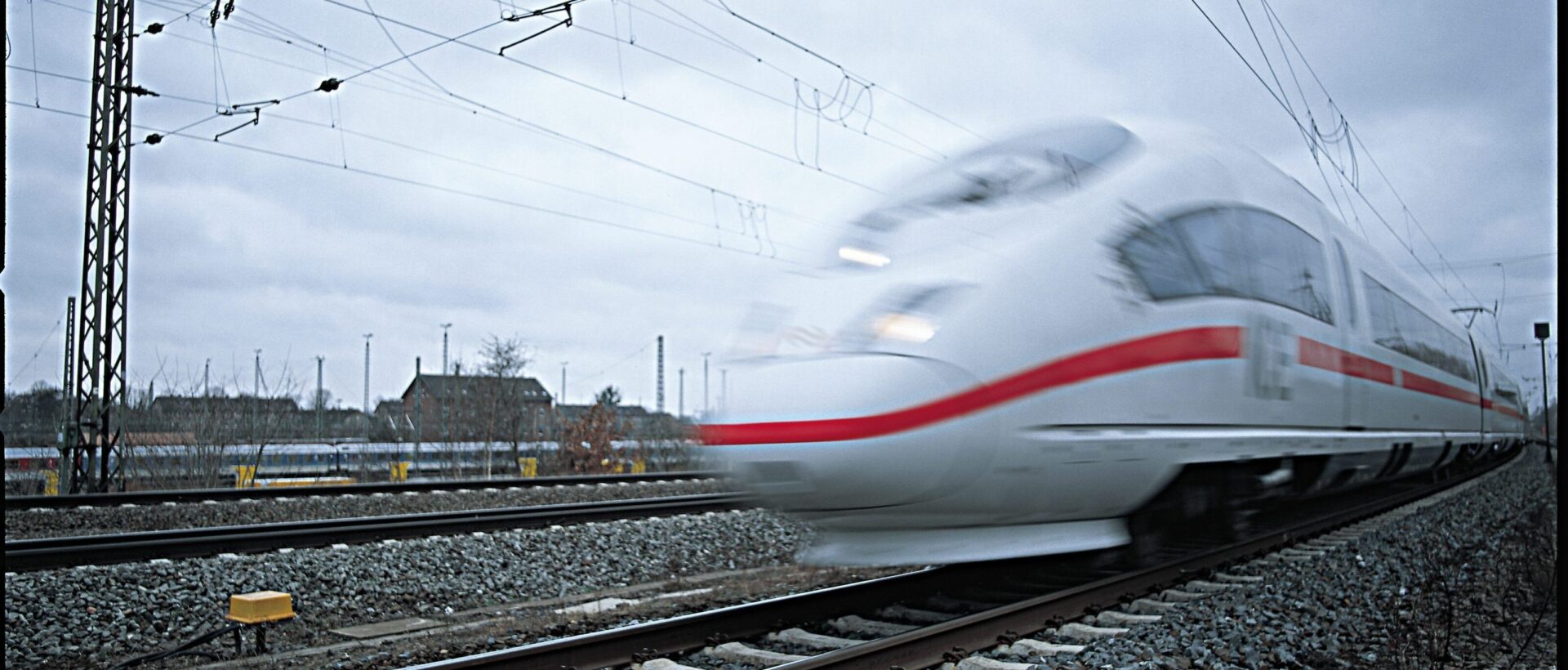
Salicru UPS systems are installed in critical routes of Spain’s high-speed rail infrastructure to ensure the smooth operation of interlocking operations throughout the AVE network.
These routes include Madrid-Seville, Madrid-Barcelona- French border, Madrid-Levante (Valencia, Alicante, Castellón), Madrid-Valladolid-León, Madrid-Galicia, Antequera-Granada, Monforte del Cid-Murcia, Zaragoza- Huesca and Madrid-Extremadura.
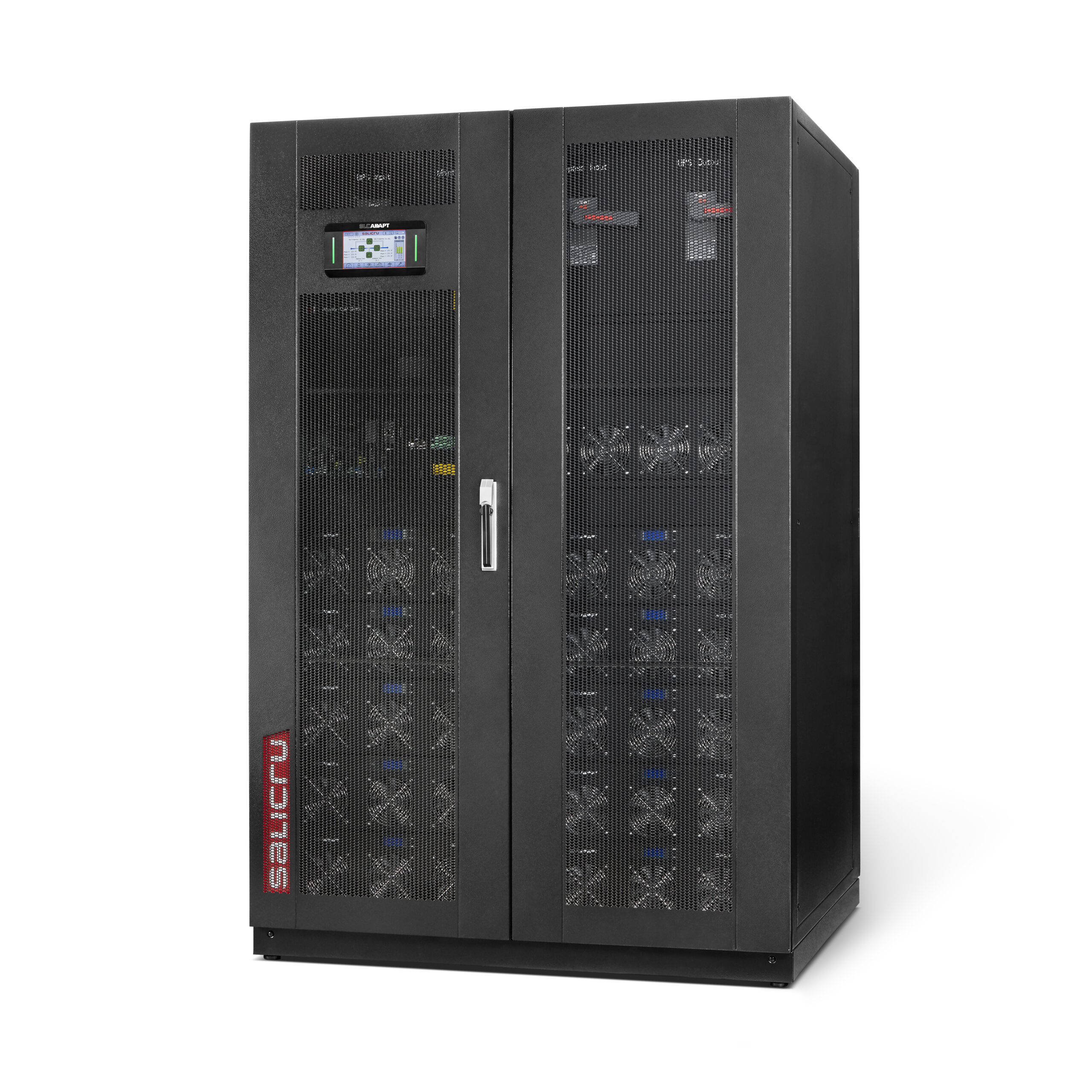
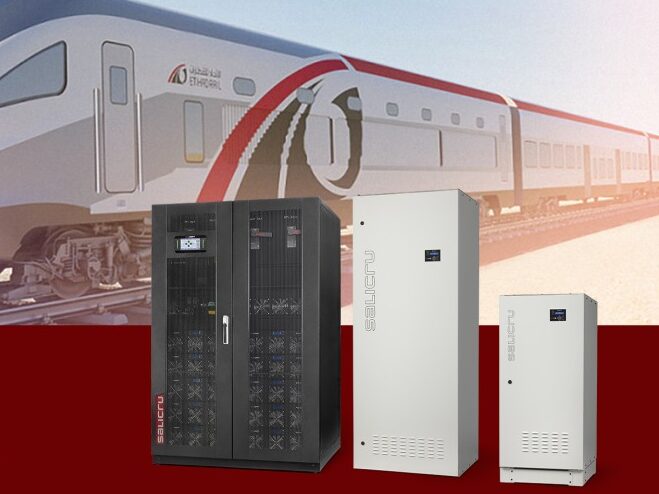
The SLC ADAPT2 series is engineered for environments that demand the highest levels of power availability, modularity and scalability. Incorporating online double- conversion technology, digital signal processing (DSP) and advanced three-level PWM modulation, these systems deliver energy efficiency above 95% in online mode and reach up to 99% in Eco mode. Their architecture supports hot-swappable 25 or 50kVA modules, allowing configurations of 8 to 12 modules per system, with a maximum capacity of 600kVA. Systems can also scale in parallel up to 30 modules, reaching a total of 1500kVA, all while maintaining N+1 redundancy with no single point of failure.
All of these features make the SLC ADAPT2 a benchmark solution for high-speed rail applications, where maximum uptime and rapid maintenance response are critical. It is especially suited to protect critical loads in traffic control centres, interlocking facilities and backup systems in technical cabins. The equipment includes advanced management and diagnostic functions through a colour touchscreen, SNMP/Nimbus communications, RS-485 interface and volt-free contacts.
In addition to the extensive deployment across Spain’s high-speed AVE network, Salicru’s UPS are also in service in other strategic international railway projects, further underlining their reliability and global competitiveness. Notably, the SLC ADAPT2 systems are installed in the Medina-Mecca high-speed line in Saudi Arabia, a 453km corridor across harsh desert conditions where the need for fault-tolerant power protection is critical. The UPS units safeguard interlocking and control systems along this route, ensuring high availability despite extreme temperatures, sand and dust exposure. Similarly, Salicru has supplied UPS solutions for the Tren Maya project in Mexico, a major railway infrastructure initiative covering over 1,500km across the Yucatán Peninsula. In this context, the UPS systems are integrated into various control and signalling nodes, supporting the seamless operation of a network designed to boost regional mobility and tourism.
CS-MV: Bidirectional Conversion from Catenary
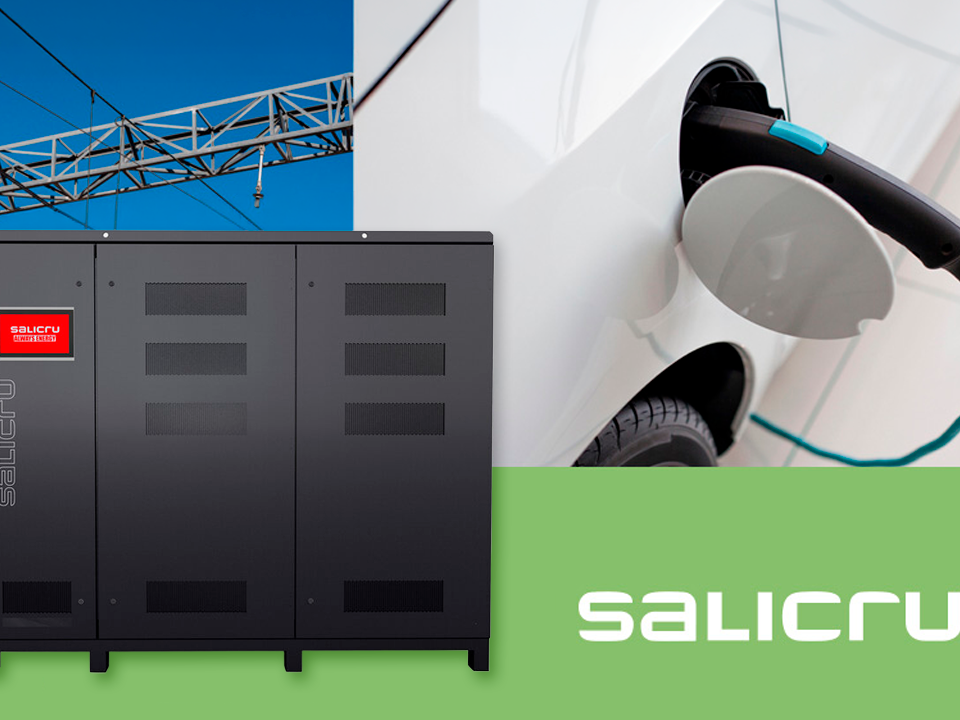
Salicru’s CS-MV range offers a state-of-the-art technical solution for bidirectional DC/AC energy conversion. Designed to operate directly with 1500Vdc or 3000Vdc catenary systems, this technology enables the supply of alternating loads at 3×400Vac/50Hz or, in reverse, the injection of recovered braking energy into the AC grid, functioning as a high-performance grid-tied inverter.
The CS-MV uses a five-level multilevel converter topology (with nine levels between phases), featuring advanced vector control and cutting-edge IGBT-based power electronics. This design achieves a conversion efficiency of 97%, with stable performance even under partial loads. The architecture significantly reduces harmonic generation, switching losses and component heating, thereby extending system lifespan and minimising maintenance requirements.
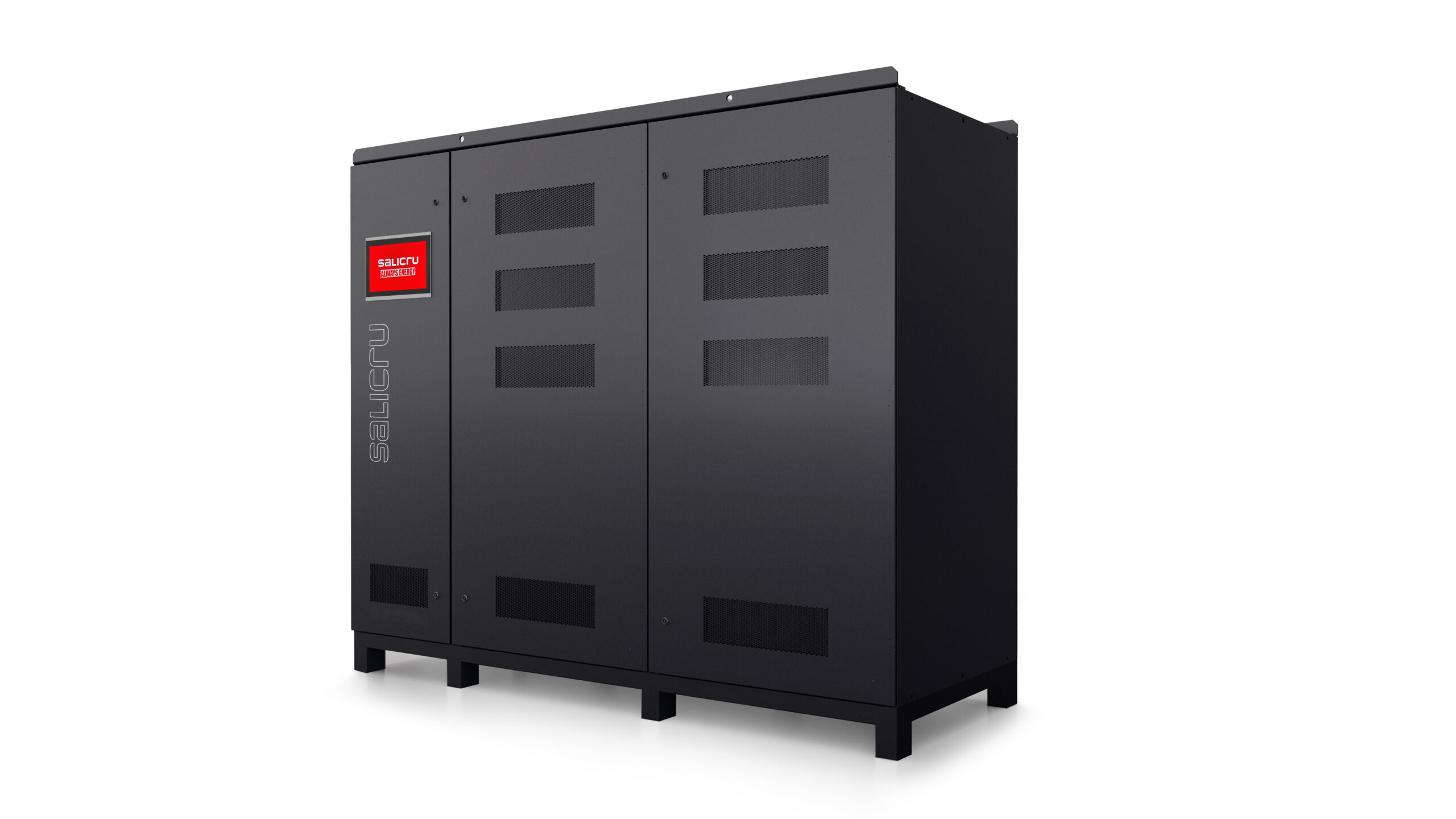
It is available in scalable power ratings from 125kW to 1MW, and can be integrated into redundant modular solutions. This flexibility allows for deployment in next-generation substations or retrofitting of existing facilities. The converter includes active and reactive power management, harmonic control, and can operate synchronously with other network elements thanks to its AC/DC/AC control capability.
In terms of protection, the equipment features reinforced galvanic isolation, a withstand voltage of up to 18.5kV (1 minute at 50Hz), and an IP protection rating suitable for installation in harsh industrial environments. The cooling system is both forced and redundant, sized to handle continuous operation under the dynamic load conditions typical of the railway sector.
The CS-MV is intended for applications such as reversible substations for braking energy recovery, electric rail vehicle charging stations from overhead lines, auxiliary service supply in technical stations from the catenary and grid stabilisation in environments with distributed energy sources (ESS, solar PV, storage).
This article first appeared in the Railway-News Magazine Issue 2 2025. Download a PDF version here.