After a six-year hiatus, Wayside Digitalisation Forum (WDF) has returned to Vienna, bringing together signalling experts, operators, and industry leaders from across the globe.
The event, which was first conceived in 2011, has become a key platform for sharing insights, best practices, and the latest technological advancements in railway signalling and digitalisation.
The forum was initially created to address a gap in global understanding of railway signalling technologies. It offers an inclusive, neutral platform where stakeholders can discuss topics such as standardisation, cybersecurity, and data management for railway signalling technologies. Its 2025 return is aptly timed, given the current major shifts in railway infrastructure, signalling, and data management.
In his opening keynote speech, Johann Pluy, Member of the Board for ÖBB-Infrastruktur, emphasised that digital signalling technologies are pivotal for increasing rail network capacity and improving cost efficiency. Advanced systems enable operators to safely reduce train headways, allowing more services to run on the same infrastructure. Meanwhile, real-time monitoring, automated traffic management, and AI-assisted dispatching optimise train movements, minimise delays, and enhance punctuality. These technologies also enable predictive maintenance, reducing unplanned downtime and extending asset lifespans to lower operational costs.
Ultimately, digital signalling ensures that the rail network is utilised in the most effective and reliable way, maximising throughput while maintaining safety and sustainability standards. However, to achieve this vision, the forum emphasised the need for effective collaboration and public-private partnerships.
Funding and long-term investment were also key topics. The opening session underscored the need for stable, multi-annual financing to support modernisation and digital innovation. In Austria, funding has allowed the country to maintain high-quality infrastructure and implement cutting-edge signalling systems. Speakers now urged a Europe-wide approach to ensure cross-border interoperability and capacity growth.
For example, Tanja Kienegger, CEO at Siemens Mobility Austria, argued that Austria has become a global leader in railway innovation through a combination of technological excellence, collaboration, and strategic investment. She emphasised the importance of strong partnerships in driving digitalisation and sustainable rail solutions. Projects such as the Koralmbahn line demonstrate how advanced signalling and operational technology can transform mobility, reduce travel times, and open new economic corridors.
Elsewhere in Europe, Bogdan Godziejewski, President at IRSE highlighted different use cases, including the automated installation of axle counters into the track in the Netherlands, significantly reducing installation time and human intervention. This initiative is part of a broader push to digitalise and automate signalling infrastructure, allowing for faster deployment of safety-critical systems while maintaining high reliability. However, Godziejewski stressed that to fully realise the benefits of such technologies, the industry should work towards reducing the time it takes to move from the demonstration time to the market.
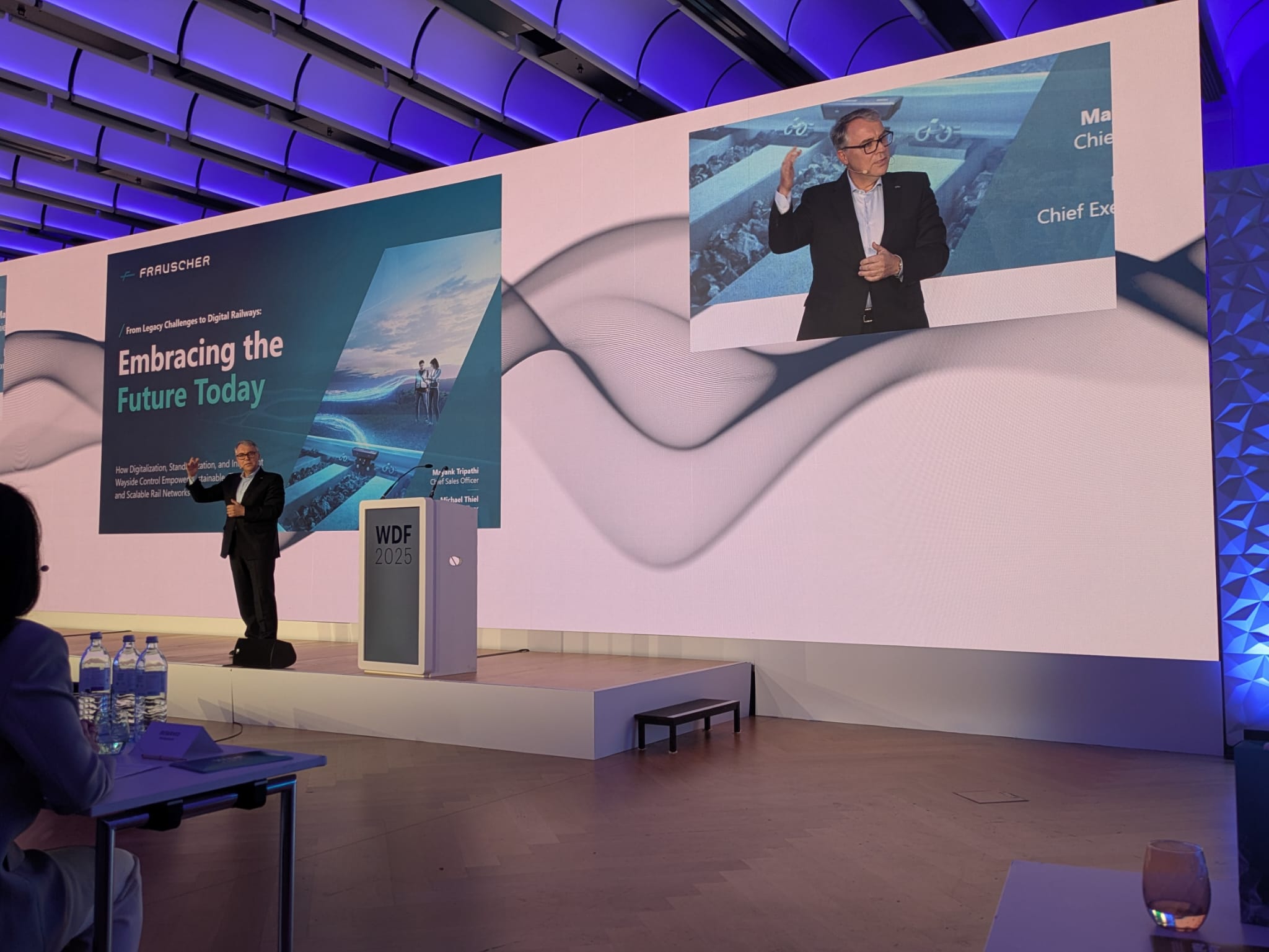
Crucially, industry leaders also addressed the role of standardisation in enabling innovation. Michael Thiel, CEO at Frauscher Sensor Technology and Mayank Tripathi, CSO at Frauscher Sensor Technology cited open and modular EULYNX architecture as a critical tool for allowing operators to integrate signalling components from multiple suppliers, thereby reducing vendor lock-in, improving lifecycle cost management, and fostering competition. They noted, however, that adoption of these standards currently remains limited due to procurement practices and regulatory challenges.
Overall, the WDF opening ceremony stressed that the future of railway signalling lies in collaboration, standardisation, and digital innovation. By sharing experiences and adopting modern technologies, operators, industry players, and researchers can collectively improve efficiency, safety, and sustainability across Europe’s railways, ensuring that the sector remains competitive in a rapidly changing mobility landscape.
Stay tuned as we delve deeper into the topics discussed at WDF 2025.
Read more from WDF: