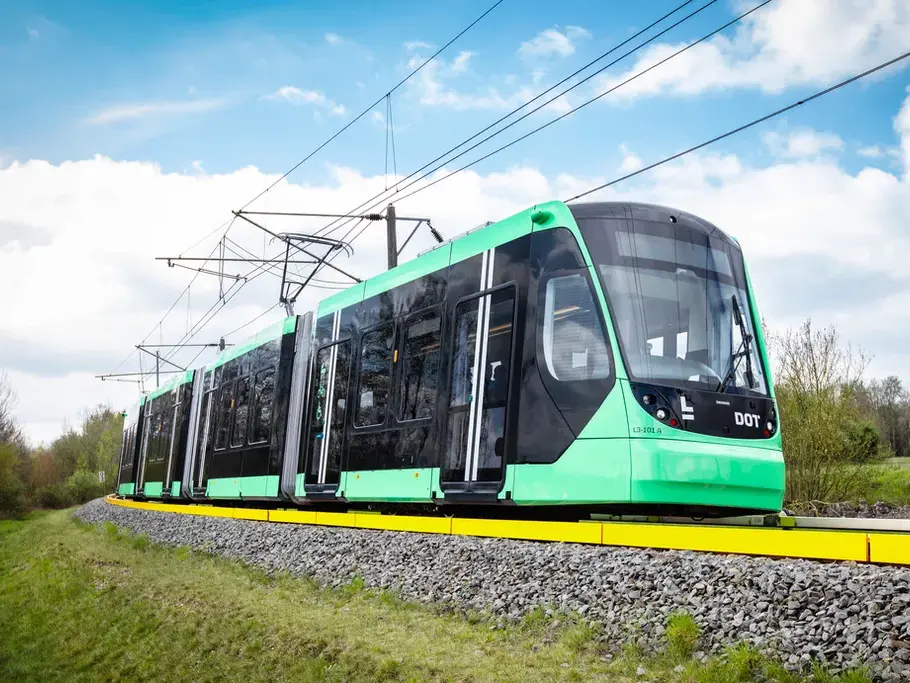
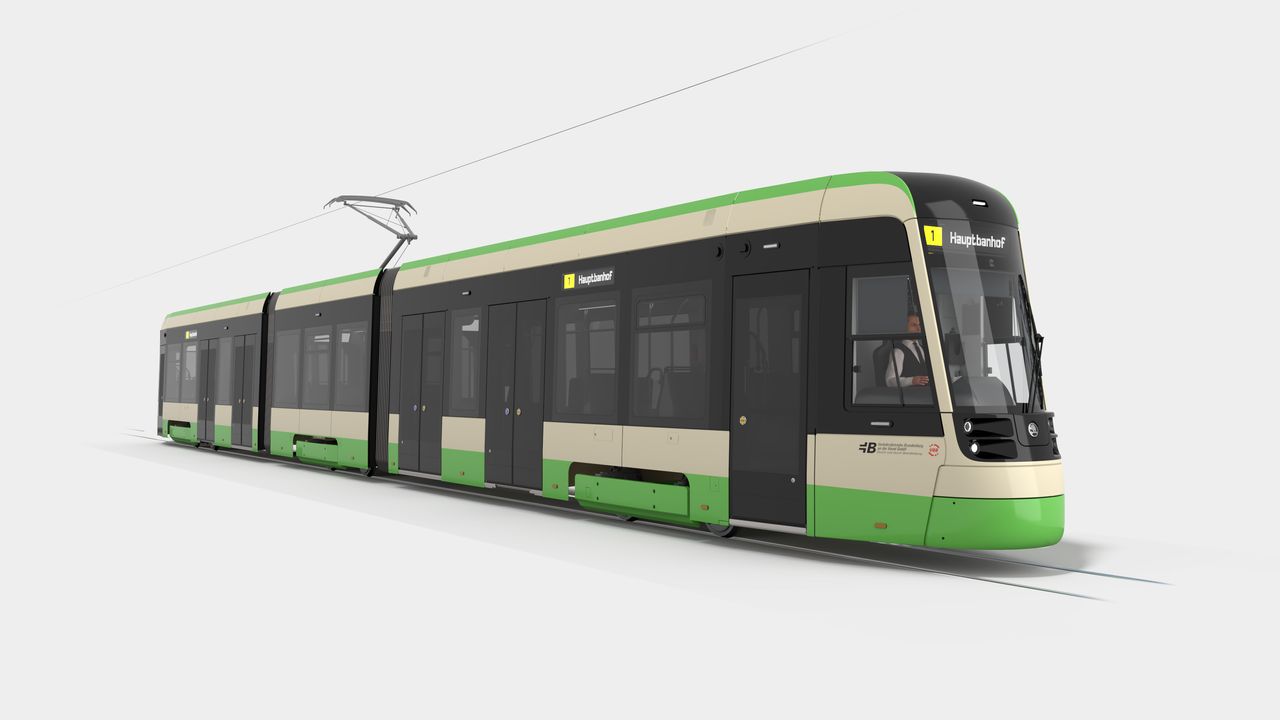
Verkehrsbetriebe Brandenburg an der Havel GmbH (VBBr) has exercised an existing option to acquire a set of four additional Škoda ForCity Plus 48T low-floor trams.
The order will increase the operator’s total number of requested vehicles from four to eight, and will underline VBBr’s ongoing relationship with the Škoda Group, as well as its operator’s confidence in the vehicle platform, which was developed jointly for public transport operators in Brandenburg an der Havel, Frankfurt (Oder) and Cottbus.
Jörg Vogler, Managing Director of Verkehrsbetriebe Brandenburg an der Havel GmbH, said:With the four additional trams, we are consistently continuing the renewal of our fleet. The vehicles improve accessibility and comfort for our passengers while also helping to secure the long-term future of tram operations in Brandenburg an der Havel. In Škoda Group, we have selected a reliable and solution-oriented partner.
Thanks to the close and constructive cooperation, we were able to achieve a very good result. We are pleased with the technical quality of the trams.This reliability provides an essential foundation for the predictable continuation of our fleet modernisation and for investing directly in the quality of life and sustainable mobility of our city.
Each of the new trams have been specifically designed to meet metre-gauge requirements of the three cities in Brandenberg, and measure in at 29 metres in length. The units can carry up to 151 passengers, and feature wide doors, low entrances and a series of multifunctional areas to facilitate travel for passengers with reduced mobility, as well as those travelling with pushchairs or bicycles.
Škoda’s ForCity Plus platform aims to combine modern low-floor design with pivoting bogies at both ends of the vehicle in an effort to reduce wheel and track wear, particularly when negotiating tight curves, allowing the trams to function on historically developed urban networks.
This procurement forms part of a joint initiative by the public transport operators in Brandenburg an der Havel, Cottbus and Frankfurt (Oder), and the coordinated order is expected to enable the operators to make use of technical synergies, share development costs and achieve economic benefits for the participating municipal companies.