Alto has set out how the Québec City–Toronto high-speed rail project will move from a broad planning corridor to a defined route, describing a staged delivery process that combines technical analysis, field studies and community input before any final alignment or land requirements are confirmed.
Public consultations are underway on the proposed high-speed rail link between Québec City and Toronto. They focus on a preliminary corridor rather than fixed route options. According to Alto, the corridor is an early planning stage intended to guide further analysis before a precise alignment is selected.
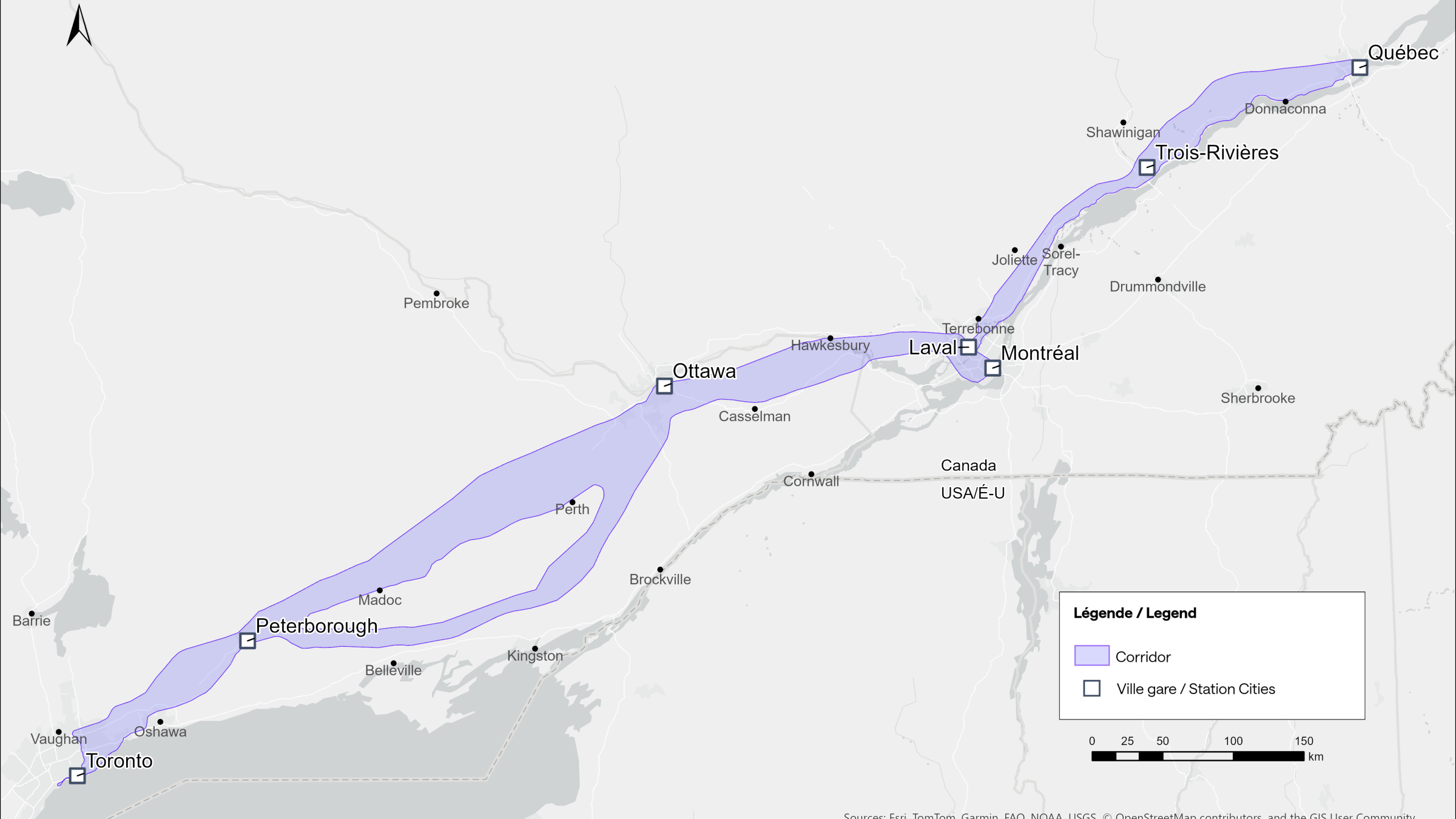
Project documents describe the corridor as an area about 10 kilometres wide. This zone is expected to be narrowed in subsequent phases until a defined right-of-way of roughly 60 metres is identified for the railway itself.
Alto said the decision to consult at this stage was intended to gather input before route choices are finalised. A narrower corridor for the Montréal–Ottawa section is scheduled to be discussed during a later consultation phase planned for late 2026.
The eventual route is expected to be shaped by several factors, including engineering analysis, environmental assessments, field study findings and feedback from residents, Indigenous groups and local authorities.
Planners say the alignment will need long straight sections and gradual curves to support high operating speeds. At the same time, the project team has indicated that it will attempt to limit effects on communities by following existing transport and utility corridors where feasible.
Field studies have begun along the first segment of the proposed network. Alto will contact landowners and communities in advance to request access for surveys. Participation is voluntary, with compensation offered to those who allow entry to their properties.
The company noted that being contacted for a study does not indicate that land is earmarked for acquisition. Study sites are selected to reflect a range of landscapes and conditions near the proposed network.
Only after the route is finalised will land requirements be confirmed. Alto intends to pursue negotiated agreements with property owners, although expropriation remains a possible option if necessary.
Members of the public can take part in in-person and online consultations or submit comments through the project’s digital platform. The scheme will also undergo a federal environmental review under Canada’s Impact Assessment Act, which is expected to provide additional information on potential impacts and allow further public input.
Alto is also regularly publishing responses to frequently asked questions.