The Nairobi City County Government has approved the implementation framework for the first phase of the Nairobi Metropolitan Mass Rapid Transit System (Nairobi Metro).
This marks the next step in plans to develop a new high-capacity public transport network for the Kenyan capital.
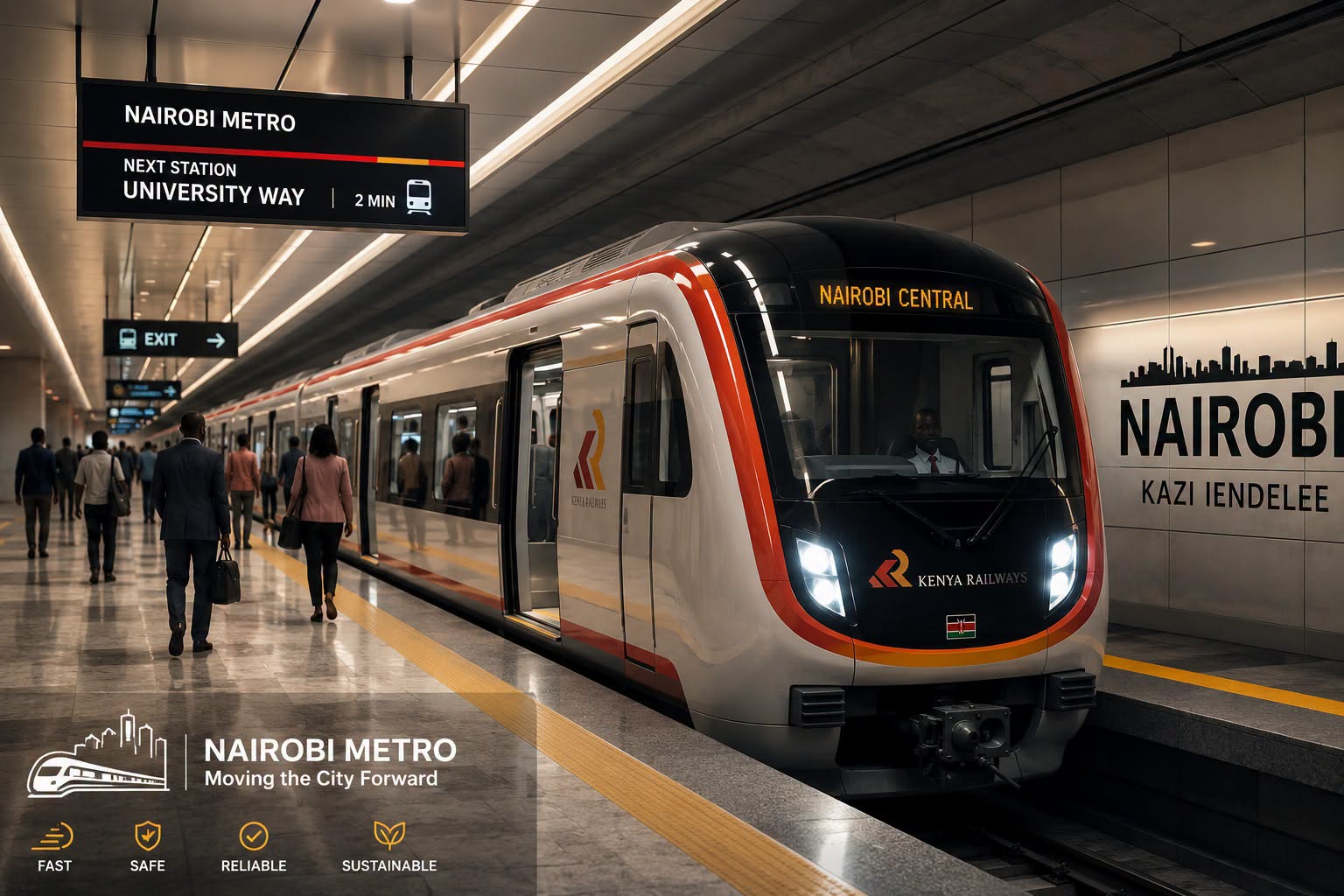
Phase I of the project will focus on two initial sections: an underground route through Nairobi’s central business district (CBD) and the Eastlands Line, which is intended to improve links between one of the city’s busiest residential areas and the city centre.
The underground CBD section is designed to reduce pressure on surface transport by creating integrated interchange stations connecting rapid transit services, pedestrians and last-mile transport options. The Eastlands Line is expected to serve one of Nairobi’s busiest commuting corridors.
The first phase is also expected to support employment during both construction and operation while contributing to lower transport-related emissions.
Governor Sakaja Johnson said:For far too long, the people of Nairobi and particularly our hardworking commuters from Eastlands and across the metropolitan area have lost precious hours in traffic grids that stall our economic momentum
Today, we say that LazimaIwork! The approval of NMRTS Phase I is our firm commitment to delivering a modern, fast, safe and dignified public transit network. By integrating an underground core through our Central Business District (CBD) with direct high capacity links to Eastlands, we will unlock Nairobi’s true economic potential, lowering the cost of living and building a cleaner, green, world-class city.
Planning for a second phase has also begun. This would extend the network to Westlands, Ngong Road and Lang’ata Road, while providing improved connections for commuters travelling from Ongata Rongai, Ngong and western parts of Nairobi.
The planned rail network is intended to integrate with the city’s Bus Rapid Transit (BRT) corridors through a series of interchange stations, creating connections between different modes of public transport.
Before construction begins, the county government plans to hold public consultation events, stakeholder engagement sessions with transport organisations and inter-agency coordination meetings ahead of the project’s official groundbreaking.