A consortium led by TRICON AG and the German Aerospace Center (DLR) has presented the ALISA night train concept at InnoTrans 2026, proposing a modular double-deck train designed to address the capacity and economic challenges associated with conventional night trains.
ALISA stands for Angebotsdifferenziertes, leichtes und innovatives Schlafwagenkonzept, meaning a differentiated, lightweight and innovative sleeper car concept. The project brings together TRICON, GETA, Satek, k+v Ingenieurgesellschaft and DLR, with funding from Germany’s Federal Ministry for Economic Affairs and Energy.
The concept is being presented through full-scale and 1:10 mock-ups at InnoTrans 2026 in Berlin.
Night Train Economics
The ALISA project identified that limited passenger capacity, ageing rolling stock and operating costs are key challenges for the economic viability of night trains.
For one, trains designed for overnight operation have relatively limited operating hours and passenger capacity. The team noted that conventional night trains may operate for only around 12 to 14 hours a day, compared with around 19 hours for a standard high-speed train. High-speed trains can also accommodate large numbers of seated passengers, increasing their utilisation and further advancing their economic value.
To overcome this discrepancy, the ALISA night train is designed to operate both during the day and overnight. Its baseline configuration can accommodate up to 30% more seated passengers than comparable night train concepts.
ALISA Train Design
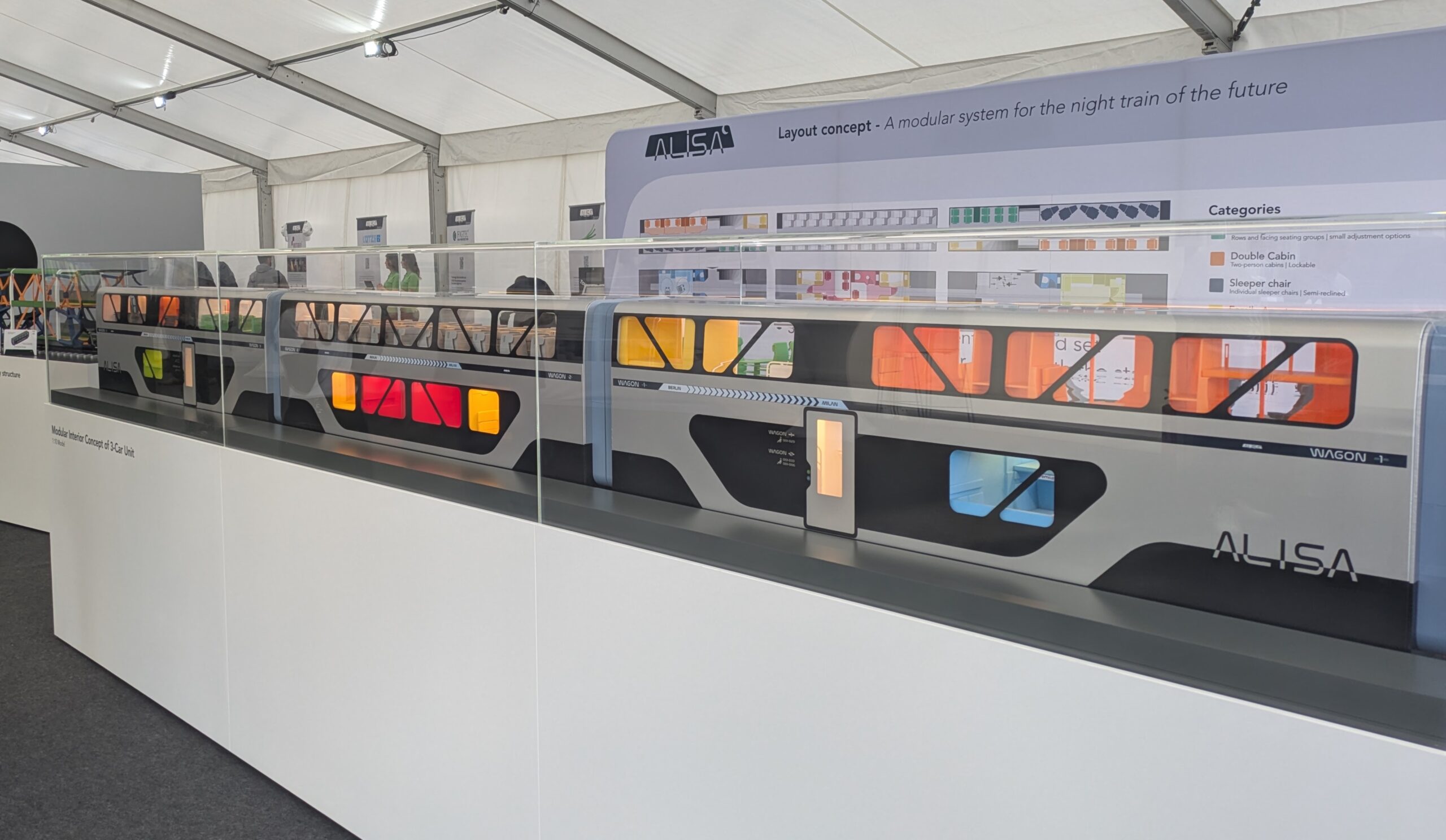
ALISA has been designed as a fixed three-car unit with a double-decker layout. These units can be coupled together according to demand. Rather than operating a complete fixed-length train regardless of passenger numbers, operators can combine multiple three-car units to create different train formations.
The approach is intended to give operators greater flexibility while also supporting the use of the vehicles during both daytime and overnight services.
The concept also uses the GC loading gauge rather than the smaller G1 profile. This provides around 15% more usable interior volume and enables a continuous passenger walkway through both levels of the three-car unit.
Nine Interior Configurations
Rather than designing the train around a single type of sleeper compartment, ALISA uses a modular interior. The project team has identified nine different passenger categories, allowing operators to select different combinations depending on their target market and route.
These include conventional seating, sleeper chairs, business sleeper arrangements and several types of private cabins, such as single and double cabins, family compartments, VIP accommodation and areas designed for passengers with reduced mobility (PRM).
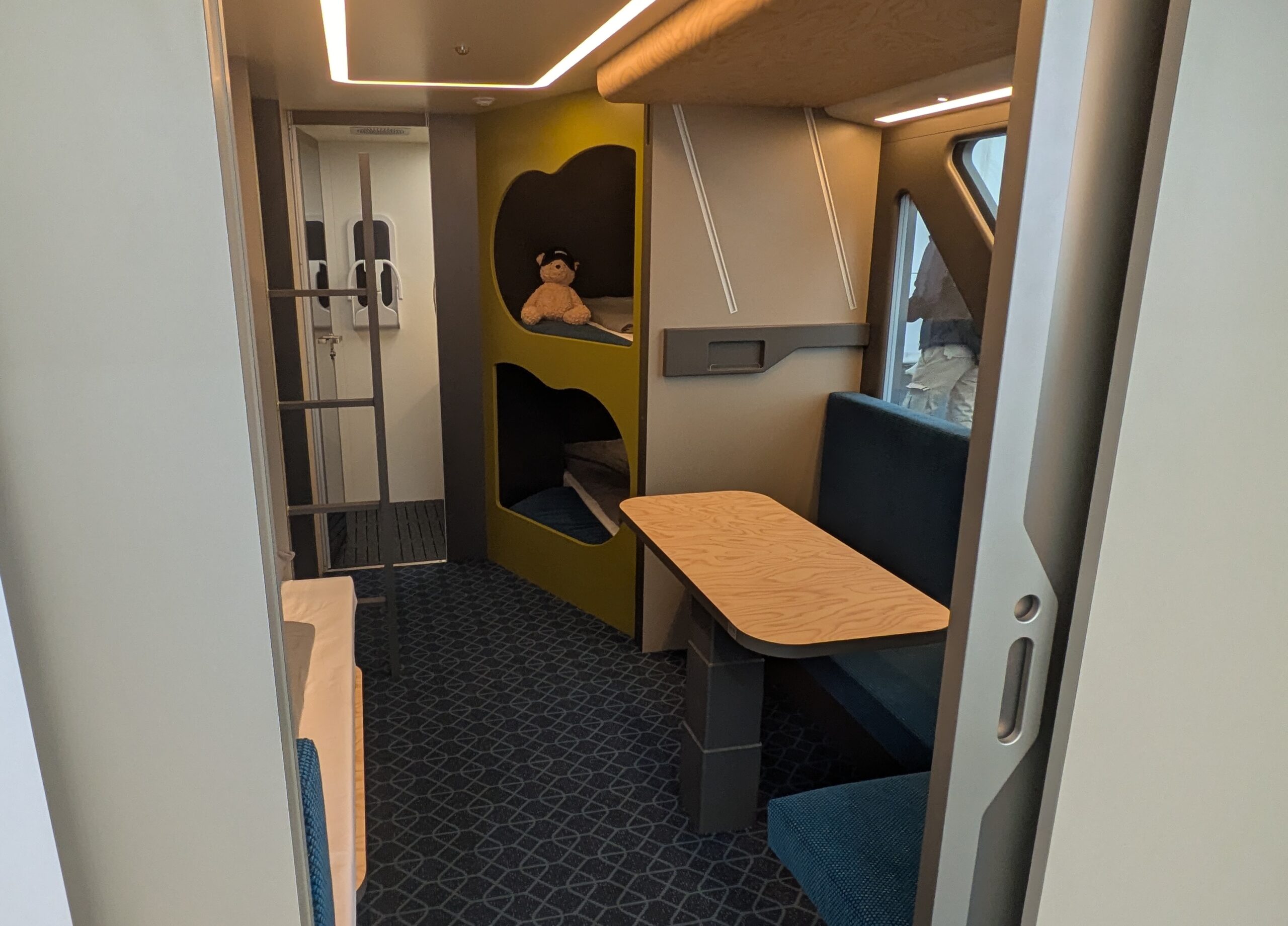
A family compartment, for example, can accommodate up to six adults, while the double cabins can be converted between seating and sleeping arrangements.
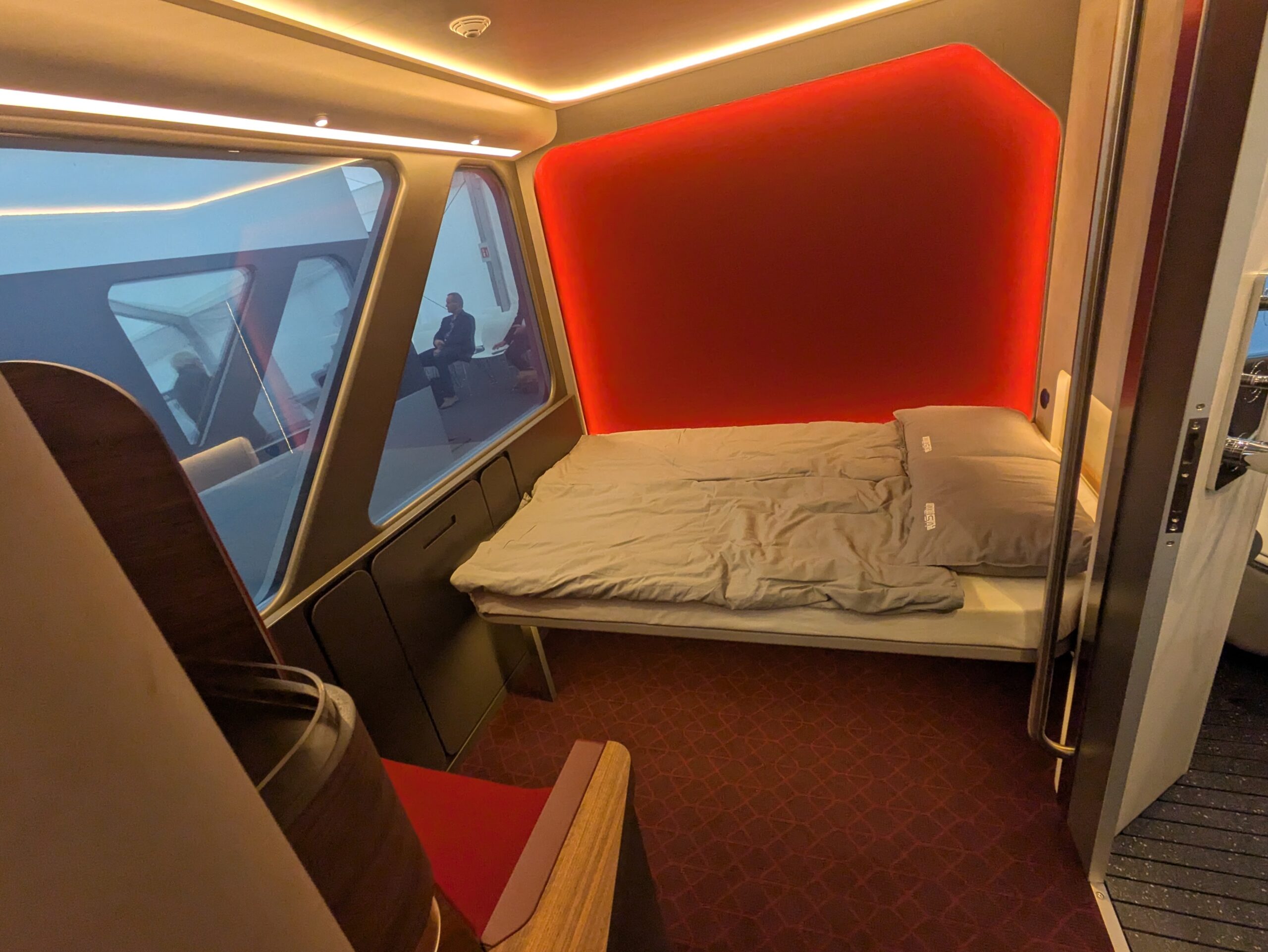
The VIP compartment is designed for three people during the day and can be converted into a double bed at night. It also includes a private washroom.
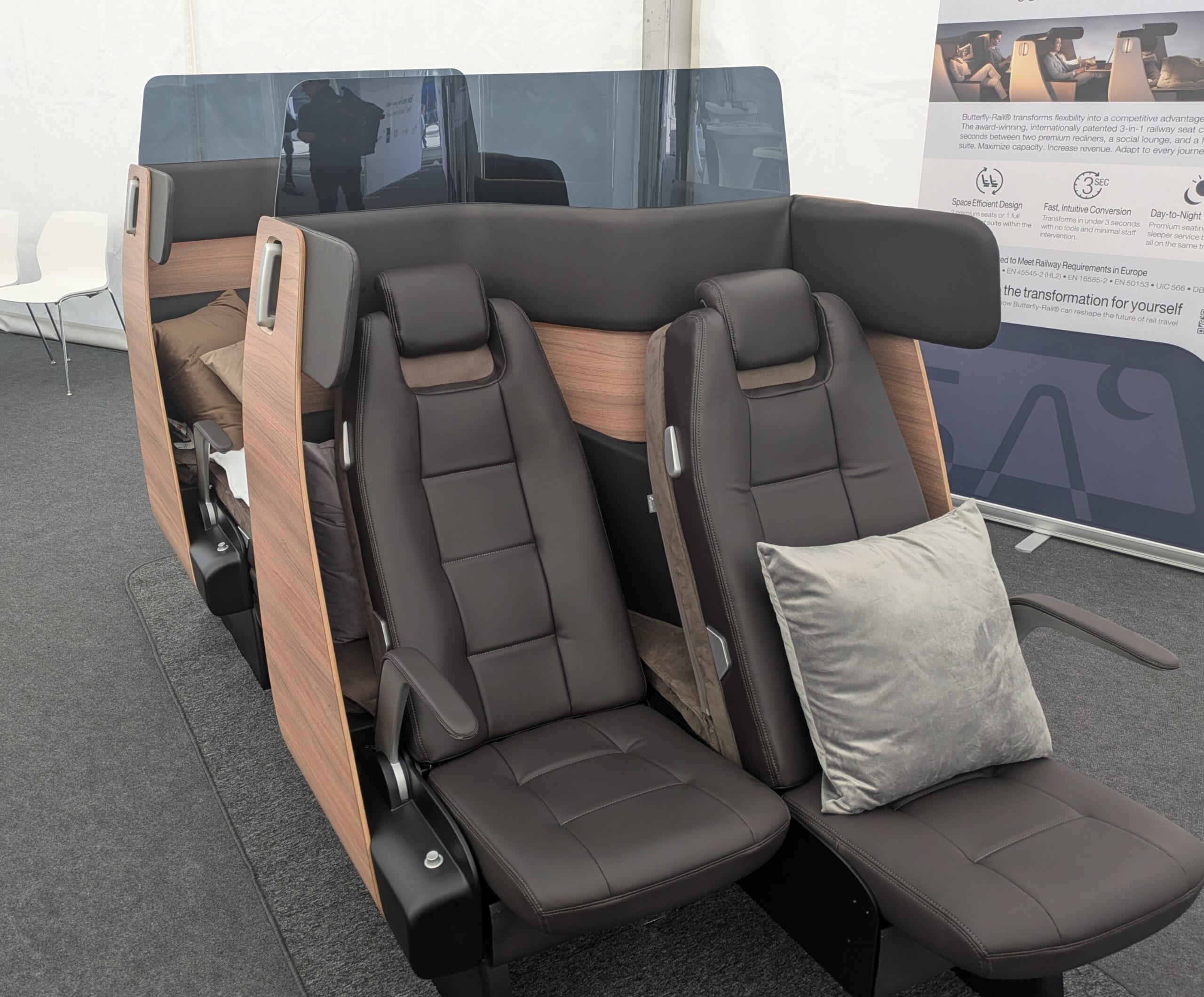
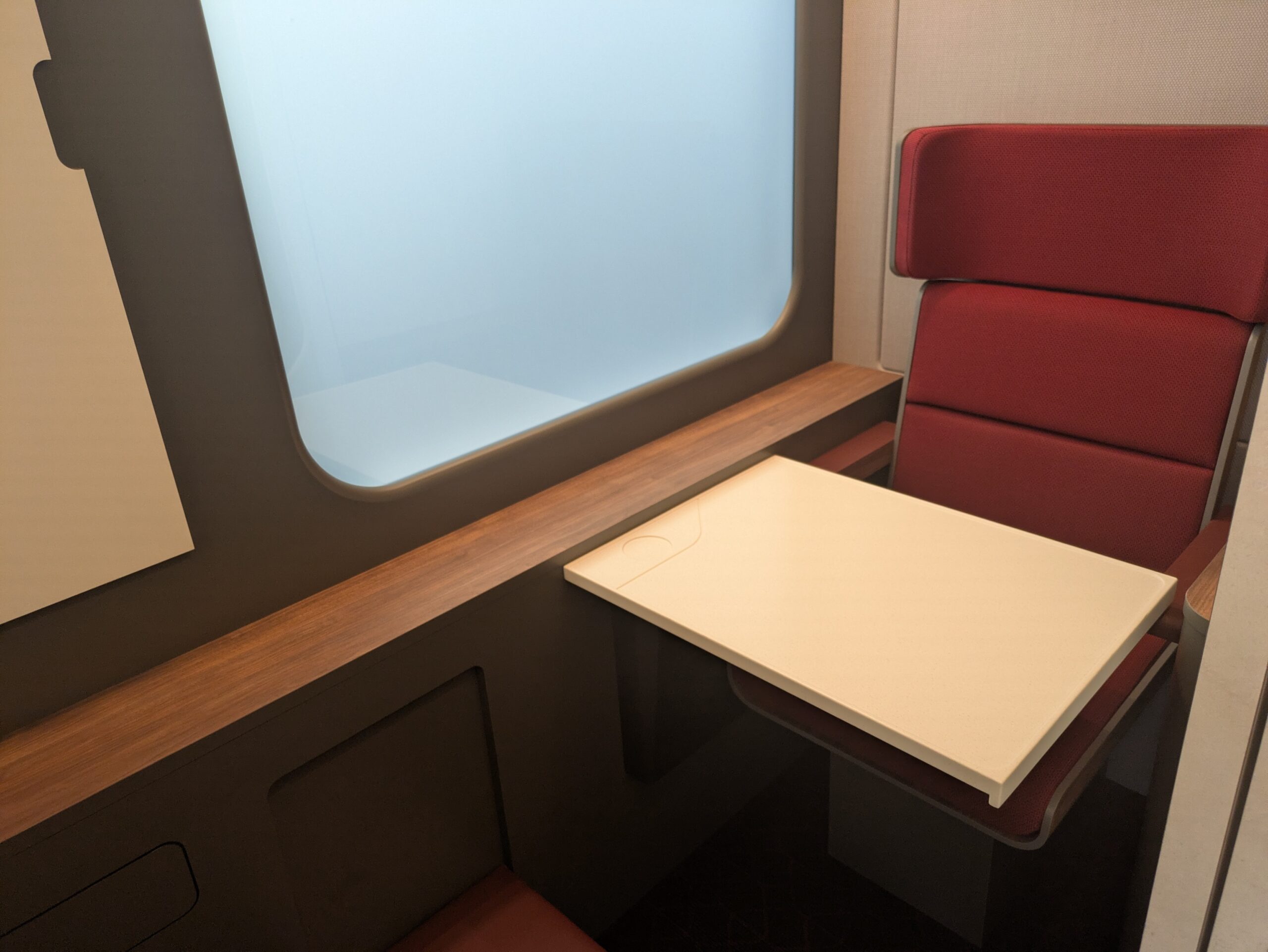
A business sleeper configuration is intended to provide a workspace and greater privacy, while the butterfly seating arrangement increases passenger capacity by using opposing seats that can be converted for overnight use.
The project team said its user research identified a current gap between conventional seating and traditional sleeping accommodation. ALISA therefore attempts to provide several intermediate options rather than dividing passengers simply into “seated” and “cabin” categories.
The modular approach is also intended to give operators flexibility around different passenger markets.
A high-capacity service could prioritise seating, while another operator could select more sleeping accommodation and private cabins. Premium configurations would provide greater privacy but reduce overall passenger capacity. The result is a range of possible passenger capacities depending on the interior configuration.
Walk-Through Double-Deck Design
A key part of the concept is the ability to move through the entire three-car unit on both levels. The project team noted this is enabled by a new DLR bogie concept without an axle between the vehicles, allowing the interior to remain accessible across the train.
The design is intended to provide barrier-free movement from the entrance through the passenger compartments, with PRM accommodation located directly next to the entrance.
The lower level includes the PRM area, family accommodation and other facilities, while the upper level contains additional sleeping compartments. The central vehicle can accommodate VIP and single cabins as well as business sleeper and butterfly-seat configurations.
Lightweight Construction
Increasing passenger capacity while adding sleeping accommodation, private cabins, double-deck construction and additional equipment creates a weight challenge. The ALISA team therefore used topology optimisation to develop a lightweight car body.
The structural concept was developed by DLR and k+v Ingenieurgesellschaft, with the design process applying the loads required by relevant standards before converting the resulting theoretical structure into a profile-based design. This has resulted in a car body featuring diagonal and relatively slim window structures.
The objective is to offset the additional mass associated with the larger loading gauge, greater passenger capacity, comfort features, HVAC equipment and sanitary facilities. DLR says its researchers developed optimised modular lightweight structures for ALISA, with the project also considering the economic and environmental implications of the vehicle concept.
Day and Night Operation
The combination of capacity, modular interiors and flexible train formation is intended to allow ALISA to be used beyond the overnight market.
During the day, the train could operate as a long-distance service with passengers travelling in seated or semi-reclined accommodation. At night, the same vehicle could provide sleeping and private compartments. The project team said this higher utilisation is central to its approach to night train economics.
The concept is also intended to support longer journeys, with operators able to combine different three-car units according to demand.
According to DLR, the design combines higher passenger density with greater privacy while allowing three-car units to be combined into different train formations.
From Concept to Physical Mock-Ups
ALISA is currently a research and development concept rather than a production train.
At InnoTrans, the project partners are using three transportable mock-ups to demonstrate sections of the vehicle, alongside a 1:10 model of the complete three-car formation. The full model has been produced to show the proportions, interior layout and different compartment configurations.
ALISA is one of several new night train concepts being presented at InnoTrans 2026. The exhibition organisers have identified night trains as one of the themes of this year’s outdoor and track programme, alongside alternative propulsion and other new rolling stock concepts.
For ALISA’s developers, the objective is to address several challenges simultaneously: increasing passenger capacity, providing a wider range of accommodation, reducing vehicle weight and making greater use of the train during the daytime.