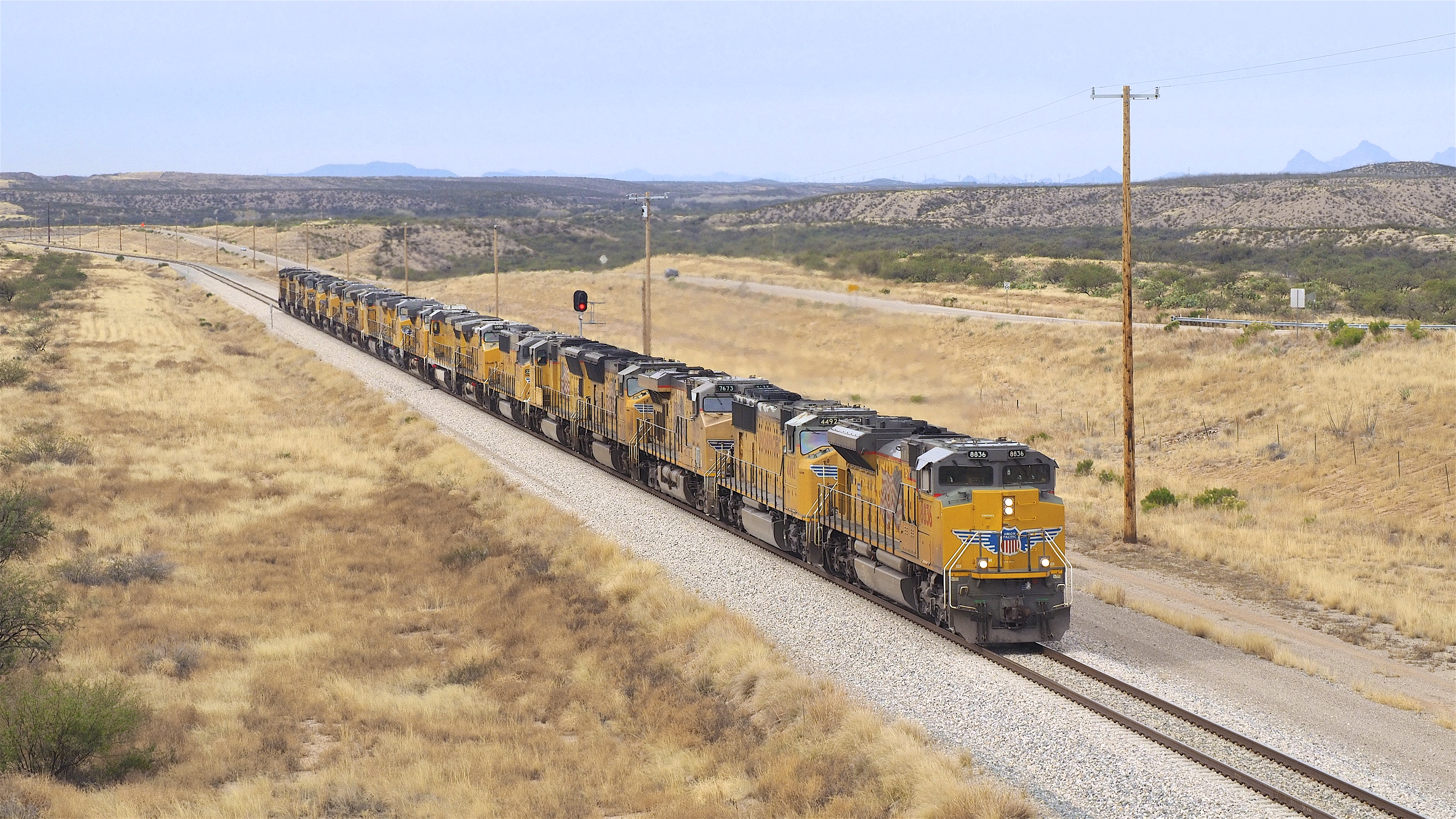
Union Pacific has begun testing battery-electric locomotives in Southern California, with the first two of four Wabtec FLXdrive units now delivered to the railway.
The locomotives are part of Union Pacific’s programme to evaluate emerging technologies in operational railway environments. The four-unit fleet will operate in the Greater Los Angeles area, with the remaining two locomotives expected to arrive in October.
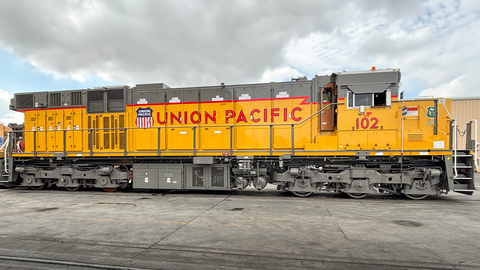
The FLXdrive locomotives will be tested across a range of duties, including switching and local customer service. Union Pacific said operating the locomotives in a busy rail yard will allow it to collect data on their performance, reliability and operational capabilities.
Each locomotive has approximately 2.7 megawatt-hours (MWh) of onboard energy storage and produces no tailpipe emissions while operating. The FLXdrive uses around 7,000 battery cells.
Union Pacific CEO Jim Vena said:Union Pacific has never been content to stand still. Our industry is constantly evolving, and if we're not exploring what's next, we risk being left behind. Testing technologies like battery-electric locomotives help us to better understand what's possible by putting these emerging technologies to work in actual railroad operations.
The Southern California testing programme follows previous development and trials of Wabtec’s FLXdrive technology. The company has been working on battery-electric locomotives as part of efforts to reduce fuel consumption and emissions in freight rail operations.
Rafael Santana, Wabtec’s chairman and CEO said:This milestone reflects Wabtec’s shared commitment with Union Pacific to advancing the future of freight rail. By deploying FLXdrive in daily operations, we’re building real-world insights needed to refine and scale battery-electric technology, delivering best-in-class value for our customers.
The four FLXdrive locomotives will provide Union Pacific with an opportunity to assess battery-electric propulsion under the conditions of a working freight railway, rather than solely in controlled testing environments.