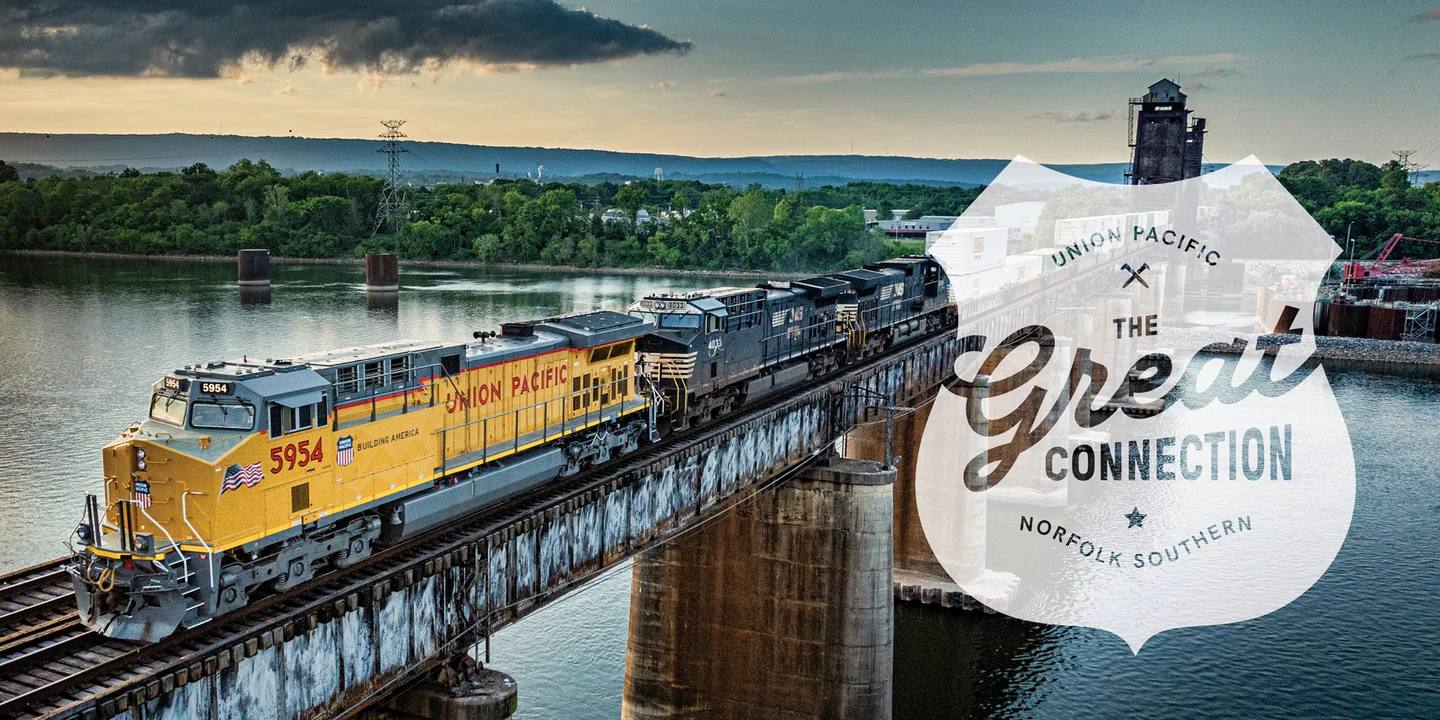
Union Pacific and Norfolk Southern have reinforced the case for their proposed merger, arguing that a more connected rail network would make freight services easier to use and more competitive with road transport.
Speaking at RailTrends 2026 in New York, Union Pacific CEO Jim Vena and Norfolk Southern President and CEO Mark George outlined how the proposed combination would create a transcontinental railway offering direct services between more locations across the United States.
The companies announced their proposed merger in July 2025 and subsequently submitted an application to the US Surface Transportation Board (STB). Since then, they have engaged with customers, short-line railways, ports, labour organisations, employees and policymakers.
According to the companies, this feedback has informed changes to their application, including additional customer protections. The submission draws on traffic data from all six North American Class I railways and includes approximately 2 billion USD in planned integration investment. The companies have also reported receiving more than 2,000 letters of stakeholder support.
The proposed merger would create what the companies describe as the first single-line transcontinental railway in the United States, covering more than 50,000 route miles across 43 states.
Union Pacific and Norfolk Southern estimate that the combination would introduce approximately 88,000 new county-to-county single-line routes and convert 10,000 existing interline movements into single-line services.
Reducing the need for freight to transfer between railway operators could simplify shipping arrangements and improve journey times. The companies estimate that these changes could generate 3.5 billion USD in annual savings for shippers, partly by shifting freight from road to rail.
Union Pacific CEO Jim Vena, said:Is the United States better if it has a railroad that operates seamlessly from one end of the country to the other? Absolutely. We will open up new products for customers that do not use railroads right now. That includes traffic within the watershed area and trucks that are on the highways now that we think we can convert to long-haul railroad business. All those things enhance the product and help America.
The companies estimate that the merger could shift approximately 2.1 million truckloads annually from road to rail.
However, the proposed merger has also attracted opposition and concerns from parts of the rail industry. Critics have questioned whether combining two major freight operators would reduce competition, increase the merged company’s market power and leave customers with fewer transportation options.
Concerns have also been raised about the potential impact on smaller and regional rail operators that depend on connections with Class I networks to move freight.
The STB’s review will examine the merger’s implications for competition, service quality and the wider US rail network. Regulatory approval is required before the companies can proceed with the combination.