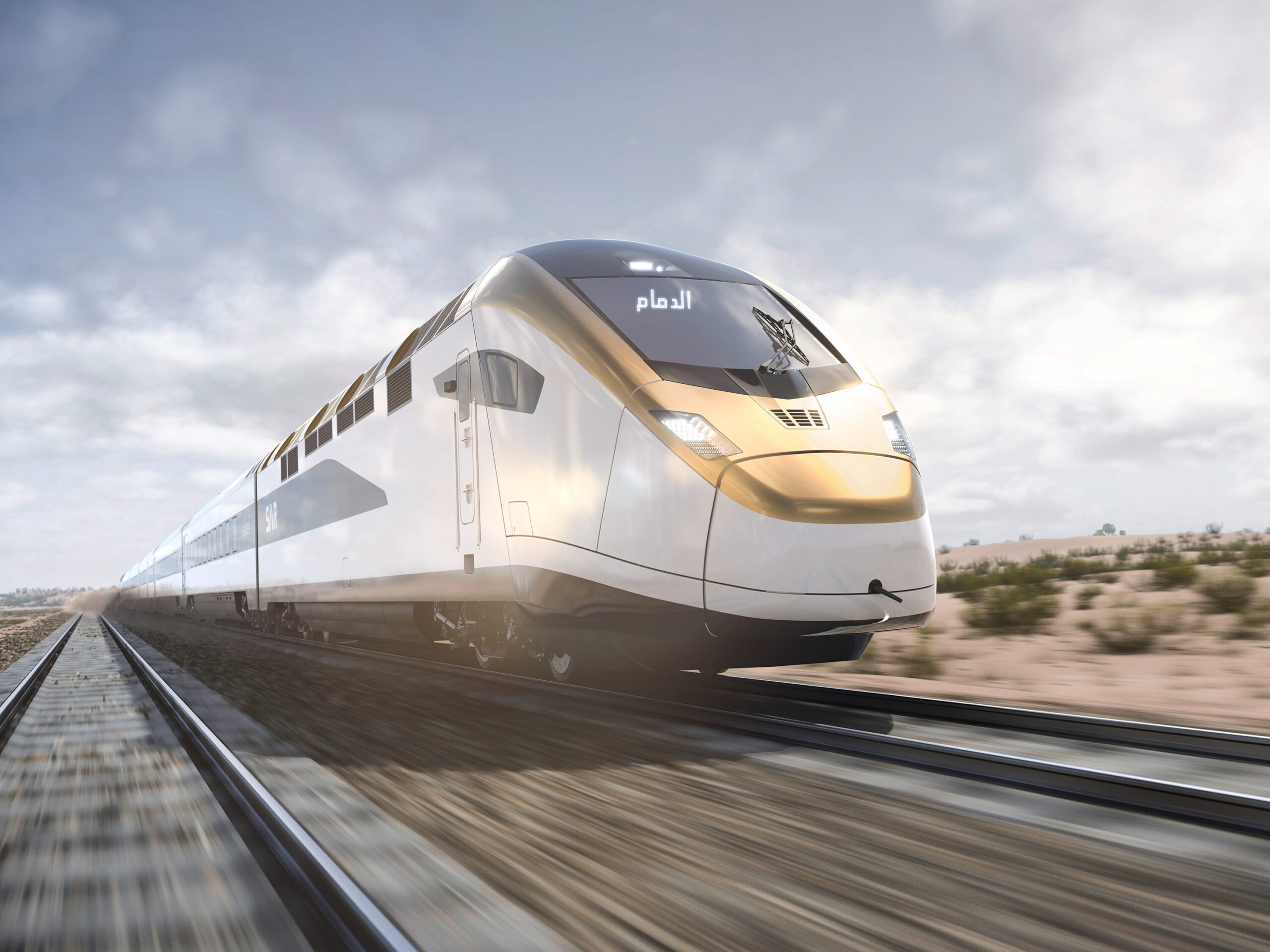
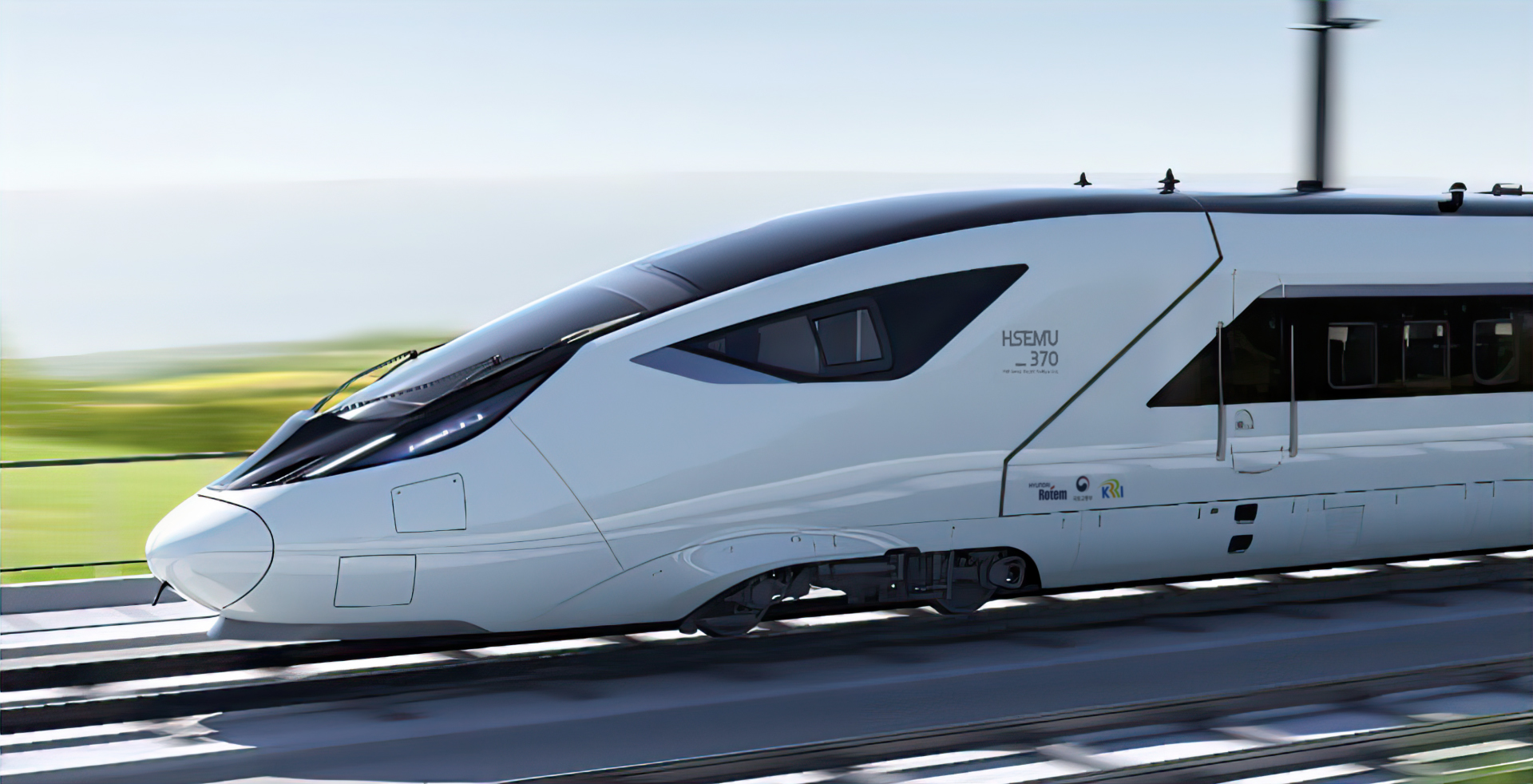
South Korea has completed the development of core technologies for a next-generation high-speed train, designed for commercial operating speeds of 370 km/h, according to the Ministry of Land, Infrastructure and Transport (MOLIT).
The train, known as EMU-370, has a design top speed of 407 km/h and has been developed through a national research and development programme. Production of the first vehicles will begin in 2026, with test operations planned from 2030.
The four-year R&D project ran from April 2022 to December 2025 and involved seven participating organisations, including public research institutes and private-sector companies. The Korea Railroad Research Institute led the programme. Total investment amounted to 22.5 billion KRW (15.5 million USD), of which 18 billion KRW was provided by the government and 4.5 billion KRW by private partners.
The project built on the technology used for the KTX-Cheongryong (EMU-320), which operates commercially at up to 320 km/h. The aim was to enhance running performance and safety at higher speeds, addressing technical challenges such as increased aerodynamic resistance, vibration and noise that arise above 350 km/h.
As part of the programme, six core technologies were developed. These include a new 560 kW traction motor, representing a 47.4% increase in output compared with the EMU-320’s 380 kW motors. Each eight-car EMU-370 trainset will be equipped with 24 of these motors.
Aerodynamic resistance has been reduced through changes to the train’s nose shape, the application of covers to bogies beneath the train, and the reduction of protruding rooftop equipment. MOLIT notes that the aerodynamic drag coefficient has been reduced from 0.868 to 0.761, a decrease of 12.3%.
Ride stability and passenger comfort have also been addressed through optimisation of the suspension system, including air springs and dampers. Lateral vibration acceleration has been reduced from 9 m/s² to below 6 m/s². Roller rig tests using a full-scale powered bogie confirmed dynamic stability at speeds exceeding 400 km/h.
Interior noise levels have been lowered by applying optimised aluminium body structures and composite sound insulation materials to floors, side walls and ceilings. Interior noise is reported to be between 68 and 73 dB, around 2 dB lower than on the EMU-320.
The project also resulted in the localisation of airtight passenger doors for high-speed operation, reducing reliance on imported components. In addition, performance evaluation and safety verification criteria applicable to trains operating at up to 400 km/h were developed. MOLIT noted that existing European technical standards do not currently define requirements above 350 km/h.
Under current plans, one to two initial EMU-370 trainsets, totalling 16 cars, will be ordered in the first half of 2026 by Korail. Test operations are expected to begin in early 2030 on sections including the Pyeongtaek–Osong corridor.