What if one of the most persistent problems in rail—unstable soils beneath the tracks—could be solved without digging everything up? For the Chicago Transit Authority’s (CTA) Blue Line, that’s exactly what happened. In this episode of Beneath the Build, we show you how they did it.
The Challenge: Slow Zones and Soft Subgrades
Before the Blue Line Improvement Project, nearly 70% of the route was restricted by “slow zones.” Trains crept through sections weakened by soft, pumping soils. Traditionally, the fix would be to dig out and replace at least 12 inches of subgrade—a costly, time-intensive process requiring thousands of truckloads of material and major impacts to Chicago traffic. CTA needed something faster, cleaner, and smarter.
The Solution: TrackTex and Tensar, Beneath the Rails
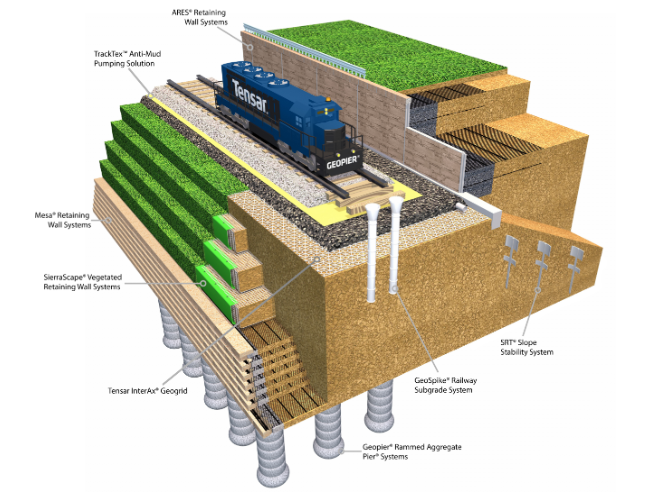
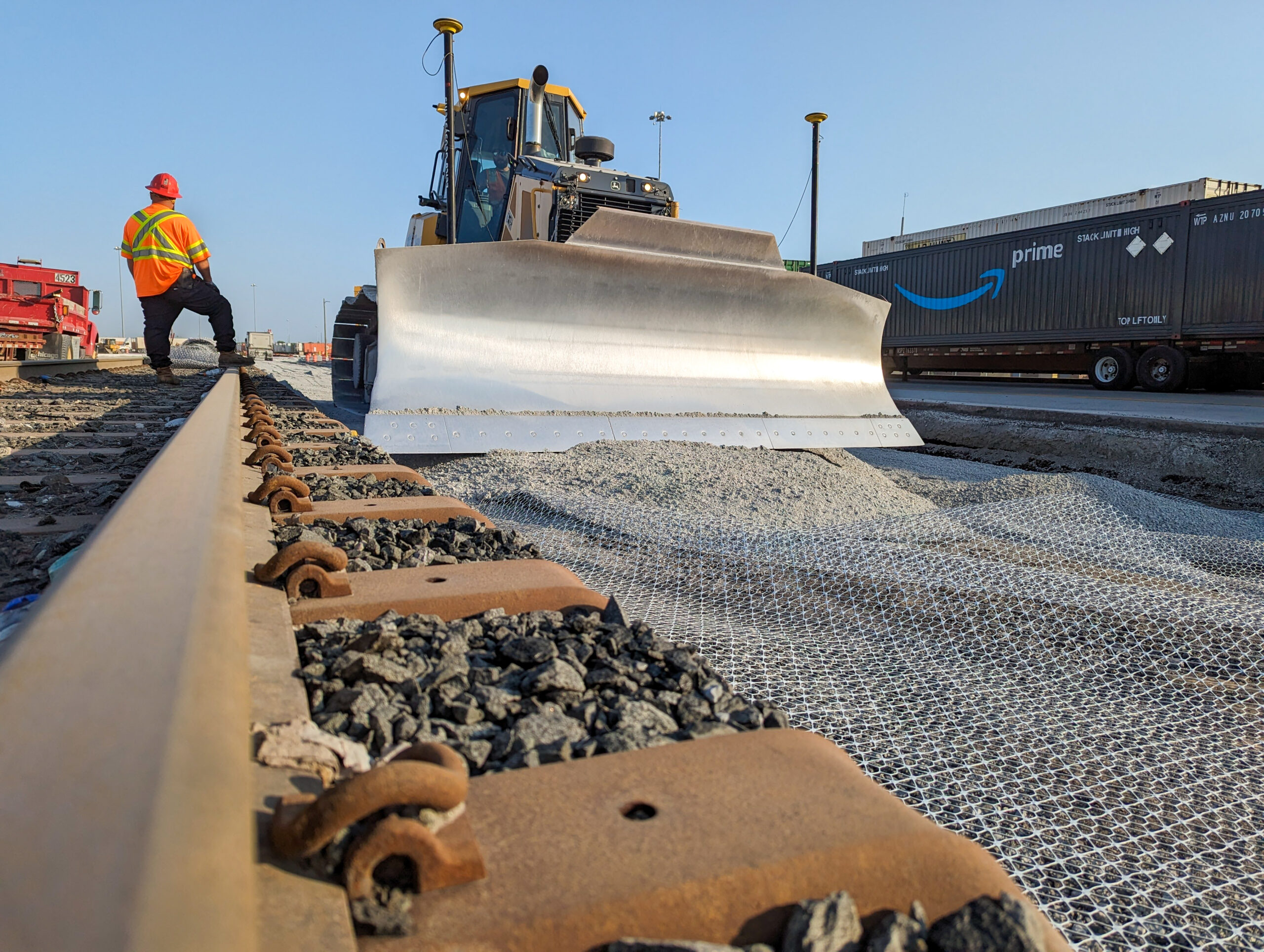
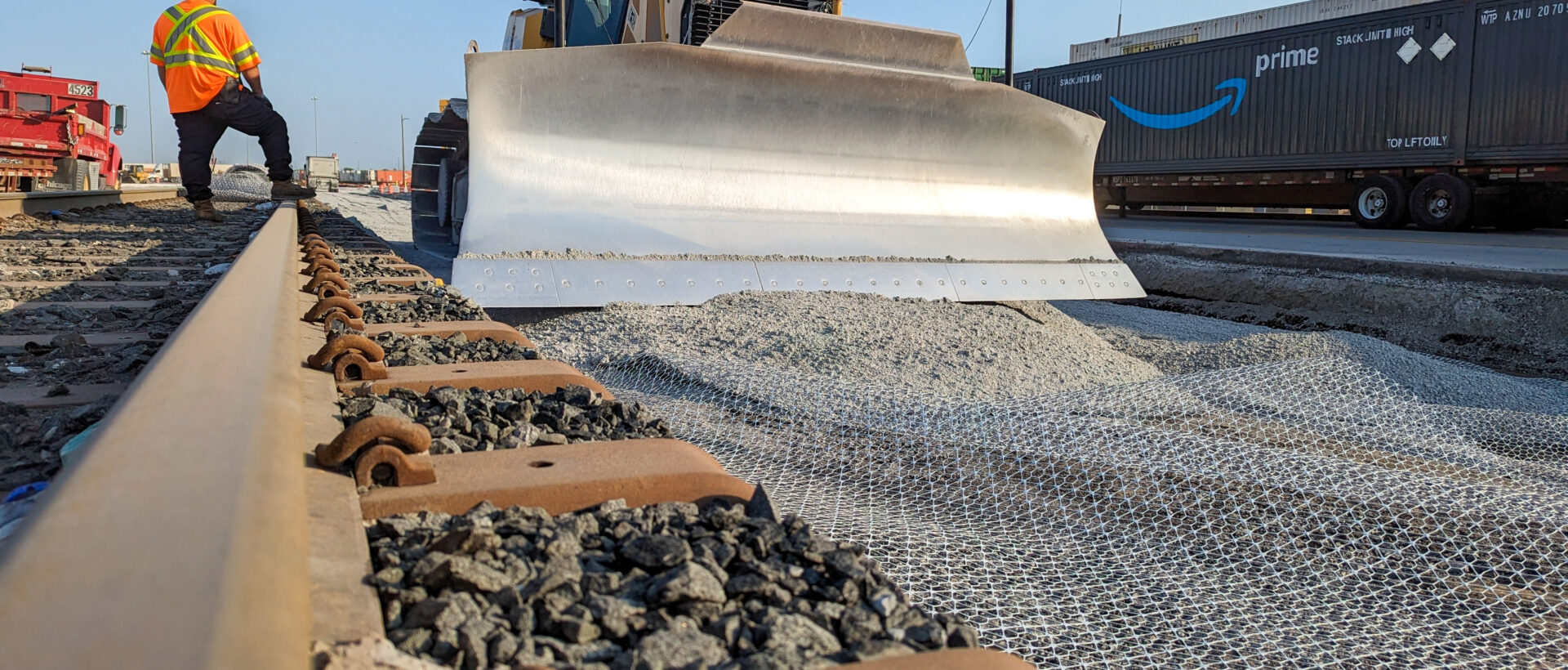
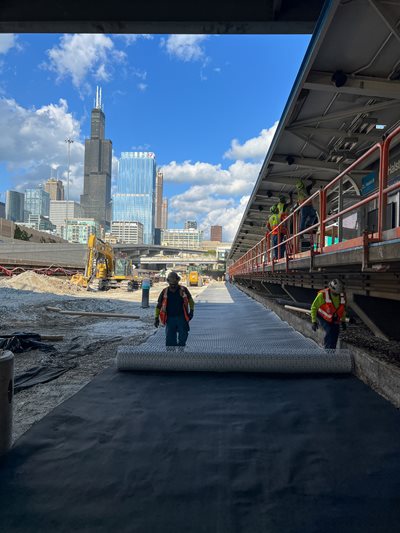
Instead of excavation, engineers turned to TrackTex anti-pumping geocomposite and Tensar InterAx® NXR2 geogrid. Together, these advanced materials formed a stabilized barrier that prevented mud pumping, stabilized the ballast, and allowed pore water to dissipate—improving subgrade strength over time.
The difference was dramatic:
- 1,200 truckloads eliminated – easing downtown congestion and cutting emissions.
- $500,000 saved – by reducing excavation and imported material needs.
- 50+ tons of CO₂ avoided – supporting CTA’s sustainability goals.
- Extended ballast life – with maintenance cycles projected to improve by up to 25 times.
The Outcome: Faster, Cleaner, More Resilient
In just 11 weeks, crews rebuilt nearly three miles of track—on time and on budget. Most importantly, CTA proved that rail agencies don’t have to choose between performance, cost, and environmental responsibility. With Tensar’s innovative rail solutions, TrackTex and InterAx geogrid, it’s possible to achieve all three.
Why It Matters
From Boston to Denver, agencies across North America face the same challenge: modernizing rail infrastructure under tight schedules and tighter budgets. CTA’s approach signals a shift—embracing smarter geosynthetics as the future of trackbed design.
Watch this episode of Beneath the Build to see how they pulled it off. Or, download the full case study for future reference.
This article was originally published by Tensar.