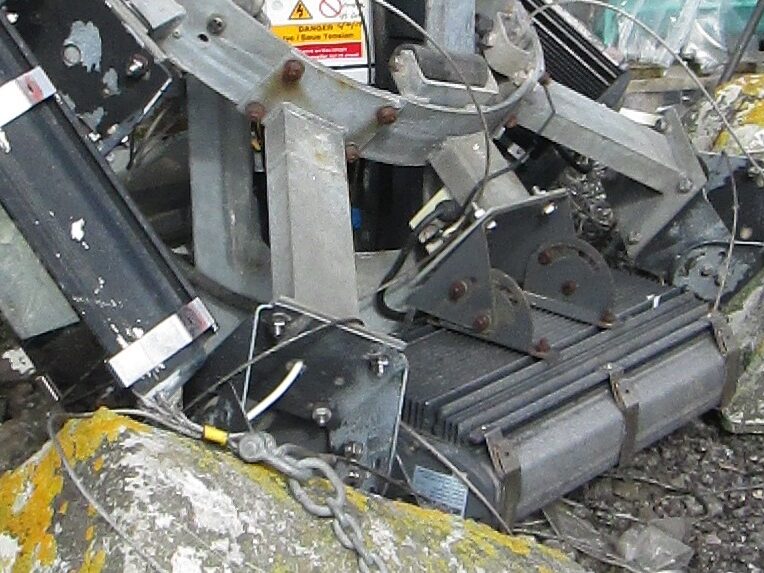
The Rail Safety and Standards Board (RSSB) has announced that its Industry Leadership Group has decided to move away from the use of signal post telephones.
The decision was made following a request from Network Rail to stop the provision of signal post telephones during re-signalling works, starting with its Fife project.

With most signal post telephones now rarely in use; the RSSB has stated that the decision follows clear evidence that they offer limited safety benefit, and represent a significant and ongoing cost to the industry.
An analysis carried out by the RSSB found that signal post telephones have a poor safety profile as a secondary communication provision when compared to alternative methods, with better solutions such as portable devices or additional SIM cards allowing on-board GSM-R radios to utilise alternative networks.
The decision will allegedly deliver significant cost savings through the ceasing of future installation and long-term maintenance of fixed lineside telephones. Currently, Network Rail maintains around 32,000 across the GB network at an estimated cost of 22.5 million GBP per year, with major re-signalling schemes serving to add further expense through design, cabling and associated infrastructure.
Professor Clive Roberts, Independent Chair of the Industry Leadership Group, said:Signal post telephones were designed for a very different railway. The evidence is clear that they are no longer the most effective or proportionate way to provide secondary communication.
This decision gives the industry clarity and leadership, allowing modern alternatives to be adopted while maintaining safety and reducing avoidable cost.